



Why Water Heater Maintenance Matters
Most homeowners never think about their water heater until it stops working, usually at the worst possible time. Regular maintenance extends the life of your unit, improves energy efficiency, and catches small problems before they become expensive emergencies.
Here is what is at stake if you skip maintenance:
- Reduced lifespan. A well-maintained tank water heater lasts 12 to 15 years. A neglected one may fail in 8 to 10 years.
- Higher energy bills. Sediment buildup forces the burner or heating element to work harder, increasing gas or electric costs by 20% to 40%.
- Catastrophic failure. A corroded tank can rupture, flooding your home with 40 to 80 gallons of water and causing thousands of dollars in damage.
- Health risks. Bacteria like Legionella can grow in tanks kept below 120 degrees Fahrenheit.
Annual Water Heater Maintenance Checklist
Follow this checklist once a year to keep your water heater running safely and efficiently. Most of these tasks take less than an hour total.
1. Check the Temperature Setting
The Department of Energy recommends setting your water heater thermostat to 120 degrees Fahrenheit. This temperature is hot enough to prevent bacterial growth, reduces scalding risk, and saves energy compared to higher settings.
Most gas water heaters have a dial on the gas valve. Electric heaters have thermostats behind upper and lower access panels. Use a meat thermometer at the nearest hot water tap to verify the actual output temperature.
2. Test the Temperature and Pressure Relief Valve (T&P Valve)
The T&P valve is the most important safety device on your water heater. It releases water if the tank pressure or temperature gets dangerously high, preventing a potential explosion.
- Place a bucket under the discharge pipe connected to the T&P valve
- Lift the lever on the valve for 5 seconds, then release it
- Water should flow freely while the lever is up and stop completely when released
- If no water flows or the valve continues to drip after release, replace it immediately
Warning: The water that comes out is hot. Keep hands and skin clear of the discharge pipe.
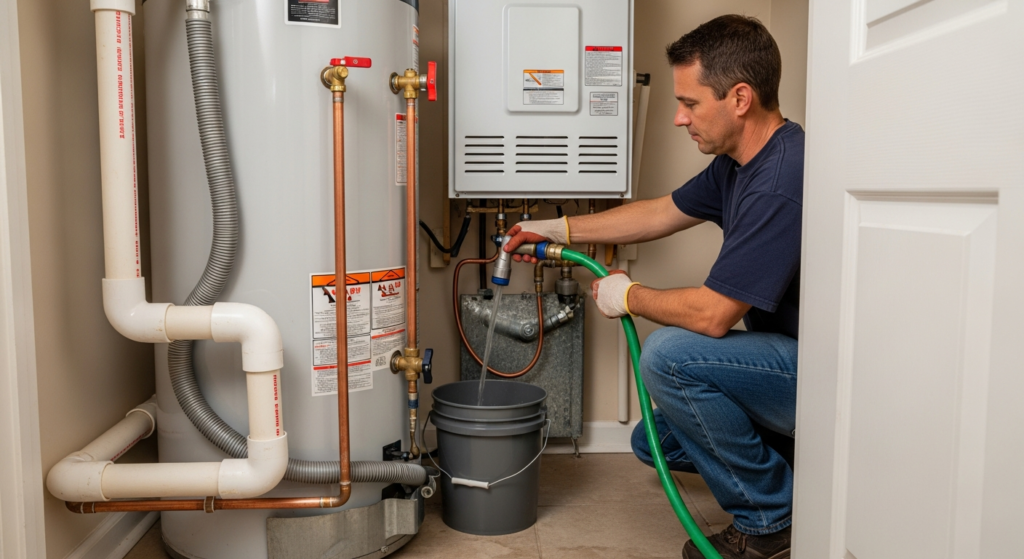
3. Flush the Tank to Remove Sediment
Sediment (calcium, magnesium, and sand) settles at the bottom of the tank over time. This layer insulates the water from the burner, reducing efficiency and accelerating corrosion.
- Turn off the gas or electricity to the water heater
- Connect a garden hose to the drain valve at the bottom of the tank
- Run the hose to a floor drain, utility sink, or outside
- Open the drain valve and let the water flow until it runs clear (usually 5 to 10 minutes)
- If the water is very cloudy, open the cold water supply briefly to stir up remaining sediment
- Close the drain valve, remove the hose, and turn the power back on
In Orange County and the Inland Empire, hard water makes sediment buildup especially aggressive. Homes in these areas benefit from flushing every 6 months rather than annually.
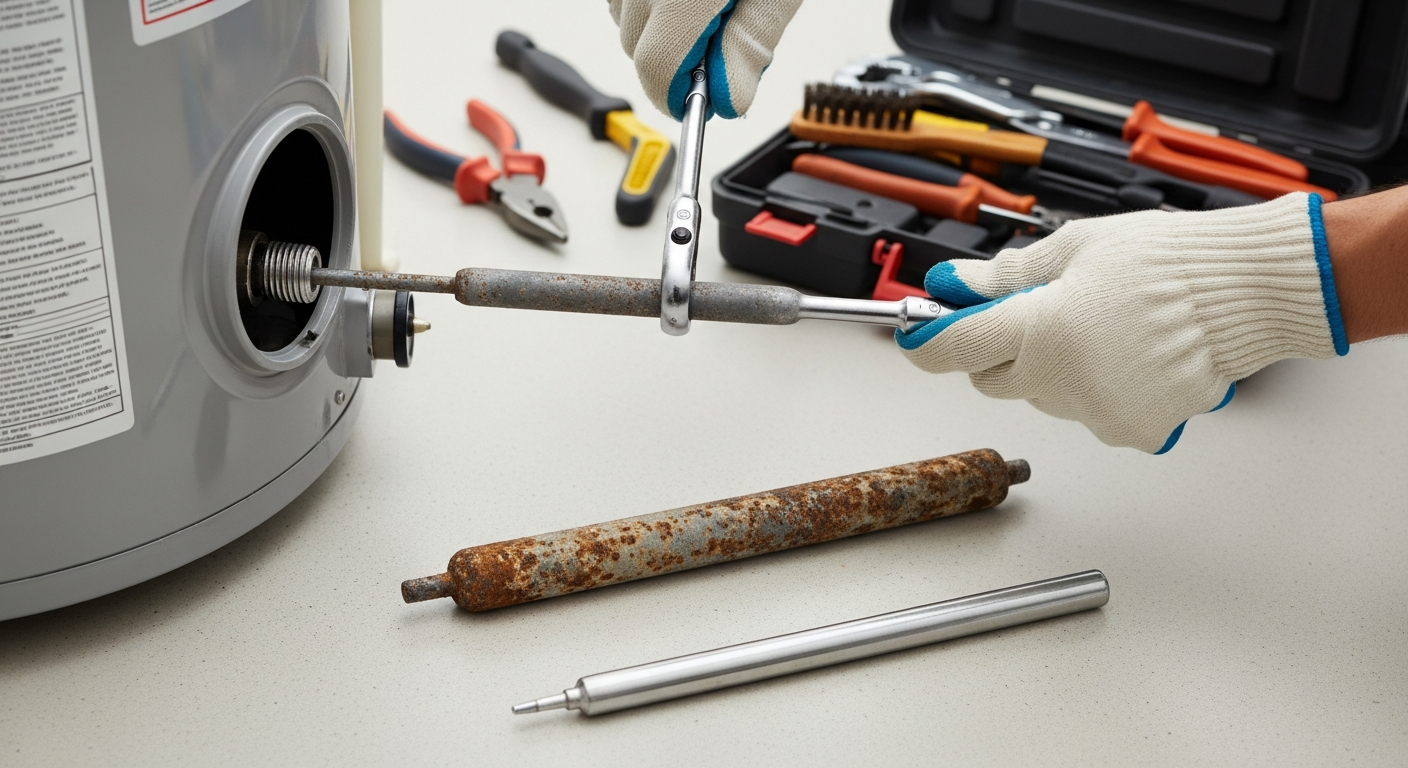
4. Inspect the Anode Rod
The anode rod is a sacrificial metal rod inside the tank that attracts corrosive elements in the water, protecting the tank walls. Once the rod is depleted, corrosion attacks the tank itself.
- Turn off the water and power to the heater
- Locate the anode rod port on top of the tank (it requires a 1-1/16 inch socket)
- Unscrew and pull the rod out
- Replace the rod if it is less than 1/2 inch thick, covered in calcium, or the core wire is exposed
Anode rods typically last 3 to 5 years. Aluminum rods cost $20 to $30. Powered (impressed current) anode rods last longer and cost $80 to $150 but never need replacement.
5. Check for Leaks and Corrosion
Inspect the area around your water heater for signs of trouble:
- Rust-colored water from the hot water tap (indicates internal tank corrosion)
- Puddles or moisture at the base of the tank
- Corrosion on fittings, pipes, or the T&P valve discharge pipe
- Discoloration or bulging on the tank body
Any visible water heater leaking from the tank body means the inner liner has failed. This cannot be repaired and requires water heater replacement in Orange County.
6. Inspect the Venting System (Gas Heaters Only)
Gas water heaters produce carbon monoxide that must vent safely outside. Check that:
- The vent pipe is securely connected to the draft hood on top of the heater
- There are no gaps, holes, or disconnections in the vent pipe
- The vent pipe slopes upward toward the chimney or roof exit
- There is no soot or discoloration around the draft hood (signs of backdrafting)
If you smell gas near the water heater, leave the house immediately and call your gas company. Then call a licensed plumber for gas line repair.
Tankless Water Heater Maintenance
Tankless water heaters require different maintenance than traditional tank units. The primary concern is mineral scale buildup inside the heat exchanger.
Annual Descaling (Flushing)
- Turn off the gas or electricity and close the water shut-off valves
- Connect two hoses to the isolation valves (service ports)
- Submerge a small submersible pump in a 5-gallon bucket of white vinegar
- Circulate the vinegar through the heat exchanger for 45 to 60 minutes
- Flush with clean water, reconnect, and restore power
Most tankless manufacturers require annual descaling to maintain the warranty. In hard water areas like Orange County, descaling every 6 months is recommended. The cost of professional tankless descaling is typically $100 to $200.
Additional Tankless Maintenance
- Clean the inlet water filter every 6 months
- Check the condensate drain (condensing units only) for blockages
- Inspect the venting system for obstructions or damage
Signs Your Water Heater Needs Professional Attention
Some maintenance tasks require a licensed plumber. Schedule a service call if you notice:
- Rumbling or popping sounds from the tank (severe sediment buildup)
- Fluctuating water temperature that does not improve after thermostat adjustment
- Discolored or rusty hot water (failing anode rod or corroding tank)
- Reduced hot water volume (sediment displacing water capacity)
- The T&P valve will not stop dripping after testing (possible pressure issue)
- Any visible leak from the tank, fittings, or connections
- The pilot light keeps going out (thermocouple failure or gas valve issue)
- Error codes on a tankless unit (indicates internal component failure)
Learn more about the signs it is time to replace your water heater and water heater installation costs.
Need professional help? Learn more about our water heater repair in Orange County.
How Often Should You Service Your Water Heater?
| Maintenance Task | Frequency | DIY or Pro |
|---|---|---|
| Check temperature setting | Every 6 months | DIY |
| Test T&P relief valve | Annually | DIY |
| Flush the tank | Annually (6 months in hard water areas) | DIY |
| Inspect anode rod | Every 3 years | DIY or Pro |
| Replace anode rod | Every 3 to 5 years | Pro recommended |
| Full professional inspection | Annually | Pro |
| Tankless descaling | Annually (6 months in hard water) | DIY or Pro |
Frequently Asked Questions
How long does a water heater last with regular maintenance?
A tank water heater lasts 12 to 15 years with annual maintenance, compared to 8 to 10 years without it. Tankless water heaters last 20 years or more with regular descaling. The biggest factors are anode rod replacement, sediment flushing, and water quality in your area.
Can I flush my water heater myself?
Yes. Tank flushing is a straightforward DIY task that requires a garden hose and about 30 minutes. However, if you have never opened the drain valve before and the unit is older, the valve may be corroded and could leak once disturbed. In that case, having a plumber handle the first flush is a safer option.
What happens if I never flush my water heater?
Sediment accumulates at the bottom of the tank, reducing heating efficiency and capacity. Over time, the layer of minerals insulates the water from the burner, causing the tank to overheat at the bottom. This accelerates corrosion, shortens the tank’s lifespan, and can eventually cause the tank to leak or rupture.
How much does professional water heater maintenance cost?
A professional water heater tune-up in Orange County typically costs $80 to $200. This usually includes flushing the tank, testing the T&P valve, inspecting the anode rod, checking connections, and verifying the thermostat setting. Tankless descaling runs $100 to $200. Annual maintenance is far cheaper than an emergency water heater repair.
Related: Flush Your Water Heater
Related: Water Heater Pilot Light
Need professional water heater maintenance or repair? Call 911 Drain Lines and Plumbing at (714) 746-7611 for expert service in Orange County and the Inland Empire. Our licensed technicians handle tank and tankless water heaters, with 24/7 emergency availability for urgent issues.