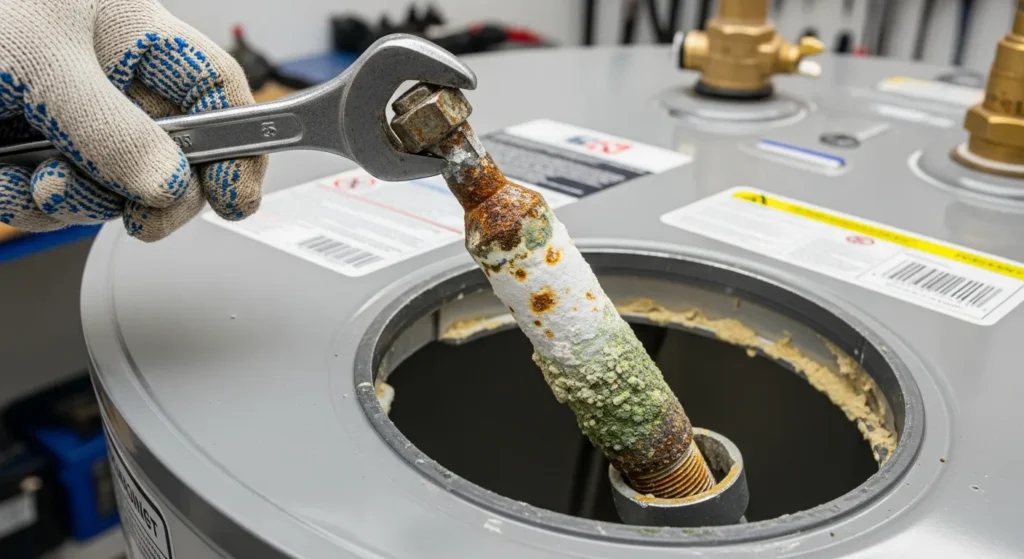




If you own a tank water heater, there is a small metal rod inside that quietly protects your entire system from corrosion. It is called the water heater anode rod, and most Orange County homeowners have never heard of it. Yet this one component can determine whether your water heater lasts 5 years or 15 years. Understanding what it does and when to replace it can save you hundreds, even thousands, of dollars in premature water heater replacement costs.
In this guide from 911 Drain Lines and Plumbing, we cover how anode rods work, the different types available, warning signs that yours needs replacing, and what replacement costs in Orange County, California.
Schedule your water heater inspection with 911 Drain Lines or call (714) 746-7611 today.
What Is a Water Heater Anode Rod and Why Does It Matter?
A water heater anode rod is a long metal rod, typically three to five feet in length, that screws into the top of your water heater tank. It is commonly called a “sacrificial anode rod” because its sole purpose is to corrode so your tank does not. Water heater tanks are made of steel with a glass or enamel lining. Over time, tiny cracks form in that lining and expose the underlying steel to water. Without an anode rod, the exposed steel would rust rapidly, leading to leaks, tank failure, and expensive water heater repair.
The anode rod attracts the corrosive minerals in your water through an electrochemical process called galvanic corrosion. As long as the rod has material left to sacrifice, it draws corrosion away from the tank walls. Think of it as a bodyguard: it absorbs the damage so the tank stays intact.
How Does a Sacrificial Anode Rod Protect Your Water Heater?
Two different metals are present inside the tank: the steel walls and the more reactive metal of the anode rod, usually magnesium, aluminum, or zinc. When both metals sit in water, which acts as an electrolyte, an electrochemical reaction occurs naturally.
Because the anode rod metal is more reactive than steel on the galvanic scale, it corrodes first. Electrons flow from the anode rod to the tank walls, keeping the steel protected. This reaction happens around the clock, gradually consuming the anode rod while preserving the tank interior.
Once the anode rod is fully consumed, the steel tank becomes the most reactive metal in the system. Corrosion then shifts to the tank itself, which is why regular inspection and timely replacement of the anode rod is critical. Pairing anode rod checks with routine water heater maintenance can significantly extend your system’s lifespan.
What Are the Different Types of Water Heater Anode Rods?
Not all anode rods are created equal. The right choice depends on your water quality, budget, and maintenance preferences. Here is a side-by-side comparison of the four main types available for residential water heaters.
| Anode Rod Type | Material | Best For | Lifespan | Approximate Cost | Key Consideration |
|---|---|---|---|---|---|
| Magnesium | Magnesium alloy | Soft water areas | 3 to 5 years | $20 to $40 | Most common factory default; corrodes faster in hard water |
| Aluminum | Aluminum/zinc alloy | Hard water areas | 4 to 6 years | $15 to $30 | Lasts longer in hard water; some health concerns about aluminum |
| Zinc | Zinc/aluminum blend | Homes with sulfur smell | 4 to 6 years | $20 to $40 | Reduces rotten egg odor caused by bacteria in the tank |
| Powered (Impressed Current) | Titanium with electrical current | Maximum protection | 10+ years | $80 to $150 | Does not corrode; requires external power source |
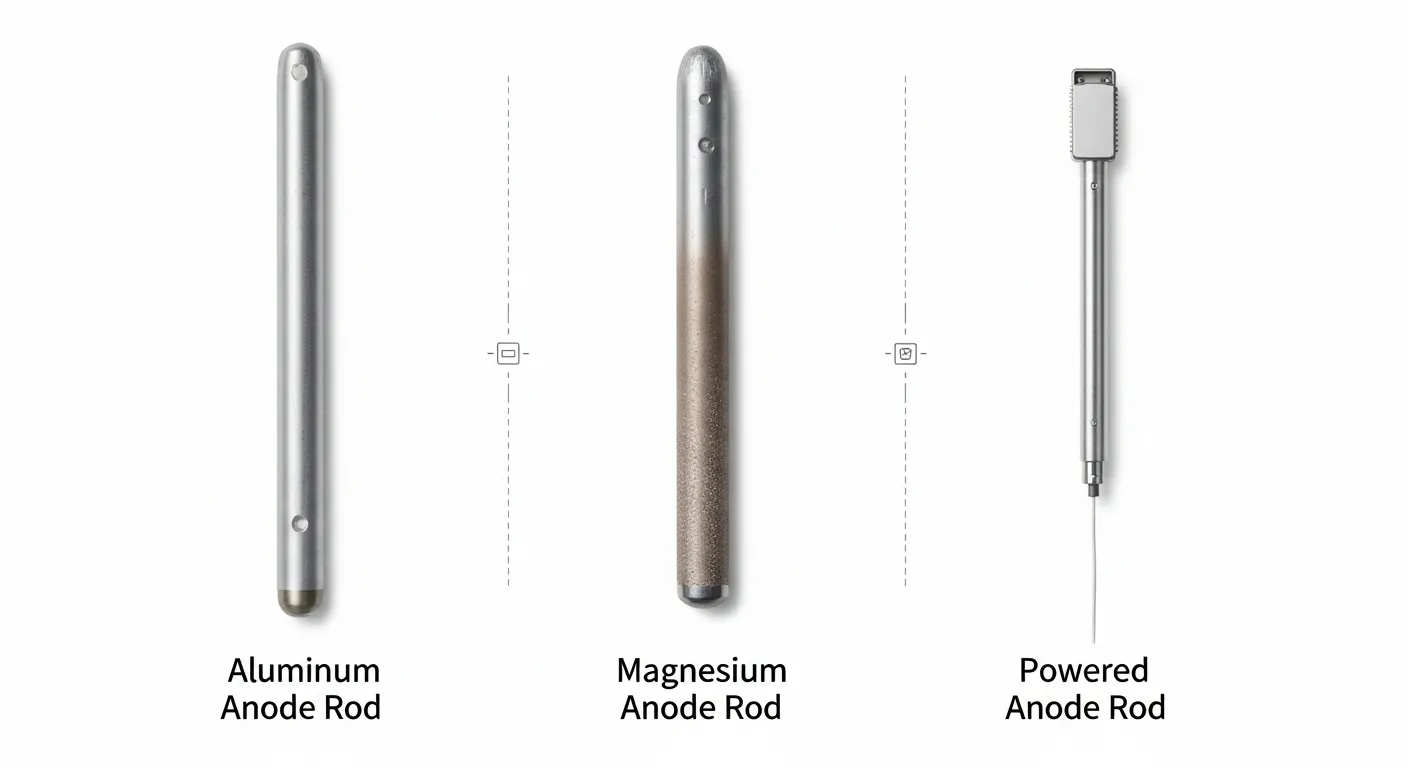
Magnesium anode rods come pre-installed in most residential water heaters. They provide excellent protection in areas with soft to moderately hard water. In Orange County, water hardness varies by city, so magnesium rods may deplete faster in communities with harder municipal water.
Aluminum anode rods hold up better in hard water conditions and generally cost less. Some homeowners avoid aluminum due to concerns about trace amounts dissolving into the hot water supply, though research on health impacts remains inconclusive.
Zinc anode rods are actually a blend of zinc and aluminum. Their main advantage is reducing the rotten egg smell that occurs when sulfate-reducing bacteria thrive inside the tank. If you have noticed a sulfur odor when running hot water, a zinc rod is often the best solution.
Powered anode rods use a small electrical current sent through a titanium rod to protect the tank. They do not rely on sacrificial corrosion, so they last significantly longer and never need replacement due to material depletion. They are the premium option for homeowners who want long-term, maintenance-free protection.
When Should You Replace Your Water Heater Anode Rod?
Most plumbing professionals recommend inspecting your anode rod every two to three years and replacing it once more than half has corroded away. Several factors affect how quickly the rod degrades:
- Water hardness: Hard water accelerates corrosion. Several Orange County cities, including Anaheim and Santa Ana, have moderately hard water that shortens anode rod life.
- Water heater age: Older units may need more frequent inspections. Learn more about how long a water heater lasts to see where your unit stands.
- Usage patterns: Households with high hot water demand put more stress on the anode rod.
- Water temperature: Higher temperatures speed up the electrochemical reaction and consume the rod faster.
- Water softeners: Softened water can accelerate anode rod corrosion by increasing the water’s electrical conductivity.
If your water heater is more than three years old and you have never had the anode rod checked, it is time to schedule an inspection.
What Are the Warning Signs That Your Anode Rod Needs Replacing?
Your water heater often gives clear signals when the anode rod is failing. Watch for these common symptoms:
- Rusty or discolored hot water: A reddish or brown tint in hot water (with clear cold water) suggests the anode rod may be depleted and the tank is starting to corrode.
- Rotten egg smell: A sulfur odor in hot water indicates bacterial growth inside the tank, which worsens when the anode rod is spent.
- Popping or rumbling noises: Sediment buildup accelerates when the anode rod is gone. If your water heater is making noise, the anode rod could be a contributing factor.
- Visible corrosion on the rod: Heavy pitting, flaking, or the core wire showing through means replacement is overdue.
- Reduced hot water output: A corroding tank develops sediment that reduces heating efficiency, potentially leading to no hot water or lukewarm output.
Any of these signs warrant a professional inspection. Ignoring them risks a full tank failure, which often results in water damage to your home.
How Much Does Water Heater Anode Rod Replacement Cost?
For most homeowners in Orange County, professional anode rod replacement typically costs between $150 and $300, including parts and labor. The rod itself is inexpensive ($20 to $50 for a standard sacrificial rod, $80 to $150 for a powered model). The majority of the cost covers labor, as accessing the rod requires shutting off the water supply, partially draining the tank, and using a specialized socket wrench.
Compare that to a full water heater replacement, which runs $1,200 to $3,500 or more. Replacing a $30 anode rod every few years is one of the most cost-effective maintenance tasks you can perform. At 911 Drain Lines and Plumbing, we include anode rod inspection as part of our comprehensive water heater maintenance service.
Can You Replace a Water Heater Anode Rod Yourself?
Anode rod replacement is a DIY-friendly task for handy homeowners. The basic steps include turning off the water supply and power, draining a few gallons from the tank, locating the hex head on top, and using a 1-1/16 inch socket wrench to swap the rod. However, several factors make professional help worth considering:
- Stuck rods: Anode rods corrode in place and can be extremely difficult to remove on older units.
- Limited clearance: The rod is as tall as the heater. Closets, attics, and tight spaces may not have enough room to pull it out.
- Tank inspection: A professional can also check for sediment buildup and recommend a full water heater flush while the tank is partially drained.
If the rod appears seized or you are not confident with plumbing connections, contact a licensed residential plumber to handle the job safely.
What Happens If You Never Replace the Anode Rod?
Skipping anode rod replacement is one of the most common and costly mistakes homeowners make. Here is the typical progression:
- Years 1 to 3: The anode rod gradually corrodes as intended. Tank remains fully protected.
- Years 3 to 5: The rod becomes significantly depleted. Protection weakens and corrosion may begin on exposed steel.
- Years 5 to 7: With no functioning anode rod, corrosion spreads across the tank interior. Rust particles appear in hot water.
- Years 7 to 10: The tank wall weakens and develops pinhole leaks. Once the tank starts leaking, replacement is the only option.
A water heater with a regularly replaced anode rod can last 12 to 15 years or longer. Without maintenance, that same unit might fail in 6 to 8 years.
How Does Water Quality in Orange County Affect Your Anode Rod?
Orange County water quality varies significantly depending on your city and water district. Cities like Irvine and Newport Beach may receive water from different sources than Anaheim or Santa Ana, leading to differences in mineral content, chlorine levels, and hardness.
Hard water accelerates sacrificial anode rod corrosion. If you live in an area with hard water, inspect your rod annually rather than every two to three years. Homeowners with tankless water heaters do not have traditional anode rods to worry about, since tankless units do not store water. However, tank-style heaters in Orange County benefit greatly from proactive anode rod monitoring.
Contact 911 Drain Lines and Plumbing at (714) 746-7611 to schedule your anode rod inspection or water heater maintenance in Orange County.
What Are the Most Common Questions About Water Heater Anode Rods?
How often should you replace a water heater anode rod?
Most manufacturers and plumbers recommend inspecting the anode rod every 2 to 3 years and replacing it when more than half has corroded. In areas with hard water, like parts of Orange County, annual inspections are ideal.
What does a water heater anode rod look like when it needs replacing?
A depleted anode rod appears heavily pitted, flaky, or thinned to the core wire. If more than six inches of core wire is exposed or the rod diameter is less than half an inch, it is time for replacement.
Can a bad anode rod cause hot water to smell like rotten eggs?
Yes. A failing magnesium anode rod can react with sulfate-reducing bacteria in the tank to produce hydrogen sulfide gas, which smells like rotten eggs. Switching to a zinc or aluminum rod often solves this.
Do tankless water heaters have anode rods?
No. Tankless water heaters heat water on demand and do not store water in a tank, so they do not need sacrificial anode rods. They require their own maintenance, including regular descaling and flushing.
Is it worth upgrading to a powered anode rod?
For many homeowners, yes. A powered anode rod costs $80 to $150 but can last the entire life of the water heater since it does not corrode. It provides consistent tank protection regardless of water quality.