



Tankless water heaters are often marketed as “low maintenance” appliances, but that label is misleading. Without regular flushing and descaling, mineral deposits build up inside the heat exchanger, reducing efficiency, increasing energy bills, and shortening the lifespan of your unit. The good news is that tankless water heater maintenance is straightforward when you know what to do and how often to do it.
Schedule your tankless water heater maintenance with 911 Drain Lines and Plumbing today or call us at (714) 400-5090 for fast, professional service across Orange County. If the issue persists, consider scheduling residential plumbing services with a licensed professional.
Why Does Your Tankless Water Heater Need Regular Maintenance?
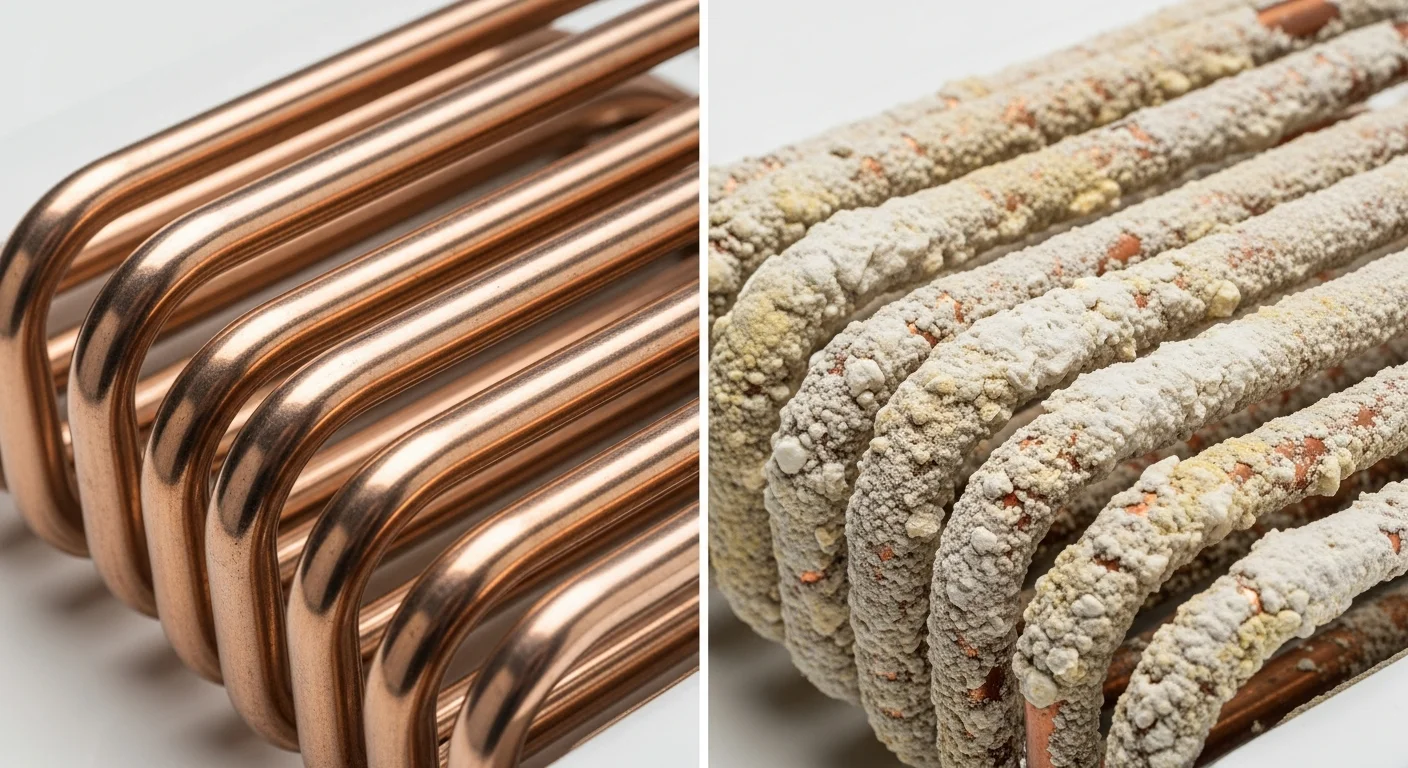
Every time water flows through your tankless unit, it carries dissolved minerals like calcium and magnesium. These minerals accumulate on the heat exchanger over time, forming a hard layer of scale. This buildup forces the unit to work harder to heat water, which leads to several problems:
- Reduced efficiency. Scale acts as an insulator between the heat exchanger and the water. Your unit burns more gas or draws more electricity to achieve the same water temperature, driving up utility costs.
- Error codes and shutdowns. Most modern tankless units have built-in sensors that detect overheating caused by restricted flow. When scale buildup gets severe enough, the unit will display an error code and shut down as a safety measure.
- Shortened lifespan. A well-maintained tankless water heater can last 20 years or more. Without regular descaling, that lifespan drops to 8 to 12 years because the heat exchanger corrodes and fails prematurely.
- Inconsistent hot water. Mineral deposits restrict water flow through the unit, causing temperature fluctuations and reduced hot water output. This is one of the most common complaints from homeowners who skip water heater maintenance.
Orange County and the Inland Empire have moderately hard water, which means mineral buildup happens faster here than in areas with soft water. If you have not flushed your tankless unit in over a year, there is a good chance scale is already affecting its performance.
How Often Should You Flush a Tankless Water Heater?
The recommended flushing frequency depends on your water hardness and usage patterns:
- Hard water areas (Orange County, Inland Empire): Flush and descale every 6 to 12 months.
- Moderate water hardness: Once per year is usually sufficient.
- Soft water or homes with a water softener: Every 12 to 18 months.
- Heavy usage households (4+ people): Every 6 months regardless of water hardness.
Most manufacturers, including Rinnai, Navien, and Noritz, specify annual maintenance in their warranty requirements. Skipping maintenance can void your warranty, leaving you responsible for the full cost of repairs or replacement.
What Tools Do You Need for Tankless Water Heater Maintenance?
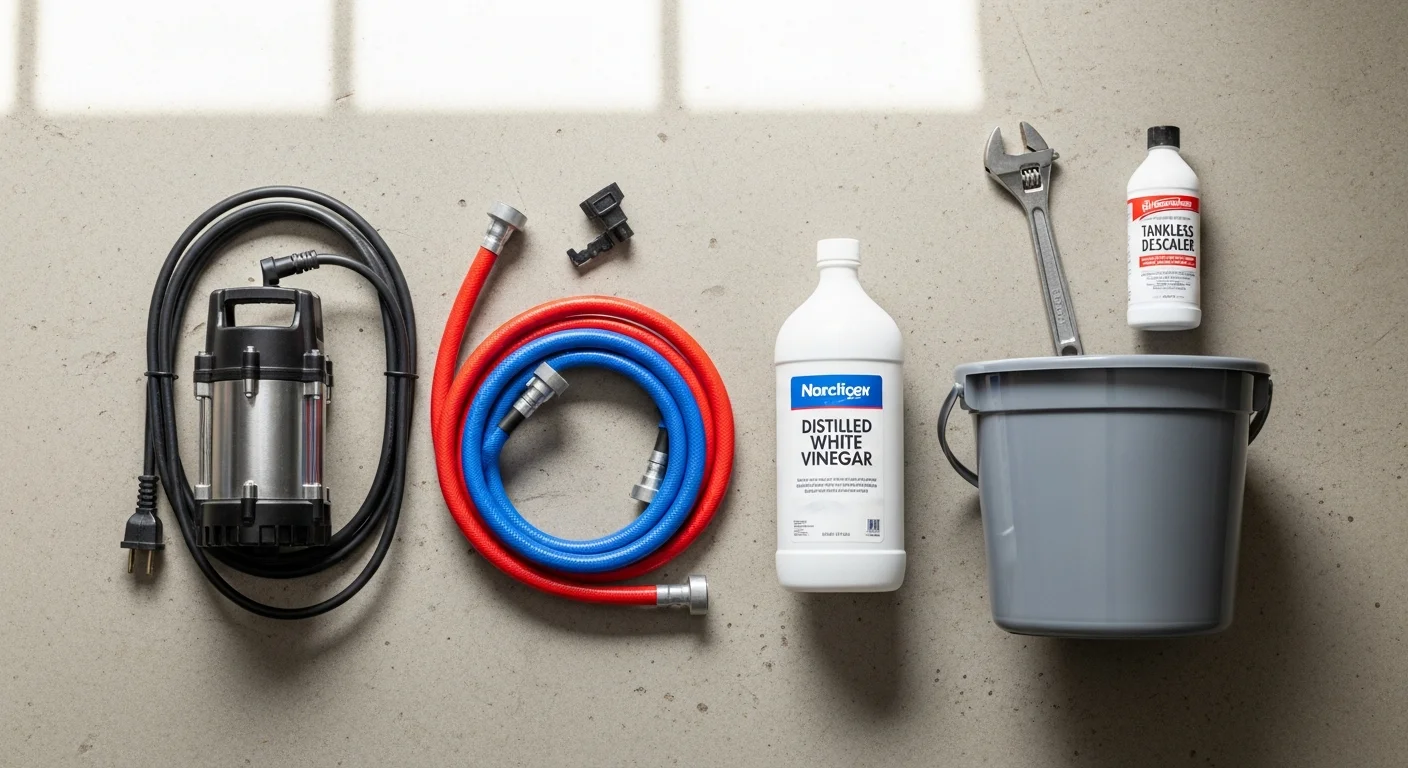
Before you start the flushing process, gather these supplies:
- Submersible pump (1/6 HP sump pump works well)
- Two 6-foot washing machine hoses or similar flexible hoses
- 5-gallon bucket
- 4 gallons of undiluted white vinegar (food-grade, not cleaning vinegar with additives)
- Adjustable wrench or channel locks
- Towels for catching drips
- Inlet filter screen (check your owner’s manual for the location)
You can also purchase a tankless water heater flush kit, which bundles the pump, hoses, and a bucket together for around $100 to $150. If you plan to flush your unit annually, the kit pays for itself after one use compared to professional service calls.
How Do You Flush and Descale a Tankless Water Heater Step by Step?
Follow these steps to flush your tankless water heater safely. The entire process takes about 60 to 90 minutes, with most of that time being the vinegar circulation.
Step 1: Turn Off the Power and Gas Supply
For gas units, turn off the gas supply valve. For electric units, switch off the dedicated circuit breaker. Never work on a tankless unit while it is actively heating water.
Step 2: Close the Water Isolation Valves
Locate the hot and cold water isolation valves (also called service valves) on the pipes leading into and out of the unit. Close both valves to isolate the water heater from the rest of your plumbing system.
Step 3: Connect the Hoses
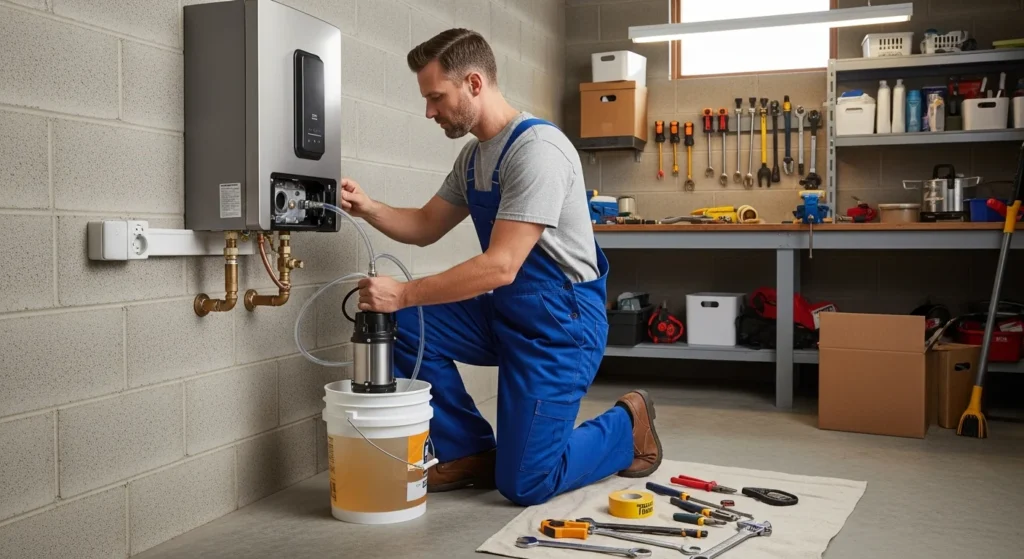
Attach one hose to the cold water service port and place the other end in the bucket. Attach the second hose to the hot water service port and connect the other end to the submersible pump, which should also be placed in the bucket.
Step 4: Fill the Bucket and Start Circulating
Pour 4 gallons of white vinegar into the bucket. Place the submersible pump in the vinegar and turn it on. The pump will push vinegar through the cold water inlet, up through the heat exchanger, and back out the hot water side into the bucket, creating a continuous loop.
Step 5: Circulate for 45 to 60 Minutes
Let the vinegar circulate for at least 45 minutes. For units with heavy scale buildup, run it for a full 60 minutes. The acetic acid in the vinegar dissolves calcium and mineral deposits without damaging the heat exchanger.
Step 6: Flush with Clean Water
Turn off the pump and empty the bucket. Remove the hose from the cold water service port and open the cold water isolation valve to flush clean water through the unit and out the hot water hose. Let it run for 5 to 10 minutes to rinse out all remaining vinegar and loosened scale.
Step 7: Clean the Inlet Filter
Remove the inlet filter screen (usually located on the cold water inlet). Rinse it under running water and use a soft brush to remove any debris. Reinstall the filter once clean.
Step 8: Restore Normal Operation
Disconnect the hoses, close the service ports, and open both isolation valves. Turn the gas or electricity back on. Run a hot water tap in your home to confirm the unit fires up and produces hot water at the correct temperature.
What Is the Difference Between Gas and Electric Tankless Maintenance?
While the flushing and descaling process is similar for both types, there are key differences in their overall maintenance needs:
Gas tankless water heaters require additional maintenance beyond flushing. The burner assembly needs periodic inspection and cleaning to remove dust, debris, and carbon buildup. The venting system should be checked for blockages, corrosion, or disconnections. Gas units also need their flame sensor cleaned occasionally to prevent ignition failures. These extra steps make gas unit maintenance more complex and are best handled by a licensed professional.
Electric tankless water heaters have fewer moving parts and no combustion components, so their maintenance is primarily limited to flushing and descaling the heat exchanger and cleaning the inlet filter. Most homeowners can handle electric unit maintenance as a DIY task with basic tools.
Regardless of type, if your water heater is not working properly after maintenance, the issue may go beyond scale buildup and require professional diagnosis.
How Much Does Professional Tankless Water Heater Maintenance Cost?
Understanding the costs helps you decide between DIY and professional service. Here is a breakdown of common tankless water heater maintenance tasks:
| Maintenance Task | Frequency | DIY or Professional | Estimated Cost |
|---|---|---|---|
| Vinegar flush and descale | Every 6 to 12 months | DIY or Pro | $15 to $30 (DIY) / $150 to $300 (Pro) |
| Inlet filter cleaning | Every 6 to 12 months | DIY | Free (included with flush) |
| Burner assembly cleaning (gas only) | Annually | Professional | $100 to $200 |
| Venting inspection (gas only) | Annually | Professional | $75 to $150 |
| Flame sensor cleaning (gas only) | As needed | Professional | $50 to $100 |
| Full professional tune-up | Annually | Professional | $200 to $400 |
| Anode rod replacement (if applicable) | Every 3 to 5 years | Professional | $150 to $300 |
If you are considering whether a tankless water heater is the right choice compared to a traditional tank, keep in mind that while tankless units cost more upfront, their longer lifespan and lower energy usage typically make up the difference over time. Understanding the full tankless water heater installation cost before purchasing helps you budget for both the unit and its ongoing maintenance.
When Should You Call a Professional for Tankless Water Heater Service?
While DIY flushing is effective for routine maintenance, certain situations call for a licensed plumber:
- Persistent error codes after flushing, which may indicate a failing component rather than simple scale buildup
- Visible corrosion on the heat exchanger, connections, or venting
- Gas smell near the unit, which requires immediate professional attention
- Water temperature fluctuations that do not improve after descaling
- Annual tune-ups on gas units that include burner and venting inspection
- Warranty-required maintenance that must be performed by a certified technician to remain valid
A professional technician can also test your water hardness and recommend a maintenance schedule tailored to your specific conditions. If you need guidance on whether your unit needs water heater repair or replacement, check out our guide on how to flush a water heater for additional tips that apply to both tank and tankless systems. If the issue persists, consider scheduling water heater replacement with a licensed professional.
Contact 911 Drain Lines and Plumbing for expert tankless water heater maintenance or call (714) 400-5090. We serve all of Orange County and the Inland Empire with same-day appointments available.
What Are the Most Common Questions About Tankless Water Heater Maintenance?
How long does it take to flush a tankless water heater?
The full process takes about 60 to 90 minutes. Most of that time is the vinegar circulating through the heat exchanger (45 to 60 minutes). Setup and cleanup add another 15 to 30 minutes.
Can I use CLR or another commercial descaler instead of vinegar?
Most manufacturers recommend food-grade white vinegar because it is effective, inexpensive, and safe for the heat exchanger. Some commercial descaling solutions are also approved, but always check your owner’s manual first. Avoid using muriatic acid or harsh chemicals, which can damage internal components.
What happens if I never flush my tankless water heater?
Scale buildup will progressively reduce water flow and heating efficiency. Eventually, the unit will overheat and trigger safety shutdowns. In severe cases, the heat exchanger can crack or corrode beyond repair, requiring a full unit replacement that costs $1,500 to $4,000 or more.
Does flushing a tankless water heater void the warranty?
No, flushing your unit does not void the warranty. In fact, most manufacturers require annual maintenance to keep the warranty valid. Skipping maintenance is what can void your coverage.
Is tankless water heater maintenance worth it compared to just replacing the unit?
Absolutely. A $200 to $400 annual tune-up extends the life of a unit that costs $2,000 to $5,000 to replace. Regular maintenance also keeps your energy bills lower and prevents costly emergency repairs. Over a 20-year lifespan, maintenance costs a fraction of premature replacement.