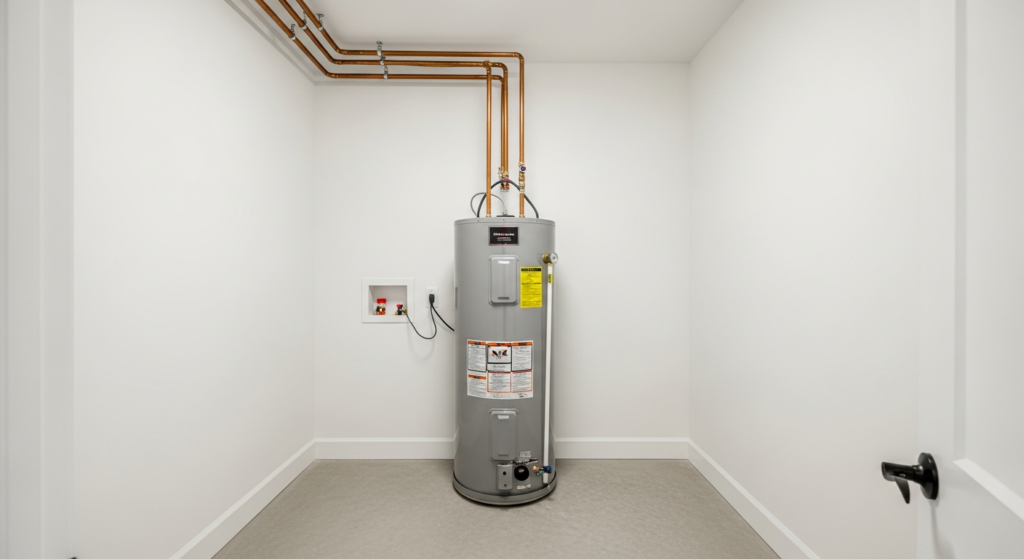




Your water heater works behind the scenes every day, delivering hot water for showers, dishes, and laundry. But like every major appliance, it has a limited lifespan. Knowing how long a water heater lasts helps you plan ahead, budget for replacement, and avoid the unpleasant surprise of a cold shower or a flooded utility room. If the issue persists, consider scheduling water heater replacement with a licensed professional.
In this guide, we break down water heater life expectancy by type, the warning signs that yours is failing, and what you can do to get the most years out of your investment.
Schedule a water heater inspection or call 911 Drain Lines and Plumbing at (714) 909-1723 for expert service across Orange County and the Inland Empire.
How Long Do Different Types of Water Heaters Last?
Not all water heaters are built the same. The type you have in your home is the single biggest factor in how long it will last.
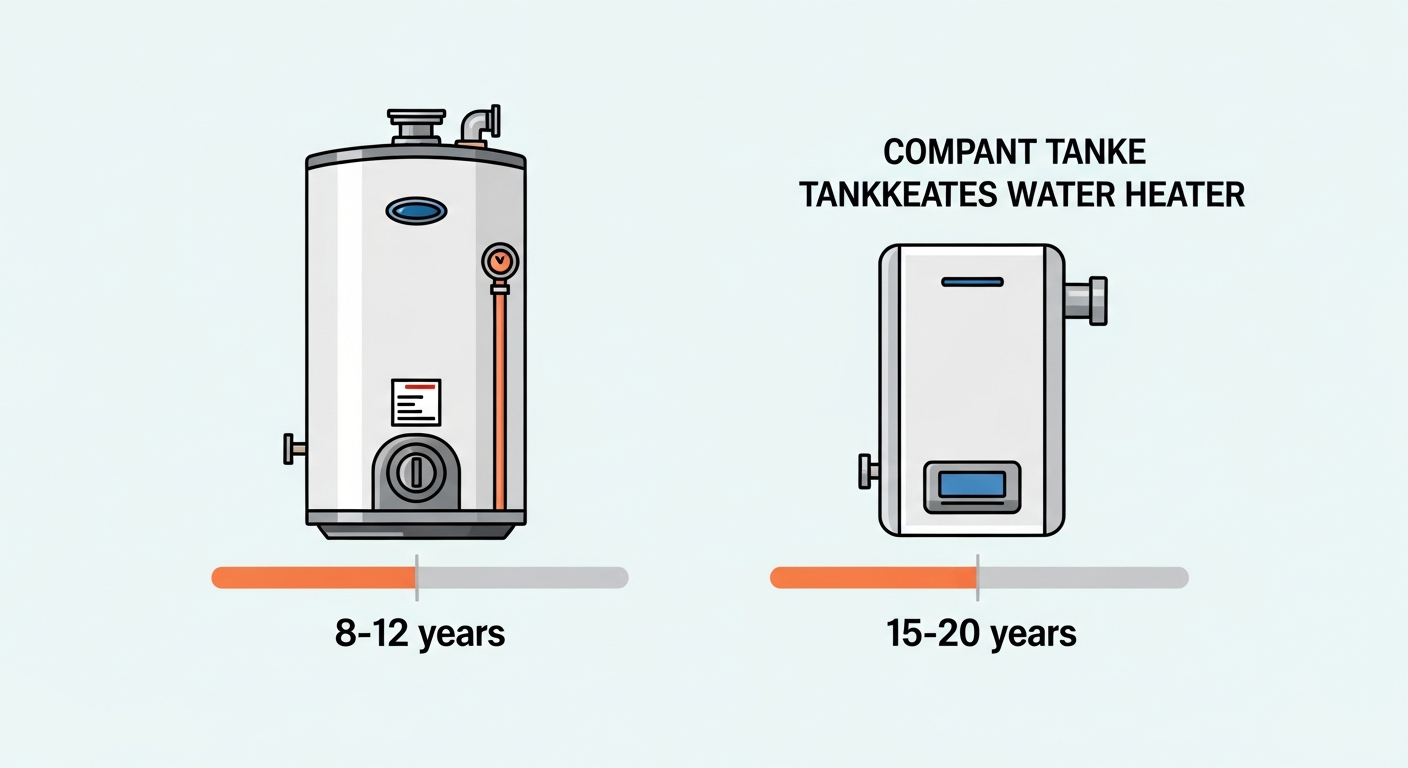
Traditional Tank Water Heaters: 8–12 Years
Conventional storage tank water heaters are the most common type found in Orange County homes. They hold 40 to 80 gallons of hot water and maintain temperature around the clock. Most tank units last 8 to 12 years with proper maintenance.
Tank water heaters are subject to constant thermal cycling and sediment buildup, which gradually corrodes the tank lining. Once the anode rod is depleted and the glass lining begins to crack, leaks are not far behind.
Tankless Water Heaters: 15–20 Years
Tankless (on-demand) water heaters heat water only when you need it. Without a storage tank collecting sediment, these units experience less internal wear. A well-maintained tankless water heater typically lasts 15 to 20 years, sometimes longer. If you are weighing the options, our tankless vs. tank water heater comparison breaks down the pros and cons of each system.
Heat Pump (Hybrid) Water Heaters: 10–15 Years
Heat pump water heaters use electricity to move heat from the surrounding air into the water tank. They are highly efficient but contain more mechanical components than a standard tank unit. Expect 10 to 15 years of service with regular maintenance.
Solar Water Heaters: 15–20 Years
Solar water heaters use rooftop collectors and a storage tank. The collectors themselves can last 20 years or more, but the tank and circulation components typically need replacement. If you need your water heater replaced quickly, learn about same-day water heater installation after 15 to 20 years.
Water Heater Lifespan Comparison Table
| Water Heater Type | Average Lifespan | Key Factor |
|---|---|---|
| Traditional Tank | 8 to 12 years | Sediment buildup and anode rod depletion |
| Tankless (On-Demand) | 15 to 20 years | No stored water reduces internal corrosion |
| Heat Pump (Hybrid) | 10 to 15 years | More mechanical components than tank units |
| Solar | 15 to 20 years | Collectors last longer than tank and pump |
What Are the Signs Your Water Heater Needs Replacing?
Age is not the only indicator. Watch for these warning signs that your water heater is reaching the end of its life:
- Rusty or discolored hot water. Brown or rusty water from only the hot side usually means the tank is corroding internally. Once rust breaks through the lining, a leak is imminent.
- Rumbling or banging noises. Hardened sediment at the bottom of the tank causes the unit to overheat and make loud popping or rumbling sounds. This accelerates wear on the tank walls.
- Leaking around the base. Any pooling water around the base of the unit signals a crack or failed fitting. A leaking water heater should be addressed immediately to prevent water damage.
- Inconsistent or reduced hot water. If showers go cold faster than they used to, the heating element or burner assembly may be failing. Our water heater troubleshooting guide walks you through common causes.
- Frequent repairs. If you are calling for repairs more than once a year, replacement is almost always the more cost-effective path forward.
- Age beyond 10 years (tank) or 18 years (tankless). Even if the unit still works, older water heaters operate far less efficiently and carry a higher risk of sudden failure.
What Factors Affect How Long a Water Heater Lasts?
Two identical water heaters installed on the same day can fail years apart depending on conditions. Here are the key variables:
Water Quality and Hardness
Hard water is common throughout Orange County and the Inland Empire. Mineral-rich water accelerates sediment buildup inside the tank, coats heating elements, and shortens the anode rod’s effective life. Homes with very hard water may see a water heater fail 2 to 3 years earlier than the average.
Maintenance Frequency
Routine water heater maintenance is the single most effective way to extend your unit’s life. Annual flushing removes sediment, and anode rod inspections catch corrosion before it reaches the tank walls. Our step-by-step guide on how to flush a water heater explains the process.
Installation Quality
Proper sizing, correct venting, adequate clearance, and code-compliant connections all matter. A poorly installed water heater may develop problems years before it should. This is why choosing a licensed plumber for water heater installation is critical.
Usage Patterns
A family of five will cycle a water heater far more than a single-person household. Higher demand means more thermal cycling, faster sediment accumulation, and greater wear on components.
Temperature Setting
Running your water heater above 140°F accelerates mineral buildup and increases thermal stress on the tank. The Department of Energy recommends 120°F as the optimal balance of comfort, safety, and efficiency.
How Can You Extend Your Water Heater’s Life?
You cannot make a water heater last forever, but the right maintenance habits can add years to its service life:
- Flush the tank annually. Draining 2 to 3 gallons from the tank removes sediment that insulates the bottom and forces the burner to work harder. See our complete flushing guide for instructions.
- Inspect the anode rod every 2 to 3 years. The anode rod attracts corrosive elements so the tank does not. Replace it when it is more than 50% depleted.
- Check the temperature and pressure (T&P) relief valve. Lift the lever once a year to verify it opens and closes properly. A stuck valve is a safety hazard.
- Insulate the tank and pipes. A tank insulation blanket reduces standby heat loss by up to 25%, especially in unheated garages or basements.
- Keep the area clear. Ensure at least 2 feet of clearance around the unit for ventilation and safe operation.
- Address the pilot light promptly. A pilot light that repeatedly goes out could indicate a thermocouple issue or venting problem that stresses other components.
Should You Repair or Replace Your Water Heater?
Not every problem means you need a new water heater. Here is a general framework:
Repair makes sense when:
- The unit is less than 8 years old (tank) or 12 years old (tankless)
- The issue is a replaceable part (thermostat, heating element, thermocouple)
- The repair cost is less than 50% of replacement cost
- The tank is not leaking
Replace makes sense when:
- The unit is older than 10 years (tank) or 18 years (tankless)
- The tank is cracked or leaking from the body
- You are paying for repairs more than once per year
- Energy bills have spiked due to declining efficiency
- You want to upgrade to a more efficient system
If you are on the fence, a professional inspection can clarify whether repair or replacement is the smarter investment. Call 911 Drain Lines and Plumbing at (714) 909-1723 for an honest assessment.
Water Heater Replacement Cost in Orange County
If you have decided it is time to replace your water heater, knowing what to expect before calling for quotes helps you budget accurately and evaluate proposals with confidence. The costs below reflect current labor and material rates for Orange County and the Inland Empire, with the unit installed and the old unit hauled away.
| Unit Type | Installed Cost Range | Notes |
|---|---|---|
| Tank water heater (gas, 40–50 gal) | $900 – $1,400 | Most common replacement; same-day installation is typically available |
| Tank water heater (electric, 40–50 gal) | $700 – $1,200 | Faster installation; no gas line concerns |
| Tankless water heater (gas, whole-home) | $1,800 – $3,500 | May require gas line upsizing and new venting — adds cost and time |
| Tankless water heater (electric, whole-home) | $1,200 – $2,500 | May require an electrical panel upgrade depending on home amperage |
| Heat pump water heater | $1,500 – $3,000 | Most energy-efficient option; eligible for rebates and tax credits (see below) |
All ranges include labor, standard permit fees, and disposal of the old unit. Costs vary based on brand, access, and whether any modifications to gas, venting, or electrical are required.
Which Type Should You Upgrade To?
If your current water heater is at end of life, it is worth taking a few minutes to decide whether to replace like-for-like or upgrade to a more efficient system. Here is a straightforward breakdown for Orange County homeowners:
Replace with a new tank water heater (same type)
The lowest upfront cost and fastest installation often same day. The right choice if your current setup has worked well, your budget is the priority, or you need hot water restored quickly. Gas tank heaters are the most common replacement throughout Orange County.
Upgrade to a tankless water heater
Tankless units heat water on demand rather than storing it, which means you never run out of hot water during back-to-back showers. They last 15 to 20 years on average — roughly double the lifespan of a tank unit and use 20 to 30 percent less energy. The trade-off is a higher upfront cost and the possibility of needing a gas line upgrade or new venting, which adds to the project timeline. Best suited for larger households or homes where the old tank was consistently undersized.
Upgrade to a heat pump water heater
Heat pump water heaters are the most energy-efficient option available for residential use, operating at up to three times the efficiency of a standard electric tank. They work by pulling heat from the surrounding air rather than generating it directly, which makes them particularly well-suited to Southern California’s mild climate. The upfront cost is higher, but running costs are significantly lower, and several financial incentives currently apply in Orange County:
• Federal tax credit: Under the Inflation Reduction Act (IRA Section 25C), homeowners who install a qualifying heat pump water heater can claim a federal tax credit of up to $600 or 30% of the installed cost, whichever is less.
• Southern California Edison rebate: SCE currently offers rebates on qualifying heat pump water heaters for residential customers amounts vary by model and program year.
• SoCalGas rebate: Customers switching from gas to a heat pump water heater may qualify for additional incentives through SoCalGas efficiency programs.
Heat pump water heaters require adequate space (at least 10 × 10 feet of surrounding air volume) and work best in garages, utility rooms, or other unconditioned spaces. They are not ideal for small interior closets or confined mechanical rooms.
911 Drain Lines and Plumbing installs all three types throughout Orange County and the Inland Empire. Our licensed plumbers can assess your current gas, electrical, and space setup and recommend the most cost-effective option for your home with same-day installation available for standard tank replacements. Call (714) 746-7611 for a free assessment.
Not sure how much life your water heater has left? Call 911 Drain Lines and Plumbing at (714) 909-1723 for a professional assessment.
Frequently Asked Questions
How long does a 50-gallon water heater last?
A standard 50-gallon tank water heater lasts 8 to 12 years on average. With annual flushing and anode rod replacement, some units reach 15 years. Hard water areas like Orange County may see shorter lifespans without regular maintenance.
How do I know how old my water heater is?
Check the serial number on the manufacturer’s label, usually on the side of the tank. Most brands encode the manufacture date in the first four digits. For example, “0618” often means June 2018. You can also search the brand’s website for their serial number decoder.
Can a water heater last 20 years?
Tank water heaters rarely last 20 years, even with perfect maintenance. Tankless water heaters can reach 20 years or more because they do not store water and experience less internal corrosion. If your tank unit is over 15 years old, plan for replacement soon.
Is it worth repairing a 10-year-old water heater?
It depends on the repair. Minor fixes like a thermostat or heating element replacement can be worthwhile if the tank is in good condition. However, if the tank is leaking or you are facing multiple repairs, replacement is usually the better financial decision at that age.
How long do tankless water heaters last compared to tank models?
Tankless water heaters typically last 15 to 20 years, roughly double the lifespan of a conventional tank unit. They require periodic descaling, especially in hard water areas, but their lack of a storage tank eliminates the most common failure point in traditional models.
How Do You Keep Your Water Heater Running Longer?
Your water heater’s lifespan depends on the type of unit, your local water quality, and how well it is maintained. The good news is that routine maintenance can add years to your system and save you from emergency replacements.
If your water heater is showing signs of age or you are unsure how much life it has left, the licensed plumbers at 911 Drain Lines and Plumbing can inspect your unit and give you a straightforward recommendation. We serve homeowners throughout Orange County and the Inland Empire with 24/7 emergency availability.
Call 911 Drain Lines and Plumbing at (714) 909-1723 for water heater inspection, repair, or replacement. If the issue persists, consider scheduling water heater repair with a licensed professional.