



A water heater pilot light that keeps going out is one of the most common water heater problems homeowners face. Without a functioning pilot light, your gas water heater cannot ignite the burner, leaving you with cold showers and no hot water for washing dishes or laundry.
The good news: most pilot light problems have straightforward causes and solutions. In this guide, we will explain what a pilot light does, why it may not stay lit, how to safely relight it, and when it is time to call a licensed plumber for help.
What Is a Water Heater Pilot Light and How Does It Work?
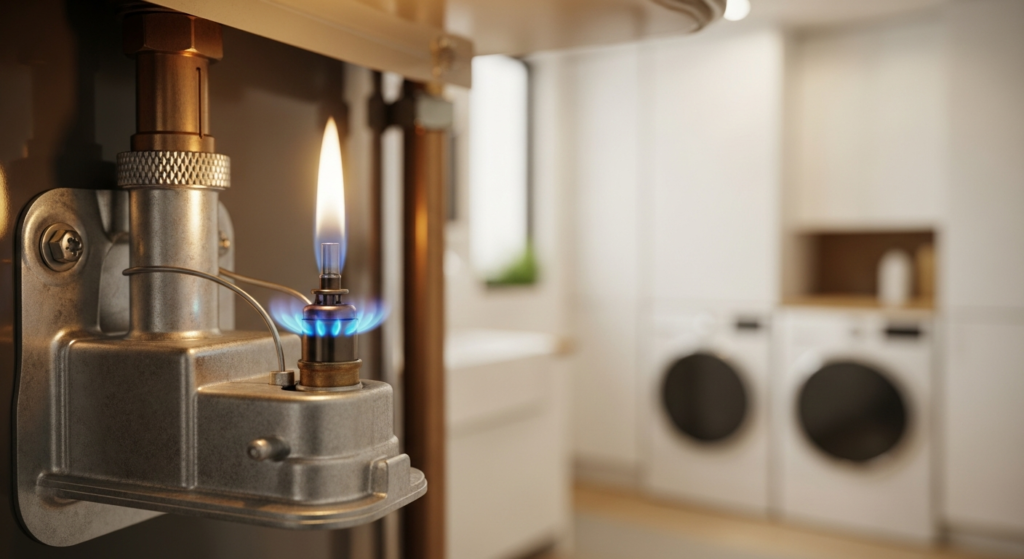
A pilot light is a small, continuously burning flame inside your gas water heater. It serves as the ignition source for the main burner. When your water heater’s thermostat detects that the water temperature has dropped below the set level, the gas valve opens and directs gas to the burner. The pilot light ignites that gas, heating the water in the tank.
The pilot light system includes several key components:
- Pilot tube: A small gas line that feeds fuel to the pilot flame
- Thermocouple: A heat-sensitive safety device positioned in the pilot flame that generates a small electrical current when heated. This current tells the gas valve it is safe to stay open.
- Gas control valve: The main valve that regulates gas flow to both the pilot light and the main burner
- Piezo igniter: A push-button or electronic igniter used to light the pilot (on newer models)
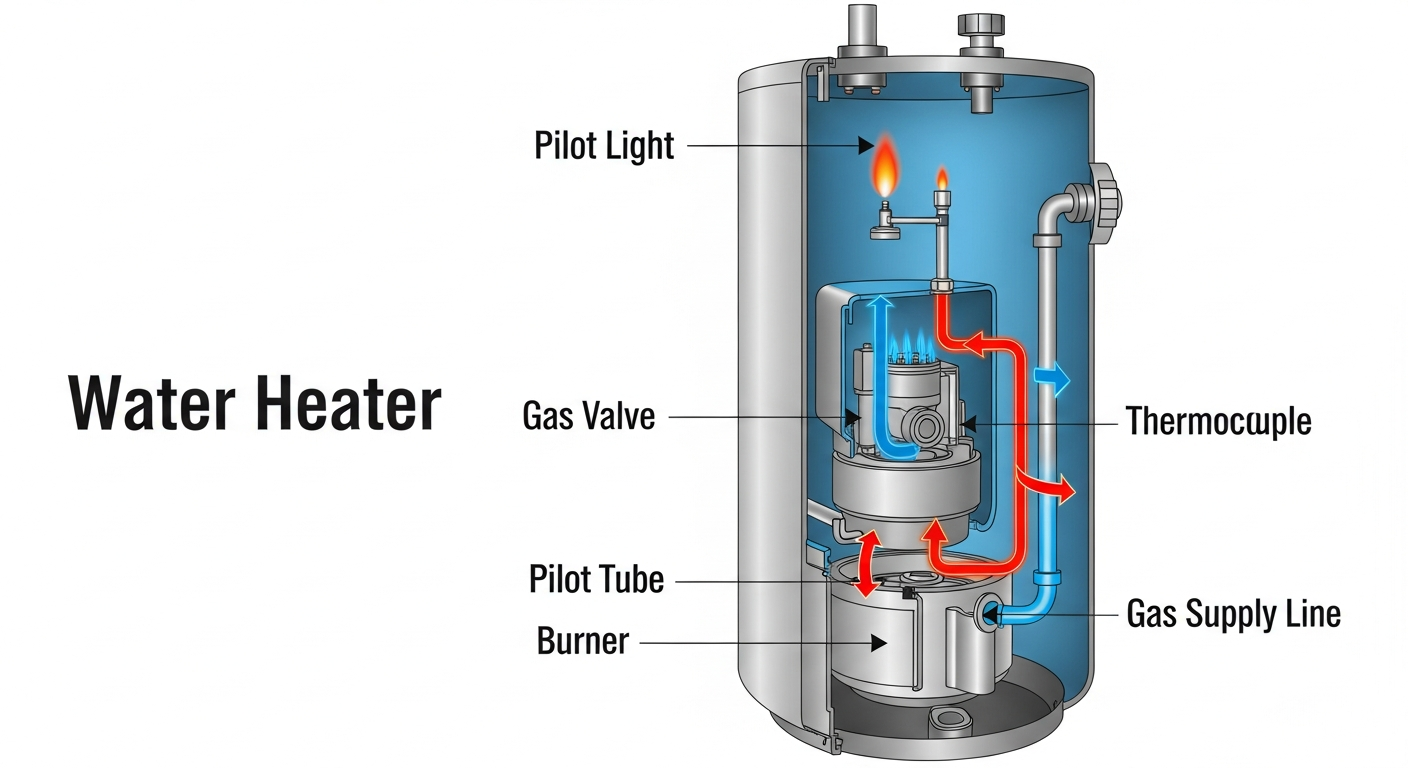
When the pilot light goes out, the thermocouple cools down, stops generating current, and the gas valve closes as a safety measure. This prevents unburned gas from leaking into your home.
Common Reasons Your Water Heater Pilot Light Won’t Stay Lit
If your water heater pilot light won’t stay lit, one of these five issues is almost always the cause.
1. Faulty or Worn Thermocouple
The thermocouple is the number one reason a pilot light refuses to stay lit. Over time, thermocouples degrade from constant heat exposure. When they can no longer generate enough electrical current, they signal the gas valve to shut off, even though the pilot flame is burning.
Signs of a bad thermocouple:
- The pilot lights but goes out within seconds of releasing the control knob
- The thermocouple tip looks corroded, bent, or discolored
- The pilot flame appears to not be touching the thermocouple sensor
2. Dirty or Clogged Pilot Orifice
The pilot orifice is the tiny opening where gas exits to feed the pilot flame. Dust, dirt, and debris can accumulate over time and partially block this opening. A restricted orifice produces a weak, flickering flame that may not adequately heat the thermocouple, causing it to shut off the gas.
Regular water heater maintenance can prevent this buildup and keep your pilot light burning reliably.
3. Gas Supply Issues
If gas is not reaching the pilot assembly, the flame cannot stay lit. Common gas supply problems include:
- The gas shutoff valve near the water heater is partially or fully closed
- Low gas pressure from your utility provider
- An empty or low propane tank (for propane water heaters)
- A kinked or damaged gas flex line
Check that all gas valves in the line are fully open and that other gas appliances in your home are working normally. If no gas appliances are working, contact your gas utility company.
4. Faulty Gas Control Valve
The gas control valve (also called the gas valve or thermostat assembly) regulates gas flow throughout your water heater. If this valve malfunctions, it may fail to supply gas consistently to the pilot or main burner. A faulty gas valve is less common than a thermocouple issue, but it does happen, especially on older units.
If you have already replaced the thermocouple and the pilot still will not stay lit, the gas control valve is the likely culprit. This is a repair that requires a licensed professional. If your water heater is showing multiple problems, it may be time to consider whether your water heater is not working well enough to justify repair versus replacement. For professional assistance, contact our water heater replacement team.
5. Drafts and Ventilation Problems
Strong air currents near your water heater can blow out the pilot light. This is especially common in garages, basements, and utility closets with poor draft protection. Sources of drafts include:
- Open windows or doors near the water heater
- HVAC vents blowing directly on the unit
- Downdrafts from the exhaust flue
- Gaps around the combustion chamber door
If your pilot light only goes out on windy days or when specific doors are open, a draft is the likely cause.
How to Light a Pilot Light on a Water Heater (Step by Step)
If you need to know how to light pilot light on water heater, follow these steps carefully. Always refer to the specific instructions printed on your water heater’s label first, as procedures can vary by manufacturer.
Safety Warning: If you smell gas (a sulfur or rotten egg odor) at any point during this process, STOP immediately. Do not flip any electrical switches, use a phone, or create any spark. Leave your home and call your gas utility company or 911 from a safe location. Gas leaks are extremely dangerous and can cause explosions or carbon monoxide poisoning.
Step 1: Turn Off the Gas
Locate the gas control knob on your water heater (usually on the front, lower section). Turn it to the OFF position. Wait at least five minutes to allow any residual gas in the combustion chamber to dissipate.
Step 2: Access the Pilot Light
Remove the access panel or door at the bottom of the water heater to expose the burner assembly and pilot light. On some newer models, the pilot light is accessible without removing a panel.
Step 3: Set the Knob to Pilot
Turn the gas control knob to the PILOT position. This allows gas to flow only to the pilot tube while keeping the main burner off.
Step 4: Light the Pilot
Press and hold the gas control knob down (or press the separate pilot button, depending on your model). While holding it down:
- If your water heater has a piezo igniter: Click the igniter button repeatedly until the pilot lights.
- If your water heater requires a manual flame: Use a long-reach lighter or fireplace match to ignite the gas at the pilot tube tip.
Step 5: Hold the Knob for 30 to 60 Seconds
Continue holding the gas control knob down for 30 to 60 seconds after the pilot lights. This allows the thermocouple to heat up and generate enough current to keep the gas valve open.
Step 6: Release and Set to On
Slowly release the gas control knob. The pilot flame should remain lit. If it goes out, repeat the process. If it goes out again after two or three attempts, there is likely a component issue (thermocouple, gas valve, or orifice) that needs professional repair.
Turn the gas control knob to the ON position and set your desired temperature. Replace the access panel. You should hear the main burner ignite shortly as the water heater begins heating water.
When to Call a Professional Plumber
While relighting a pilot is something most homeowners can handle, certain situations call for a licensed professional:
- The pilot will not stay lit after multiple relighting attempts. This usually means the thermocouple, gas valve, or another component has failed.
- You smell gas at any point. Leave the area and call your gas utility or 911 immediately.
- The pilot flame is yellow or orange instead of blue. A healthy pilot flame is primarily blue with a small yellow tip. A yellow or orange flame suggests incomplete combustion and possible carbon monoxide production.
- Your water heater is more than 10 to 12 years old. Frequent pilot light issues on an aging unit may signal it is time for a water heater replacement.
- There are signs of water damage or leaking. A pilot light problem combined with a water heater leak requires immediate attention from a professional.
- You are uncomfortable working around gas appliances. There is no shame in calling for help. Gas appliance repairs carry real safety risks.
Preventing Future Pilot Light Problems
Regular maintenance goes a long way toward keeping your water heater running smoothly. Here are practical steps to reduce pilot light issues:
- Schedule annual water heater maintenance. A licensed plumber can inspect the thermocouple, clean the pilot orifice, check gas connections, and flush the tank.
- Keep the area around your water heater clean. Dust and debris can clog the pilot assembly and air intake.
- Protect from drafts. If your water heater is in a garage or exposed area, consider adding a draft shield or relocating it to a more protected spot.
- Replace the thermocouple proactively. Thermocouples are inexpensive parts that wear out over time. Replacing them during routine maintenance can prevent surprise failures.
- Check the pilot flame color. During your regular home checks, glance at the pilot flame. A strong blue flame is healthy. A weak, yellow, or flickering flame means service is needed.
Frequently Asked Questions
Why does my water heater pilot light keep going out?
The most common reason is a worn or faulty thermocouple. The thermocouple is a safety sensor that detects whether the pilot flame is burning. When it fails, it signals the gas valve to shut off the gas supply, causing the pilot light to go out. Other causes include a dirty pilot orifice, drafts near the water heater, or a malfunctioning gas control valve.
Is it dangerous if my water heater pilot light goes out?
A pilot light going out is not immediately dangerous in most modern water heaters because the thermocouple safety mechanism shuts off the gas supply automatically. However, if you smell gas (a rotten egg odor), leave your home immediately, do not use any electrical switches or open flames, and call your gas utility company or 911. Never attempt to relight a pilot when you smell gas.
How much does it cost to fix a water heater pilot light?
The cost varies depending on the underlying issue. A simple relighting may only require a service call fee, while replacing a thermocouple or gas control valve will cost more. Contact a licensed plumber for an accurate diagnosis and estimate based on your specific water heater model and the repair needed.
Can I relight the pilot light on my water heater myself?
Yes, relighting a pilot light is a straightforward task for many homeowners if done safely. Turn the gas knob to the OFF position, wait five minutes for any residual gas to clear, then follow the relighting instructions on your water heater’s label. If the pilot will not stay lit after multiple attempts, or if you smell gas at any point, stop and call a professional plumber.
Need Help With Your Water Heater?
If your water heater pilot light will not stay lit, or you are dealing with any other water heater issue, do not wait for the problem to get worse. Call 911 Drain Lines and Plumbing for fast, reliable water heater repair. Our licensed technicians serve Orange County and the Inland Empire 24/7.
Related: Flush Your Water Heater