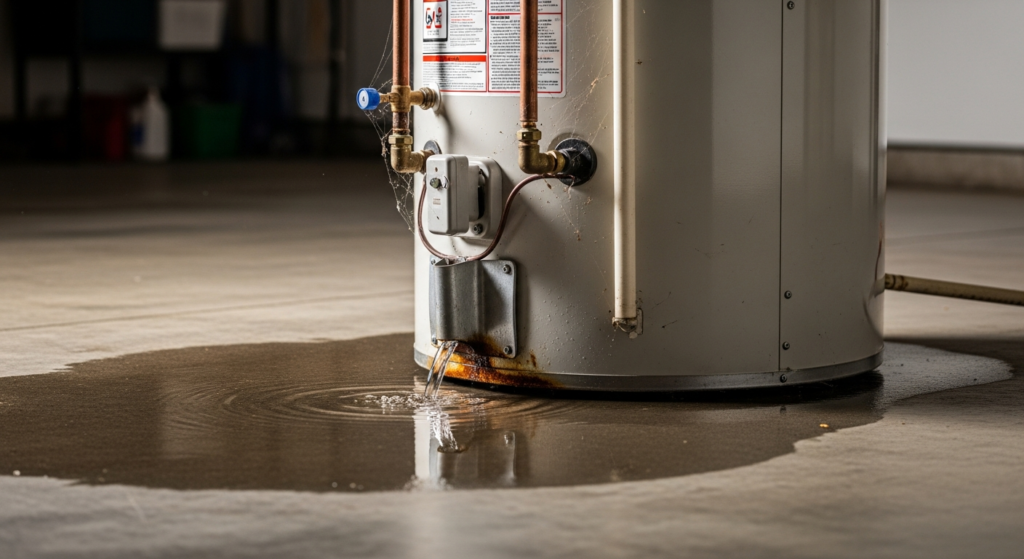




Why Is My Water Heater Leaking from the Bottom?
A puddle of water beneath your water heater is never a good sign. Whether it is a slow drip or a steady stream, a leaking water heater can cause serious water damage to your home if left unchecked. The good news: not every leak means you need a full replacement. Understanding the source helps you decide whether a quick repair or a new unit is the right call. For professional assistance, contact our water heater replacement team.
Below, we break down the most common reasons your water heater is leaking, what you can do right now, and when to call a licensed plumber in Orange County.
Common Causes of a Water Heater Leaking from the Bottom
1. Drain Valve Is Loose or Faulty
The drain valve sits at the base of every tank water heater. It is used to flush sediment during routine maintenance. Over time, the valve can loosen or the internal washer can wear out, creating a slow leak. If you see water dripping directly from the valve spigot, try hand-tightening it a quarter turn. If the drip continues, the valve likely needs replacement.
2. Sediment Buildup and Tank Corrosion
Hard water in Orange County and the Inland Empire leaves mineral deposits inside your tank. When sediment accumulates on the bottom, it creates hot spots that overheat the steel lining. Over months and years, this causes cracking and internal corrosion. Once the tank itself is compromised, replacement is usually the only option.
3. Temperature and Pressure (T&P) Relief Valve Discharge
Every water heater has a T&P relief valve connected to a discharge tube that runs down to the floor. If the water temperature or tank pressure gets too high, the valve opens to prevent an explosion. Water pooling at the base may actually be coming from this valve, not the tank. Common causes include a thermostat set above 120 degrees Fahrenheit or excessive water supply pressure.

4. Internal Tank Failure
Tank water heaters have a glass lining inside the steel shell that prevents rust. When this lining deteriorates, usually after 8 to 12 years, water contacts bare steel and corrosion starts from the inside out. Leaks from internal tank failure typically appear as moisture seeping from the base with no identifiable external source. At this stage, the tank cannot be repaired and needs full replacement.
5. Condensation
Not every puddle means a leak. Cold water entering a hot tank, especially during winter or heavy usage, can produce condensation on the outside of the tank that drips down and pools at the base. This is more common with newer units or after long periods of inactivity. Condensation usually resolves on its own once the tank reaches operating temperature.
What to Do When Your Water Heater Is Leaking
If you discover a leak, follow these steps before calling a plumber:
- Turn off the power. For a gas water heater, turn the gas valve to the “off” or “pilot” position. For an electric unit, switch off the breaker at your electrical panel.
- Shut off the water supply. Close the cold water shutoff valve above the tank. If the valve is stuck or you cannot reach it, shut off your home’s main water supply.
- Identify the source. Wipe the area dry with towels, then wait and watch where the water reappears. Check the drain valve, T&P valve discharge tube, and all fittings.
- Minimize damage. Place towels or a shallow pan under the leak. If water is spreading, use a wet/dry vacuum.
- Call a licensed plumber. Even if the leak seems minor, a professional inspection can identify whether a repair or replacement is needed.
Repair vs. Replacement: Which Do You Need?
The right choice depends on the leak’s source and your unit’s age:
- Drain valve leak: Repairable. A plumber can tighten or replace the valve in under an hour.
- T&P valve discharge: Repairable. The valve itself may need replacement, or the thermostat may need adjustment.
- Inlet/outlet fitting leak: Repairable. Fittings can be tightened or reconnected.
- Internal tank corrosion: Replacement required. Once the tank wall is breached, it cannot be patched.
- Unit older than 10 years with recurring issues: Replacement recommended. Modern units are 10% to 20% more energy efficient, which offsets the upfront installation cost over time.
If you are unsure, a professional water heater inspection will give you a clear answer. 911 Drain Lines and Plumbing offers 24/7 emergency water heater service across Orange County and the Inland Empire. Call (714) 746-7611 for same-day diagnosis.
How Long Does a Water Heater Last?
The average tank water heater lasts 8 to 12 years. Tankless units can last 15 to 20 years with proper maintenance. Factors that shorten lifespan include hard water, lack of annual flushing, high thermostat settings, and corrosive environments like unventilated garages.
If your unit is approaching or past the 10-year mark and showing signs of leaking, investing in a new water heater is almost always more cost-effective than repeated repairs. If a tankless model interests you, find out what you’ll pay for a tankless upgrade before making your decision.
Preventing Water Heater Leaks
Regular maintenance significantly extends the life of your water heater and helps prevent leaks:
- Flush the tank annually. This removes sediment buildup that causes corrosion and hot spots.
- Inspect the anode rod every 2 to 3 years. The anode rod attracts corrosive elements to protect the tank lining. Replace it when it is more than 50% depleted.
- Test the T&P valve once a year. Lift the lever briefly. Water should flow freely through the discharge tube and stop when you release it.
- Check for drips regularly. A monthly visual inspection catches small leaks before they become emergencies.
- Keep the thermostat at 120 degrees Fahrenheit. Higher settings increase pressure and accelerate wear.
Frequently Asked Questions
Is a leaking water heater dangerous?
A small leak is not immediately dangerous, but it can cause mold growth, structural water damage, and higher utility bills if ignored. A gas water heater leak near the burner can also create a fire risk. Address any leak promptly.
Can I still use my water heater if it is leaking?
It depends on the severity. A minor drip from the drain valve may be safe temporarily. However, if water is pooling rapidly or coming from the tank body, turn off the unit and call a plumber immediately.
How much does it cost to fix a leaking water heater?
Simple valve replacements typically cost $100 to $300. If the tank itself is corroded and needs replacement, the total cost ranges from $1,000 to $3,500 depending on the unit type and installation requirements. A licensed plumber can give you an accurate estimate after inspection.
Should I replace my water heater if it is leaking from the bottom?
If the leak is from the tank body due to internal corrosion, yes. If the leak is from a valve or fitting, a repair is usually sufficient. Your plumber can help you make the right decision based on the unit’s age and condition.
Does homeowners insurance cover water heater leaks?
Most homeowners insurance policies cover water damage caused by a sudden water heater failure, but not the replacement of the unit itself. Check your policy for specific coverage details.
Related: Repair Vs Replacement
If your water heater is not working properly, making unusual noises, or leaking, do not wait for the problem to get worse. Call 911 Drain Lines and Plumbing at (714) 746-7611 for 24/7 emergency service in Orange County, the Inland Empire, and surrounding areas.