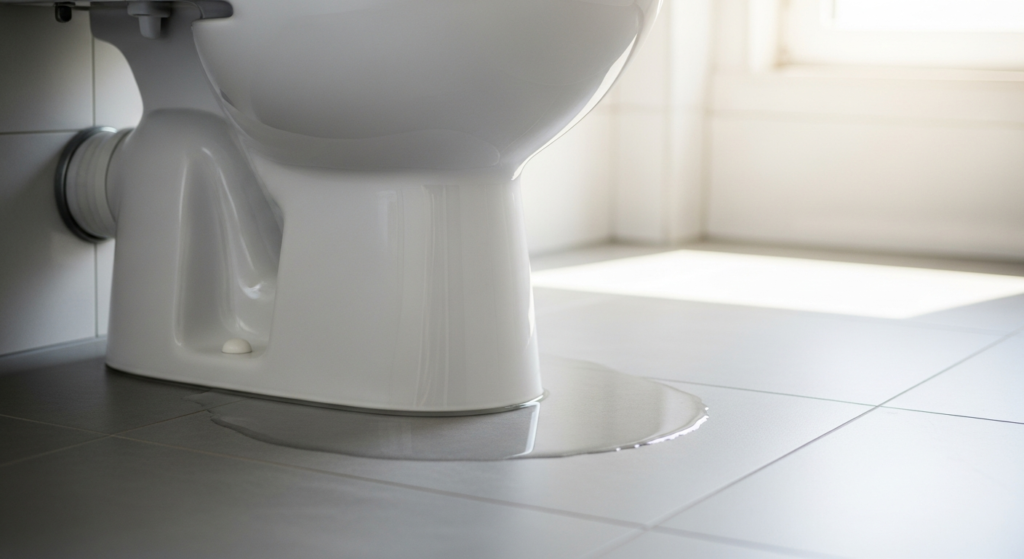




Finding water pooling around the bottom of your toilet is more than just an annoyance. A toilet leaking at base can damage your bathroom flooring, promote mold growth, and lead to costly structural repairs if left unchecked. The good news? Most toilet base leaks have straightforward causes, and many homeowners can diagnose the problem themselves before deciding whether to tackle the repair or call a professional.
In this guide, we cover the five most common reasons your toilet is leaking from the bottom, the tools you need for each fix, step-by-step repair instructions, and clear guidelines on when it is time to call a licensed plumber.
Why Is My Toilet Leaking from the Bottom?
When you notice water leaking from the base of toilet, the source is almost always one of these five culprits:
- Worn wax ring — the most common cause
- Loose tee bolts (closet bolts)
- Cracked toilet base
- Condensation (not actually a leak)
- Faulty water supply line
Let’s walk through each cause in detail so you can pinpoint exactly what is going on with your toilet.
1. Worn or Damaged Wax Ring
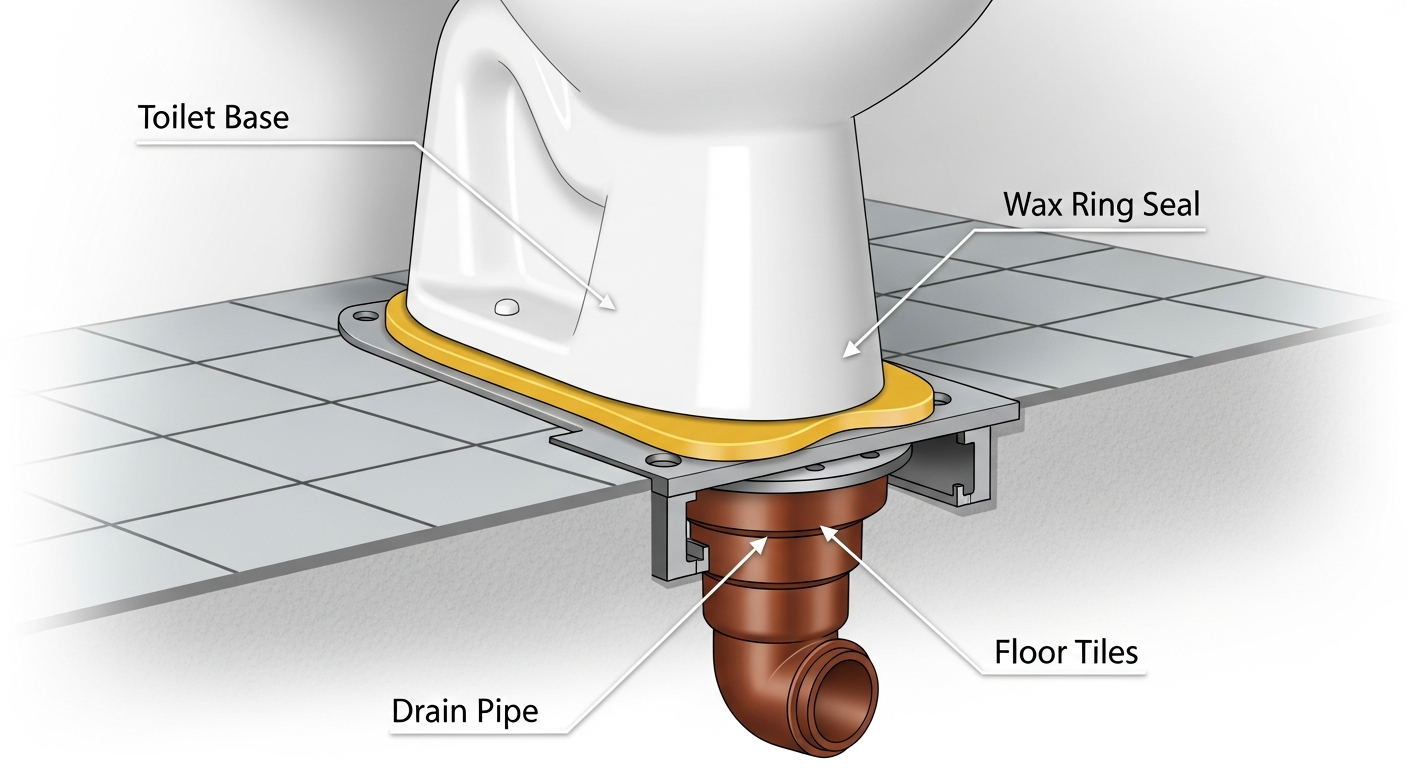
The wax ring sits between the bottom of the toilet and the floor flange (the pipe fitting that connects to your drain). Its job is to create a watertight seal so waste and water flow directly into the drain line, not onto your floor.
Over time, wax rings dry out, compress, or shift if the toilet rocks even slightly. When the seal breaks, you get a toilet base leak every time you flush.
Signs It’s the Wax Ring
- Water appears only after flushing
- You notice a faint sewer smell near the toilet
- The toilet rocks or wobbles when you sit on it
How to Replace a Wax Ring
Tools and materials needed: adjustable wrench, putty knife, new wax ring (standard or extra-thick), rubber gloves, towels, bucket, and a sponge.
- Turn off the water supply by twisting the shut-off valve (usually located on the wall behind the toilet) clockwise. If you are unsure how to do this, check our guide on how to turn off water to your house.
- Flush and empty the tank. Hold the flush handle down to drain as much water as possible, then sponge out any remaining water from the tank and bowl.
- Disconnect the supply line from the bottom of the tank using your wrench. Have a towel or bucket ready for residual water.
- Remove the tee bolts. Pop off the decorative caps at the base of the toilet, then unscrew the nuts. If the bolts spin, grip them with pliers while loosening the nut.
- Lift the toilet straight up and set it on a towel or old blanket nearby. Toilets weigh 50 to 80 pounds, so ask for help if needed.
- Scrape away the old wax ring from the flange and the bottom of the toilet using a putty knife. Inspect the flange for cracks or corrosion.
- Press the new wax ring onto the flange (or onto the toilet horn, depending on the ring style). Make sure it is centered over the drain opening.
- Lower the toilet straight down onto the flange bolts. Press down firmly and evenly to compress the new wax ring. Do not rock the toilet.
- Hand-tighten the tee bolt nuts, then snug them with a wrench. Alternate sides to apply even pressure. Do not overtighten; porcelain cracks easily.
- Reconnect the supply line, turn on the water, let the tank fill, and flush several times. Check around the base for any leaks.
If you are comfortable removing a toilet, this is a project most DIY homeowners can handle in about an hour. For a deeper walkthrough, see our guide on how to install a toilet, which covers the same removal and reinstallation process.
2. Loose Tee Bolts (Closet Bolts)
Tee bolts (also called closet bolts) anchor the toilet to the floor flange. If these bolts loosen over time, the toilet can shift and break the wax ring seal, causing water leaking from the base of toilet after each flush.
Signs It’s the Tee Bolts
- The toilet rocks or wobbles noticeably
- You can see gaps between the toilet base and the floor
- Tightening the bolts stops the leak temporarily
How to Fix Loose Tee Bolts
Tools needed: adjustable wrench or socket set, plastic shims (optional).
- Pop off the decorative bolt caps at the base of the toilet.
- Using an adjustable wrench, tighten each bolt a quarter turn at a time, alternating sides.
- Stop tightening as soon as the toilet feels secure. Over-tightening can crack the porcelain base.
- If the toilet still wobbles after tightening, slide plastic shims under the base to level it, then trim the excess with a utility knife.
- Flush a few times and check for leaks at the base.
If tightening the bolts does not stop the leak, the wax ring likely needs replacement as well (see section above).
3. Cracked Toilet Base
A crack in the porcelain base of the toilet can allow water to seep out every time the bowl fills. Cracks happen from age, impact (dropping something heavy), or over-tightening the tee bolts.
Signs It’s a Cracked Base
- Water appears constantly, not just after flushing
- You can see a visible hairline crack on the outside of the bowl
- The leak persists even after replacing the wax ring
How to Fix a Cracked Toilet Base
Unfortunately, a cracked toilet base cannot be reliably repaired. Epoxy may slow the leak temporarily, but the only permanent solution is replacing the toilet. If you are replacing the entire unit, you will also install a new wax ring at the same time. Our toilet installation guide walks through the full process.
4. Condensation (Not an Actual Leak)
Before tearing apart your toilet, rule out condensation. In humid climates like Southern California’s coastal areas, cold water filling the tank can cause moisture from the surrounding air to condense on the outside of the bowl and drip down to the base. It looks exactly like a toilet leaking around base, but the toilet itself is fine.
Signs It’s Condensation
- The outside of the tank and bowl feels wet or damp to the touch
- Water appears even when the toilet has not been flushed recently
- The “leak” is worse on humid days or after hot showers
How to Fix Toilet Condensation
- Improve bathroom ventilation. Run the exhaust fan during and for 15 minutes after showers.
- Use a toilet tank liner kit (an insulating foam that sticks to the inside of the tank to reduce the temperature difference).
- Check the flapper valve. A running toilet continuously cycles cold water through the tank, making condensation worse. Fixing a running toilet can solve the moisture issue entirely.
5. Faulty Water Supply Line
The braided supply line that connects your shut-off valve to the toilet tank can develop leaks at either connection point or along the line itself. Water drips down the back of the toilet and pools at the base, mimicking a toilet base leak.
Signs It’s the Supply Line
- Water drips from the connection at the tank or the shut-off valve
- The supply line feels wet or shows mineral buildup at the fittings
- Water appears at the back of the toilet base rather than evenly around it
How to Fix a Leaking Supply Line
Tools needed: adjustable wrench, plumber’s tape (Teflon tape), replacement supply line (if damaged).
- Turn off the shut-off valve and flush the toilet to empty the tank.
- Dry the connection points and check if the leak comes from the valve end, the tank end, or the line itself.
- If the connection is loose, tighten it gently with a wrench. Wrap the threads with plumber’s tape first for a better seal.
- If the line itself is cracked or corroded, replace it with a new braided stainless steel supply line (available at any hardware store for under $10).
- Turn the water back on and check for drips.
Tools Checklist for Toilet Base Leak Repair
Before starting any repair, gather these tools so you do not have to stop mid-project:
- Adjustable wrench
- Channel-lock pliers
- Putty knife
- Rubber gloves
- Bucket and old towels
- Sponge
- New wax ring (standard or extra-thick)
- Plastic shims
- Plumber’s tape (Teflon tape)
- Replacement supply line (if needed)
When to Call a Plumber
While many toilet leaking at base repairs are DIY-friendly, some situations require a licensed plumber:
- The floor flange is cracked or corroded. Replacing a flange involves working with the drain pipe and may require cutting into the floor.
- The subfloor is damaged. If water has been leaking for a while, the plywood beneath the tile may be rotted, soft, or warped.
- You replaced the wax ring but it still leaks. This could indicate a deeper issue with the drain line alignment or flange height.
- You smell sewer gas. A persistent sewer odor means waste gases are escaping, which is a health concern that should be addressed quickly.
- The toilet has a cracked base. Replacing a toilet involves proper installation to avoid future leaks.
If you are dealing with a toilet that will not flush in addition to a base leak, or suspect a blockage further down the line, try to unclog a toilet yourself first. If the problem persists, a professional can run a sewer camera inspection to check the full drain system.
Our water leak detection services use advanced equipment to pinpoint the exact source of any plumbing leak, saving you time and guesswork. For professional assistance, contact our residential plumbing services team.
Call 911 Drain Lines and Plumbing at (714) 909-1723 for toilet repair and plumbing services in Orange County. We offer 24/7 emergency service and can diagnose your toilet leak fast.
Frequently Asked Questions
Is a toilet leaking at the base an emergency?
It depends. If the leak is small and only happens after flushing, you have time to plan the repair. However, if water is pooling rapidly or you smell sewer gas, turn off the water supply and call a plumber right away to prevent water damage and health risks.
How much does it cost to replace a toilet wax ring?
A wax ring itself costs between $5 and $15 at most hardware stores. If you hire a plumber, expect to pay between $150 and $300 for the complete replacement, including labor. The repair typically takes less than an hour.
Can I use my toilet if it is leaking at the base?
You can use it temporarily, but every flush sends more water onto your floor. Prolonged leaking damages subflooring, encourages mold growth, and can weaken the structural support around the toilet. Fix the issue as soon as possible.
Why does my toilet leak at the base only when flushed?
A leak that occurs only during flushing almost always points to a failed wax ring. The rush of water during a flush pushes past the broken seal. Between flushes, there is not enough water pressure to force water past the damaged ring.
How often should a toilet wax ring be replaced?
Wax rings do not have a set replacement schedule. A properly installed wax ring can last 20 to 30 years. However, if the toilet is removed for any reason (remodeling, repairs), you should always install a new wax ring when resetting it. If the toilet wobbles, replace the ring immediately regardless of age.