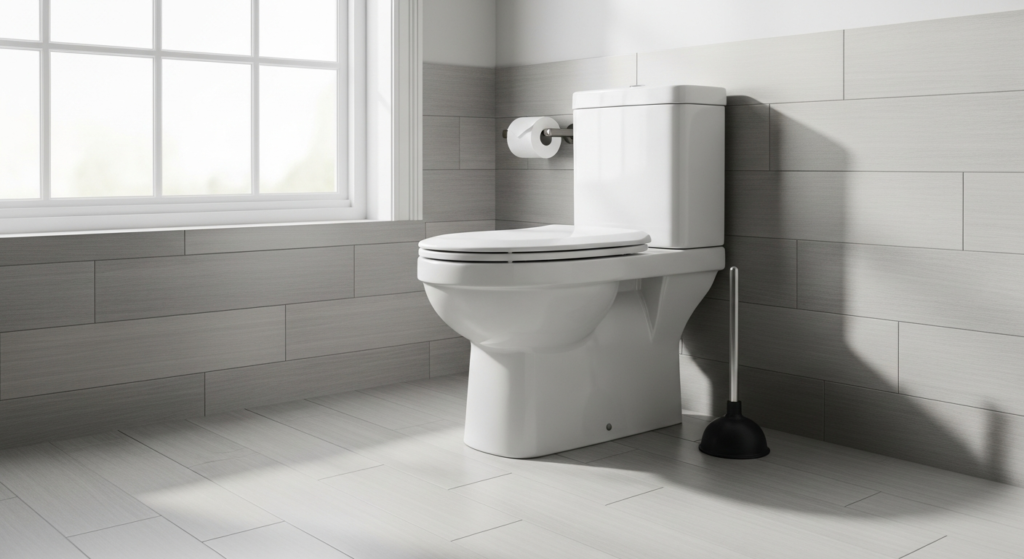




A clogged toilet is one of those household problems that always seems to happen at the worst time. Whether it is a holiday gathering, a busy weekday morning, or late at night, knowing how to unclog a toilet quickly can save you from an embarrassing, messy situation.
The good news: most toilet clogs are easy to fix yourself with the right technique. Below, we cover seven proven methods, from a basic plunger technique to when it is time to call a professional plumber.
Why Toilets Get Clogged
Before jumping into fixes, it helps to understand what causes toilet clogs in the first place:
- Too much toilet paper — The most common cause. Thick or excessive toilet paper bunches up and blocks the drain.
- Non-flushable items — Wipes (even those labeled “flushable”), feminine hygiene products, cotton balls, and paper towels do not break down in water.
- Low-flow toilet issues — Older low-flow models sometimes lack the pressure to push waste through the trap.
- Blocked drain line — If your toilet clogs frequently, the problem may be deeper in the sewer line.
- Hard water buildup — Mineral deposits narrow the drain passage over time.
Method 1: Use a Plunger (the Right Way)
A plunger is the go-to tool for unclogging a toilet, but technique matters. Many people use the wrong type of plunger or the wrong motion.
Steps:
- Use a flange plunger — The kind with the rubber extension (flange) that folds out from the cup. This creates a much better seal in the toilet bowl than a flat cup plunger.
- Create a seal — Insert the plunger at an angle to fill the cup with water (not air). Place it firmly over the drain opening.
- Plunge with steady, controlled strokes — Push down and pull up firmly, keeping the seal intact. Do 15 to 20 strokes.
- Check the drain — Remove the plunger and see if the water drains. If not, repeat.
Pro tip: Running the plunger under hot water for a minute before use softens the rubber and creates a better seal.
Method 2: Hot Water and Dish Soap
This method works well for minor clogs caused by organic waste and toilet paper.
- Squirt a generous amount of liquid dish soap into the toilet bowl.
- Heat a pot or kettle of water to just below boiling. Do not use boiling water, as it can crack porcelain.
- Carefully pour the hot water into the bowl from waist height to create pressure.
- Wait 10 to 15 minutes. The soap lubricates the clog while the hot water breaks it apart.
- Flush. The clog should clear.
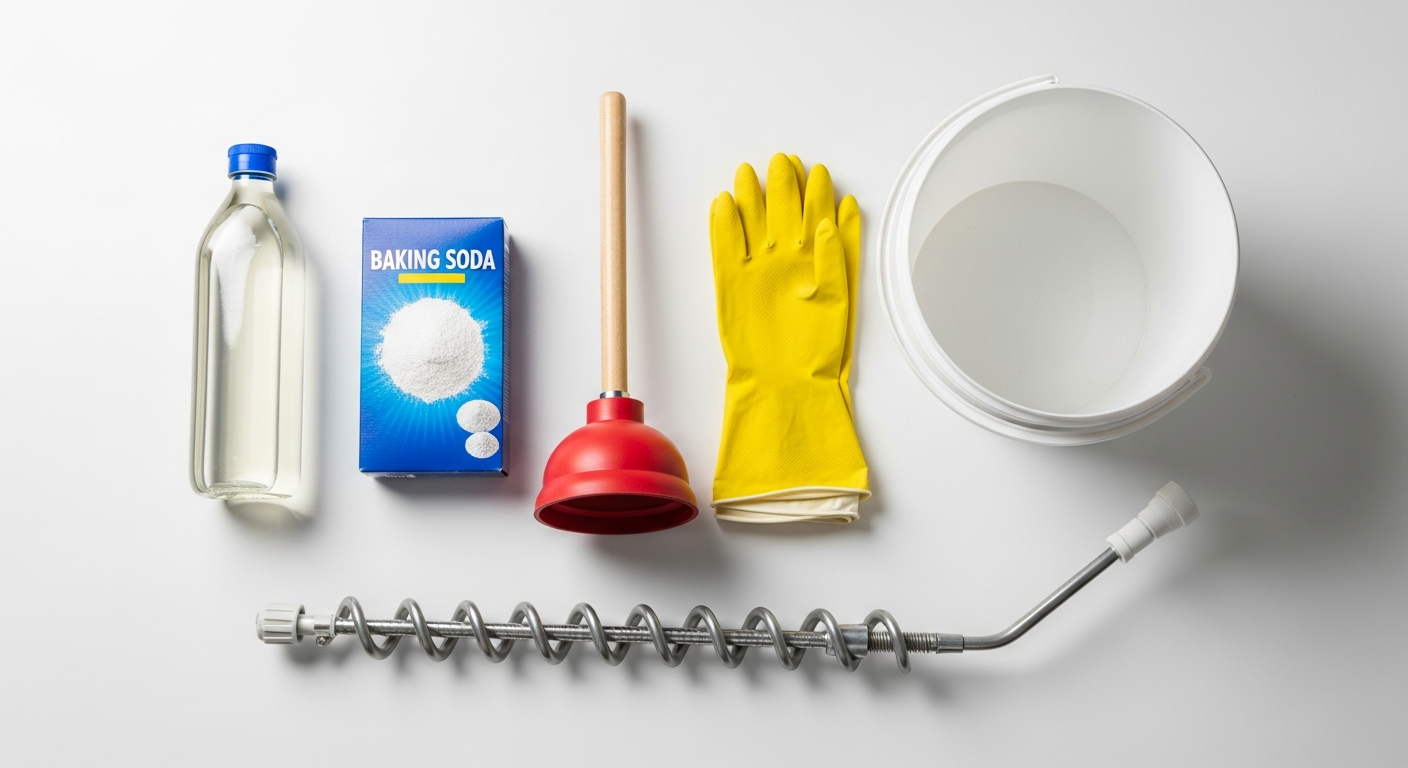
Method 3: Baking Soda and Vinegar
This classic DIY combination creates a fizzing reaction that can break up soft clogs.
- If the bowl is full, remove some water with a cup or container.
- Pour one cup of baking soda into the toilet bowl.
- Slowly add two cups of white vinegar. It will fizz; that is normal.
- Let the mixture sit for 30 minutes to an hour.
- Follow up with hot (not boiling) water and flush.
This method works best on organic clogs and is a good option if you do not have a plunger handy.
Method 4: Use a Toilet Auger (Closet Auger)
A toilet auger, also called a closet auger, is a specialized drain snake designed specifically for toilets. It has a protective rubber coating that will not scratch the porcelain.
- Insert the auger into the bowl with the curved end going into the drain.
- Crank the handle clockwise while pushing the cable forward.
- When you feel resistance, you have reached the clog. Keep cranking to break it up or hook it.
- Pull the auger back slowly, then flush to test.
A toilet auger costs $15 to $40 at any hardware store and handles clogs that a plunger cannot reach.
Method 5: Wet/Dry Vacuum Method
If you have a wet/dry shop vacuum (not a regular vacuum), this can be very effective:
- Set the vacuum to liquids mode.
- Vacuum out the water from the bowl.
- Insert the hose into the drain opening and create a tight seal with an old towel around it.
- Turn the vacuum on. The suction can pull the clog back out.
Important: Never attempt this with a regular household vacuum. Only use a wet/dry shop vac.
Method 6: Enzyme-Based Drain Cleaner
For organic clogs (waste and toilet paper), enzyme-based drain cleaners are a safer alternative to chemical drain cleaners.
- Pour the recommended amount into the bowl.
- Let it sit overnight (these products work slowly).
- Flush in the morning.
Avoid chemical drain cleaners like Drano in toilets. They can damage the wax ring, corrode older pipes, and create dangerous fumes. Enzyme cleaners break down organic material without harsh chemicals.
Method 7: Call a Professional Plumber
Some clogs are beyond DIY methods. Call a professional if:
- You have tried multiple methods and the toilet still will not drain.
- Multiple drains in your home are clogged at the same time (this points to a main sewer line clog).
- Water is backing up into other fixtures (tub, shower, or sink).
- You notice sewage smells coming from drains.
- The toilet clogs repeatedly, even after successful clearing.
A licensed plumber can use a sewer camera inspection to see exactly what is causing the problem and recommend the right fix, whether that is hydro jetting, drain snaking, or a more involved repair.
What NOT to Do When Your Toilet Is Clogged
- Do not keep flushing — If the first flush does not work, stop. Repeated flushing will overflow the bowl and flood your bathroom.
- Do not use a wire hanger — It can scratch and damage the porcelain permanently.
- Do not pour chemical drain cleaner in the bowl — As mentioned, it can damage pipes and the wax seal.
- Do not ignore recurring clogs — Frequent clogs are a symptom of a bigger issue in the drain line.
How to Prevent Toilet Clogs
- Use less toilet paper per flush — If you need a lot, flush halfway through.
- Never flush anything except toilet paper and waste — No wipes, cotton swabs, dental floss, or paper towels.
- Clean your toilet regularly — A weekly cleaning helps prevent buildup.
- Consider a toilet upgrade — Modern high-efficiency toilets have much better flush power than older low-flow models.
- Schedule periodic drain cleaning — Professional drain cleaning every 1 to 2 years prevents buildup in the line.
Frequently Asked Questions
Will a clogged toilet unclog itself?
Sometimes. If the clog is caused by toilet paper and organic waste, it may dissolve on its own after several hours. However, waiting is risky because the toilet could overflow. It is better to actively clear the clog.
Can I use Drano to unclog a toilet?
No. Drano and similar chemical drain cleaners are not designed for toilets. They can damage the wax ring seal, corrode pipes, and create toxic fumes, especially if mixed with other cleaning products. Use a plunger, auger, or enzyme cleaner instead.
How much does it cost to have a plumber unclog a toilet?
Professional toilet unclogging typically costs $100 to $300. The price depends on the severity of the clog and the method required. A simple snake job is on the lower end; a camera inspection and hydro jetting for a deeper blockage will cost more.
Why does my toilet keep clogging?
Recurring clogs usually indicate one of these problems: a partial blockage in the drain line, tree root intrusion into the sewer pipe, a low-flow toilet with insufficient flush power, or a venting issue in the plumbing system. A sewer camera inspection can pinpoint the exact cause.
Need Help With a Stubborn Clog?
If DIY methods are not working, or you are dealing with frequent clogs, it is time to call in a professional. 911 Drain Lines & Plumbing provides 24/7 emergency drain cleaning services throughout Orange County and the Inland Empire.
Related: Snake Your Drain
Related: Fix A Running Toilet
Call (714) 746-7611 for fast, reliable service.