



A clogged main sewer line is one of the most serious plumbing emergencies a homeowner can face. Unlike a single slow drain, a main line blockage affects every fixture in your home and can cause raw sewage to back up through floor drains, bathtubs, and toilets.
Knowing the warning signs, common causes, and repair options can save you thousands of dollars and prevent major property damage. This guide covers everything Orange County homeowners need to know about main sewer line clogs.
What Is a Main Sewer Line?
Your main sewer line is the large pipe (typically 4 to 6 inches in diameter) that carries all wastewater from your home to the municipal sewer system or septic tank. Every drain in your house, from kitchen sinks to toilets to washing machines, connects to this single line through a network of smaller branch drains.
When this main line gets clogged, wastewater has nowhere to go. It backs up through the lowest drains first, then progressively affects the rest of your plumbing system.
7 Warning Signs of a Main Sewer Line Clog
Catching a main line clog early can prevent sewage backups and expensive emergency repairs. Watch for these warning signs:
1. Multiple Drains Are Slow or Backed Up
When more than one drain in your home runs slowly at the same time, the problem is likely in the main line rather than in individual branch pipes. Pay special attention if drains on different floors are both affected.
2. Gurgling Sounds from Drains or Toilets
Air trapped by a blockage in the main line creates gurgling or bubbling noises in drains and toilets. If you hear gurgling when running the washing machine or dishwasher, this is a strong indicator of a main line problem.
3. Sewage Odor in Your Home or Yard
A functioning sewer system is airtight except for vent stacks on the roof. If you smell sewage inside your home, in the basement, or near your yard’s sewer cleanout, it suggests a clog or break in the main line.
4. Water Backs Up in Unexpected Places
Flushing a toilet causes water to come up in the bathtub. Running the washing machine causes the kitchen sink to overflow. These cross-drain backups are a hallmark sign of a main sewer line blockage.
5. Wet Spots or Lush Patches in Your Yard
A cracked or broken sewer line can leak wastewater into the surrounding soil. You might notice unusually green grass, soggy spots, or even sinkholes along the path of your sewer line.
6. Frequent Drain Clogs
If you find yourself constantly plunging toilets or clearing slow drains despite regular maintenance, a partial blockage in the main line may be the underlying cause.
7. Sewage Backup Through Floor Drains
This is the most obvious and serious sign. When raw sewage comes up through basement or garage floor drains, your main sewer line is almost certainly blocked and needs immediate professional attention.
Common Causes of Main Sewer Line Clogs
Understanding what causes main line clogs helps you prevent them. Here are the most common culprits in Orange County homes, from Irvine to Newport Beach:
Tree Root Intrusion
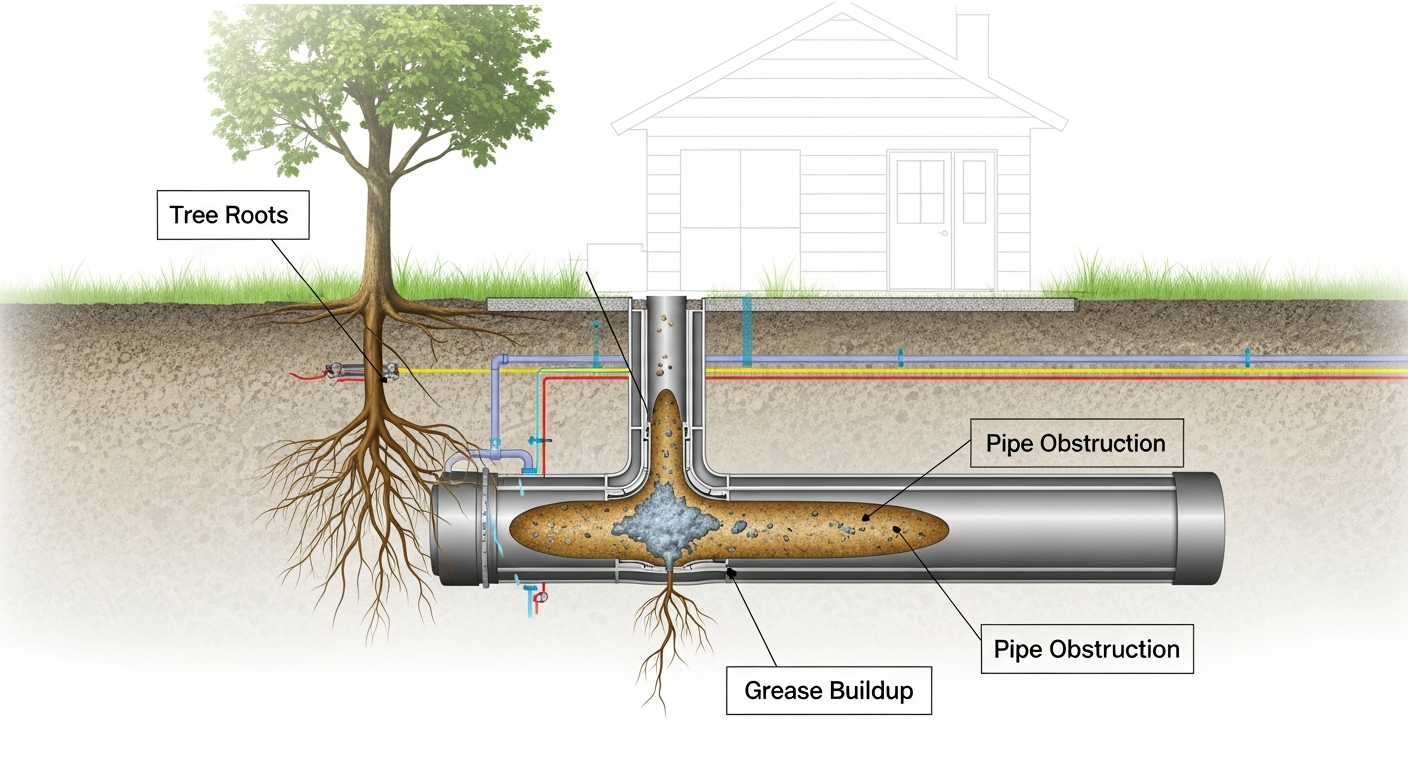
Tree roots are the number one cause of main sewer line clogs in Southern California. Roots naturally seek moisture and can infiltrate even tiny cracks or joints in your sewer pipe. Once inside, they grow rapidly and create dense blockages that trap debris and grease.
Grease and Fat Buildup
Cooking grease, oils, and fats poured down kitchen drains solidify as they cool inside the sewer line. Over time, these deposits narrow the pipe diameter and eventually create a complete blockage. This is especially common in older homes with cast iron pipes.
Flushing Non-Flushable Items
So-called “flushable” wipes, feminine hygiene products, paper towels, and cotton swabs do not break down like toilet paper. These items accumulate in the main line and create stubborn clogs that snaking alone may not resolve.
Pipe Deterioration and Collapse
Many Orange County homes built before 1970 have clay or Orangeburg (bituminous fiber) sewer pipes. These materials degrade over decades, leading to cracks, bellies (sagging sections), and eventual collapse, all of which cause persistent clogs.
Soil Shifting and Settling
Southern California’s clay-heavy soil expands when wet and contracts when dry. This movement can shift sewer pipes out of alignment, creating low spots (bellies) where waste accumulates and eventually blocks the line.
How Professionals Clear a Main Sewer Line Clog
DIY solutions like chemical drain cleaners are ineffective and potentially damaging for main line clogs. Here is how licensed plumbers diagnose and fix the problem:
Sewer Camera Inspection
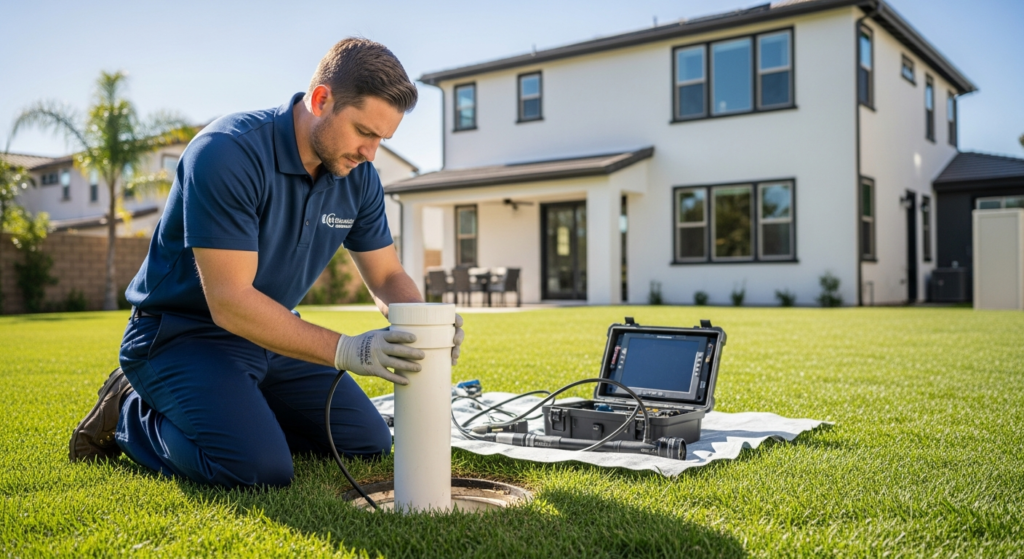
A waterproof camera is fed through the sewer cleanout into the main line. This reveals the exact location, cause, and severity of the blockage, whether it is roots, grease, a collapsed pipe, or an offset joint. Sewer camera inspection eliminates guesswork and ensures the right repair approach.
Mechanical Snaking (Augering)
A motorized auger with a cutting head is fed into the sewer line to break through moderate clogs. This method works well for soft blockages like grease buildup and minor root intrusion. For main lines, professionals use heavy-duty machines with cables rated for 4- to 6-inch pipes.
Hydro Jetting
Hydro jetting uses high-pressure water (typically 3,000 to 4,000 PSI) to scour the interior walls of the sewer pipe. It removes grease, scale, roots, and debris far more thoroughly than snaking. Hydro jetting is the gold standard for main line cleaning because it restores the pipe to near-original diameter.
Trenchless Sewer Repair
If the camera inspection reveals pipe damage (cracks, bellies, or collapse), trenchless sewer replacement can restore the line without excavating your entire yard. Methods include pipe lining (cured-in-place pipe) and pipe bursting, which pulls a new pipe through the old one while breaking the damaged pipe apart.
Main Sewer Line Clog Prevention Tips
Prevent future clogs with these proven maintenance practices:
- Schedule annual sewer camera inspections to catch root intrusion and buildup before they cause backups.
- Never pour grease down drains. Collect cooking oil in a container and dispose of it in the trash.
- Only flush toilet paper. Keep a wastebasket in the bathroom for wipes, cotton products, and hygiene items.
- Install root barriers if you have trees planted near your sewer line.
- Consider preventive hydro jetting every 1 to 2 years, especially if your home has older pipes or nearby trees.
- Know where your sewer cleanout is. This makes professional service faster and more affordable when you need it.
When to Call a Professional
Call a licensed plumber immediately if you experience any of these situations:
- Sewage backing up through any drain in your home
- Multiple drains are slow or clogged at the same time
- Persistent sewage odors despite clean drains and traps
- Standing water around the sewer cleanout in your yard
- Previous main line clogs that keep recurring
A sewer camera inspection is the fastest way to identify the exact problem and determine the right solution.
Frequently Asked Questions
How much does it cost to clear a main sewer line clog?
Main sewer line clearing typically costs between $150 and $800 depending on the method used and the severity of the clog. Basic snaking runs $150 to $300, while hydro jetting costs $350 to $800. If the line needs repair or replacement, costs can range from $1,500 to $8,000 or more depending on the extent of damage and the method used.
Can I clear a main sewer line clog myself?
Minor clogs near the cleanout can sometimes be addressed with a rented drain snake, but most main line clogs require professional equipment. Chemical drain cleaners should never be used on main sewer lines, as they can damage pipes and are ineffective against roots. For safety and to avoid making the problem worse, professional service is recommended.
How long does it take to clear a main sewer line?
Professional snaking typically takes 1 to 2 hours. Hydro jetting takes 2 to 4 hours depending on the length and condition of the line. If pipe repair or replacement is needed, the timeline extends to 1 to 3 days for trenchless methods.
Why does my main sewer line keep clogging?
Recurring main line clogs usually indicate an underlying structural issue such as tree root intrusion, a bellied (sagging) pipe section, or deteriorated pipe material. A sewer camera inspection can reveal the root cause so you can address it permanently rather than repeatedly clearing symptoms.
Get Your Main Sewer Line Inspected Today
If you are experiencing signs of a main sewer line clog, do not wait for a full backup. 911 Drain Lines and Plumbing provides 24/7 sewer line repair and drain cleaning services across Orange County and the Inland Empire. Our licensed plumbers use advanced camera inspection and hydro jetting to diagnose and resolve main line problems fast.
Contact us or call to schedule a sewer camera inspection and get your drains flowing again.