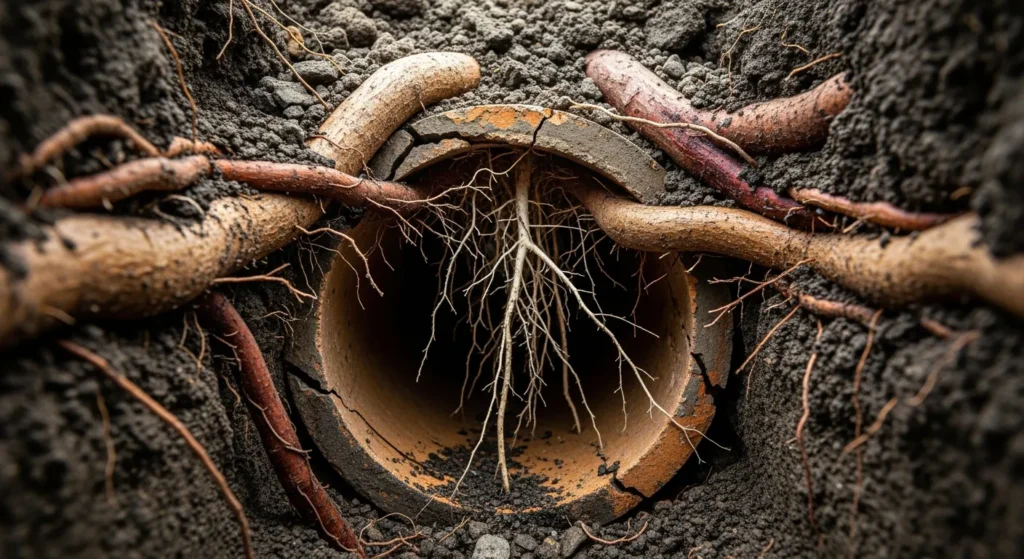




Tree roots in your sewer line are one of the most common and destructive plumbing problems homeowners face in Orange County. Roots naturally seek out moisture, and the small cracks or joints in your sewer pipes create the perfect entry point. Once inside, they grow rapidly, catching debris, blocking flow, and eventually cracking or collapsing the pipe entirely. If you have noticed slow drains, gurgling sounds, or sewage backups, root intrusion could be the cause.
The good news is that tree root sewer damage is both treatable and preventable. In this guide, we will walk you through the warning signs of tree roots in your sewer line, the most effective removal methods, and what you can do to keep roots from coming back.
Need sewer line help? Contact 911 Drain Lines or call (714) 657-5767 for a free camera inspection.
How Do Tree Roots Get Into Sewer Lines?
Tree roots are naturally drawn to three things: water, nutrients, and oxygen. Your sewer line provides all three. Even a tiny crack, loose joint, or small gap in your pipe is enough for a hair-thin root to find its way inside.
Once a root enters the pipe, it encounters a steady supply of water and organic matter. This accelerates growth dramatically. Within months, a single root can expand into a dense mass that fills the pipe’s interior. The roots act like a net, catching grease, paper, and other debris that flows through the line. This creates blockages that get worse over time.
Older homes in Orange County are especially vulnerable because many still have clay or cast iron sewer pipes. These materials are more prone to cracking and joint separation than modern PVC. If your home was built before the 1980s and you have large trees near your sewer line, root intrusion is a significant risk.
Common tree species in Southern California that cause sewer problems include:
- Ficus trees (extremely aggressive root systems)
- Willow trees
- Magnolia trees
- Elm trees
- Sycamore trees
- Eucalyptus trees
What Are the Warning Signs of Tree Roots in Your Sewer Line?
Root intrusion sewer problems rarely appear overnight. The signs develop gradually, and catching them early can save you thousands in repair costs. Here is what to watch for:
Slow drains throughout the house. If multiple drains are slow at the same time, the problem is likely in your main sewer line rather than individual drain branches. Tree roots partially blocking the main line will slow flow from every fixture.
Gurgling sounds from toilets or drains. When roots create a partial blockage, air gets trapped in the pipe. This produces gurgling or bubbling noises, especially after flushing a toilet or running a washing machine.
Recurring clogs. If you clear a clog with drain cleaning and it comes back within a few weeks, roots are a likely culprit. Mechanical cleaning temporarily cuts through the roots, but they grow back quickly.
Sewage odors in the yard or house. A root-damaged pipe can leak sewage into the surrounding soil. If you smell rotten eggs or sewage near your home, the sewer line may be compromised.
Patches of extra-green grass. Sewage leaking from a cracked pipe fertilizes the soil above it. If one patch of your lawn is noticeably greener or more lush than the rest, the sewer line below may be damaged.
Sewage backups. In advanced cases, roots completely block the pipe. When this happens, wastewater has nowhere to go and backs up through the lowest drains in your home, typically floor drains, showers, or ground-floor toilets.
Sinkholes or depressions in the yard. Severe root damage can cause pipes to collapse, which creates voids in the soil. Over time, these voids cause the ground above to sink or shift.
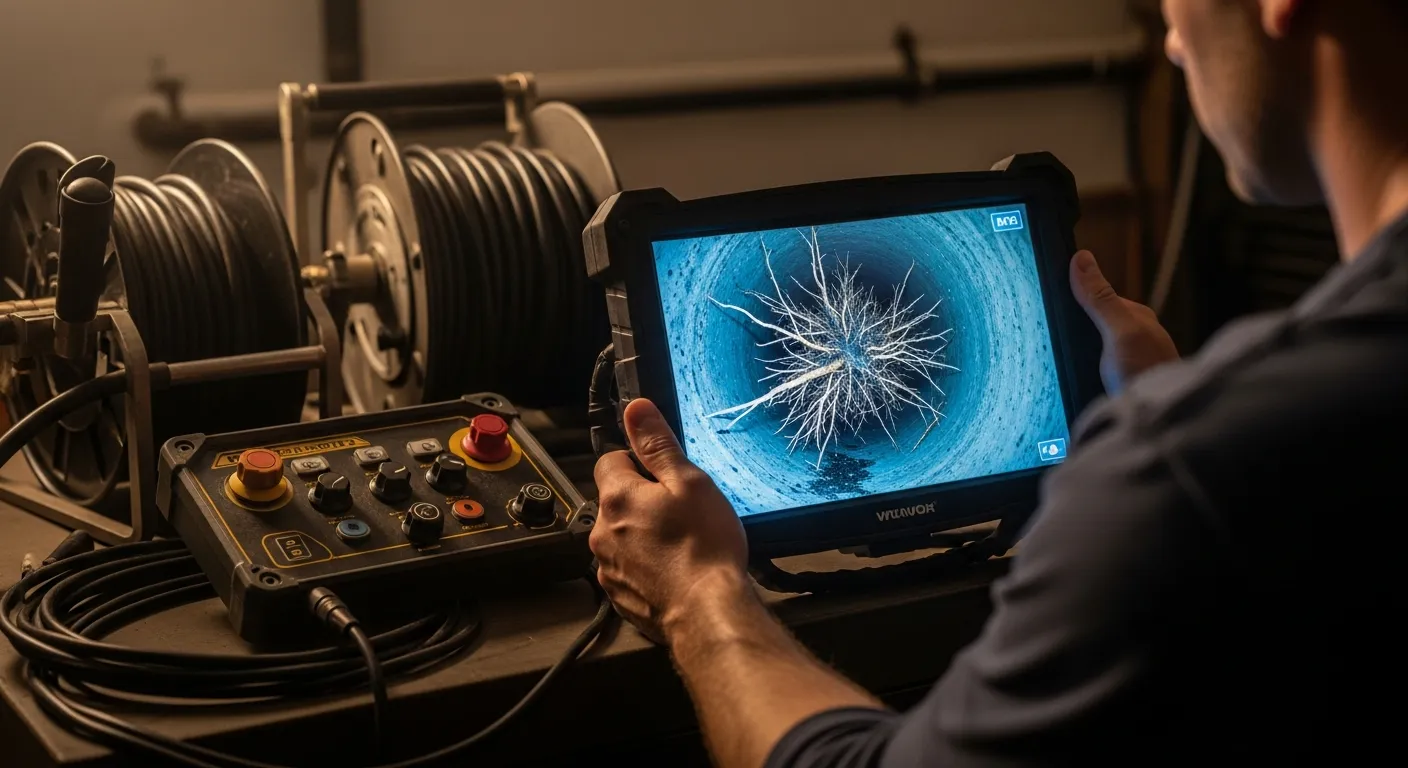 Sewer camera inspection screen showing tree roots inside a drain pipe during video pipe inspection” width=”1024″ height=”576″ class=”aligncenter size-full” />
How Can You Confirm Tree Roots Are in Your Sewer Line?
The only way to confirm root intrusion is with a sewer camera inspection. A licensed plumber feeds a waterproof camera through your sewer cleanout into the line and views the interior in real time on a monitor. This reveals the exact location and severity of root growth, along with any pipe damage.
A camera inspection also identifies the pipe material, the type of joints, and any other issues like bellied sections, offsets, or corrosion. This information is critical for choosing the right repair method.
At 911 Drain Lines, we recommend a camera inspection before any root removal work. Cutting roots blindly without understanding the pipe’s condition can make the problem worse, especially if the pipe is already cracked or collapsed.
What Are the Best Methods to Remove Tree Roots From a Sewer Line?
There are several proven methods to remove tree roots from a sewer line. The right choice depends on the severity of the root intrusion, the condition of the pipe, and your budget. Here is a comparison of the most common options:
| Method | Effectiveness | Cost Range | Duration | Best For |
|---|---|---|---|---|
| Mechanical Rooter (Auger) | Moderate | $150 to $450 | Temporary (3 to 12 months) | Minor root intrusion, quick clearing |
| Hydro Jetting | High | $350 to $800 | Longer-lasting (1 to 3 years) | Moderate root growth, grease buildup |
| Chemical Root Killer | Low to Moderate | $10 to $50 (DIY) | Slow (weeks to months) | Preventive maintenance only |
| Pipe Relining (CIPP) | Very High | $4,000 to $10,000 | Permanent (50+ years) | Cracked pipes with root damage |
| Pipe Bursting | Very High | $3,000 to $8,000 | Permanent (50+ years) | Collapsed or severely damaged pipes |
Mechanical Rooter (Auger)
A mechanical rooter uses a rotating metal cable with a cutting head to slice through roots inside the pipe. It is the fastest and most affordable option, but it is also temporary. The roots will grow back because the entry points remain open. Most homeowners who rely on rooter service need it repeated every 6 to 12 months.
Hydro Jetting
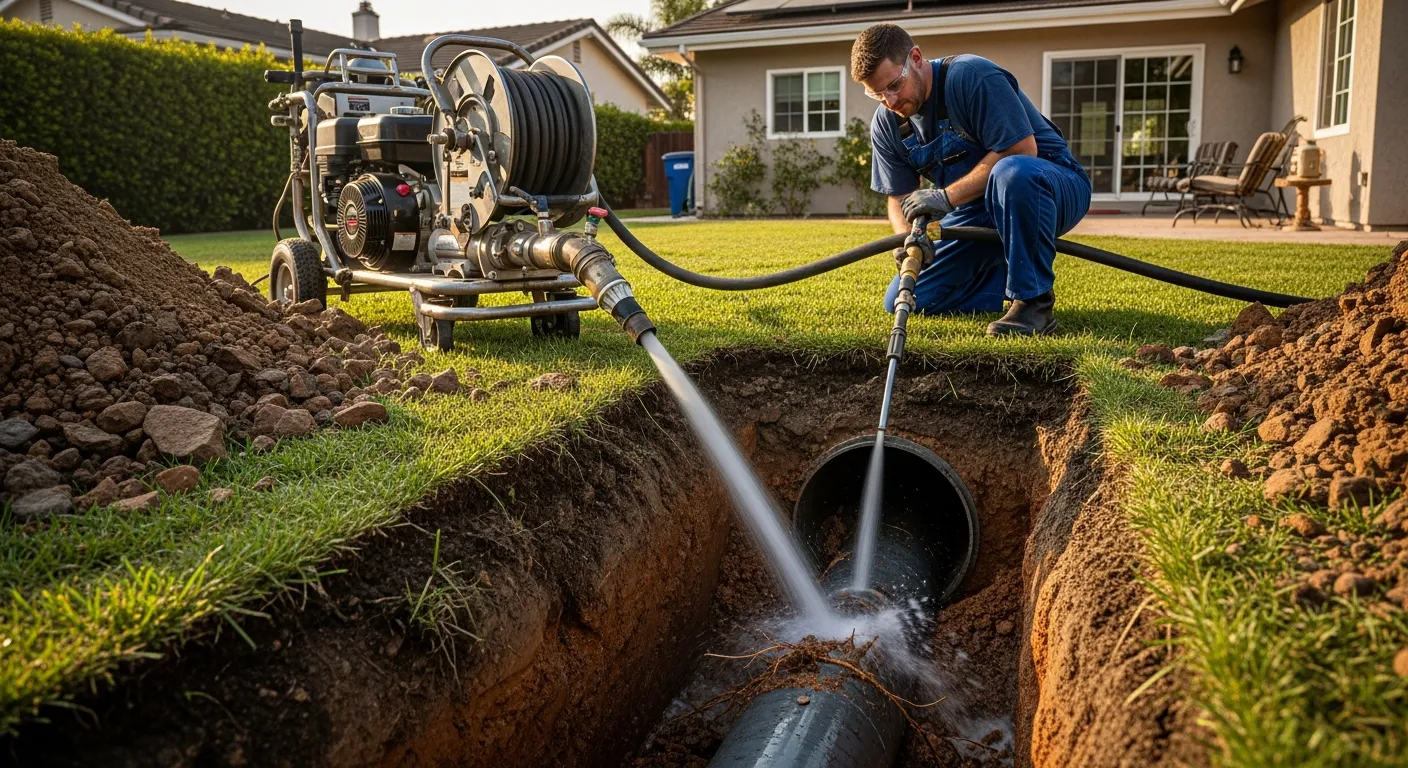
Hydro jetting uses water pressure of up to 4,000 PSI to blast roots, grease, and debris out of the pipe. It is more thorough than a mechanical rooter because it scours the entire interior of the pipe, not just the center. Hydro jetting is effective for moderate root growth and also clears scale, grease, and mineral buildup. However, it requires a camera inspection first to ensure the pipe is structurally sound enough to handle the pressure.
Chemical Root Killer
Chemical root killers (copper sulfate or foaming root killers) are available at most hardware stores. They work by killing roots on contact inside the pipe. However, they are slow-acting, inconsistent, and do not remove dead root material from the line. Chemical treatments work best as a preventive measure after professional root removal, not as a standalone solution.
Pipe Relining (Cured-in-Place Pipe)
Trenchless pipe relining creates a new pipe inside your existing pipe. A flexible liner coated with epoxy resin is inserted into the damaged sewer line and inflated. Once the resin cures, it forms a seamless, jointless pipe within the old one. This eliminates the entry points that roots use to get in and provides a permanent fix without excavation.
Pipe Bursting
When the existing pipe is too damaged or collapsed for relining, pipe bursting is the next option. A bursting head is pulled through the old pipe, breaking it apart while simultaneously pulling a new HDPE pipe into place. Like relining, pipe bursting is a trenchless method that avoids digging up your yard. Learn more about sewer line replacement costs to understand your options.
Should You Repair or Replace a Sewer Line With Root Damage?
This is one of the most important questions homeowners face. The answer depends on three factors: the extent of the damage, the pipe material, and long-term cost.
If the pipe is structurally intact with just root intrusion at the joints, cleaning followed by relining is usually the most cost-effective solution. You clear the roots, then seal the pipe so they cannot return.
If the pipe is cracked, collapsed, or bellied in multiple locations, replacement is the better long-term investment. Continuing to clear roots from a failing pipe is like putting a bandage on a broken bone. You will spend more on repeated rooter calls than a one-time replacement would cost.
A camera inspection gives you the data to make this decision. At 911 Drain Lines, we always show homeowners the camera footage so they can see the condition of their pipe firsthand.
How Can You Prevent Tree Roots From Entering Your Sewer Line?
Prevention is always cheaper than repair. Here are the most effective strategies to keep tree roots in drain pipes from becoming a recurring problem:
Know where your sewer line runs. Before planting any trees or large shrubs, find out where your sewer line is located. Also locate your sewer cleanout so plumbers can access the line quickly if needed. Your city may have utility maps, or a plumber can locate the line with a camera and transmitter.
Choose slow-growing, small-rooted trees. If you are planting near a sewer line, choose species with less aggressive root systems. Palm trees, crepe myrtles, and most ornamental fruit trees are safer choices for Southern California landscapes.
Install root barriers. Physical root barriers are sheets of heavy-duty material buried vertically between trees and your sewer line. They redirect root growth downward and away from the pipe.
Upgrade to PVC or HDPE pipe. Modern plastic pipes have fewer joints and are more resistant to root penetration than clay or cast iron. If you are already replacing a section of your sewer line, upgrading the material is a smart long-term investment.
Schedule regular camera inspections. An annual or biannual sewer camera inspection catches root growth early. Homeowners in Irvine can schedule a sewer camera inspection in Irvine for fast service, before it becomes a major blockage. Early detection means simpler, less expensive treatment.
Use preventive root treatments. After professional root removal, periodic application of copper sulfate or foaming root killer can slow regrowth. This is a supplement to professional maintenance, not a replacement.
Schedule a sewer camera inspection with 911 Drain Lines or call (714) 657-5767 today. We will identify root problems before they turn into emergencies.
Frequently Asked Questions About Tree Roots in Sewer Lines
How much does it cost to remove tree roots from a sewer line?
The cost depends on the method used. A mechanical rooter typically costs $150 to $450, while hydro jetting ranges from $350 to $800. Permanent solutions like pipe relining or pipe bursting cost $3,000 to $10,000 but eliminate the problem for 50+ years. A sewer camera inspection helps determine which method is right for your situation.
Can tree roots grow back after they are removed from a sewer line?
Yes. If you only clear the roots without sealing the entry points, they will grow back. Mechanical rooter and hydro jetting remove existing roots but do not prevent regrowth. Pipe relining or replacement is the only way to permanently stop root intrusion by eliminating the joints and cracks that roots exploit.
Will homeowners insurance cover tree root damage to a sewer line?
In most cases, standard homeowners insurance does not cover tree root damage to sewer lines. Insurance policies typically exclude gradual damage and maintenance-related issues. Some policies offer optional sewer line coverage as a rider. Check with your insurance provider for your specific coverage details.
How far should trees be planted from a sewer line?
As a general rule, trees should be planted at least 10 feet away from sewer lines. Large, fast-growing species with aggressive root systems (like ficus, willow, or elm) should be planted at least 20 to 30 feet away. Installing a root barrier provides additional protection if you cannot maintain sufficient distance.
How long does it take for tree roots to damage a sewer line?
Root intrusion can begin within a year of a tree being planted near a sewer line, but significant blockages typically develop over 3 to 5 years. In older clay pipes with loose joints, damage can progress faster. Regular camera inspections catch root growth early before it causes backups or pipe failure.