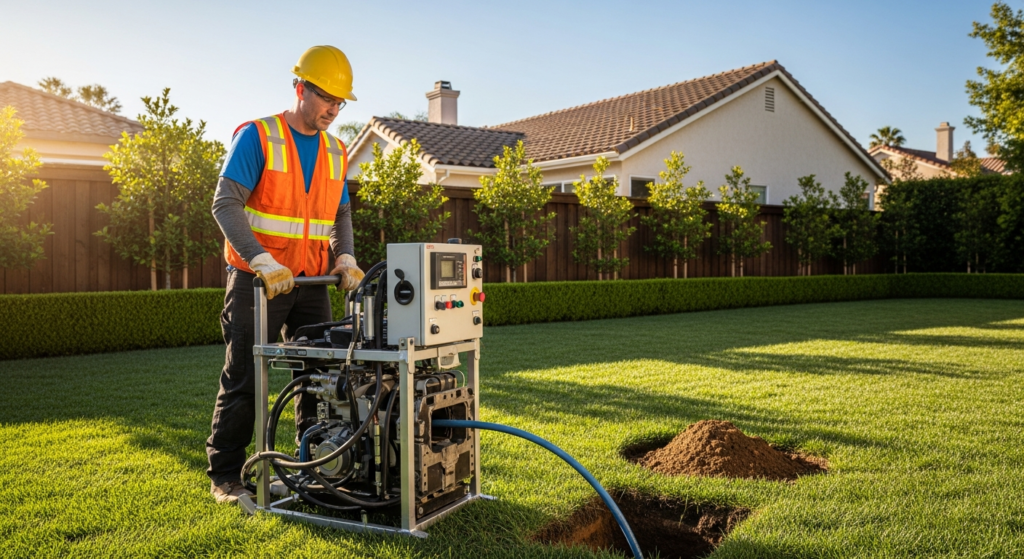




When your sewer line fails, the traditional fix involves digging up your entire yard to reach the buried pipe. That means torn-up landscaping, destroyed driveways, and weeks of disruption. Trenchless sewer repair eliminates most of that headache by fixing or replacing underground pipes with minimal excavation — often through just one or two small access points.
At 911 Drain Lines and Plumbing, we specialize in trenchless technology for homeowners across Orange County, including Irvine and Newport Beach, and the Inland Empire. This guide covers everything you need to know: how trenchless pipe repair works, what it costs, when it makes sense, and when it doesn’t.
What Is Trenchless Sewer Repair?
Trenchless sewer repair is a modern plumbing method that fixes damaged underground pipes without digging a full trench along the pipe’s path. Instead of excavating your entire yard, technicians access the pipe through small entry and exit points. This is part of modern residential plumbing services available — typically 4-foot access pits at each end of the damaged section.
This no-dig approach has been used in municipal infrastructure for decades and is now the preferred method for residential sewer line repair and replacement. It works on most pipe materials, including clay, cast iron, PVC, and orangeburg, and can handle pipes ranging from 2 to 6 inches in diameter for residential applications.
Two Main Methods: Pipe Lining vs. Pipe Bursting
There are two primary trenchless techniques used for residential sewer repair. The right one depends on the condition of your existing pipe and the type of damage.
Trenchless Pipe Lining (CIPP — Cured-in-Place Pipe)
Trenchless pipe lining creates a brand-new pipe inside your existing one. Here’s the step-by-step process:
- Camera inspection: A sewer camera inspection maps the damage and confirms pipe lining is viable.
- Pipe cleaning: The existing pipe is cleaned with hydro jetting to remove roots, debris, and buildup.
- Liner preparation: A flexible felt or fiberglass liner is saturated with a two-part epoxy resin.
- Liner insertion: The resin-coated liner is pulled or inverted into the damaged pipe using air pressure or water.
- Curing: The liner is inflated against the pipe walls and cured using hot water, steam, or UV light, hardening into a smooth, jointless pipe-within-a-pipe.
- Final inspection: Another camera inspection verifies the liner is properly seated with no wrinkles or gaps.
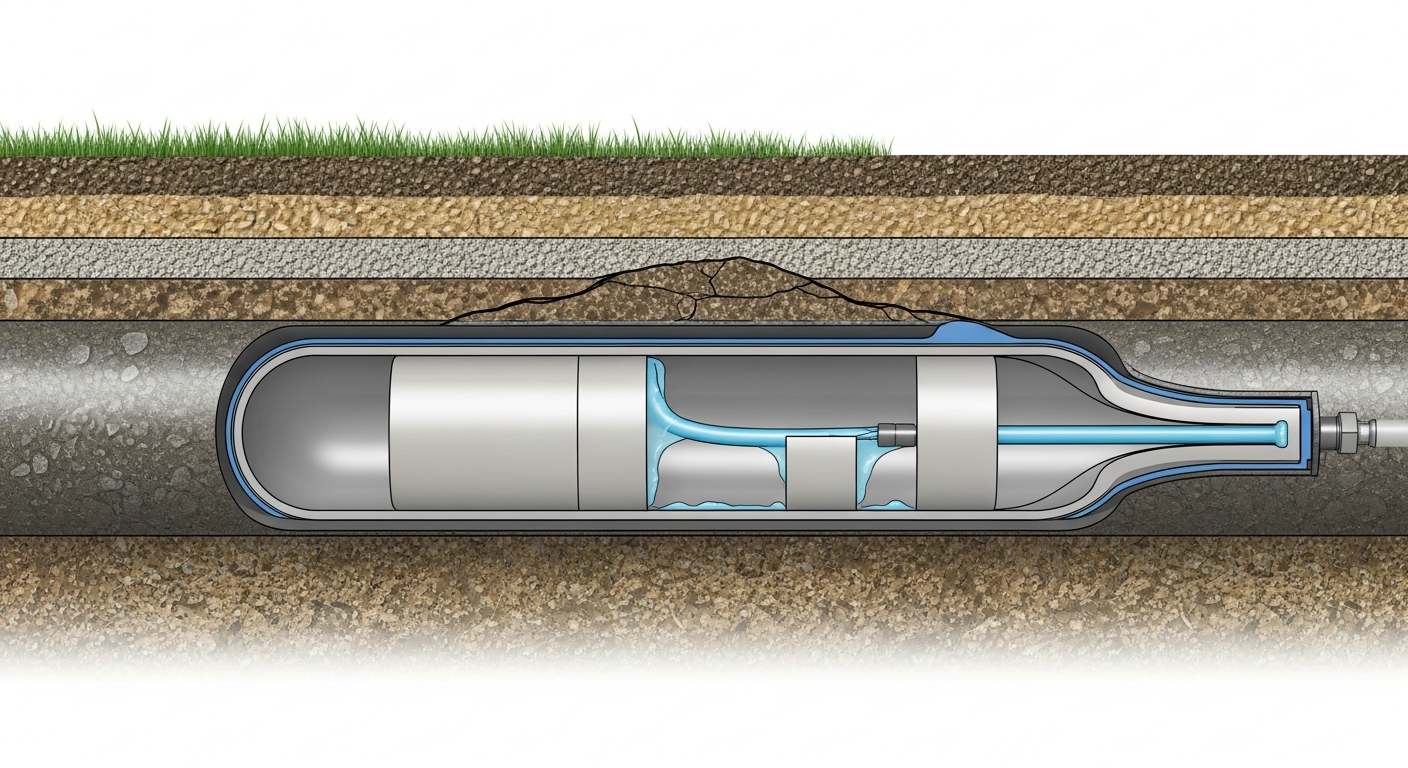
CIPP lining works best for pipes with cracks, minor root intrusion, joint separation, or corrosion. Because it creates a pipe inside your existing pipe, it slightly reduces the pipe diameter (typically by about ¼ inch), but the smoother interior actually improves flow.
Trenchless Pipe Bursting
Trenchless pipe bursting replaces your old pipe entirely by breaking it apart while simultaneously pulling a new pipe into its place. Here’s how it works:
- Camera inspection: The existing pipe is inspected to map the route and confirm pipe bursting is the right method.
- Access pits: Two small access pits are dug — one at each end of the damaged section.
- Cable threading: A steel cable is fed through the old pipe from one access point to the other.
- Bursting head attachment: A cone-shaped bursting head is attached to the cable, with a new HDPE (high-density polyethylene) pipe connected behind it.
- Pipe replacement: Hydraulic force pulls the bursting head through the old pipe, shattering it outward while dragging the new pipe into position.
- Connection and verification: The new pipe is connected to the existing system, and a final camera inspection confirms proper installation.
Pipe bursting is the better choice when your existing pipe is severely damaged, collapsed in sections, or you want to upsize to a larger diameter. It’s also the preferred method for trenchless sewer replacement when the pipe is beyond lining repair.
Cost Comparison: Trenchless vs. Traditional Sewer Repair
One of the biggest questions homeowners ask: how much does trenchless sewer repair cost? Here’s what to expect:
| Method | Typical Cost Range | Timeline | Yard Damage |
|---|---|---|---|
| Trenchless pipe lining (CIPP) | $3,000 – $10,000 | 1 day | Minimal (1-2 small access pits) |
| Trenchless pipe bursting | $4,000 – $15,000 | 1 – 2 days | Minimal (2 small access pits) |
| Traditional excavation | $5,000 – $25,000+ | 1 – 3 weeks | Major (full trench along pipe) |
The final price depends on several factors:
- Pipe length: Longer runs cost more. Most residential sewer lines are 50 to 100 feet.
- Pipe depth: Deeper pipes require more labor and equipment. Pipes under driveways or foundations add complexity.
- Extent of damage: Spot repairs cost less than full-line replacement.
- Access difficulty: Tight spaces, mature trees, and obstacles increase costs.
- Permits and inspections: Local code requirements in Orange County cities vary.
While trenchless methods may have a similar upfront cost to traditional excavation, the total project cost is often lower because you don’t pay for landscape restoration, driveway repair, or extended labor. For a detailed breakdown, see our guide on sewer line replacement cost.
Benefits of Trenchless Sewer Repair
Trenchless technology isn’t just a convenience — it’s a better solution for most residential sewer problems. Here’s why:
Minimal Property Damage
Traditional excavation tears up lawns, gardens, driveways, sidewalks, and sometimes even foundations. Trenchless methods need only one or two small access points, leaving your property largely intact.
Faster Completion
Most trenchless sewer repairs are completed in 1 to 2 days, compared to 1 to 3 weeks for traditional dig-and-replace. You’re back to normal faster, with far less disruption to your daily life.
Long-Lasting Results
CIPP liners and HDPE pipes used in trenchless repair are rated for 50+ years of service life. The new materials resist root intrusion, corrosion, and joint separation — the exact problems that likely caused your original pipe to fail.
Cost-Effective Overall
When you factor in landscape restoration, driveway repair, and the cost of extended project timelines, trenchless repair often comes out equal or cheaper than traditional methods for the total project.
Environmentally Friendly
Less excavation means less soil disruption, less heavy equipment, fewer truck trips, and less waste. Trenchless repair preserves established trees and root systems that would be destroyed by open-trench excavation.
When Trenchless Repair Is NOT the Right Choice
Trenchless technology is versatile, but it’s not a universal fix. There are situations where traditional excavation may be necessary:
- Complete pipe collapse: If the pipe has fully collapsed or there’s no continuous path through it, pipe bursting and lining may not work. The bursting head or liner needs a pathway to follow.
- Major bellies or sags: Significant low spots in the pipe where water pools can’t always be corrected with trenchless methods. The new pipe follows the old pipe’s path, so if the path dips, the new pipe will too.
- Certain pipe materials: Some older pipe materials, like severely deteriorated orangeburg (tar paper pipe), may not provide enough structure for pipe lining.
- Offset joints with major gaps: If pipe sections have shifted significantly apart, lining may not bridge the gap effectively.
- Shallow, easily accessible pipes: If your sewer line runs through open lawn at a shallow depth with no obstacles, traditional repair may actually be simpler and cheaper.
This is exactly why a sewer camera inspection is always the first step. The camera reveals the exact condition, location, and type of damage, so you know which method is right before any work begins.
What to Expect During the Process
If you’re considering trenchless sewer repair for your Orange County home, here’s the typical process from start to finish:
Step 1: Sewer Camera Inspection
A high-resolution waterproof camera is fed through a cleanout or access point into your sewer line. This gives your plumber a live video feed of the pipe’s interior, identifying the exact location, type, and severity of the problem.
Step 2: Method Selection
Based on the camera findings, your plumber recommends the best approach: pipe lining for repairable damage, pipe bursting for pipes that need full replacement, or traditional excavation if trenchless isn’t viable.
Step 3: Preparation and Execution
For lining: the pipe is cleaned via hydro jetting, and the resin-saturated liner is inserted and cured. For pipe bursting: two access pits are dug, and the old pipe is burst apart as the new pipe is pulled through.
Step 4: Verification
A final camera inspection confirms the new pipe or liner is properly installed, with no defects, wrinkles, or gaps. Your plumber should show you the before-and-after camera footage.
Step 5: Cleanup and Restoration
Access pits are backfilled and compacted. Minimal surface restoration is needed — usually just a small patch of lawn or concrete rather than rebuilding an entire trench line.
Need professional help? Learn more about our sewer line repair in Orange County.
Frequently Asked Questions
How long does trenchless sewer repair last?
Both CIPP pipe liners and HDPE pipes used in pipe bursting are rated for 50 years or more. These modern materials resist corrosion, root intrusion, and chemical degradation, making them more durable than the original clay or cast iron pipes they replace.
Is trenchless sewer repair worth the cost?
For most homeowners, yes. While the upfront price is comparable to traditional excavation, trenchless methods save significantly on landscaping restoration, driveway repair, and project timeline. The total cost of ownership is typically lower.
Can trenchless repair fix a pipe under my driveway or foundation?
Yes — this is actually one of the biggest advantages of trenchless technology. Pipes under driveways, foundations, patios, and other hardscape can be repaired without demolishing the structure above them.
How do I know if my sewer line needs repair?
Common warning signs include slow drains throughout the house, gurgling toilet sounds, sewage odors in the yard, soggy patches in the lawn, and recurring backups. A sewer camera inspection provides a definitive diagnosis. Learn more in our guide on how to know it’s time for sewer line repair or replacement.
Does trenchless sewer repair work on all types of pipes?
Trenchless methods work on most residential pipe materials, including clay, cast iron, PVC, ABS, and concrete. The main exceptions are pipes that have completely collapsed or severely deteriorated orangeburg pipes that can’t support the lining process.
Need Trenchless Sewer Repair in Orange County?
Don’t let a damaged sewer line turn into a full yard excavation. Call 911 Drain Lines at (714) 696-1532 for a free camera inspection and estimate. We serve Irvine, Anaheim, Costa Mesa, Mission Viejo, Lake Forest, and all surrounding Orange County cities.
Related: Sewer Camera Inspection