



What Is a Sewer Camera Inspection?
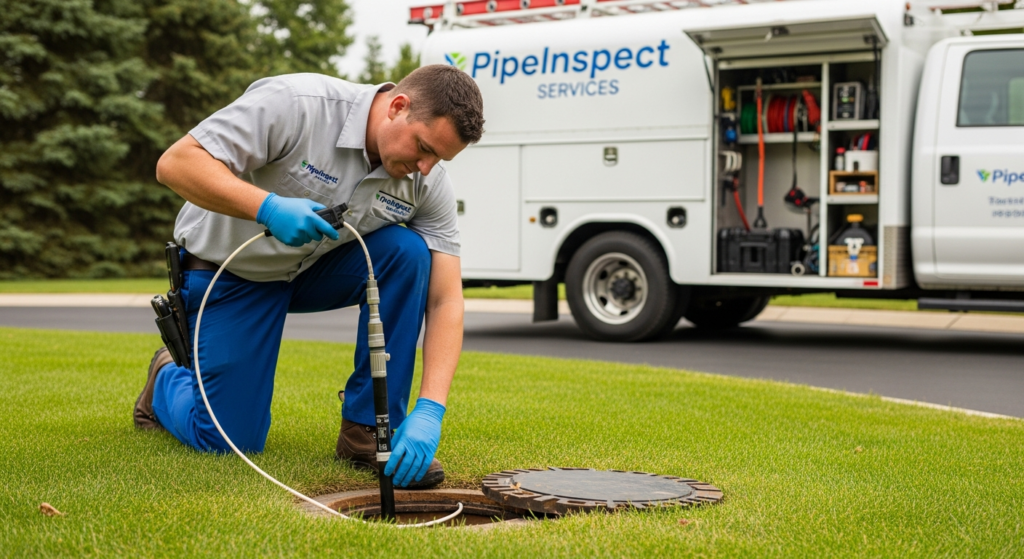
A sewer camera inspection is a non-invasive diagnostic method that uses a small, waterproof camera attached to a flexible cable to examine the inside of your sewer and drain pipes. A trained plumber feeds the camera through a cleanout or access point, and the live video feed reveals the exact condition of your pipes in real time.
This technology eliminates the guesswork that once required digging up yards and driveways to find problems. Instead of tearing up landscaping to locate a blockage or crack, a plumber can pinpoint the issue down to the foot and recommend the most cost-effective repair.
Sewer cameras are typically mounted on a rod or cable that can navigate bends and turns in pipes ranging from 2 inches to 36 inches in diameter. The camera transmits high-definition video to a monitor above ground, and many systems include a locator transmitter so the technician can mark the exact location and depth of any problem from the surface.
How Does a Sewer Camera Inspection Work?
The process is straightforward and usually takes between 30 minutes and two hours depending on the length and condition of your sewer line.
- Access point location – The plumber locates a cleanout or removes a toilet to access the sewer line. Most homes have a cleanout near the foundation or in the yard.
- Camera insertion – The waterproof camera is fed into the pipe opening. The technician controls the speed and direction as it moves through the line.
- Real-time video review – You and the technician watch the live feed on a monitor. The camera records video and captures still images of any issues.
- Problem identification – The technician notes the location, type, and severity of any damage, blockages, or defects found.
- Report and recommendations – After the inspection, you receive a detailed report with video footage and a recommended repair plan.
What Problems Can a Sewer Camera Detect?
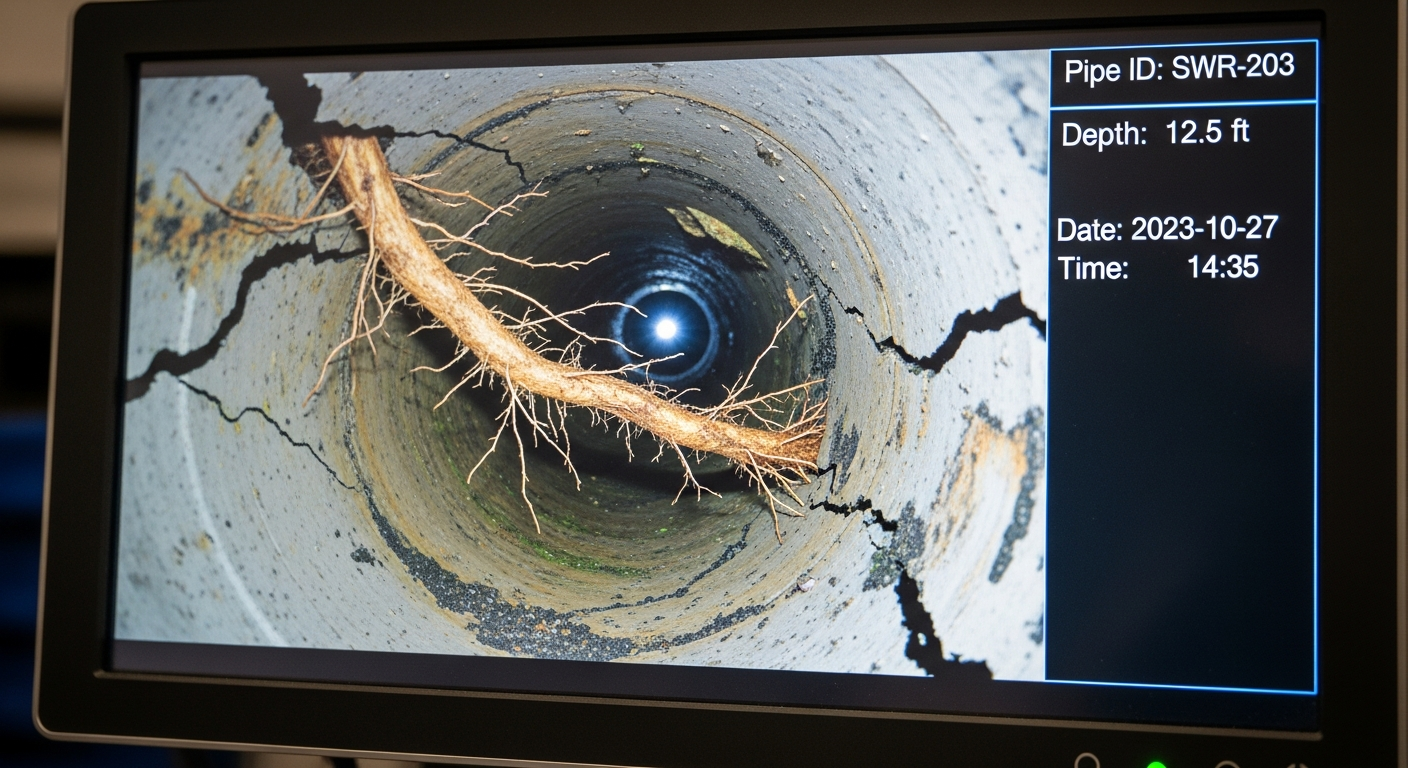
A sewer camera inspection can identify a wide range of pipe problems that are invisible from the surface:
- Tree root intrusion – Roots enter through small cracks and joints, growing inside the pipe until they cause major blockages.
- Pipe cracks and fractures – Age, ground shifting, or heavy loads above the pipe can cause cracks that lead to leaks and sinkholes.
- Bellied or sagging pipes – Sections of pipe that have sunk create low spots where waste and water collect, leading to recurring backups.
- Corrosion and deterioration – Older cast iron or clay pipes break down over time, narrowing the pipe diameter and creating rough surfaces that catch debris.
- Grease and debris buildup – Years of grease, soap, and mineral deposits can coat pipe walls and restrict flow.
- Collapsed pipes – Severely damaged sections may have partially or fully collapsed, requiring immediate repair or replacement.
- Offset or misaligned joints – Ground movement can shift pipe sections out of alignment, creating lips that snag waste and cause clogs.
- Pipe material identification – The camera reveals whether your pipes are PVC, cast iron, clay, or orangeburg, which affects repair options and urgency.
How Much Does a Sewer Camera Inspection Cost?
The average cost of a sewer camera inspection ranges from $100 to $500, with most homeowners paying between $250 and $400. Several factors affect the price:
- Pipe length and complexity – Longer sewer lines or systems with multiple bends and connections take more time to inspect.
- Accessibility – If there is no cleanout and a toilet must be removed, expect additional labor charges.
- Location – Pricing varies by region. In Orange County and the Inland Empire, including Irvine and Newport Beach, expect to pay $200 to $450 for a standard residential inspection.
- Additional services – Some companies bundle the camera inspection with a hydro jetting cleaning or include it free with a repair.
While $250 to $400 might seem like a significant expense for a diagnostic, it can save you thousands compared to the alternative of blind excavation. A camera inspection that reveals a simple root intrusion at a specific location means a targeted repair instead of digging up your entire yard.
When Should You Schedule a Sewer Camera Inspection?
Some situations call for a camera inspection more urgently than others. Here are the most common reasons homeowners schedule one:
Recurring drain clogs
If you are dealing with the same main sewer line clog every few months, a camera inspection reveals whether the problem is tree roots, a bellied pipe, or a structural issue that drain cleaning alone cannot fix.
Buying or selling a home
A pre-purchase sewer scope is one of the smartest investments a homebuyer can make. Replacing a sewer line can cost $5,000 to $25,000, and a standard home inspection does not check underground pipes. Sellers can also use a clean inspection report as a selling point.
Slow drains throughout the house
When multiple drains are slow at the same time, the problem is likely in the main sewer line rather than individual branch lines. A camera inspection identifies the blockage location and type so the plumber can choose the right fix.
Sewer odors inside or outside the home
Persistent sewer smell in your house or yard often indicates a cracked pipe, dry trap, or broken vent. The camera can trace the source quickly.
Older homes with original plumbing
Homes built before 1970 often have cast iron, clay, or even orangeburg (tar paper) pipes. These materials deteriorate over time, and a proactive inspection can catch problems before they become emergencies.
After a major landscaping or construction project
Heavy equipment, new tree plantings, or foundation work near your sewer line can damage underground pipes. An inspection after the project confirms everything is intact.
Sewer Camera Inspection vs. Other Diagnostic Methods
Before camera technology became widely available, plumbers relied on less precise methods:
- Dye testing – Dye is flushed down a drain to see where it emerges. Useful for confirming a leak exists but cannot show the pipe’s internal condition.
- Smoke testing – Smoke is pumped into the sewer system to find cracks and openings. Effective for detecting leaks but does not show blockages or structural damage.
- Excavation – Digging to physically inspect pipes. Accurate but expensive, destructive, and time-consuming.
A camera inspection provides the most detailed and least invasive assessment. It shows the exact problem, its precise location, and the overall condition of the entire pipe, all without digging a single hole.
How to Prepare for a Sewer Camera Inspection
Preparation is minimal, but a few steps help the process go smoothly:
- Locate your cleanout – If you know where your sewer cleanout is, point it out to the technician. It is usually a capped pipe near the foundation or in the yard.
- Clear the area – Remove any items stored near the cleanout or the toilets that might need to be accessed.
- Note your symptoms – Write down which drains are affected, how often backups occur, and any unusual sounds or odors. This helps the technician focus on problem areas.
- Ask about the report – Before the inspection starts, confirm you will receive video footage and a written report of the findings.
What Happens After the Inspection?
Once the camera inspection is complete, your plumber will walk you through the findings and recommend next steps. Common outcomes include:
- No issues found – Your pipes are in good shape. The video serves as a baseline for future reference.
- Minor issues – Small root intrusions or light buildup may be resolved with hydro jetting or a targeted drain cleaning.
- Moderate damage – Cracked sections or offset joints may require a spot repair or trenchless pipe bursting to replace the damaged section without excavation.
- Severe damage – Collapsed or heavily deteriorated pipes may need full sewer line repair or trenchless sewer replacement.
Frequently Asked Questions
How long does a sewer camera inspection take?
Most residential sewer camera inspections take 30 minutes to 2 hours. The time depends on the length of your sewer line, the number of access points, and whether any blockages slow the camera’s progress.
Can a sewer camera inspection damage my pipes?
No. The camera and cable are designed to navigate through pipes without causing damage. The equipment is flexible enough to pass through bends and joints safely, even in older pipe materials.
Is a sewer camera inspection worth it before buying a house?
Yes. A sewer scope typically costs $250 to $400 and can reveal problems that would cost $5,000 to $25,000 to fix. It is one of the highest-ROI inspections a homebuyer can request, especially for homes older than 20 years.
How often should I get a sewer camera inspection?
For most homeowners, an inspection every 2 to 3 years is sufficient for preventive maintenance. If you have mature trees near your sewer line or an older home with original plumbing, consider annual inspections to catch root intrusion and deterioration early.
Related: Trenchless Sewer Repair
If you are experiencing recurring drain problems or want a professional assessment of your sewer line, schedule a sewer camera inspection with 911 Drain Lines and Plumbing. We serve Orange County and the Inland Empire with 24/7 availability.