



A sewer smell in your house is more than just unpleasant. It can signal plumbing problems that need immediate attention and may even pose health risks to your family. Sewer gas contains a mix of hydrogen sulfide, ammonia, methane, and other compounds that can cause headaches, nausea, and respiratory issues at higher concentrations.
This guide explains why your house smells like sewer, how to identify the source, and what steps to take to eliminate the odor permanently.
What Is Sewer Gas?
Sewer gas is a mixture of toxic and non-toxic gases produced by the decomposition of organic waste in your drainage system. The most recognizable component is hydrogen sulfide, which produces that distinctive rotten egg smell. While small amounts are mainly a nuisance, prolonged exposure to sewer gas can cause eye irritation, fatigue, and difficulty breathing. In rare cases involving high methane concentrations, sewer gas can also create a fire or explosion risk.
7 Common Causes of Sewer Smell in Your House
1. Dried-Out P-Trap
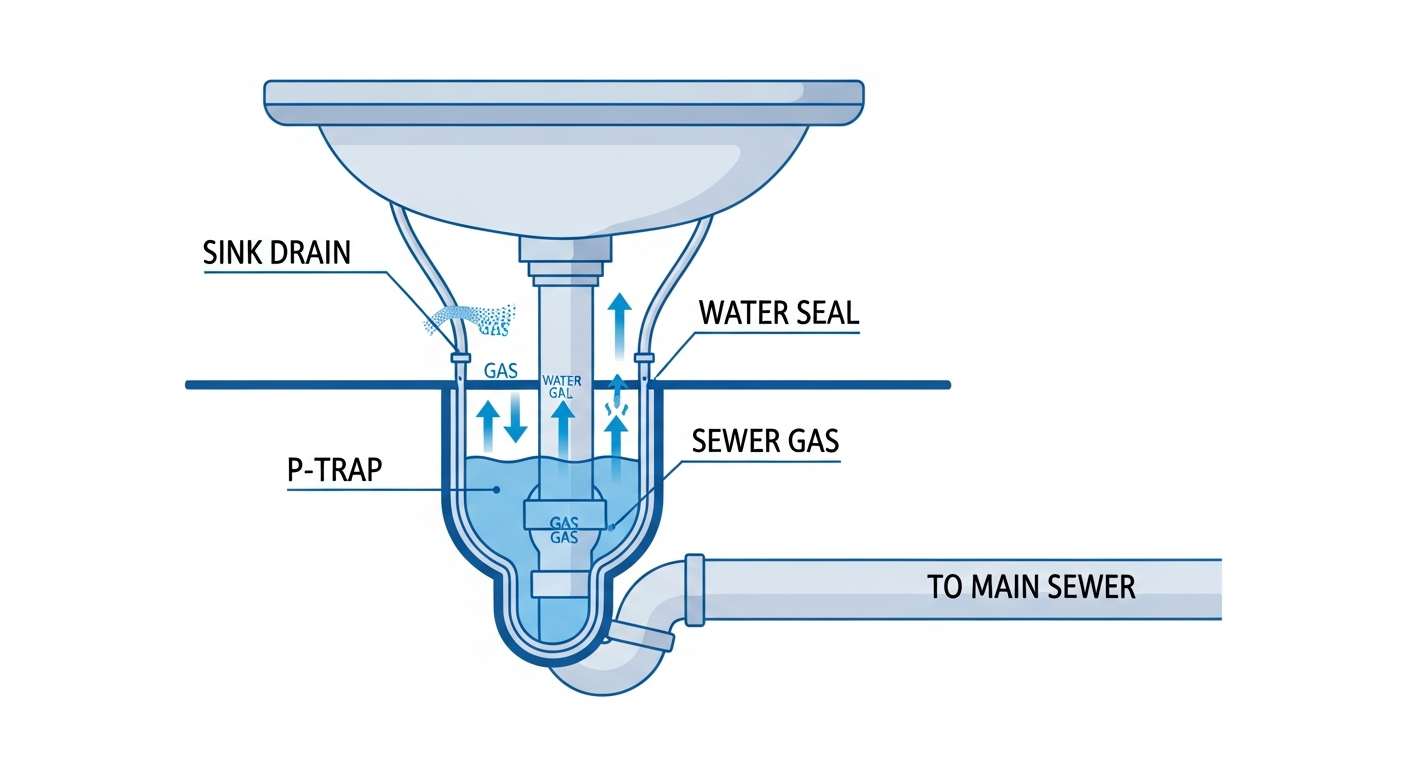
Every drain in your home has a P-trap: the U-shaped pipe section beneath the fixture. The P-trap holds a small amount of water that creates a seal preventing sewer gas from rising through the drain into your living space. When a sink, shower, or floor drain goes unused for several weeks, the water in the P-trap evaporates and breaks this seal.
Fix: Run water in every drain you haven’t used recently for 30 seconds to refill the P-trap. This is the most common cause and the easiest to fix.
2. Damaged or Cracked Sewer Line
Tree root intrusion, ground shifting, and aging pipes can crack or collapse your main sewer line. When this happens, sewer gas escapes through the damaged section and seeps up through the soil and into your home through foundation cracks, basement walls, or floor drains.
Fix: A sewer camera inspection pinpoints the exact location and severity of the damage. Depending on the situation, trenchless sewer replacement can repair the line without excavating your yard.
3. Blocked or Clogged Vent Pipe
Your plumbing system has vent pipes that extend through the roof to allow air into the drainage system and release sewer gases safely above your home. When vent pipes become blocked by leaves, bird nests, debris, or ice, sewer gas has nowhere to go except back into your house through drain openings.
Fix: Have a licensed plumber inspect and clear the vent stack. Signs of a blocked vent include gurgling drains, slow drainage in multiple fixtures, and sewer smells that appear throughout the house rather than at one specific drain.
4. Loose or Deteriorated Toilet Wax Ring
The wax ring at the base of your toilet creates an airtight seal between the toilet and the drain flange. Over time, wax rings compress, crack, or shift, especially if the toilet has been rocked or moved. A failing wax ring allows sewer gas to leak into your bathroom from the gap between the toilet base and the floor. A loose wax ring can also lead to toilet clogs, so if you notice both odors and slow flushing, see our guide on clearing a clogged toilet.
Fix: Remove the toilet, scrape off the old wax ring, and install a new one. This is a straightforward repair, though the toilet must be completely removed and reseated.
5. Broken or Missing Drain Cleanout Cap
Drain cleanouts are access points along your sewer line used for maintenance and clearing blockages. Each cleanout has a threaded cap that seals the opening. If a cap is cracked, missing, or improperly seated, sewer gas escapes directly into your crawl space, basement, or yard and eventually finds its way inside.
Fix: Inspect visible cleanouts in your yard, garage, and basement. Replace any missing or damaged caps. Standard cleanout caps cost a few dollars and screw on by hand.
6. Cracked or Corroded Drain Pipes
Older homes in Orange County and the Inland Empire often have cast iron or galvanized steel drain pipes that corrode from the inside over decades. Small cracks and pinhole leaks in these pipes release sewer gas into wall cavities, under cabinets, or beneath your slab. The smell may be strongest near walls or in specific rooms.
Fix: A professional plumber can locate leaking pipes using a sewer camera or smoke test. Sewer line repair or repiping with PEX resolves the issue permanently.
7. Sewer Line Blockage or Backup
A partial blockage in your main sewer line creates pressure that forces sewer gas back through your drains and into your home. You may notice the smell is worse when running water or flushing toilets, as the additional flow increases pressure against the blockage.
Fix: Professional drain cleaning or hydro jetting clears the blockage and restores proper drainage and ventilation.
Is Sewer Gas Dangerous?
At the low concentrations typically found in homes, sewer gas is more of a nuisance than an immediate health threat. However, prolonged exposure can cause:
- Headaches and fatigue from hydrogen sulfide exposure
- Nausea and dizziness, especially in confined spaces like bathrooms
- Eye and throat irritation from ammonia content
- Respiratory problems in people with asthma or other lung conditions
In extreme cases where methane accumulates in enclosed spaces, there is a risk of oxygen displacement and potential combustion. If you smell a strong sewage or rotten egg odor and feel lightheaded, leave the area immediately and ventilate your home.
How to Find the Source of Sewer Smell
Tracking down the exact source of a sewer smell takes a systematic approach:
- Check all drains. Run water in every sink, shower, tub, and floor drain in your home. If the smell stops after running water, a dried-out P-trap was the cause.
- Inspect toilet bases. Rock each toilet gently. If it moves at all, the wax ring may be compromised.
- Look for cleanout caps. Check your basement, crawl space, garage, and yard for exposed drain cleanouts with missing or loose caps.
- Listen for gurgling. Flush a toilet or run a sink and listen at nearby drains. Gurgling sounds indicate a vent blockage or partial sewer line clog.
- Note the pattern. Does the smell come and go? Intermittent sewer smells often point to wind-driven downdrafts through blocked vent pipes or partial drain blockages that fluctuate with water usage.
If these checks don’t reveal the source, a professional plumber can perform a smoke test. This involves pumping non-toxic smoke into the drain system; the smoke exits through any cracks, gaps, or failed seals, making hidden leaks visible.
When to Call a Plumber for Sewer Smell
Call a licensed plumber if:
- Running water in all drains does not eliminate the smell
- Multiple drains are gurgling or draining slowly
- The smell is strongest near walls, floors, or the foundation
- You notice wet spots, mold, or discoloration near drain lines
- The odor appeared suddenly after no plumbing changes
- You suspect the sewer line is damaged or backing up
911 Drain Lines and Plumbing provides 24/7 emergency plumbing service throughout Orange County and the Inland Empire. Our licensed plumbers use sewer camera inspection to locate the exact source of sewer gas leaks and recommend the most cost-effective repair. Call (714) 746-7611 for same-day diagnosis and repair.
How to Prevent Sewer Smell in Your Home
- Run water in unused drains weekly. Guest bathrooms, basement floor drains, and utility sinks are the most common P-traps to dry out.
- Schedule regular drain cleaning. Professional drain cleaning every one to two years prevents buildup that leads to blockages, odors, and even drain fly infestations.
- Inspect your sewer line. A camera inspection every few years catches cracks and root intrusion before they become major problems.
- Maintain your vent pipes. Trim tree branches away from roof vents and check for obstructions after storms.
- Replace aging pipes. If your home has original cast iron or galvanized drain pipes and you’re experiencing recurring issues, repiping with modern PEX piping eliminates corrosion-related leaks permanently.
Frequently Asked Questions
Why does my house smell like sewer at night?
Sewer smells often seem stronger at night because air pressure drops and wind patterns change, allowing sewer gas to flow more easily through blocked vents or dried P-traps. Reduced airflow from closed windows and less ventilation also makes the odor more noticeable.
Can a sewer smell in the house be dangerous?
At typical household concentrations, sewer gas causes discomfort but is not immediately dangerous. However, prolonged exposure to hydrogen sulfide and ammonia can cause respiratory issues, headaches, and nausea. High methane levels in enclosed spaces create explosion risk. Address sewer smells promptly rather than ignoring them.
How much does it cost to fix a sewer smell?
Costs range widely depending on the cause. Refilling a P-trap is free (just run water). Replacing a toilet wax ring costs $5 to $30 in parts. Professional sewer line repair ranges from $150 for a simple cleanout to several thousand dollars for line replacement. A sewer camera inspection to diagnose the source typically costs $100 to $300.
Why does my bathroom smell like sewage after it rains?
Heavy rain can saturate the ground around your sewer line, forcing sewer gas upward through cracks in the pipe or foundation. Rain can also cause temporary pressure changes in the municipal sewer system that push gas back through your home’s plumbing. If this happens regularly, have your sewer line inspected for damage.
Related: Sewer Camera Inspection
Related: Main Sewer Line Clog