



What Causes a Clogged Drain?
Before grabbing the plunger, it helps to understand why drains clog in the first place. The most common culprits include:
- Hair buildup in bathroom sinks, showers, and bathtub drains
- Grease and cooking oil that solidify inside kitchen pipes
- Soap scum that accumulates over time and narrows pipes
- Food particles that slip past the garbage disposal
- Mineral deposits from hard water common in Orange County homes
- Foreign objects like cotton swabs, dental floss, or small toys
Knowing the cause helps you pick the right solution and prevent future clogs.
7 Ways to Unclog a Drain at Home
1. Boiling Water
The simplest method works surprisingly well on minor clogs caused by soap scum or grease. Boil a full kettle of water and pour it directly down the drain in two or three stages, waiting a few seconds between pours. The heat melts grease and dissolves soap buildup.
Best for: Kitchen sinks with grease clogs
Skip this method if: You have PVC pipes (boiling water can soften PVC joints) or a porcelain sink
2. Baking Soda and Vinegar
This classic combination creates a fizzing reaction that breaks apart organic material inside pipes:
- Remove the drain cover and clear any visible debris
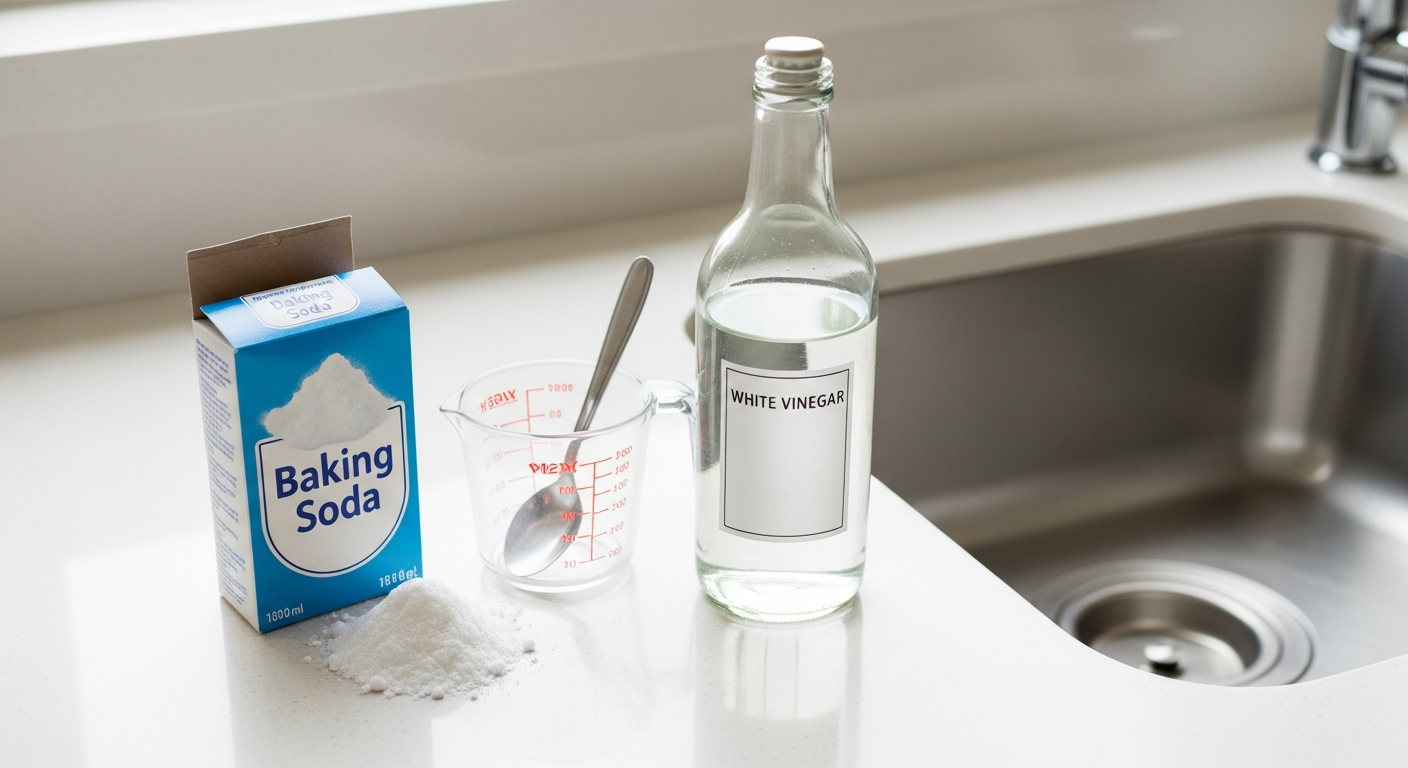
- Pour 1/2 cup of baking soda directly into the drain
- Follow with 1/2 cup of white vinegar
- Cover the drain opening with a wet cloth to contain the fizzing action
- Wait 30 minutes, then flush with hot water
This works well for slow drains but may not clear severe blockages.
3. Plunger
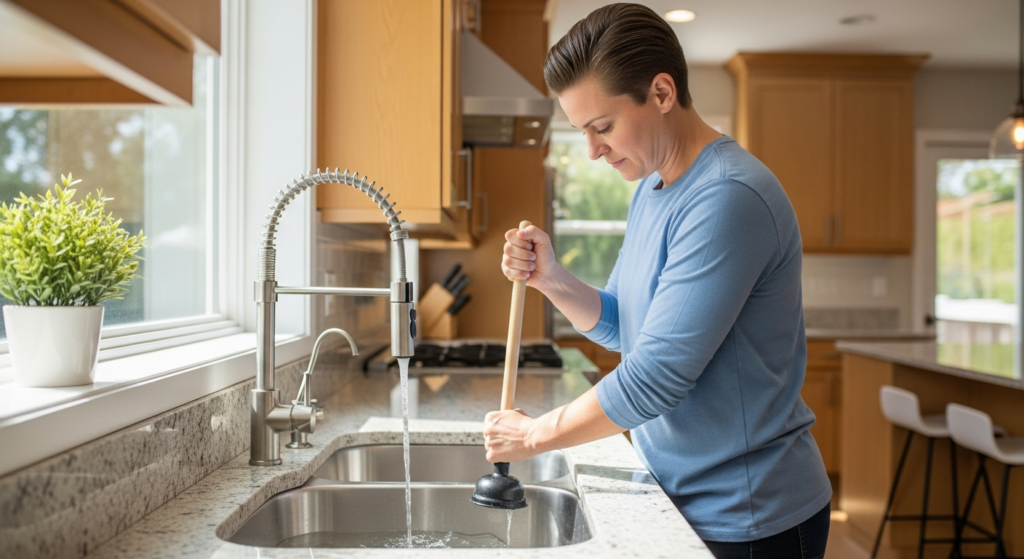
A plunger is one of the most effective tools for clearing a clogged drain. Use a cup plunger (flat bottom) for sinks and a flange plunger (extended rubber lip) for toilets.
- Fill the sink or tub with enough water to cover the plunger cup
- Place the plunger over the drain and press down to create a tight seal
- Pump vigorously 15 to 20 times
- Pull the plunger away quickly to break the seal
- Repeat 2 to 3 times if the water does not start draining
If you have a double sink, plug the other drain with a wet rag so the pressure goes to the clog instead of escaping.
4. Drain Snake (Plumbing Auger)
A drain snake reaches deeper clogs that a plunger cannot fix. You can buy a basic hand-crank model at any hardware store for around $25.
- Insert the snake into the drain opening
- Turn the handle clockwise as you push the cable deeper
- When you feel resistance, you have reached the clog
- Continue turning to break through or hook the blockage
- Pull the snake out slowly, bringing debris with it
- Flush the drain with hot water
5. Wet/Dry Vacuum
If you own a wet/dry shop vacuum, it can create strong suction to pull clogs out of drains. Set it to the wet setting, create a tight seal over the drain, and turn it on the highest setting. This method works especially well for hard clogs caused by small objects.
6. Remove and Clean the P-Trap
The P-trap is the U-shaped pipe beneath your sink. Clogs often form here because it is designed to hold standing water (which blocks sewer gases). To clean it:
- Place a bucket under the P-trap to catch water
- Unscrew the slip nuts on both ends by hand or with pliers
- Remove the P-trap and dump out the contents
- Use a brush or wire to clear any buildup inside
- Reassemble the P-trap and run water to check for leaks
7. Enzyme-Based Drain Cleaner
Enzyme cleaners use natural bacteria to eat away organic material inside pipes. They are slower than chemical drain cleaners but safer for your pipes and the environment. Pour the recommended amount down the drain before bed and let it work overnight.
Avoid chemical drain cleaners. Products containing sodium hydroxide or sulfuric acid can corrode pipes over time, especially older galvanized steel or cast iron pipes common in Southern California homes built before 1970.
When to Call a Professional Plumber
DIY methods work for most minor clogs, but some situations require professional equipment and expertise. Call a licensed plumber if you experience:
- Multiple drains clogging at once, which signals a main sewer line clog
- Water backing up into other fixtures when you run the sink or flush the toilet
- Recurring clogs in the same drain despite repeated clearing
- Foul sewage odor coming from drains (sewer smell in house)
- Gurgling sounds from drains or toilets
- Standing water that will not drain at all
These symptoms often indicate a deeper issue like tree root intrusion, a collapsed pipe, or a blockage in the main sewer line that requires a professional drain cleaning service or sewer camera inspection.
How Professional Drain Cleaning Works
Licensed plumbers have access to tools that go far beyond what a homeowner can buy at a hardware store:
- Motorized drain snakes that can reach 100+ feet into your plumbing system
- Hydro jetting that uses 4,000 PSI water pressure to scour pipes clean
- Sewer camera inspection to locate the exact position and cause of the blockage
At 911 Drain Lines and Plumbing, our technicians start with a camera inspection to diagnose the problem before recommending a solution. This ensures you only pay for the service you actually need.
How to Prevent Future Drain Clogs
Prevention costs nothing and saves you from dealing with emergency clogs:
- Use drain screens on all sinks and showers to catch hair and debris
- Never pour grease down the drain. Let it cool and throw it in the trash
- Run hot water for 30 seconds after each use of the kitchen sink
- Clean drain stoppers weekly to remove hair and soap buildup
- Flush drains monthly with the baking soda and vinegar method described above
- Schedule professional drain cleaning once a year for preventive maintenance
Cost of Professional Drain Cleaning in Orange County
Drain cleaning costs in Orange County typically range from:
- Basic drain snaking: $100 to $250
- Hydro jetting: $300 to $500
- Sewer camera inspection: $100 to $300
- Main line cleaning: $150 to $500
911 Drain Lines offers flat-rate pricing with no overtime charges, even for late-night and weekend emergency calls.
Frequently Asked Questions
What is the fastest way to unclog a drain?
A plunger is the fastest DIY method for most clogs. Create a tight seal over the drain, pump vigorously 15 to 20 times, and pull away quickly. For stubborn clogs, a drain snake is the next best option. If neither works, call a professional plumber who can use motorized equipment or hydro jetting to clear the blockage quickly.
Can I pour boiling water down a PVC drain?
No. Boiling water can soften PVC pipe joints and cause leaks over time. Use hot tap water instead, which is warm enough to help dissolve grease without damaging plastic pipes. If you have metal pipes (copper or galvanized steel), boiling water is safe to use.
Why does my drain keep clogging?
Recurring clogs usually indicate a deeper issue beyond the P-trap. Common causes include tree root intrusion into sewer lines, a partially collapsed pipe, mineral buildup narrowing the pipe diameter, or a belly (low spot) in the sewer line where debris collects. A sewer camera inspection can identify the exact cause.
Is it safe to use chemical drain cleaners?
Most plumbers recommend against chemical drain cleaners. Products with sodium hydroxide or sulfuric acid can corrode pipes, damage septic systems, and create toxic fumes. Enzyme-based cleaners are a safer alternative for routine maintenance. For active clogs, mechanical methods like plunging or snaking are more effective and less risky.
Dealing with a stubborn clog that will not clear? Call 911 Drain Lines and Plumbing at (714) 746-7611 for 24/7 emergency drain cleaning service in Orange County. Our licensed technicians use advanced hydro jetting and sewer camera technology to clear any blockage fast.
Related: Unclog A Drain With Baking Soda And Vinegar
Related: Unclog A Kitchen Sink
Related: How Drain Cleaners Work
Related: Drain Cleaning Frequency
Related: Drain Cleaning Costs