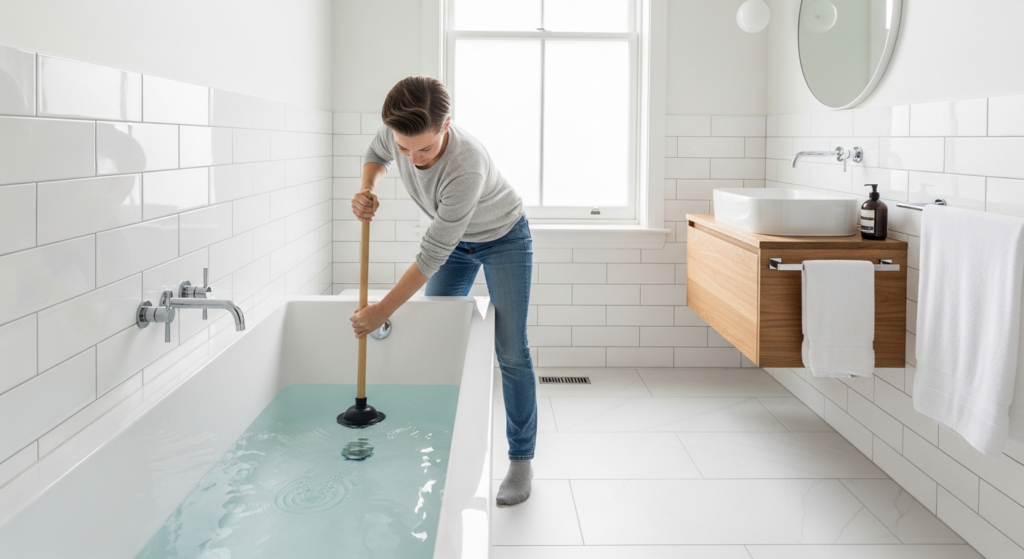




Why Bathtub Drains Clog
Bathtub drains clog for a few predictable reasons. Hair is the primary culprit, combining with soap residue, body oils, and mineral deposits to form a sticky mass that accumulates just below the drain cover. Over time, this buildup narrows the pipe opening until water drains slowly or stops altogether.
Unlike kitchen sinks where grease is the main offender, bathtub clogs are almost always a combination of hair and soap scum. The good news is that most bathtub clogs sit close to the drain opening, making them easier to reach and clear than deep pipe blockages.
5 Methods to Unclog a Bathtub Drain
1. Remove visible debris by hand
Start with the simplest approach. Remove the drain cover or stopper and look inside with a flashlight. You will often find a clump of hair wrapped around the crossbars or stopper mechanism that you can pull out with your fingers or needle-nose pliers.
Most bathtub drain covers unscrew counterclockwise or pop off with a flathead screwdriver. Push-pull stoppers lift out with a twist and pull. Toe-touch stoppers unscrew by turning the cap counterclockwise.
2. Use a plunger
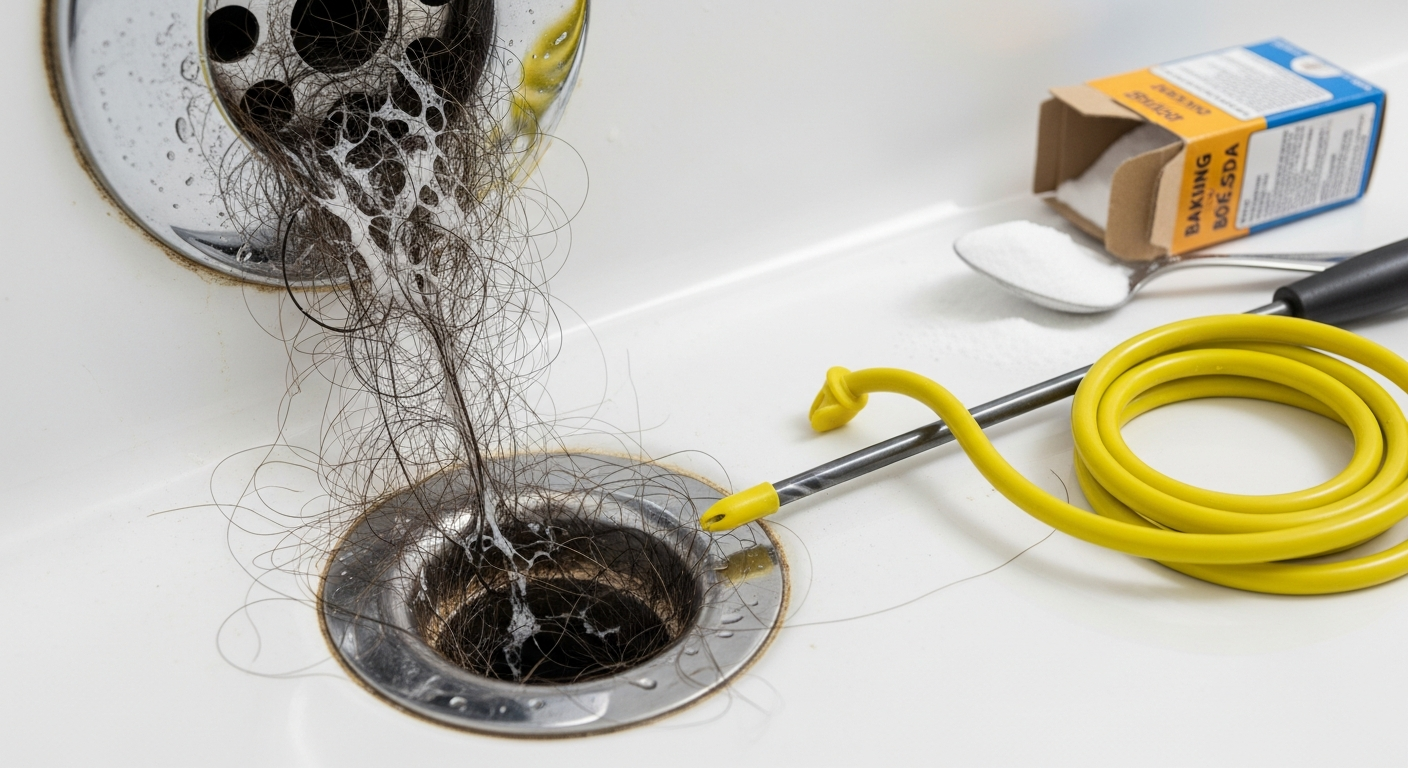
A cup plunger (flat-bottomed, not the flanged type used for toilets) works well on bathtub drains. Here is the process:
- Remove the drain cover and plug the overflow opening with a wet rag or tape. This is critical because the overflow creates an air gap that prevents the plunger from building pressure.
- Add enough water to cover the plunger cup, about 2 inches.
- Place the plunger over the drain opening and push down firmly, then pull up sharply. Repeat 15 to 20 times.
- Pull the plunger away quickly on the last stroke. The suction should dislodge the clog.
If the water starts draining, run hot water for a minute to flush loose debris through the pipe.
3. Use a drain snake (drum auger)
When a plunger does not work, a drain snake reaches deeper into the pipe to break through or pull out the clog. You can buy a basic hand-crank drain snake at any hardware store for $10 to $30.
- Remove the drain cover. For better access, you can also remove the overflow plate and feed the snake through the overflow opening, which gives a straighter path to the trap.
- Feed the snake cable into the drain until you feel resistance.
- Turn the crank handle clockwise to work the tip through or around the clog.
- Push and pull the snake several times to break up the blockage.
- Pull the snake out slowly. Hair and debris will often come out wrapped around the tip.
- Run hot water to flush the line.
4. Baking soda and vinegar
This natural method works best on partial clogs caused by soap scum and light buildup, not dense hair blockages.
- Remove standing water from the tub.
- Pour 1/2 cup of baking soda directly into the drain.
- Follow with 1/2 cup of white vinegar.
- Cover the drain and wait 30 minutes. The fizzing reaction helps dissolve soap scum and loosen debris.
- Flush with a full kettle of boiling water.
This method is safe for all pipe types and will not damage plumbing. For stubborn buildup, repeat the process two or three times.
5. Boiling water flush
For minor slow drains, boiling water alone can dissolve soap scum and grease buildup. Boil a full kettle and pour it directly down the drain in two or three stages, waiting a few seconds between pours to let the heat work on the buildup.
Important: Only use boiling water if you have metal or PVC pipes in good condition. If your home has older pipes or you are unsure of the material, use hot (not boiling) tap water instead.
What About Chemical Drain Cleaners?
Chemical drain cleaners like Drano or Liquid-Plumr are widely available but come with trade-offs. They contain harsh chemicals (sodium hydroxide or sulfuric acid) that can:
- Damage older pipes, especially cast iron and galvanized steel
- Weaken PVC pipe joints with repeated use
- Create toxic fumes, especially if mixed with other cleaners
- Harm septic systems by killing beneficial bacteria
If you choose to use a chemical cleaner, follow the label instructions exactly, use it as a last resort, and never mix products. For recurring clogs, a chemical cleaner is a temporary fix that does not address the underlying cause.
How to Prevent Bathtub Drain Clogs
Prevention is far easier than dealing with a fully clogged drain:
- Install a drain screen or hair catcher – These inexpensive mesh covers sit over the drain and catch hair before it enters the pipe. Clean it after every shower.
- Flush with hot water weekly – Run hot water for 30 seconds after your last shower of the day to help dissolve soap residue before it hardens.
- Clean the drain monthly – Pour baking soda and hot water down the drain once a month as preventive maintenance.
- Brush hair before showering – Removing loose hair before you get in the tub reduces the amount that goes down the drain.
When to Call a Professional Plumber
Some bathtub drain problems require professional equipment and expertise:
- The clog keeps coming back – Recurring clogs often indicate a deeper problem like tree root intrusion, a bellied pipe, or a buildup that home methods cannot fully clear.
- Multiple drains are slow – When the bathtub, sink, and toilet are all draining slowly, the issue is likely in the main sewer line, not the individual fixture.
- You smell sewage – A sewer smell in your house along with slow drains may indicate a cracked pipe or dry trap that needs professional attention.
- Water backs up into other fixtures – If plunging the bathtub causes water to rise in the toilet or sink, the blockage is in a shared drain line.
- You have tried everything – If hand removal, plunging, snaking, and baking soda have all failed, a plumber can use professional hydro jetting or a sewer camera inspection to diagnose and clear the problem.
Frequently Asked Questions
What dissolves hair in a bathtub drain?
Baking soda and vinegar can dissolve light hair buildup over time. For dense hair clogs, a drain snake is more effective because it physically removes the hair rather than trying to dissolve it. Chemical drain cleaners containing sodium hydroxide can dissolve hair but may damage pipes with repeated use.
Why does my bathtub drain slowly even after I cleaned it?
If the drain is still slow after clearing visible debris, the clog may be deeper in the P-trap or branch line. A drain snake can reach these areas. Persistent slow drains may also indicate a partially blocked vent pipe, which affects drainage throughout the house.
Can I use a toilet plunger on a bathtub drain?
A flanged (toilet) plunger will not seal properly over a flat bathtub drain. Use a cup plunger with a flat bottom for bathtubs and sinks. The flat rim creates the airtight seal needed to generate pressure against the clog.
How often should bathtub drains be cleaned?
Clean the drain cover and remove visible hair weekly. Do a deeper clean with baking soda and hot water once a month. This simple routine prevents most clogs from forming in the first place.
Related: How To Unclog A Drain
If your bathtub drain is clogged and home methods are not working, contact 911 Drain Lines and Plumbing for professional drain cleaning. We serve Orange County and the Inland Empire with 24/7 emergency service.