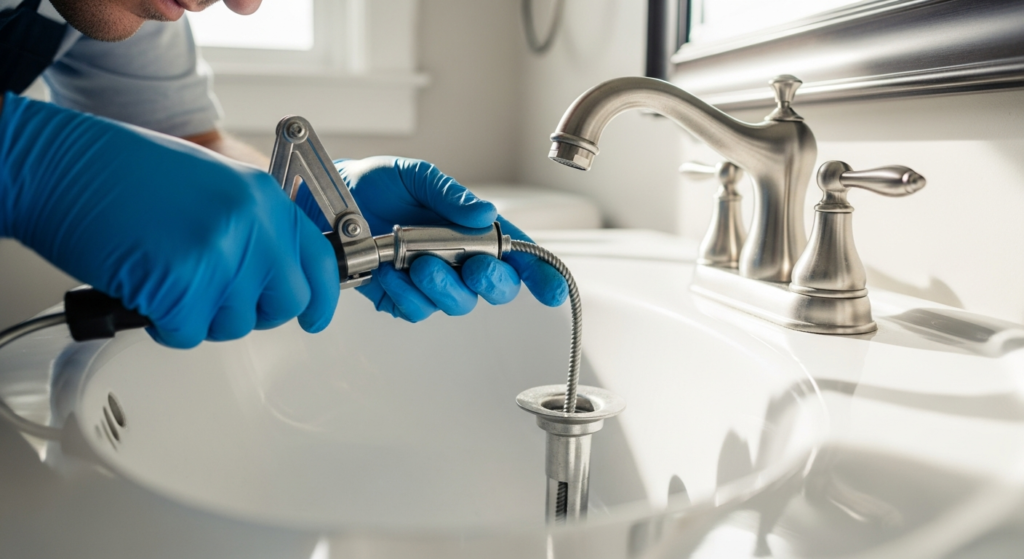




A drain snake (also called a plumbing snake or drain auger) is one of the most effective tools for clearing stubborn clogs that a plunger cannot handle. Whether you are dealing with a slow-draining kitchen sink, a backed-up shower, or a clogged bathtub, learning how to snake a drain can save you time and money on plumbing repairs.
In this guide, we will walk you through everything you need to know about using a drain snake, from choosing the right type to step-by-step instructions for different drains in your home.
What Is a Drain Snake and How Does It Work?
A drain snake is a flexible metal cable with a corkscrew tip (or auger head) that you feed into a drain pipe to break up or pull out clogs. The cable rotates as you push it through the pipe, allowing the tip to grab onto or cut through blockages like hair, grease, soap scum, and food debris.
Unlike basic unclogging methods such as plunging or pouring hot water, a drain snake reaches deep into the pipe to physically remove the obstruction rather than just pushing it further down.
Types of Drain Snakes
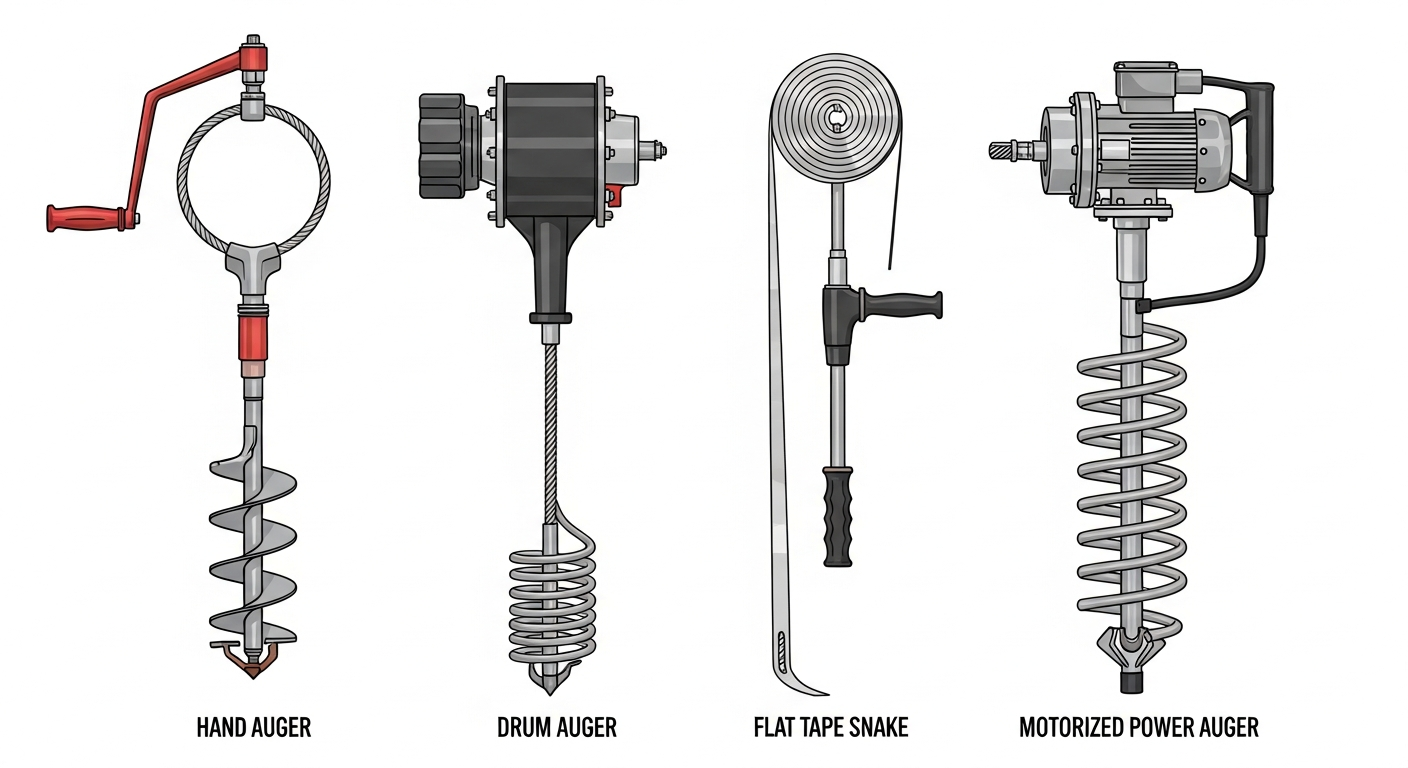
Before you start, it helps to understand the different types of drain snakes available. Each one is designed for specific drain sizes and clog types.
Hand Auger (Manual Drain Snake)
The most common and affordable option for homeowners. A hand auger features a coiled cable inside a drum with a hand crank. You feed the cable into the drain and turn the crank to rotate it through the clog. Best for: bathroom sinks, shower drains, and small kitchen sink clogs.
Drum Auger
Similar to a hand auger but with a larger drum that holds more cable (typically 25-50 feet). Drum augers provide more reach and power for tougher clogs. Best for: kitchen drains, laundry drains, and deeper blockages.
Flat Tape Snake
A flat, ribbon-like metal strip rather than a round cable. Flat tape snakes are thinner and more flexible, making them ideal for navigating tight bends in smaller pipes. Best for: small-diameter pipes (1.25 to 2 inches) and drains with sharp turns.
Power Auger (Electric Drain Snake)
A motorized version that does the rotating for you. Power augers are heavier and more expensive, but they handle the toughest residential clogs with less physical effort. Best for: stubborn clogs, larger pipes, and frequent drain maintenance. Professional plumbers, including the team at 911 Drain Lines and Plumbing, use commercial-grade power augers for serious blockages.
How to Snake a Drain: Step-by-Step Guide
Follow these steps to use a drain snake safely and effectively. The technique is similar for most household drains, with a few variations depending on the fixture.
What You Will Need
- Drain snake (hand auger recommended for most DIY jobs)
- Rubber gloves
- Bucket or towel (to catch water and debris)
- Pliers or channel locks (to remove the drain cover or P-trap if needed)
- Flashlight
Step 1: Remove the Drain Cover or Stopper
Take off the drain cover, pop-up stopper, or strainer. For bathroom sinks and tubs, you may need to unscrew or twist off the stopper. Check the stopper for hair or debris that could be causing the clog before going further.
Step 2: Feed the Cable Into the Drain
Push the tip of the drain snake cable into the drain opening. Feed it slowly, applying gentle forward pressure. Do not force it. The cable should slide smoothly through the pipe.
Step 3: Crank and Push Through the Clog
When you feel resistance, you have likely reached the clog. Start turning the hand crank clockwise while pushing forward. The auger tip will either break through the blockage or hook onto it. Keep steady pressure and maintain the rotation.
Step 4: Pull Out the Cable
Once you feel the resistance ease, slowly pull the cable back out. You will likely see hair, grease, or other debris on the auger tip. Wipe the cable clean with a rag as you retract it. Have the bucket handy to catch any mess.
Step 5: Flush the Drain
Run hot water through the drain for 2-3 minutes to flush any remaining debris. If the drain is still slow, repeat the snaking process. Persistent clogs that do not clear after 2-3 attempts may need professional hydro jetting to fully clear the pipe. For professional assistance, contact our hydro jetting services team.
Snaking Specific Drain Types
How to Snake a Kitchen Sink Drain
Kitchen drains clog most often from grease, food scraps, and soap buildup. For best results, disconnect the P-trap under the sink and feed the snake directly into the wall pipe. This avoids getting the cable stuck in the trap. If your kitchen sink is completely backed up, removing the P-trap also lets trapped water drain into a bucket.
How to Snake a Shower or Bathtub Drain
Hair is the primary culprit in shower drain and bathtub drain clogs. Remove the drain cover or overflow plate and feed the snake through the drain opening. In tubs, you can also try going through the overflow opening for better cable access. Turn the crank slowly, as hair clogs tend to tangle around the auger tip.
How to Snake a Toilet
Never use a standard drain snake on a toilet. The metal cable can scratch and damage the porcelain bowl. Instead, use a dedicated toilet auger (also called a closet auger), which has a rubber sleeve to protect the bowl. Feed the auger into the bowl opening and crank it to clear the clog. For more tips, see our guide on how to unclog a toilet.
Safety Tips and Common Mistakes
Using a drain snake is straightforward, but there are a few things to watch out for:
- Wear rubber gloves. Drain debris is unsanitary, and the metal cable can have sharp edges.
- Do not force the cable. If you hit strong resistance that will not budge with steady cranking, stop. Forcing the cable can damage pipes or cause the cable to kink.
- Never mix chemicals and snaking. If you already poured chemical drain cleaner into the drain, do not stick a snake in right after. The chemicals can splash back and cause serious burns.
- Use the right size snake. A snake that is too large for the pipe can get stuck or damage the pipe walls. Match the cable diameter to your pipe size.
- Protect the fixture surface. Lay a towel around the drain area. Metal cables can scratch sinks, tubs, and countertops.
- Do not use a standard snake on toilets. Always use a toilet-specific auger with a rubber guard.
Drain Snake vs. Other Unclogging Methods
Wondering whether a drain snake is the best option? Here is how it compares to other common methods:
| Method | Best For | Pros | Cons |
|---|---|---|---|
| Plunger | Minor, soft clogs near the drain opening | Cheap, easy, no pipe risk | Ineffective on deep or solid clogs |
| Drain Snake | Hair, grease, soap, food debris in residential pipes | Physically removes the clog, reusable, safe for pipes | Requires some skill, may not clear root intrusions |
| Chemical Drain Cleaner | Minor organic buildup | No tools needed | Can corrode pipes, toxic fumes, bad for environment, often temporary fix |
| Hydro Jetting | Severe clogs, grease buildup, tree roots, full pipe cleaning | Most thorough cleaning, removes all buildup | Requires professional equipment, higher cost |
For most household clogs, a drain snake is the best balance of effectiveness, cost, and safety. For severe or recurring clogs, hydro jetting is the professional-grade solution.
When to Call a Professional Plumber
While a drain snake handles most common clogs, some situations require a licensed plumber with professional-grade equipment:
- The clog keeps coming back. Recurring clogs often indicate a deeper problem like pipe damage, root intrusion, or a main sewer line clog that a hand snake cannot reach.
- Multiple drains are backing up at once. This is a sign that the main sewer line is blocked, not just a single fixture drain.
- You smell sewage. Sewer odors coming from drains suggest a venting issue or main line problem that needs professional diagnosis.
- The snake cannot get past the clog. If you have tried multiple times and the cable will not break through, the blockage may be hardened scale, collapsed pipe, or tree roots.
- Old or fragile pipes. Homes with galvanized steel, cast iron, or clay pipes may be vulnerable to damage from aggressive snaking. A professional can assess the pipe condition with a sewer camera before clearing the clog.
Need professional help? Call 911 Drain Lines and Plumbing at (714) 746-7611 for fast, reliable drain cleaning service. We offer 24/7 emergency plumbing in Orange County and the Inland Empire.
Need professional help? Learn more about our How to Unclog a Drain with Baking Soda and Vinegar in Orange County.
Need professional help? Learn more about our How to Unclog a Bathtub Drain: 5 Methods That Work in Orange County.
Frequently Asked Questions
Can a drain snake damage pipes?
When used correctly, a drain snake is safe for most pipes. However, applying too much force on older or corroded pipes can cause cracks or punctures. Use gentle, steady pressure and avoid forcing the cable through stubborn blockages. If you feel strong resistance, stop and call a professional plumber.
What size drain snake do I need?
For bathroom sinks and showers, a 1/4-inch cable (15-25 feet long) works well. Kitchen sinks typically need a 3/8-inch cable. Toilets require a dedicated toilet auger with a protective rubber coating. For main sewer lines, you need a 1/2-inch or larger cable, which is best left to professionals.
How far should you snake a drain?
Most household clogs occur within the first 5-10 feet of the drain opening. Feed the cable slowly until you feel resistance, then work through the clog. If you have fed more than 25 feet of cable without hitting a blockage, the problem may be deeper in your sewer line and requires professional equipment.
Related: Hydro Jetting
Related: Causes Of Drain Clogs
Is a drain snake better than a chemical drain cleaner?
Yes, in most cases. Drain snakes physically remove the clog without harming your pipes, while chemical cleaners can corrode pipes over time (especially older metal pipes), harm the environment, and often fail on solid blockages like hair clumps or tree roots. A drain snake is a safer, more effective, and reusable option.