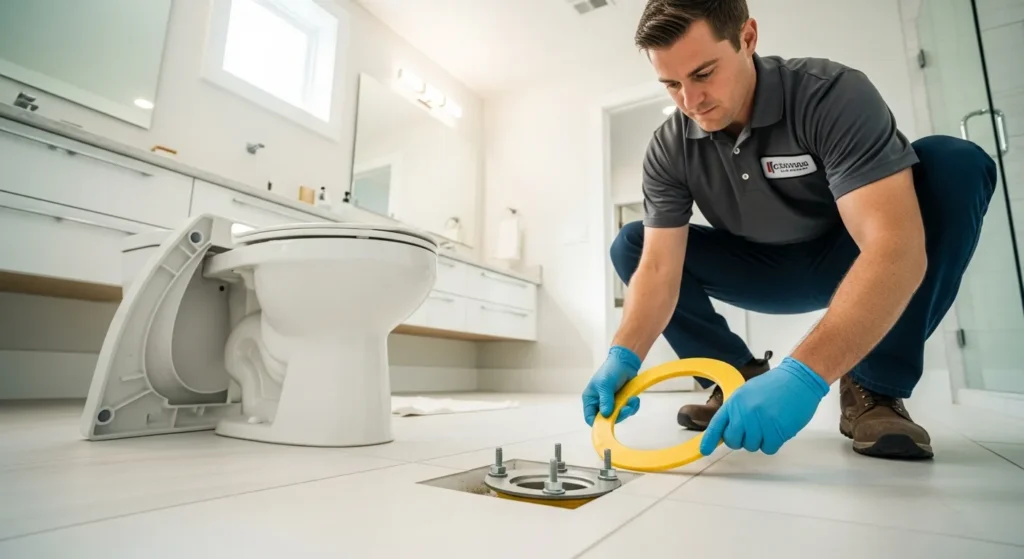




A toilet wax ring is one of those hidden plumbing components most homeowners never think about until something goes wrong. This small but critical seal sits between the base of your toilet and the drain flange in the floor, preventing water, sewer gas, and odors from escaping every time you flush. When a wax ring fails, you may notice water pooling around the base, unpleasant smells in your bathroom, or even a toilet that rocks back and forth. Learning how to replace a toilet wax ring can save you from water damage, mold growth, and costly repairs down the road. Whether you are a confident DIYer or want to understand the process before calling a professional, this guide covers everything you need to know about toilet wax ring replacement.
Regular drain cleaning services help prevent the buildup that can compromise toilet seals over time.
A sewer camera inspection can help identify if the problem extends beyond the wax ring into your drain line.
Schedule toilet repair service with 911 Drain Lines or call (714) 909-1517 today.
What Is a Toilet Wax Ring and Why Does It Matter?
A toilet wax ring is a soft, circular gasket made from petroleum-based wax that creates an airtight and watertight seal between your toilet and the sewer pipe below. Every standard toilet in your home relies on this seal to function properly. When you flush, water and waste flow through the toilet bowl, down through the wax ring, and into the drain pipe. Without a properly functioning wax seal, that wastewater would leak out onto your bathroom floor with every flush.
The wax ring also serves a second important purpose: it blocks sewer gases from entering your home. These gases, which include methane and hydrogen sulfide, are not only unpleasant but can be harmful in high concentrations. A good wax ring for toilet installations keeps those gases sealed safely underground where they belong.
Most wax rings last between 20 and 30 years under normal conditions. However, certain situations can cause them to fail sooner, including a toilet that was improperly installed, a toilet that rocks or shifts on an uneven floor, or a flange that sits too high or too low relative to the finished floor.
What Are the Signs Your Toilet Wax Ring Needs Replacing?
Recognizing a failing wax ring early can prevent significant water damage. Here are the most common warning signs that indicate your toilet wax seal has failed:
- Water around the base of the toilet: If you notice water pooling around the bottom of your toilet after flushing, the wax ring is the most likely culprit. This is different from condensation, which typically appears on the tank or bowl exterior. Check our guide on toilet leaking at base for more details on diagnosing this issue.
- Sewer odor in the bathroom: A persistent sewage smell that does not go away with cleaning often points to a broken wax seal. The ring is no longer blocking gases from escaping around the base of the toilet.
- A wobbly or rocking toilet: If your toilet shifts when you sit on it, the wax ring may have compressed unevenly or deteriorated. A rocking toilet will eventually break the seal completely. Learn more about related issues in our toilet won’t flush troubleshooting guide.
- Ceiling stains below a second-floor bathroom: Water damage or brown stains on the ceiling directly below an upstairs bathroom are a strong indicator that the wax ring on the toilet above has failed.
- Soft or spongy flooring around the toilet: Prolonged leaking from a bad wax ring can damage subflooring over time, making the area around the toilet feel soft or spongy underfoot.
If you notice any of these signs, do not ignore them. Even a small leak from a failed wax ring can cause mold growth, rotting subfloor, and thousands of dollars in structural damage if left unaddressed.
What Tools and Materials Do You Need for Toilet Wax Ring Replacement?
Before starting the replacement, gather the following tools and materials. Having everything ready will make the process smoother and faster:
- New wax ring (standard or extra-thick, depending on your flange height)
- Adjustable wrench or pliers
- Putty knife or plastic scraper
- Rubber gloves
- Old towels or rags
- Bucket and sponge
- New toilet bolts (recommended if the old ones are corroded)
- Toilet shims (if the floor is uneven)
- Caulk and caulk gun
You can find wax rings at any hardware store for around $3 to $10 depending on the type. If you are unsure whether to choose a standard or extra-thick ring, measure the distance from the top of your toilet flange to the finished floor. If the flange sits below floor level, an extra-thick wax ring or a wax ring with a built-in plastic sleeve provides a better seal.
How Do You Replace a Toilet Wax Ring Step by Step?
Replacing a toilet wax ring is a manageable project for most homeowners. Follow these steps carefully for a successful toilet wax ring replacement:
Step 1: Turn Off the Water Supply
Locate the shut-off valve behind the toilet, usually near the wall or floor. Turn it clockwise until it stops. Flush the toilet to drain as much water as possible from the tank and bowl. Use a sponge and bucket to remove any remaining water.
Step 2: Disconnect the Water Supply Line
Use an adjustable wrench to disconnect the water supply line from the bottom of the toilet tank. Have a towel ready to catch any residual water that drips out.
Step 3: Remove the Toilet
Pop off the decorative caps covering the toilet bolts at the base. Use a wrench to remove the nuts from the bolts. If the bolts spin freely or are corroded, you may need to cut them with a hacksaw. Gently rock the toilet back and forth to break the old wax seal, then lift the toilet straight up and set it on an old towel or cardboard. Toilets are heavy, typically weighing 60 to 80 pounds, so get help if needed. For a complete guide on the removal and installation process, see our article on how to install a toilet.
Step 4: Remove the Old Wax Ring
Use a putty knife or plastic scraper to remove all the old wax from both the toilet flange on the floor and the bottom of the toilet horn (the outlet opening on the underside of the toilet). Stuff a rag into the open drain pipe to block sewer gases while you work. Be thorough here; any leftover wax can prevent the new ring from sealing properly.
Step 5: Inspect the Flange
With the old wax removed, inspect the toilet flange for cracks, breaks, or corrosion. The flange should be firmly attached to the floor and sit at or slightly above floor level. If the flange is damaged, it needs to be repaired or replaced before installing a new wax ring. A damaged flange is one of the most common reasons a new wax ring fails prematurely.
Step 6: Install the New Wax Ring
Place the new wax ring on the toilet flange with the rounded side facing up. If the ring has a built-in plastic funnel, that side should face down into the drain opening. Some plumbers prefer to place the ring on the bottom of the toilet instead. Either method works, but placing it on the flange is often easier because the wax stays in position while you lower the toilet.
Step 7: Reinstall the Toilet
Remove the rag from the drain pipe. Insert new toilet bolts into the flange slots if needed. Carefully lower the toilet straight down onto the wax ring, aligning the bolt holes at the base with the bolts sticking up from the flange. Press down firmly with your body weight to compress the wax ring and create a proper seal. Do not rock the toilet during this step, as that can distort the wax and create gaps in the seal.
Step 8: Secure and Reconnect
Hand-tighten the nuts onto the toilet bolts, alternating sides to ensure even pressure. Then use a wrench to snug them down. Be careful not to over-tighten, as this can crack the porcelain base of the toilet. Reconnect the water supply line, turn the water back on, and flush several times to check for leaks. If everything looks dry, apply a bead of caulk around the base of the toilet for a finished look. For more tips on fixing common toilet problems, visit our how to fix a running toilet guide.
Should You Choose a Wax Ring or a Wax-Free Seal?
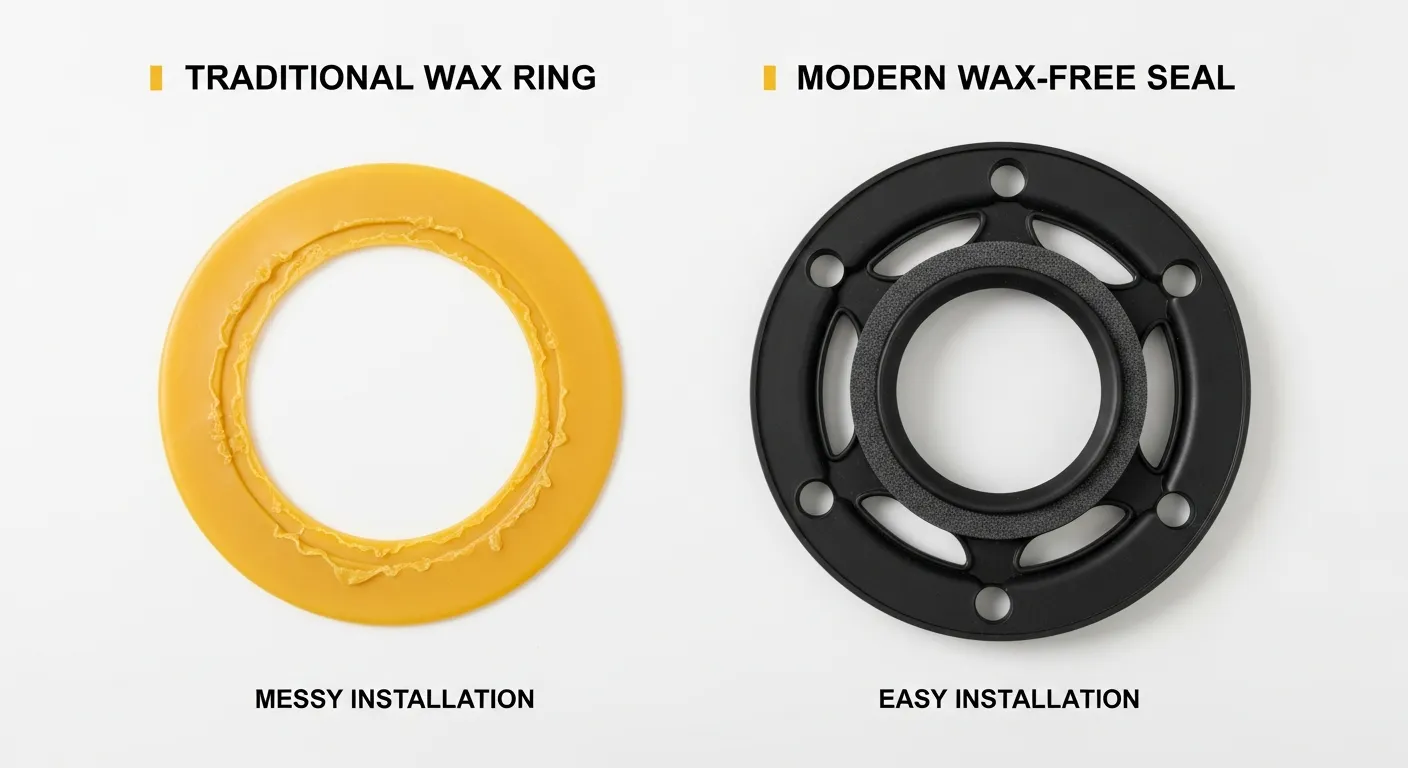
When shopping for a replacement, you will find two main types of toilet seals: traditional wax rings and modern wax-free alternatives. Here is how they compare:
| Feature | Traditional Wax Ring | Wax-Free Seal |
|---|---|---|
| Cost | $3 to $7 | $10 to $20 |
| Ease of Installation | Moderate; messy, one chance to position correctly | Easier; can be repositioned, no sticky wax |
| Reusability | No; deforms permanently on compression | Yes; can be reused if toilet is removed |
| Seal Reliability | Excellent when properly installed (proven for decades) | Very good; uses rubber gaskets and compression |
| Best For | Standard installations, flanges at or above floor level | Uneven floors, flanges below floor level, frequent toilet removal |
| Temperature Sensitivity | Can soften in extreme heat, harden in cold | Not affected by temperature changes |
| Longevity | 20 to 30 years typical | Varies by brand; newer technology with less long-term data |
For most standard toilet installations in Southern California homes, a traditional wax ring remains the most reliable and cost-effective option. However, if your flange sits below floor level or you anticipate needing to remove the toilet again for other repairs, a wax-free seal offers more flexibility.
When Should You Call a Professional Plumber for Wax Ring Replacement?
While replacing a toilet wax ring is a feasible DIY project, there are situations where calling a licensed plumber is the smarter choice:
- Damaged or broken toilet flange: If the flange is cracked, corroded, or sitting too far below the floor, a professional can replace or repair it properly.
- Signs of water damage: If the subfloor feels soft, shows mold growth, or appears rotted, a plumber can assess the extent of the damage and coordinate repairs.
- Recurring leaks after replacement: If you have replaced the wax ring and the toilet still leaks, there may be a deeper issue with the drain line, flange, or toilet itself.
- Second-floor bathrooms: A leak from a second-floor toilet can cause significant damage to the ceiling and walls below. Professional installation ensures the seal is right the first time.
- Lack of confidence or physical ability: Toilets are heavy and awkward to move. There is no shame in hiring a professional to handle the job safely.
At 911 Drain Lines and Plumbing, our licensed technicians handle toilet repairs and installations throughout Orange County and the Inland Empire. We bring the right tools, inspect the full drain system, and guarantee a proper seal. Visit our residential plumbing services page for a full list of what we offer.
Contact 911 Drain Lines for expert toilet wax ring replacement or call (714) 909-1517 for fast, reliable service.
Frequently Asked Questions About Toilet Wax Ring Replacement
How much does it cost to replace a toilet wax ring?
The wax ring itself costs between $3 and $10 at most hardware stores. If you hire a plumber, expect to pay $150 to $300 for the complete service, which includes removing the toilet, replacing the ring, inspecting the flange, and reinstalling the toilet. Costs can be higher if additional repairs to the flange or subfloor are needed.
How long does a toilet wax ring last?
A properly installed wax ring typically lasts 20 to 30 years. However, factors like a rocking toilet, improper installation, or a flange that is too high or too low can shorten its lifespan significantly.
Can you replace a toilet wax ring without removing the toilet?
No. The toilet must be completely removed to access and replace the wax ring. There is no shortcut for this step. The old wax must be fully cleaned from both the flange and the toilet outlet before a new ring can be installed.
How do I know if my toilet wax ring is leaking?
The most common signs include water pooling around the base of the toilet after flushing, a persistent sewer smell in the bathroom, water stains on the ceiling below a second-floor bathroom, and a toilet that rocks or feels unstable.
Is a wax-free toilet seal better than a traditional wax ring?
Both options can provide a reliable seal when installed correctly. Traditional wax rings are time-tested, inexpensive, and work well for standard installations. Wax-free seals are easier to install, can be repositioned, and work better when the flange sits below the floor. Your choice depends on your specific installation conditions.