



Why You Need to Know How to Turn Off Your Water
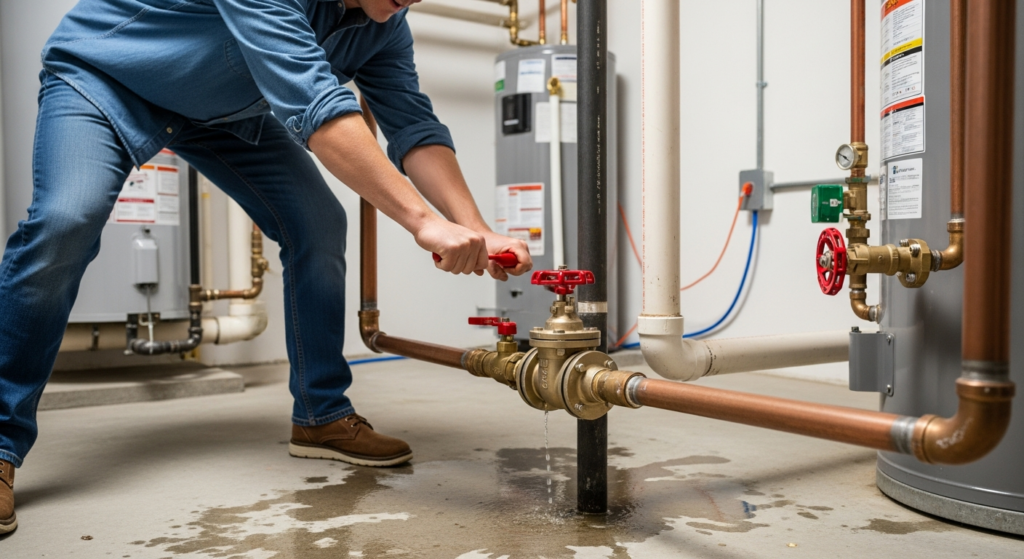
A burst pipe, a major leak, or a plumbing fixture failure can dump hundreds of gallons of water into your home in minutes. Knowing how to shut off your water supply quickly is one of the most important things a homeowner can learn. It is the difference between a manageable repair and tens of thousands of dollars in water damage.
Every adult in your household should know where the main shut-off valve is and how to operate it. Practice turning it off and on once a year so the valve does not seize from disuse.
How to Turn Off Water at the Main Shut-Off Valve
The main shut-off valve controls all water flowing into your home. Turning it off stops water to every fixture, appliance, and outdoor spigot.
Where to find the main shut-off valve
The location depends on your home’s construction and climate:
- Warm climates (Southern California, Arizona, Texas) – The valve is usually outside on an exterior wall, near the front hose bib, or in the garage. In Orange County and the Inland Empire, check the front or side of the house near where the water line enters.
- Cold climates – The valve is typically inside, in the basement or crawl space, where the water line enters to prevent freezing.
- Slab foundations – Look near the water heater, in the garage, or on an exterior wall near the front of the house.
- Condos and apartments – The shut-off may be inside a utility closet, under a sink, or controlled by building maintenance.
How to turn the valve
There are two common types of main shut-off valves:
- Ball valve (lever handle) – Turn the lever 90 degrees so it is perpendicular to the pipe. When the lever is parallel to the pipe, the water is on. When it is perpendicular, the water is off. Ball valves are the modern standard and operate smoothly.
- Gate valve (round handle) – Turn the round handle clockwise until it stops. Gate valves are common in older homes and may require several full turns. They can be stiff if they have not been used in years. Apply steady pressure without forcing it.
After closing the valve, open a faucet at the lowest point in your house to drain remaining water from the pipes and confirm the water is off.
How to Turn Off Water at the Street (Water Meter)
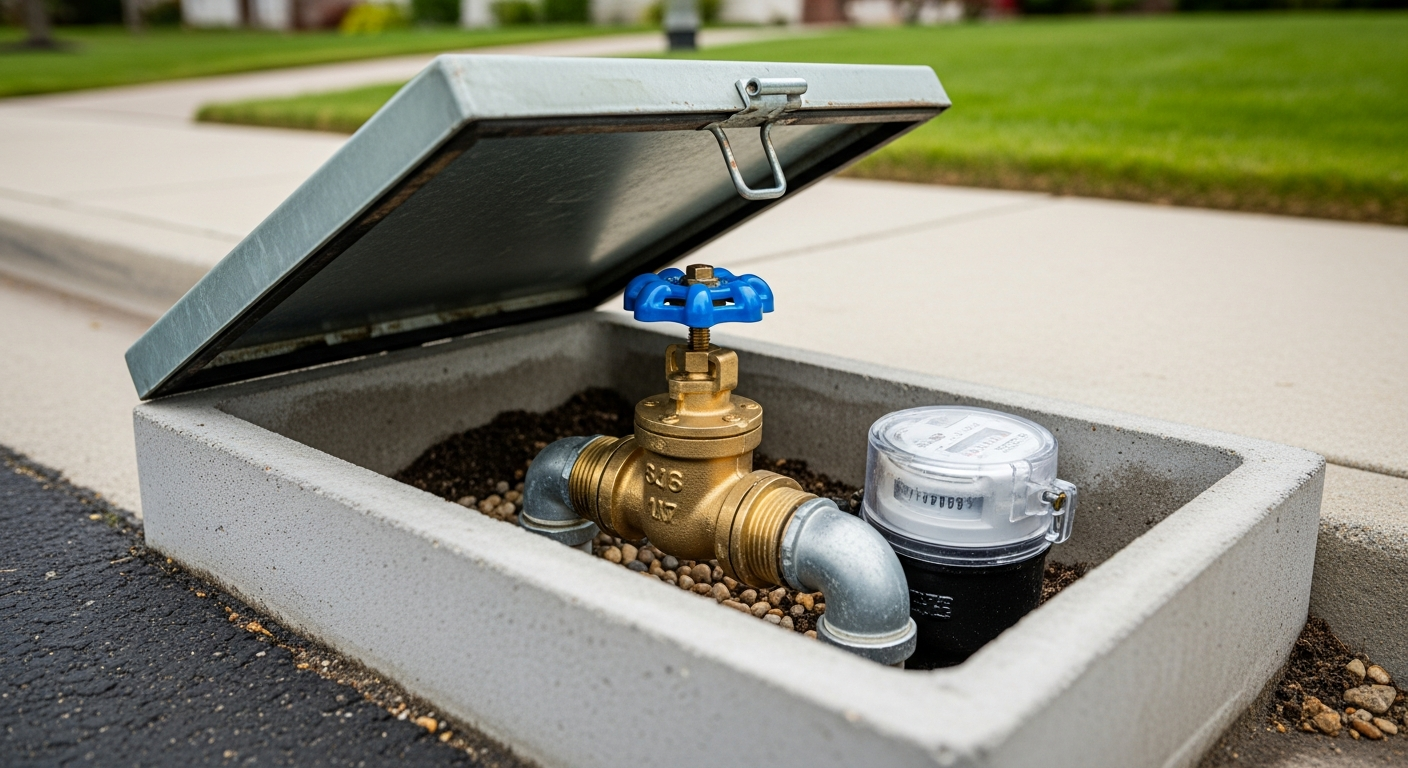
If your main shut-off valve is stuck, broken, or you cannot find it, you can turn off the water at the street. The street shut-off valve is located inside the water meter box, usually near the curb or sidewalk in front of your home.
- Locate the meter box – Look for a rectangular concrete or plastic lid near the curb marked “Water” or “Water Meter.”
- Open the lid – Use a large flathead screwdriver or a meter key to pry open the cover. Be careful of insects or debris inside.
- Find the shut-off valve – The valve is typically on the house side of the meter (the side closest to your property). It may be a small brass valve or a curb stop that requires a meter key to turn.
- Turn the valve – Turn it clockwise (or 90 degrees for a quarter-turn valve) until it stops. A meter key or crescent wrench may be needed.
Note: In some areas, the street shut-off valve is considered property of the water utility, and only authorized personnel are supposed to operate it. In an emergency, shutting it off to prevent damage is generally acceptable, but contact your water company afterward.
How to Turn Off Water to Individual Fixtures
Not every situation requires shutting off water to the entire house. If the problem is isolated to one fixture, use the local shut-off valve:
Toilets
The shut-off valve is behind the toilet near the floor, where the supply line connects to the wall. Turn the oval-shaped handle clockwise until it stops.
Sinks (kitchen and bathroom)
Look under the sink for two valves: one for hot (left) and one for cold (right). Turn both clockwise to stop flow. In some homes, the valves are behind an access panel.
Washing machine
Two valves (hot and cold) are typically behind the machine, connected to the wall with braided steel hoses. Turn both clockwise.
Water heater
The cold water inlet valve sits on top of the water heater on the cold supply pipe (usually on the right). Turning this off stops water from entering the tank. This is useful when the water heater is leaking from the bottom.
Dishwasher
The shut-off valve is usually under the kitchen sink, connected to a small supply line that branches off the hot water line.
Outdoor spigots
Some outdoor faucets have an interior shut-off valve, often located in the garage or basement where the pipe passes through the wall.
What to Do After Turning Off the Water
Once the water is off, take these steps:
- Open faucets to drain remaining water – Open the lowest faucet in the house to relieve pressure and drain the pipes. This minimizes continued leaking from the damaged area.
- Contain the damage – Use towels, buckets, or a wet/dry vacuum to manage standing water. Move furniture and valuables away from the wet area.
- Document the damage – Take photos and video for insurance purposes before you start cleanup.
- Assess the situation – Determine whether this is something you can fix (like a loose fitting) or if you need a professional plumber.
- Call a plumber if needed – For burst pipes, major leaks, or anything you are unsure about, call a licensed plumber. For emergencies, look for a 24/7 plumber who can respond quickly.
Common Problems When Turning Off the Water
The shut-off valve is stuck
Gate valves that have not been operated in years can seize due to mineral buildup. Apply penetrating oil (WD-40) to the valve stem and wait 15 minutes before trying again. Use a wrench for extra leverage but apply pressure gradually. If the valve will not budge, turn off the water at the street instead.
The valve leaks when you turn it
Some older valves develop small leaks around the stem when operated after long periods of disuse. Tighten the packing nut (the nut directly behind the handle) slightly with a wrench. If this does not stop the leak, the valve itself may need replacement.
You cannot find the shut-off valve
Check your home inspection report, which typically lists the valve location. If you are still unable to find it, turn off the water at the street meter as a backup while you call a plumber to locate and potentially relocate the valve to an accessible spot.
Frequently Asked Questions
How long can I leave the water turned off to my house?
You can leave the water off indefinitely without damaging your plumbing. However, if you plan to leave it off for more than a day, drain the pipes by opening all faucets and flushing toilets. This prevents stagnant water from sitting in the lines.
Will turning off the main water affect my water heater?
Turning off the water supply is safe for the water heater in the short term because the tank remains full. However, do not turn off the water supply and leave the water heater running for extended periods. If the water will be off for more than a few hours, turn off the water heater (gas or electric) as a precaution to prevent the tank from overheating if water is drawn out.
Should I turn off the water when going on vacation?
Yes. Turning off the main water supply when you leave for more than a few days is one of the best ways to prevent water damage while you are away. A slow leak or burst pipe in an unoccupied home can cause catastrophic damage before anyone notices.
How do I know if the water is fully off?
After closing the valve, open a faucet and wait 30 seconds. If water slows to a trickle and stops, the valve is fully closed. If water continues flowing at normal pressure, the valve may not be fully closed or you may have turned the wrong valve.
Related: Water Leak Detection
If you are dealing with a plumbing emergency and need help fast, contact 911 Drain Lines and Plumbing. We provide 24/7 emergency plumbing services throughout Orange County and the Inland Empire. For professional assistance, contact our professional plumbing services team.