



Key Takeaways
- Low water pressure usually has a fixable cause. Common culprits include clogged pipes, a failing pressure regulator, corroded plumbing, or issues with the municipal water supply. Interestingly, high water pressure can also be a problem, often causing water hammer and pipe damage. Identifying the source is the first step toward a solution.
- Start with simple checks before calling a plumber. Test the pressure at multiple fixtures, check your main shutoff valve, and ask your neighbors if they have the same problem. These steps can narrow down the issue quickly.
- Persistent low pressure often signals a bigger plumbing problem. If DIY troubleshooting does not resolve the issue, a licensed plumber can diagnose hidden causes like corroded pipes, slab leaks, or municipal supply problems that require professional repair.
What Is Normal Water Pressure?
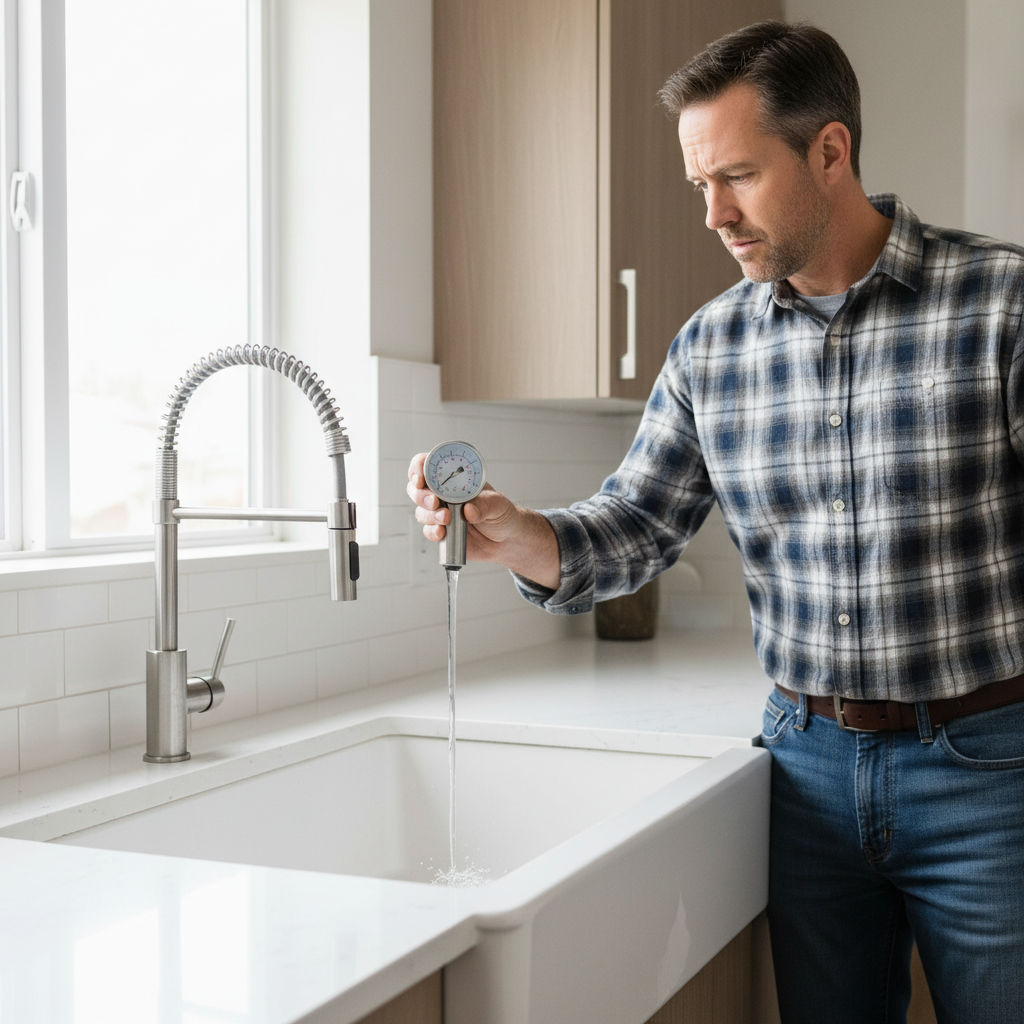
Before troubleshooting, it helps to know what “normal” actually means. Residential water pressure in most homes should fall between 40 and 60 pounds per square inch (PSI). The ideal sweet spot is around 50 PSI. You can measure yours with an inexpensive pressure gauge that screws onto any outdoor hose bib.
Pressure below 40 PSI will feel noticeably weak at your faucets and showerheads. Pressure above 80 PSI can actually damage your plumbing, cause leaks, and shorten the lifespan of your appliances. Both extremes are problems worth addressing.
7 Common Causes of Low Water Pressure
Low water pressure is rarely random. In most cases, one of the following issues is to blame.
1. A Partially Closed Main Shutoff Valve
This is the simplest fix and the most commonly overlooked cause. Your home has a main water shutoff valve, usually located near the water meter or where the main line enters the house. If this valve is not fully open, it restricts water flow to every fixture in the home. This sometimes happens after plumbing work or home renovations when a valve gets bumped. Check that the handle is turned all the way counterclockwise (for gate valves) or fully in line with the pipe (for ball valves).
2. Clogged or Corroded Pipes
Over time, mineral deposits, rust, and sediment build up inside your pipes. This is especially common in older homes with galvanized steel pipes, which corrode from the inside out. The buildup narrows the pipe diameter, reducing the volume of water that can flow through. If you notice low pressure throughout the entire house and it has gotten worse gradually over months or years, pipe corrosion is a likely culprit. A sewer camera inspection can confirm the condition of your pipes without tearing into walls.
3. A Failing Pressure Regulator
Many homes in Orange County have a pressure regulator (also called a pressure-reducing valve or PRV) installed where the main water line enters the property. This device controls incoming water pressure to keep it within a safe range. When it fails, pressure can either spike or drop dramatically. A failing PRV often causes a sudden change in pressure rather than a gradual decline. Replacing a PRV is a straightforward job for a licensed plumber and typically costs a few hundred dollars.
4. Leaks in the Plumbing System
A hidden leak diverts water before it reaches your fixtures. Even a small leak under a slab or inside a wall can significantly reduce pressure. Signs of a hidden leak include unexplained increases in your water bill, damp spots on floors or walls, and the sound of running water when all fixtures are off. If you suspect a leak, professional leak detection can pinpoint the exact location without destructive digging.
5. Municipal Water Supply Issues
Sometimes the problem is not in your home at all. Your city’s water main may be undergoing repairs, experiencing high demand during peak hours, or dealing with a pressure drop. Before calling a plumber, check with your neighbors. If they are experiencing the same issue, the problem is on the municipal side. You can also contact your local water district for information about any active work or known issues in your area.
6. Too Many Fixtures Running at Once
Running the shower, dishwasher, washing machine, and an outdoor hose at the same time puts a heavy demand on your plumbing system. If your home’s supply line is undersized (common in older construction), it simply cannot deliver enough water to all fixtures simultaneously. This type of pressure drop is intermittent and only happens during high-demand periods. Solutions include staggering water use or upgrading to a larger supply line.
7. A Malfunctioning Water Heater
If the low pressure only affects hot water, the problem is likely your water heater. Sediment buildup in the tank can restrict flow, or a failing dip tube may be sending cold water to the top of the tank prematurely. Flushing the water heater annually helps prevent this. If flushing does not help, it may be time for a water heater repair or replacement.
How to Troubleshoot Low Water Pressure
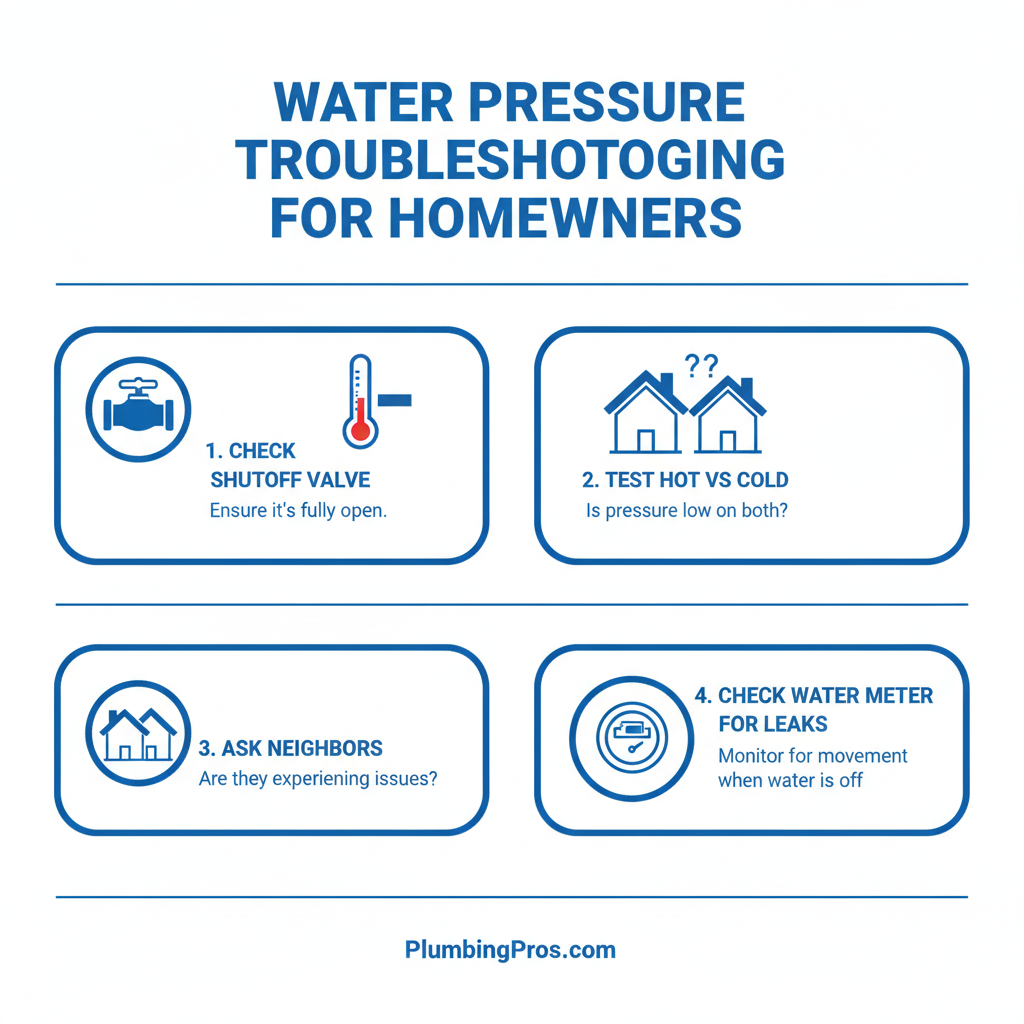
Before calling a professional, run through these steps to narrow down the issue.
Step 1: Check Multiple Fixtures
Is the low pressure isolated to one faucet or showerhead, or does it affect the entire house? A single fixture problem usually means a clogged aerator or a leaky faucet or a local valve issue. Whole-house low pressure points to a larger systemic problem.
If your faucet is old and contributing to low water pressure, replacing your kitchen faucet with a modern model can improve water flow significantly.
Step 2: Test Hot vs. Cold Water
Run the hot and cold water separately. If only the hot water has low pressure, the issue is likely with your water heater or the hot water pipes. If both are weak, the problem is upstream in your supply system.
Step 3: Inspect Your Main Shutoff Valve
Locate the valve and confirm it is fully open. Even a quarter-turn restriction can cause a noticeable pressure drop throughout the home.
Step 4: Check the Pressure Regulator
If your home has a PRV, it may need adjustment or replacement. A pressure gauge reading at the hose bib closest to the regulator will tell you if the device is working correctly.
Step 5: Ask Your Neighbors
If your neighbors on the same street have low pressure too, the issue is municipal. Contact your water district for updates.
Step 6: Look for Signs of Leaks
Check your water meter. Turn off all water in the house and watch the meter for 30 minutes. If it moves, you have a leak somewhere in the system. This test can save you significant money by catching leaks early before they cause structural damage.
When to Call a Plumber for Low Water Pressure
DIY troubleshooting can identify many common causes, but some problems require professional tools and expertise. Call a plumber if:
- Your water pressure has dropped suddenly with no obvious cause.
- Low pressure affects the entire house and your main valve is fully open.
- You suspect a hidden leak (meter test shows water use with all fixtures off).
- Your home has galvanized steel pipes and the pressure has declined over time.
- You need a pressure regulator replacement or adjustment.
- Multiple DIY fixes have not resolved the issue.
A professional plumber can perform a full pressure test, inspect your pipes with a camera, and identify issues that are not visible from the surface.
Frequently Asked Questions
What causes low water pressure in the whole house?
The most common causes of whole-house low water pressure are a partially closed main shutoff valve, a failing pressure regulator, corroded or clogged pipes, a hidden leak, or a problem with the municipal water supply. A process of elimination starting with the simplest checks will usually reveal the source.
Can a plumber fix low water pressure?
Yes. A licensed plumber can diagnose the exact cause using pressure testing equipment and pipe inspection cameras. Common fixes include replacing a pressure regulator, clearing mineral buildup from pipes, repairing leaks, or recommending a repipe if the existing pipes are too corroded.
Why is my water pressure low only in the morning?
Morning is peak water usage time in most neighborhoods. High demand on the municipal system can temporarily reduce pressure to individual homes. If the problem is consistent every morning, it may also indicate an undersized supply line that cannot keep up with your household’s demand during high-use periods.
How much does it cost to fix low water pressure?
Costs vary widely depending on the cause. Replacing a pressure regulator typically costs $250 to $500. Clearing clogged pipes may run $150 to $400. A full repipe of an older home can cost $4,000 to $15,000 or more depending on the size and complexity. The best approach is to get a professional diagnosis first so you know exactly what you are dealing with.
Does low water pressure affect my water heater?
Yes. Low incoming water pressure can reduce the efficiency of your water heater, especially tankless models that rely on a minimum flow rate to activate. Consistently low pressure can also cause uneven heating and premature wear on the unit.
Get Your Water Pressure Back to Normal
Low water pressure is more than an inconvenience. It can signal hidden leaks, corroded pipes, or failing equipment that will only get worse with time. If water accumulation is a concern, learn about whether a sump pump is right for your Southern California home. The team at 911 Drain Lines and Plumbing diagnoses and fixes water pressure problems for homeowners across Orange County and the Inland Empire every day.
Call (714) 746-7611 for a pressure assessment, or contact us online to schedule a visit.