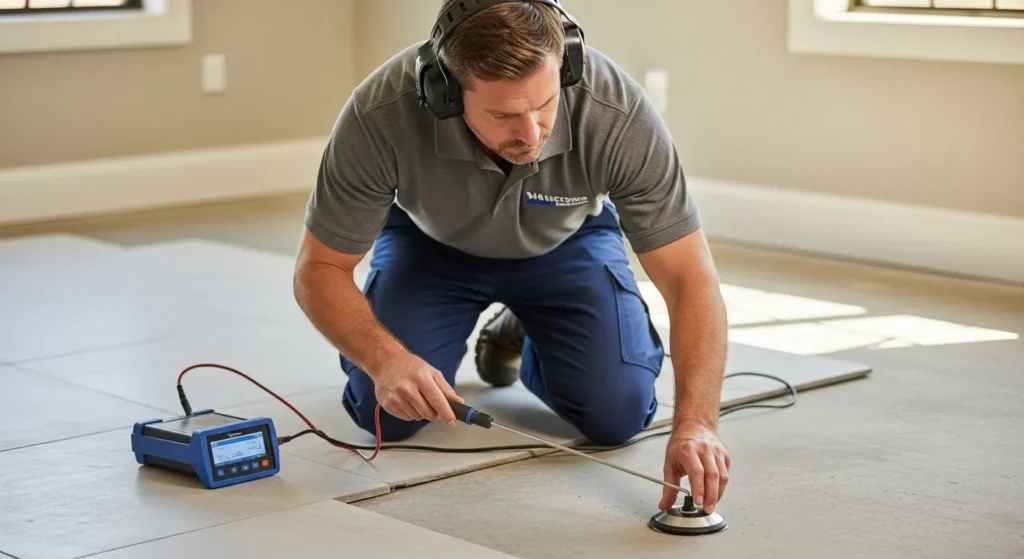




A slab leak occurs when a water pipe running beneath your home’s concrete foundation develops a crack or rupture. Left undetected, slab leaks cause thousands of dollars in structural damage, mold growth, and skyrocketing water bills. The problem is that most homeowners have no idea a leak is happening until the damage is already significant.
Knowing the signs of a slab leak is the first step toward protecting your home. In this guide, we walk you through every major warning sign, explain what causes slab leaks in the first place, and cover the professional detection methods that pinpoint the exact location of the problem without tearing up your floors.
Contact 911 Drain Lines and Plumbing for 24/7 slab leak detection. Call (714) 909-1723 today for fast, reliable service. If the issue persists, consider scheduling residential plumbing services with a licensed professional.
Why Is Your Water Bill Suddenly Higher?
An unexplained spike in your water bill is one of the earliest and most common signs of a slab leak. When a pipe beneath your foundation cracks, water flows continuously, even when every faucet, toilet, and appliance in your home is turned off. Many homeowners in Orange County report bills jumping 30% to 50% before they realize the cause.
If your water usage habits have not changed but your bill keeps climbing, do a simple test. Turn off every water fixture in your home, then check your water meter. If the meter is still running, you likely have a leak somewhere in your system. A slab leak is one of the most common culprits, especially in homes built on concrete foundations.
For a deeper look at leak detection options in your area, read our guide on water leak detection services.
Are There Wet or Warm Spots on Your Floors?
One of the most telltale slab leak symptoms is discovering damp, wet, or unusually warm spots on your floors. If a hot water line beneath the slab is leaking, you may notice sections of your tile, hardwood, or carpet that feel warm to the touch. Cold water line leaks create damp or wet areas instead.
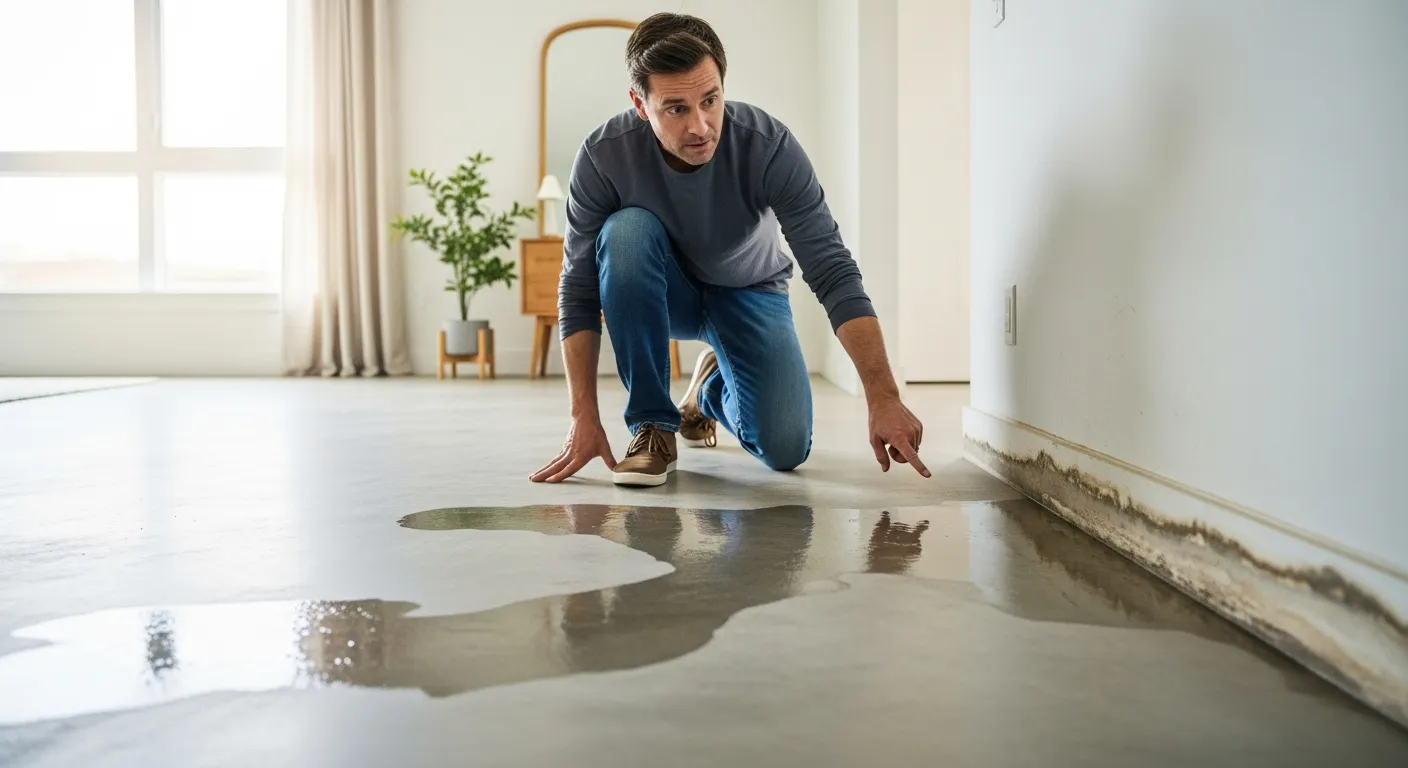
These warm or wet spots often appear near bathrooms, kitchens, or laundry rooms where water supply lines run underneath the slab. Pay close attention to areas where flooring has started to warp, buckle, or discolor. Carpet that feels perpetually damp in one spot is a strong indicator that water is seeping up from below.
Do You Hear Running Water When Everything Is Off?
If you hear the sound of running or hissing water when no fixtures are in use, that is a major red flag. Slab leaks often produce a faint but persistent sound of water movement beneath the floor. The sound may be louder in certain rooms depending on where the damaged pipe is located.
This symptom is easier to detect at night when background noise is minimal. Walk through your home barefoot on hard floors and listen carefully. If you consistently hear rushing or dripping sounds coming from below, contact a licensed plumber for a professional inspection right away.
Is There a Mold or Mildew Smell Under Your Floors?
A musty, moldy odor that you cannot trace to a visible source often points to hidden moisture beneath the slab. When water leaks continuously under your foundation, it creates a damp environment that is ideal for mold and mildew growth. The smell may be strongest in rooms directly above the leak.
Mold growth is more than just an unpleasant odor. It poses serious health risks, including respiratory issues, allergies, and skin irritation, particularly for children, elderly family members, and anyone with compromised immune systems. If you smell mold but cannot find a visible source, a slab leak should be at the top of your list of suspects.
Are Cracks Appearing in Your Foundation or Walls?
Slab leaks erode the soil beneath and around your foundation over time. As the ground shifts, your home’s foundation can settle unevenly, causing cracks to appear in walls, ceilings, and the foundation itself. You may notice:
- Hairline cracks along baseboards or door frames
- Cracks in exterior stucco or interior drywall
- Doors and windows that suddenly stick or will not close properly
- Gaps between walls and the ceiling or floor
Foundation cracks that appear suddenly or grow over time should never be ignored. The longer a slab leak goes unrepaired, the more extensive the structural damage becomes. Visit our slab leak detection in Orange County page to learn how we locate leaks without guesswork.
Why Has Your Water Pressure Dropped?
A noticeable drop in water pressure throughout your home is another key indicator of a slab leak. When water escapes through a crack in the pipe beneath your slab, less water reaches your fixtures. You may notice weaker flow in showers, faucets running at reduced pressure, or appliances like dishwashers and washing machines taking longer to fill.
Low water pressure can have several causes, including municipal supply issues or clogged pipes. However, if the pressure drop is sudden, affects the entire home, and coincides with any other symptoms on this list, a slab leak is a strong possibility. A professional pressure test can help confirm the diagnosis.
What Causes Slab Leaks in the First Place?
Understanding the root causes helps you assess your home’s risk. Slab leaks typically result from one or more of the following factors:
- Soil shifting and expansion: Southern California soils expand and contract with moisture changes, putting pressure on buried pipes. Earthquakes and seasonal shifts accelerate this process.
- Pipe corrosion: Copper and galvanized steel pipes corrode over time, especially when soil chemistry is acidic. Homes built before the 1990s are at higher risk.
- Poor installation: Pipes that were kinked, dented, or improperly soldered during construction are more likely to fail prematurely.
- Abrasion: Pipes that rest against concrete, gravel, or other pipes vibrate slightly during water flow. Over years, this friction wears through the pipe wall.
- Water chemistry: Hard water with high mineral content accelerates internal pipe corrosion, a common issue throughout Orange County and the Inland Empire.
If your home is more than 20 years old and built on a concrete slab, proactive slab leak detection is a smart investment. Catching a leak early can save you thousands compared to dealing with foundation damage after the fact. To understand what repairs involve, see our breakdown of slab leak repair costs. Homeowners in flood-prone areas may also benefit from installing a sump pump to manage water around the foundation. If the issue persists, consider scheduling water heater repair with a licensed professional.
How Do Professionals Detect Slab Leaks?
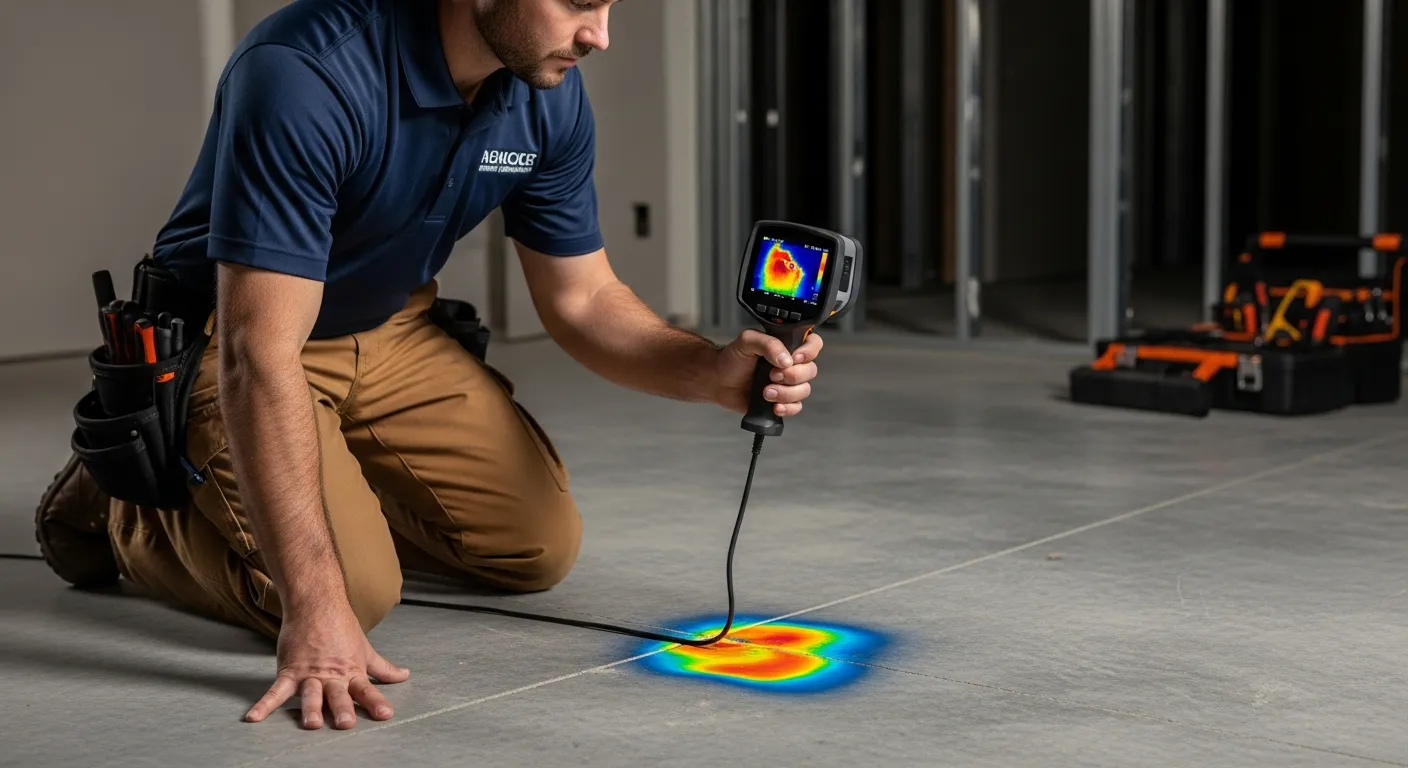
Professional slab leak detection uses advanced, non-invasive technology to locate the exact point of failure without unnecessary demolition. At 911 Drain Lines and Plumbing, our technicians use a combination of methods:
- Electronic listening devices (hydrophones): These amplify the sound of water escaping from a pressurized pipe, allowing technicians to pinpoint the leak within inches.
- Thermal imaging cameras: Infrared cameras detect temperature differences in the slab surface, revealing hot water leaks that create warm zones on the floor above.
- Pressure testing: By isolating sections of your plumbing and monitoring pressure drops, technicians can determine which line is leaking.
- Sewer camera inspection: For drain line leaks, a high-definition camera is fed through the pipe to visually identify cracks, corrosion, or joint failures.
These methods are fast, accurate, and minimize disruption to your home. Most slab leak inspections are completed within a few hours.
Why Is DIY Slab Leak Detection Risky?
While some homeowners attempt to locate slab leaks themselves, DIY detection is unreliable and can make the problem worse. Here is why professional detection is the better choice:
- Inaccurate location: Without electronic and thermal equipment, you cannot pinpoint the leak. Guessing the location means breaking through concrete in the wrong spot, adding unnecessary repair costs.
- Missed secondary leaks: Slab leaks rarely occur in isolation. Professionals check the entire system, not just the obvious symptom area.
- Risk of further damage: Jackhammering through a slab without precise leak coordinates can damage other pipes, electrical conduits, or structural reinforcement.
- No repair path: Even if you locate the general area, you still need a licensed plumber to perform the repair. Modern solutions like trenchless slab leak repair are only available through trained professionals with specialized equipment.
Slab Leak Symptoms: Quick Reference Table
| Symptom | Severity | What to Do |
|---|---|---|
| Unexplained water bill increase | Moderate | Check water meter with all fixtures off; call a plumber if meter is running |
| Wet or damp spots on floors | High | Schedule professional leak detection immediately |
| Warm spots on concrete floors | High | Likely a hot water line leak; request thermal imaging inspection |
| Sound of running water when pipes are off | High | Turn off main water valve and call a licensed plumber |
| Mold or mildew smell with no visible source | High | Schedule inspection; mold poses health risks |
| Cracks in foundation or walls | Critical | Contact a plumber and a structural engineer; do not delay |
| Low water pressure throughout home | Moderate | Rule out municipal issues, then request a pressure test |
| Flooring warping, buckling, or discoloration | High | Indicates prolonged moisture exposure; get professional assessment |
Schedule your slab leak inspection with 911 Drain Lines and Plumbing today. Our licensed technicians use advanced detection technology to find leaks fast, 24 hours a day, 7 days a week.
Frequently Asked Questions About Slab Leaks
How much does it cost to fix a slab leak?
Slab leak repair costs vary depending on the location, severity, and repair method. Simple spot repairs may cost less, while rerouting pipes or using trenchless methods for extensive damage will cost more. Read our detailed guide on slab leak repair costs for a full breakdown of what to expect.
Can a slab leak cause mold?
Yes. Continuous moisture from a slab leak creates the perfect environment for mold growth beneath your floors and inside walls. Mold can spread quickly and pose serious health risks. Early detection and repair are essential to preventing mold problems.
How long can a slab leak go undetected?
Slab leaks can go undetected for weeks, months, or even years depending on the size of the leak and the pipe’s location. Slow leaks are particularly dangerous because they cause gradual damage that homeowners often attribute to other causes. Regular plumbing inspections help catch leaks before they become emergencies.
Does homeowner insurance cover slab leak repair?
Most homeowner insurance policies cover damage caused by a slab leak (such as flooring, drywall, and mold remediation) but do not cover the cost of repairing the pipe itself. Coverage varies by policy and provider, so review your policy or contact your insurance company for specifics.
What is the best method for repairing a slab leak?
The best method depends on the leak’s location and severity. Options include spot repair (cutting through the slab to fix the specific pipe section), pipe rerouting (running new pipes through walls or ceiling to bypass the slab), and trenchless pipe repair (using specialized equipment to repair or replace pipes without major excavation). A professional assessment determines which approach fits your situation. In cases of severe or recurring slab leaks, a full house repipe may be the most reliable long-term solution.