



Every home connected to a municipal water supply relies on a small but critical device called a water pressure regulator. Also known as a pressure reducing valve (PRV), this plumbing component protects your pipes, fixtures, and appliances from dangerously high water pressure. In Orange County and the Inland Empire, municipal water pressure routinely reaches 80 to 150 psi, well above the safe range for residential plumbing. Without a functioning water pressure regulator, that excessive force can cause burst pipes, leaking fixtures, water hammer, and premature appliance failure.
Excess pressure is a leading cause of pipe leaks. Our pipe leak repair services can fix the damage before it spreads.
High pressure can also shorten the life of your water heater. Learn more about water heater repair if you notice issues.
Understanding how your water pressure regulator works, recognizing the signs of failure, and knowing when to schedule a water pressure regulator replacement can save you thousands of dollars in plumbing repairs. This guide covers everything Southern California homeowners need to know about PRV valves, from basic function to professional replacement.
Need water pressure regulator service? Contact 911 Drain Lines or call (714) 909-1517 today.
What Is a Water Pressure Regulator?
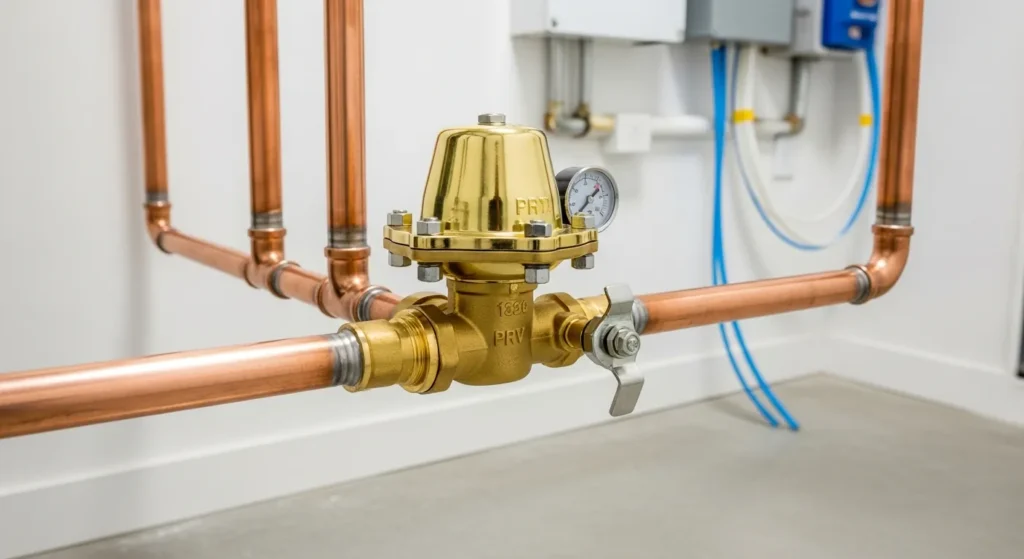
A water pressure regulator is a bell-shaped or dome-shaped valve installed on your main water supply line, usually near the point where water enters your home. Its sole purpose is to reduce the incoming municipal water pressure to a safe, consistent level before it reaches your plumbing system.
Most residential plumbing systems are designed to operate between 40 and 60 psi. Municipal water suppliers, however, push water through their mains at much higher pressures, often between 80 and 150 psi, to maintain adequate flow across large service areas. In parts of Orange County, Irvine, Anaheim, and Mission Viejo, incoming water pressure can exceed 120 psi, especially during off-peak hours when demand drops.
The water pressure reducing valve acts as a buffer between the city’s high-pressure supply and your home’s plumbing. It automatically adjusts to maintain a steady output pressure regardless of fluctuations in the supply line.
How Does a Water Pressure Regulator Work?
Inside a typical PRV valve, you will find a spring-loaded diaphragm mechanism. Here is how the process works:
- High-pressure water enters the valve body from the street-side supply line.
- The diaphragm and spring inside the valve resist the incoming pressure. The spring tension determines the output pressure setting.
- Water passes through a constricted opening in the valve, which physically reduces the pressure as it flows to the house side.
- The diaphragm self-adjusts in real time. When demand increases (multiple faucets running), the valve opens wider. When demand drops, the valve tightens to maintain the set pressure.
Most regulators ship from the factory pre-set to approximately 50 psi. Homeowners and plumbers can adjust this setting using the adjustment screw on top of the valve body. Learning how to adjust water pressure regulator settings properly requires a pressure gauge and careful, incremental turns of the screw. Clockwise increases pressure; counterclockwise decreases it.
Where Is the Water Pressure Regulator Located in Your Home?
In most Southern California homes, the water pressure regulator is located in one of these areas:
- Near the main water shutoff valve, typically where the water line enters the house from the street
- In the garage, mounted on the water supply pipe near the wall closest to the street
- In a utility closet or basement, near the water meter area
- At the front of the house, near the hose bib or water meter box (in some slab-on-grade homes common in Orange County)
The valve is usually brass or bronze and looks like a bell or dome shape, roughly the size of a fist. It will have an adjustment screw on top and may have a pressure gauge attached.
What Are the Signs Your Water Pressure Regulator Is Failing?
A failing water pressure regulator does not always announce itself with a dramatic failure. Often, the symptoms develop gradually. Watch for these warning signs:
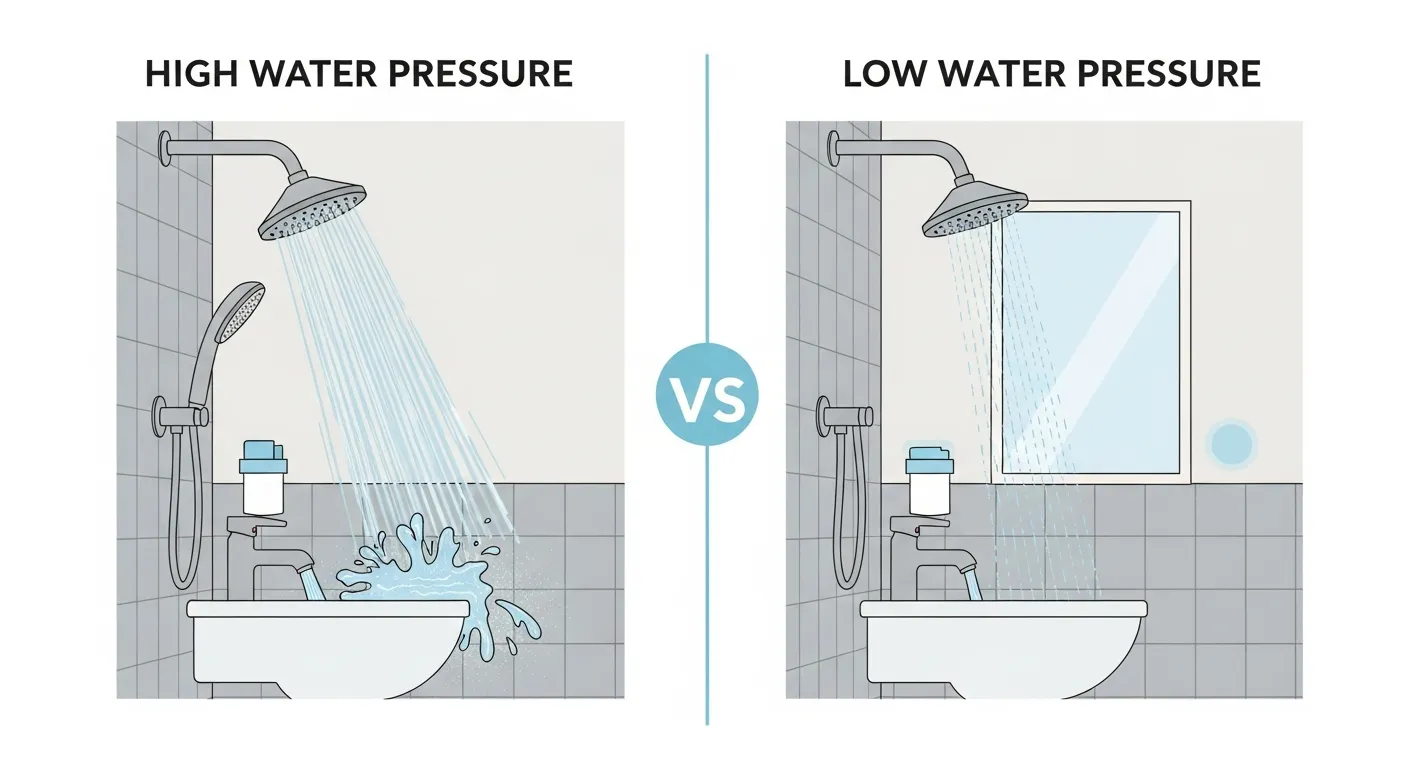
- Sudden high water pressure: Faucets blast water when turned on, and showerheads spray with unusual force.
- Water hammer: Loud banging or knocking sounds in your pipes when valves close, caused by pressure surges.
- Inconsistent water pressure: Pressure fluctuates between too high and too low throughout the day.
- Low water pressure: A stuck or partially closed regulator can restrict flow and reduce pressure throughout the house.
- Leaking from the PRV: Water seeping or dripping from the valve body or adjustment screw indicates internal seal failure.
- Running toilets: Excessive pressure can prevent fill valves from sealing properly, causing toilets to run continuously.
- Appliance problems: Dishwashers, washing machines, and water heaters may malfunction or develop leaks under excessive pressure.
- Frequent pipe leaks: If you keep needing water leak detection services, high pressure from a bad regulator may be the root cause.
How Do You Test Your Water Pressure?
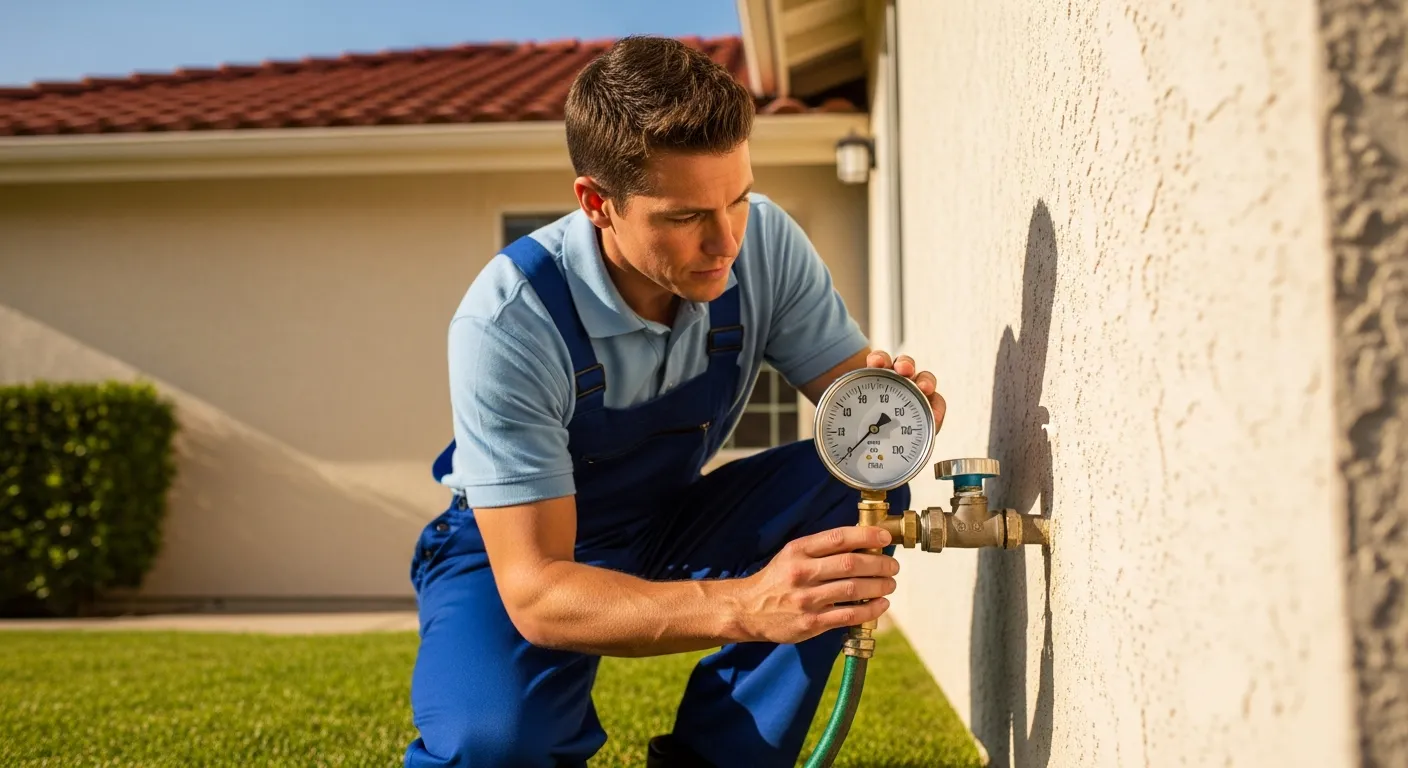
Testing your home’s water pressure is straightforward and takes less than five minutes. You will need a water pressure gauge, available at any hardware store for under $15.
- Turn off all water-using appliances in your home (dishwasher, washing machine, sprinklers, ice maker).
- Attach the pressure gauge to an outdoor hose bib or the laundry faucet.
- Open the valve fully and read the gauge.
- Record the reading. Ideal residential pressure is between 40 and 60 psi.
- Test at different times of day. Pressure often spikes during late night and early morning hours when neighborhood demand is lowest.
If your reading consistently shows pressure above 80 psi, your water pressure regulator is likely failing or mis-adjusted. Readings below 30 psi suggest the valve may be stuck or clogged.
How Do You Adjust a Water Pressure Regulator?
If testing reveals your pressure is slightly outside the ideal range, you may be able to resolve the issue by adjusting the regulator rather than replacing it. Here is how to adjust water pressure regulator settings:
- Locate the adjustment screw on top of the PRV body. It is usually covered by a locknut.
- Loosen the locknut with a wrench.
- Turn the adjustment bolt clockwise to increase pressure or counterclockwise to decrease pressure.
- Make small adjustments, no more than one to two turns at a time.
- Recheck the pressure at your hose bib with the gauge after each adjustment.
- Tighten the locknut once you reach the desired pressure.
If adjusting the screw does not change the pressure reading, the internal components are likely worn out or corroded and the valve needs replacement.
When Should You Replace Your Water Pressure Regulator?
Most water pressure regulators last between 7 and 12 years. However, Southern California’s hard water and high incoming municipal pressure can shorten that lifespan significantly. Replace your PRV valve when:
- The regulator is more than 10 years old, even if it appears to be working
- Adjustment no longer changes the output pressure
- The valve is visibly corroded, leaking, or damaged
- Your pressure gauge shows readings above 80 psi that cannot be corrected
- You have experienced a burst pipe caused by pressure surges
- Multiple fixtures or appliances are failing prematurely
Proactive replacement before a failure occurs is almost always cheaper than dealing with the water damage a failed PRV can cause.
Can You Replace a Water Pressure Regulator Yourself?
While some experienced DIY homeowners can handle a water pressure regulator replacement, this job comes with significant risks that favor professional installation:
| Factor | DIY Replacement | Professional Replacement |
|---|---|---|
| Cost (parts + labor) | $50 to $100 (parts only) | $250 to $500 (parts + labor) |
| Time required | 2 to 4 hours | 1 to 2 hours |
| Tools needed | Pipe wrenches, Teflon tape, pipe cutter, soldering kit (if copper) | All provided by plumber |
| Risk of water damage | High (main line work) | Low (insured, experienced) |
| Code compliance | May not meet local code | Guaranteed code compliant |
| Warranty | Parts only | Parts + labor warranty |
| Permit required | Varies by city | Plumber handles permits |
Replacing a water pressure regulator involves shutting off the main water supply, cutting into the water line, removing the old valve, and installing the new one with proper fittings and sealant. Any mistake on the main supply line can cause a major flood. For most homeowners, the cost difference between DIY and professional installation is small compared to the risk.
What Does Water Pressure Regulator Replacement Cost?
In Orange County and the Inland Empire, typical water pressure regulator replacement costs break down as follows:
| Component | Typical Cost Range |
|---|---|
| PRV valve (standard residential) | $35 to $100 |
| Labor (licensed plumber, 1 to 2 hours) | $150 to $350 |
| Additional fittings and materials | $20 to $50 |
| Permit (if required by your city) | $0 to $75 |
| Total estimate | $250 to $500 |
Costs may increase if the valve is in a difficult-to-access location, if the surrounding pipe is corroded and needs replacement, or if the job requires rerouting supply lines. Compare that to the cost of repairing water damage from a burst pipe, which can easily run $5,000 to $15,000 or more.
Why Is Professional Water Pressure Regulator Service Important?
A licensed plumber brings more than just tools to a water pressure regulator replacement. At 911 Drain Lines and Plumbing, our residential plumbing services team handles PRV replacements across Orange County and the Inland Empire with these advantages:
- Accurate diagnosis: We verify whether the issue is truly the regulator or another problem (municipal supply issue, partially closed valve, or pipe obstruction).
- Proper sizing: We select the correct valve size and pressure rating for your home’s specific needs.
- Code compliance: All work meets California plumbing code requirements.
- Pressure testing: We verify output pressure after installation and adjust to your ideal setting.
- Warranty coverage: Our work includes both parts and labor warranty for your protection.
Schedule your water pressure regulator inspection or replacement today. Call 911 Drain Lines at (714) 909-1517 for fast, reliable service.
Frequently Asked Questions About Water Pressure Regulators
How long does a water pressure regulator last?
Most water pressure regulators last between 7 and 12 years. Factors like hard water, high incoming pressure, and water quality can shorten the lifespan. In Southern California, where municipal pressure is often very high, many PRV valves begin failing around the 8 to 10 year mark.
What happens if your water pressure regulator fails?
A failed water pressure regulator allows unregulated municipal pressure (often 80 to 150 psi in Orange County) to enter your home. This can cause water hammer, burst pipes, leaking fixtures, running toilets, appliance damage, and significantly higher water bills.
How much does it cost to replace a water pressure regulator?
Professional water pressure regulator replacement in Orange County typically costs between $250 and $500, including the valve, labor, and fittings. Costs may be higher if additional pipe work is needed or the valve is in a hard-to-reach location.
Can you adjust a water pressure regulator yourself?
Yes. Locate the adjustment screw on top of the valve, loosen the locknut, and turn the bolt clockwise to increase pressure or counterclockwise to decrease it. Make small adjustments (one to two turns) and recheck with a pressure gauge after each change. If adjustment does not change the reading, the valve likely needs replacement.
What is the ideal water pressure for a home?
The ideal residential water pressure is between 40 and 60 psi. Pressure above 80 psi is considered too high and can damage plumbing and appliances. Pressure below 30 psi will result in weak flow and poor performance from fixtures and water-using appliances.