



Buying a home in Orange County is one of the biggest financial decisions you will ever make. With median home prices well above $900,000 across cities like Irvine, Newport Beach, and Anaheim, the last thing you want is a surprise plumbing problem after closing. A dedicated plumbing inspection catches hidden issues that standard home inspections often miss, from aging sewer lines to corroded pipes behind walls.
Schedule a pre-purchase plumbing inspection with 911 Drain Lines today or call us at (714) 746-7611 for a thorough evaluation before you buy.
This checklist walks you through every system a qualified plumber should evaluate, the Orange County-specific risks buyers face, and what to do if the inspection turns up problems.
Why Orange County Home Buyers Need a Dedicated Plumbing Inspection
A general home inspection covers the basics: roof, foundation, electrical, and plumbing. But most home inspectors spend only 15 to 20 minutes on plumbing and rarely go beyond running faucets and flushing toilets. They typically do not scope sewer lines, test water pressure at multiple fixtures, or identify pipe materials hidden inside walls.
Orange County has plumbing challenges that make a dedicated inspection especially important:
- Hard water mineral buildup: OC’s water supply is high in calcium and magnesium. Over years, mineral deposits narrow pipes, reduce water pressure, and shorten the life of water heaters and fixtures.
- Slab foundations: Most Orange County homes sit on concrete slab foundations. Plumbing runs under or through the slab, making leaks difficult to detect and expensive to repair. A slab leak can cause foundation damage, mold, and water bills that climb without explanation.
- Aging housing stock: Homes built before 1970 in cities like Santa Ana, Fullerton, and Garden Grove may still have galvanized steel or cast iron drain lines. Homes built between 1978 and 1995 could contain polybutylene pipes, a material known for sudden, catastrophic failures.
- Seismic activity: Southern California earthquakes shift soil and stress underground sewer lines. Joints separate, pipes crack, and bellied sections develop over time.
A 30-minute add-on to a general home inspection will not catch these issues. A dedicated plumbing inspection takes one to three hours and covers every system in the house.
What Is Checked During a Plumbing Inspection?
A full plumbing inspection evaluates seven core systems. Here is what a licensed plumber should examine:
- Water supply lines: Material, condition, and connections from the meter to every fixture. The plumber checks for corrosion, leaks at joints, and appropriate pipe sizing.
- Drain, waste, and vent (DWV) system: All drain lines from sinks, tubs, showers, and toilets. Proper venting prevents slow drains and sewer gas from entering the home.
- Sewer line: The main line running from the house to the city connection. Camera inspection is the only reliable way to assess underground sewer condition.
- Water heater: Age, capacity, condition of the tank or tankless unit, temperature and pressure relief valve, and proper venting. In California, water heaters must be strapped for earthquake safety.
- Fixtures and faucets: Every sink, toilet, shower, and tub tested for leaks, proper drainage, and functional shut-off valves.
- Water pressure: Tested at multiple points throughout the house. Normal residential pressure falls between 40 and 80 PSI.
- Shut-off valves: Main water shut-off and individual fixture valves tested for proper operation. Stuck or corroded valves are a common finding in older homes.
Room-by-Room Plumbing Inspection Checklist
Use this checklist when walking through a potential home with your plumber or when doing your own preliminary assessment before making an offer.
Kitchen
- Run hot and cold water at the kitchen sink. Check water pressure and wait 30 seconds for temperature change.
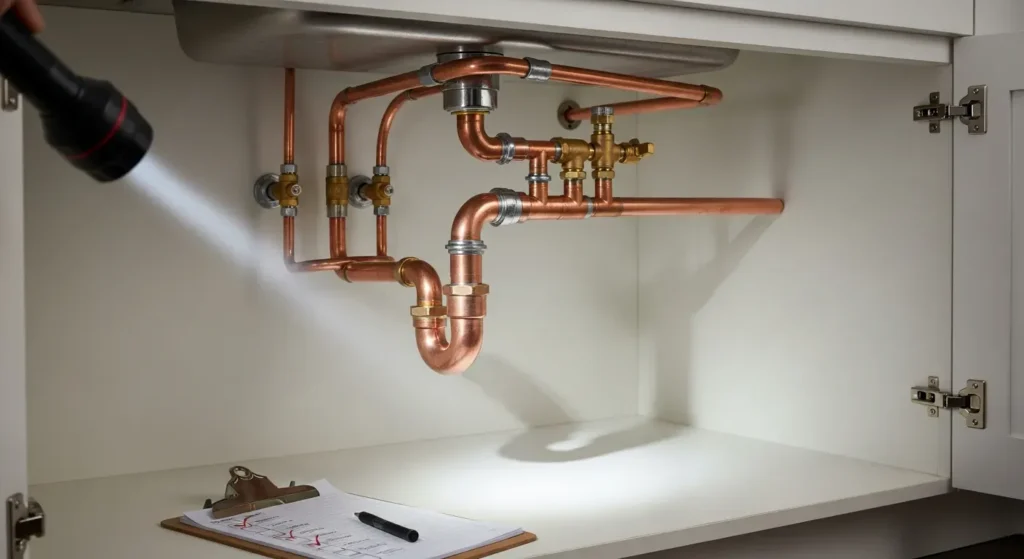
- Look under the sink for drips, water stains, or mold on the cabinet floor.
- Check the garbage disposal for grinding noises, leaks, or electrical issues.
- Inspect the dishwasher supply line and drain connection.
- Look for water damage around the base of the refrigerator if it has a water line.
Bathrooms
- Flush every toilet. Watch for slow filling, rocking on the base, or water seeping around the floor seal.
- Run all faucets and check for low water pressure, which could signal corroded pipes or mineral buildup.
- Test each shower and tub drain. Slow drains may indicate partial blockages in the branch lines.
- Check caulking around tubs and showers. Failed caulking leads to water intrusion in walls and subfloor.
- Look for water stains on ceilings below second-floor bathrooms.
Laundry Area
- Inspect washing machine supply hoses. Rubber hoses older than five years are a burst risk.
- Check the drain standpipe for proper height and overflow protection.
- Look for water stains or warped flooring around the washer area.
Water Heater
- Note the unit’s age (a label on the side shows the manufacture date). Traditional tank water heaters last 8 to 12 years. Learn more about how long a water heater lasts and what affects its lifespan.
- Check for rust or sediment around the base of the tank.
- Verify the temperature and pressure (T&P) relief valve has a discharge pipe routed safely.
- Confirm earthquake strapping is installed (required by California code).
- Look at the venting. Gas water heaters need proper exhaust venting to prevent carbon monoxide buildup.
Outdoor and Exterior
- Test hose bibs (outdoor faucets) for leaks and proper shut-off.
- Locate the main water shut-off valve and test it. If it does not close fully, it needs replacement.
- Check the cleanout access point for the main sewer line.
- Inspect visible irrigation connections for backflow prevention devices.
- Look for standing water, unusually green patches of grass, or sewage odors in the yard, which could indicate a broken sewer line.
Want a professional to run through this entire checklist? Contact 911 Drain Lines at (714) 746-7611 to book a pre-purchase plumbing inspection in Orange County.
Pipe Materials in Orange County Homes: What to Watch For
The pipes inside and under a home tell you a lot about future maintenance costs. Here is what you might find in Orange County properties based on when the home was built:
| Pipe Material | Common Era | Expected Lifespan | Risk Level | Key Concerns |
|---|---|---|---|---|
| Galvanized Steel | Pre-1970 | 40-70 years | High | Interior corrosion restricts flow, rust-colored water, lead solder at joints |
| Cast Iron (Drain) | Pre-1975 | 50-100 years | Medium-High | Interior scaling, joint deterioration, collapse in advanced stages |
| Copper | 1960s-present | 50-70+ years | Low-Medium | Pinhole leaks from acidic water, green patina at joints signals active corrosion |
| Polybutylene | 1978-1995 | 10-15 years | Very High | Reacts with chlorine in water supply, cracks and splits without warning |
| CPVC | 1980s-present | 25-40 years | Medium | Becomes brittle with age, sensitive to UV exposure and certain chemicals |
| PEX | 1990s-present | 40-50+ years | Low | Most reliable modern option, flexible, resistant to scale buildup |
If the home you are considering has galvanized or polybutylene pipes, budget for a full repipe. In Orange County, repiping a house typically costs between $5,000 and $15,000 depending on the size of the home and accessibility of the pipes.
Sewer Line Camera Inspection: What It Reveals and Why It Matters
The sewer line is the most expensive single component of a home’s plumbing system to replace. A full sewer line replacement in Orange County can run $5,000 to $25,000 or more, depending on depth, length, and method. Yet most home inspections skip the sewer line entirely.
A sewer camera inspection sends a waterproof, high-resolution camera through the main sewer line from the cleanout to the city connection. The camera records video and allows the plumber to identify:
- Tree root intrusion: Roots seek moisture and can penetrate pipe joints, especially in clay and Orangeburg pipes common in older OC neighborhoods.
- Bellied or sagging sections: Soil settlement causes dips where waste collects and creates recurring backups.
- Cracks, fractures, and offsets: Earthquake movement and soil shifting displace pipe sections over time.
- Orangeburg pipe: A tar-paper pipe material used from the 1940s through the 1970s that collapses as it ages. Some older homes in Santa Ana, Anaheim, and Fullerton still have Orangeburg lines.
- Scale and buildup: Hard water deposits and grease accumulation that narrow the effective pipe diameter.
A sewer camera inspection typically costs $150 to $500 in Orange County. For a detailed breakdown of the process, see our sewer camera inspection guide or learn more about what a sewer camera inspection can reveal about your pipes.
Considering the potential cost of sewer repairs, this is one of the highest-return inspections a home buyer can request.
How Much Does a Plumbing Inspection Cost in Orange County?
The cost of a plumbing inspection depends on the scope of work and the size of the home. Here are typical ranges for Orange County in 2026:
| Inspection Type | Typical Cost | What It Covers |
|---|---|---|
| General home inspection (plumbing portion) | Included in $400-$600 home inspection | Visual check of accessible plumbing, run fixtures, basic drainage test |
| Dedicated plumbing inspection | $150-$500 | Full system evaluation: supply lines, DWV, water heater, pressure test, fixture check |
| Sewer camera inspection | $150-$500 | Video inspection of main sewer line from cleanout to city connection |
| Slab leak detection | $200-$600 | Electronic and acoustic leak detection for pipes under the foundation |
| Full pre-purchase package | $400-$1,200 | Combined plumbing inspection + sewer camera + leak detection |
Compare those costs to the price of repairs you could face after closing. A sewer line repair or replacement runs $5,000 to $25,000. A full repipe costs $5,000 to $15,000. Water leak detection and slab leak repair can exceed $3,000. Spending a few hundred dollars on an inspection before you buy protects you from five-figure surprises after.
For a broader look at what plumbing work costs in the area, check our guide to the cost of plumbing services.
Does a Home Inspection Cover Plumbing?
Yes, but not thoroughly enough for most buyers. A standard home inspection includes a plumbing component, but it is limited to what the inspector can see and access without moving furniture, opening walls, or using specialized equipment.
Here is how the two compare:
| Check | General Home Inspection | Dedicated Plumbing Inspection |
|---|---|---|
| Run faucets and flush toilets | Yes | Yes |
| Check for visible leaks | Yes | Yes |
| Water pressure test (gauge) | Sometimes | Yes |
| Identify pipe material | Rarely | Yes |
| Sewer camera inspection | No | Yes (recommended add-on) |
| Slab leak detection | No | Available as add-on |
| Water heater detailed evaluation | Basic | Full (age, condition, code compliance) |
| Shut-off valve testing | Sometimes | Yes (every valve) |
| Sewer line condition | No | Yes (with camera) |
For homes older than 20 years, on a slab foundation, or with an unknown plumbing history, a dedicated plumbing inspection is worth the additional cost. Most buyers who skip this step and discover problems after closing wish they had spent the extra $200 to $500.
What to Do If the Inspection Finds Problems
A plumbing inspection that turns up issues is not necessarily a reason to walk away from a home. It gives you negotiating power. Here is how to handle common findings:
Minor Issues (Under $1,000 to Fix)
- Dripping faucets, running toilets, slow drains
- Missing shut-off valves or non-functional valves
- Water heater past its expected lifespan but still functional
Action: Request a repair credit or ask the seller to fix before closing. These are common findings and reasonable requests.
Moderate Issues ($1,000-$5,000)
- Partial repiping needed (one section of galvanized pipe)
- Water heater replacement required
- Sewer line needs spot repair or root clearing
Action: Get written repair estimates from a licensed plumber. Present these to the seller with a request for a price reduction or repair credit equal to the estimated cost.
Major Issues ($5,000+)
- Full repipe required (polybutylene or deteriorated galvanized throughout)
- Sewer line replacement needed (collapsed, bellied, or Orangeburg pipe)
- Active slab leak with foundation concerns
Action: These are deal-altering findings. Get at least two repair estimates. Negotiate a significant price reduction, ask the seller to complete repairs before closing with proof of completion, or use the inspection contingency to walk away if the seller will not negotiate.
Need repair estimates for a home you are considering? 911 Drain Lines provides residential plumbing services across Orange County. Call (714) 746-7611 for honest assessments and written estimates.
Frequently Asked Questions
How much is a plumbing inspection?
A dedicated plumbing inspection in Orange County typically costs $150 to $500, depending on the size of the home and what is included. Adding a sewer camera inspection runs another $150 to $500. A complete pre-purchase plumbing package ranges from $400 to $1,200.
What is checked during a plumbing inspection?
A plumbing inspection covers water supply lines, drain and waste pipes, the sewer line, water heater, all fixtures and faucets, water pressure, and shut-off valves. A thorough inspection also identifies pipe materials, checks for code compliance, and evaluates the overall condition of the system.
Does a home inspection cover plumbing?
A standard home inspection includes a basic plumbing check, but it does not cover sewer line condition, pipe material identification, slab leak detection, or detailed water pressure testing. For homes older than 20 years or on slab foundations, a dedicated plumbing inspection is recommended.
How do I check plumbing before buying a house?
Start by running every faucet, flushing all toilets, and looking under sinks for leaks or water damage. Check the water heater’s age and condition. Look for water stains on ceilings and walls. Then hire a licensed plumber for a full inspection that includes a sewer camera scope, water pressure test, and pipe material identification.
What is the biggest plumbing red flag in a home inspection?
Polybutylene pipes (gray or blue flexible pipes found in homes built between 1978 and 1995) and a damaged sewer line are the two biggest red flags. Both require expensive replacement and indicate a home that could have ongoing plumbing problems. A sewer line with active root intrusion or significant bellying is another top concern.
How long do sewer lines last?
Sewer line lifespan depends on the material. PVC pipes last 50 to 100 years. Cast iron lasts 50 to 75 years. Clay pipes last 50 to 60 years. Orangeburg (tar paper) pipes deteriorate within 30 to 50 years and often fail much sooner. Learn more about how long sewer lines last based on material and conditions.