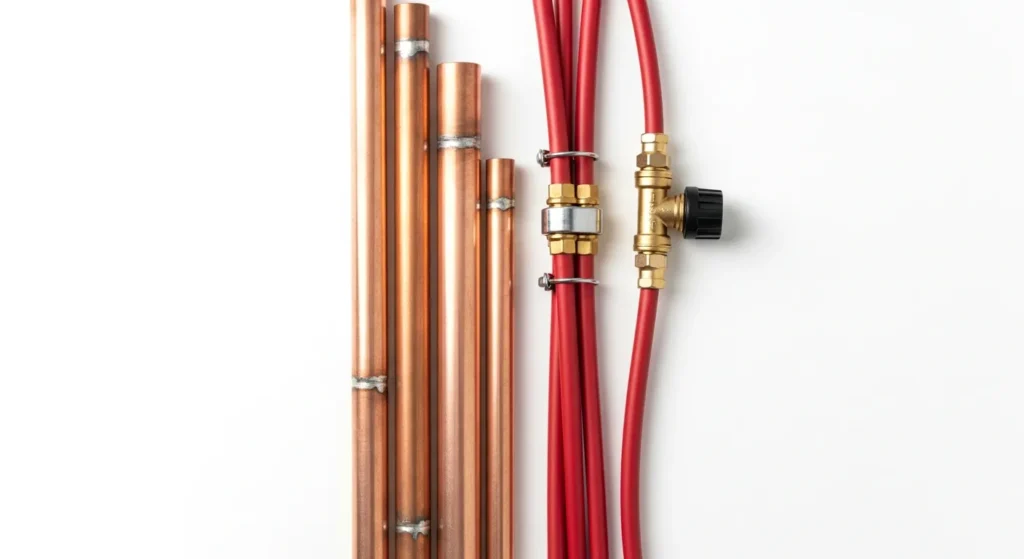




If you are planning a repiping project or building a new home in Orange County, one of the biggest decisions you will face is choosing between copper and PEX piping. Both materials have been used in residential plumbing for decades, but they differ significantly in cost, durability, installation complexity, and long-term performance. Understanding the strengths and weaknesses of each material helps you make a confident decision that protects your home and your wallet.
In this comprehensive guide, we break down the copper vs PEX piping debate from every angle. Whether you are dealing with aging galvanized pipes, replacing polybutylene pipes, or simply upgrading your plumbing system, this comparison covers everything you need to know before hiring a plumber.
Need help choosing the right piping for your home? Contact 911 Drain Lines or call (714) 746-7611 for a free consultation.
What Is Copper Piping and Why Has It Been the Industry Standard?
Copper piping has been the gold standard in residential plumbing since the 1960s. It replaced lead and galvanized steel pipes and quickly earned a reputation for reliability, longevity, and excellent water quality. Copper is a rigid metal pipe that comes in three main types: Type M (thin wall, most common in homes), Type L (medium wall, used for commercial and underground), and Type K (thick wall, used for water mains).
Copper pipes are naturally resistant to bacteria and handle high water pressure well. They have a proven track record of lasting 50 to 70 years in ideal conditions, making copper an attractive option for homeowners who value longevity.
However, copper does have notable drawbacks. It is susceptible to corrosion in areas with acidic water or high mineral content. It can also develop pinhole leaks over time, particularly in homes with aggressive water chemistry. Copper pipes are rigid, meaning installation requires soldering joints with a torch, which adds labor time and cost. If you have experienced slab leak issues, corroding copper pipes beneath the foundation are often the culprit.
What Is PEX Piping and How Does It Differ from Copper?
PEX (cross-linked polyethylene) is a flexible plastic tubing that has rapidly gained popularity in residential plumbing since the 1990s. PEX comes in three types: PEX-A (most flexible, made with the Engel method), PEX-B (slightly stiffer, made with the silane method), and PEX-C (least flexible, made with electron beam). PEX-A is generally considered the best choice for whole-house repiping because of its superior flexibility and resistance to kinking.
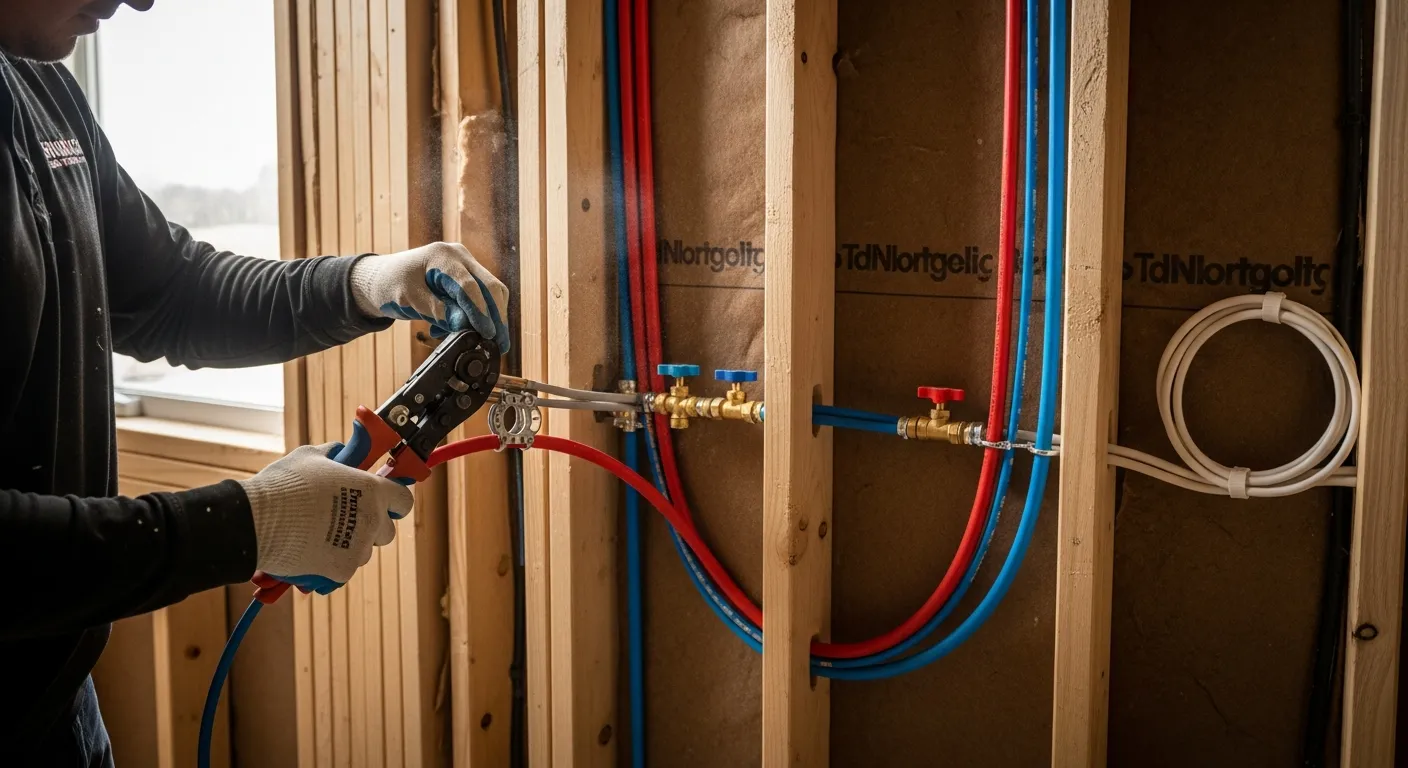
The biggest advantage of PEX is its flexibility. It bends around corners without requiring elbow fittings, reducing connection points and potential leak sources. PEX is also significantly cheaper than copper. A plumber can run PEX through walls and floors much faster because there is no soldering; connections are made with crimp rings, clamp rings, or expansion fittings.
PEX also expands and contracts with temperature changes, which gives it excellent freeze resistance. Unlike copper, which can crack when water freezes inside it, PEX can expand up to three times its diameter before returning to its original shape. This makes it a smart choice for homes in areas that occasionally experience cold snaps. If you have ever dealt with frozen pipes or a burst pipe emergency, PEX piping can help prevent that scenario from happening again.
How Do Copper and PEX Compare on Cost?
Cost is often the deciding factor for homeowners weighing copper vs PEX piping. Here is how the numbers break down:
Copper pipe material costs range from $2 to $8 per linear foot depending on diameter and type. PEX material costs range from $0.50 to $2 per linear foot. That means PEX material alone can be 60% to 75% cheaper than copper.
The cost difference becomes even more dramatic when you factor in labor. Copper installation requires skilled soldering, more fittings, and longer installation time. A typical whole-house repiping project with PEX can cost 40% to 60% less than the same project with copper. For a standard 1,500 square foot Orange County home, that can mean saving $3,000 to $6,000 or more on a full repipe.
However, copper does hold its value better as a material asset. Copper pipes can be recycled for scrap value, while PEX cannot. For homeowners planning to stay in their home for 30+ years, the long-term value calculation may shift slightly in copper’s favor.
Which Material Lasts Longer: Copper or PEX?
Copper has the edge in proven longevity. Well-maintained copper plumbing systems can last 50 to 70 years or longer. There are homes in Orange County with original copper pipes from the 1960s still functioning reliably today.
PEX has a projected lifespan of 40 to 50 years, though the material has only been widely used in the United States since the late 1990s. That means we do not yet have 50+ years of real-world data to confirm those projections. Laboratory testing and performance in European homes (where PEX has been used since the 1970s) support these estimates, but it is worth noting the shorter track record.
One important factor: PEX degrades when exposed to direct sunlight (UV radiation) and should never be used for outdoor exposed applications. Copper handles outdoor exposure without issue. Inside walls and under slabs, both materials perform well when properly installed.
What Are the Key Differences in Installation?
Installation is where PEX truly shines. A plumber can run long, continuous lengths from a manifold to each fixture with minimal connections, using the “home run” layout that reduces potential leak points. Copper installation requires cutting rigid pipes to length, fitting them with couplings, and soldering each joint with a torch, which takes significantly longer and requires a higher skill level.
For residential plumbing projects in Orange County, PEX installation typically takes one to two days for a full repipe, while copper can take three to five days. That difference translates directly into labor cost savings with PEX.
How Does Each Material Affect Water Quality?
Copper is naturally antimicrobial and does not leach chemicals under normal conditions, making it excellent for water quality. However, in homes with highly acidic water (low pH), copper can leach into the supply, creating a metallic taste.
PEX pipes are certified safe for drinking water by NSF International and meet all building code requirements. Early versions of PEX sometimes caused a slight plastic taste, but modern formulations have eliminated this issue. Both materials deliver safe, clean water for most Orange County homeowners.
Which Piping Material Handles Water Pressure Better?
Both copper and PEX handle standard residential water pressure (40 to 80 PSI) without issues. They respond differently to water hammer though. Copper is rigid and transmits vibrations that can loosen joints, while PEX absorbs shock and protects fittings from stress.
If you are experiencing low water pressure in your house, the pipe material may be a factor. Older copper pipes with mineral buildup can restrict flow, while PEX maintains its smooth interior surface throughout its lifespan. Installing a water pressure regulator is recommended regardless of which material you choose.
How Does Each Material Perform with Freeze Resistance?
This is one area where PEX has a clear advantage. PEX tubing can expand up to three times its original diameter when water inside it freezes, then return to its normal size when the ice thaws. This expansion capability dramatically reduces the risk of burst pipes during cold weather events.
Copper, being a rigid metal, has very little give. When water freezes and expands inside a copper pipe, the pressure often exceeds what the pipe can handle, resulting in cracks or splits. While Orange County rarely sees severe winter weather, cold snaps do occur, and homes with pipes running through uninsulated exterior walls or attics can be vulnerable.
For homes where freeze protection is a concern, PEX is the stronger choice. At 911 Drain Lines and Plumbing, we often recommend PEX for repiping projects specifically because of this freeze resistance advantage, particularly for pipes routed through garages, crawl spaces, and exterior walls.
What Does the Copper vs PEX Comparison Look Like Side by Side?
| Criteria | Copper | PEX |
|---|---|---|
| Material Cost | $2 to $8 per foot | $0.50 to $2 per foot |
| Lifespan | 50 to 70 years | 40 to 50 years (projected) |
| Installation Difficulty | High (soldering required) | Low (crimp or expansion fittings) |
| Installation Time | 3 to 5 days (full repipe) | 1 to 2 days (full repipe) |
| Freeze Resistance | Poor (rigid, prone to cracking) | Excellent (expands up to 3x) |
| Water Quality | Excellent (antimicrobial) | Good (NSF certified) |
| Flexibility | Rigid | Highly flexible |
| Corrosion Resistance | Moderate (vulnerable in acidic water) | Excellent (no corrosion) |
| UV Resistance | Excellent | Poor (degrades in sunlight) |
| Recyclability | Yes (scrap value) | No |
| Noise | Can transmit water hammer | Absorbs vibration |
| Best For | Long-term investment, outdoor use | Budget-friendly repipes, freeze-prone areas |
Which Material Do Orange County Plumbers Recommend?
Most licensed plumbers in Orange County, including the team at 911 Drain Lines and Plumbing, recommend PEX for the majority of residential repiping projects. The combination of lower cost, faster installation, freeze resistance, and corrosion immunity makes PEX the practical choice for most homeowners.
That said, copper still has its place. If you are building a custom home and want the longest possible lifespan with proven water quality, copper is a strong option. Some homeowners also prefer copper for exposed plumbing (like a loft-style design) where aesthetics matter.
For homes with leaky pipe problems caused by corroding copper or failing polybutylene, repiping with PEX is typically the most cost-effective solution.
Can You Mix Copper and PEX in the Same Plumbing System?
Yes, copper and PEX can coexist in the same plumbing system. Many homes have copper supply lines from the water main with PEX running throughout the interior, connected by brass transition fittings. Never connect copper directly to PEX without a proper dielectric fitting, as this can cause galvanic corrosion. Partial repiping is also an option; if only certain sections of your copper plumbing are failing, a plumber can replace just those sections with PEX while leaving functioning copper lines intact.
Ready to repipe your home? Call 911 Drain Lines and Plumbing at (714) 746-7611 for a free estimate on copper or PEX installation in Orange County.
If your pipes have been failing repeatedly or are nearing end of life, it may be time to plan for full replacement. Our guide on water line replacement cost covers what Orange County homeowners can expect to pay in 2026.
What Are the Most Common Questions About Copper vs PEX?
Is PEX piping safe for drinking water?
Yes. PEX piping is certified safe for drinking water by NSF International and meets all current plumbing code requirements in California and across the United States. Modern PEX formulations have eliminated the taste issues associated with earlier versions of the material.
How long does PEX piping last compared to copper?
Copper pipes typically last 50 to 70 years, while PEX has a projected lifespan of 40 to 50 years. Copper has a longer proven track record because it has been used in homes since the 1960s, whereas PEX became common in the U.S. in the late 1990s.
Does PEX reduce water pressure?
No. PEX actually maintains consistent water pressure better than aging copper because its smooth interior surface does not develop mineral buildup or corrosion over time. The flexible material also helps absorb water hammer, which can protect fixtures and fittings.
Can I replace copper pipes with PEX myself?
While PEX is easier to work with than copper, whole-house repiping should be done by a licensed plumber. California building codes require permits and inspections for repiping projects. Improper installation can lead to leaks, water damage, and code violations that affect your home insurance and resale value.
How much does it cost to repipe a house with PEX in Orange County?
A full PEX repipe for a typical Orange County home ranges from $4,000 to $10,000 depending on the home’s size, number of fixtures, and accessibility of existing plumbing. For a detailed breakdown, see our guide on how much it costs to repipe a house in Orange County. Copper repiping for the same home would typically cost $8,000 to $18,000 or more. Both estimates include labor and materials.