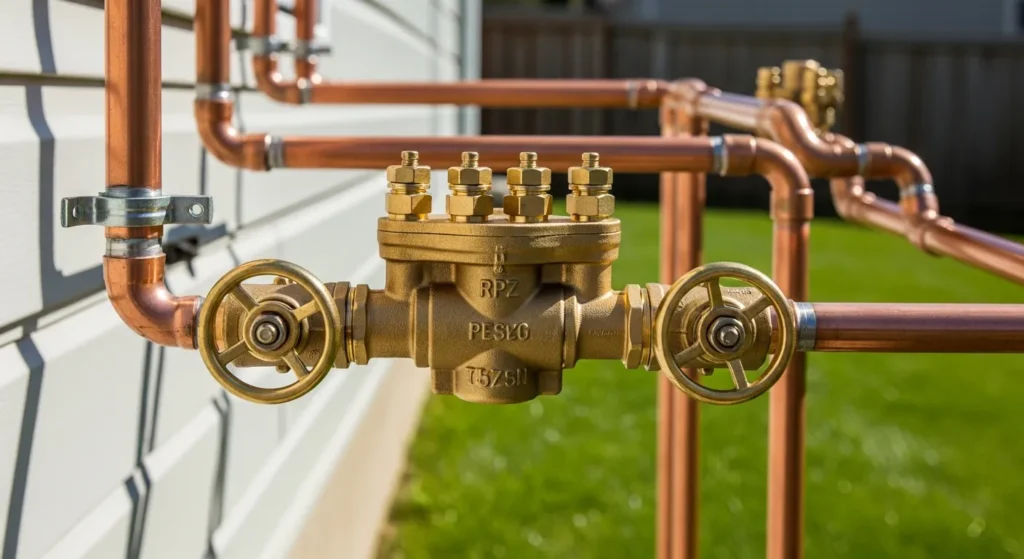




A backflow preventer is one of the most important plumbing devices in your home, yet most homeowners have never heard of one. This small but critical valve stops contaminated water from flowing backward into your clean drinking water supply. Without proper backflow prevention, pesticides, fertilizers, sewage, and other hazardous substances can enter your potable water lines and put your family’s health at serious risk.
If you live in Orange County or the Inland Empire, California law requires backflow prevention on certain plumbing connections. Understanding what a backflow preventer does, the different types available, and when you need testing can save you from code violations, costly fines, and dangerous water contamination.
Need backflow preventer installation or testing? Contact 911 Drain Lines or call (714) 657-5767.
What Is a Backflow Preventer and How Does It Work?
A backflow preventer is a mechanical device installed on your plumbing system that allows water to flow in only one direction. It uses check valves, air gaps, or pressure differentials to block contaminated water from reversing direction and entering your clean water supply.
Backflow happens when water pressure changes cause a reversal in the normal direction of flow. These same pressure fluctuations can also cause water hammer, which produces loud banging in your pipes. Two conditions create this problem:
- Back-siphonage: Occurs when negative pressure (a vacuum) develops in the supply line. A water main break, firefighting operations, or heavy water use nearby can all cause this sudden drop in pressure. If you have noticed low water pressure in your house, it could indicate conditions that contribute to back-siphonage.
- Back-pressure: Happens when downstream pressure exceeds supply pressure. Boilers, elevated plumbing loops, and pumps can all generate enough pressure to push water backward through the system.
In both scenarios, a properly installed backflow prevention device acts as a one-way gate. It lets municipal water flow into your home but physically prevents anything from flowing back toward the public water supply.
What Are the Different Types of Backflow Preventers?
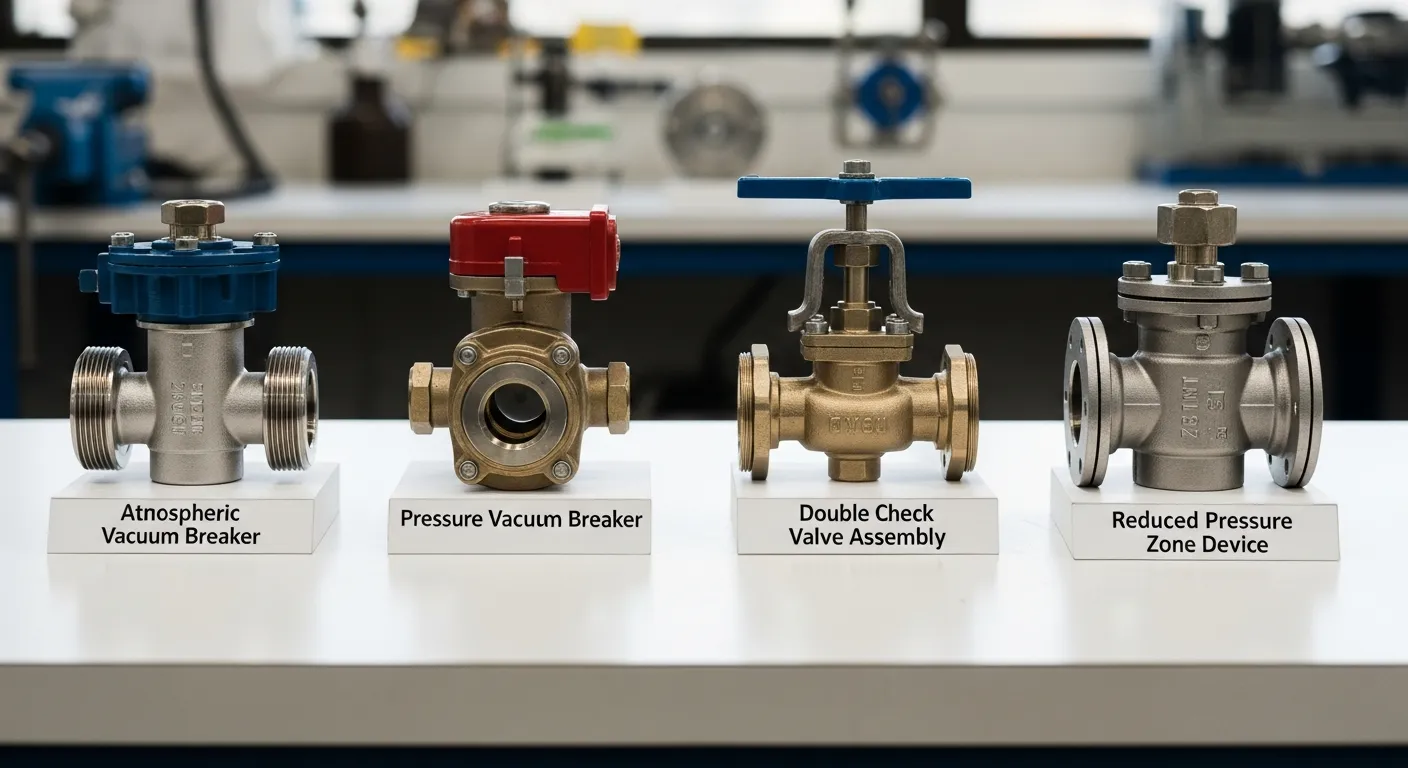
Not all backflow preventers are created equal. Each type serves a specific application based on the degree of hazard and the plumbing configuration. Here is a comparison of the four main backflow preventer types homeowners should know about:
| Type | Best Use Case | Estimated Cost Range | Annual Testing Required? | Protection Level |
|---|---|---|---|---|
| Atmospheric Vacuum Breaker (AVB) | Irrigation systems, hose bibbs, low-hazard applications | $30 to $100 | No (but periodic inspection recommended) | Low to moderate |
| Pressure Vacuum Breaker (PVB) | Sprinkler systems, outdoor plumbing, moderate-hazard connections | $100 to $300 | Yes | Moderate |
| Double Check Valve Assembly (DCVA) | Fire sprinkler lines, commercial connections, moderate-hazard applications | $200 to $600 | Yes | Moderate to high |
| Reduced Pressure Zone (RPZ) | High-hazard connections, chemical facilities, medical buildings, properties with boilers | $400 to $1,200+ | Yes | Highest |
The RPZ assembly provides the highest level of protection and is required for high-hazard connections in California. Most residential irrigation systems use either a PVB or an AVB, while commercial properties often require DCVA or RPZ devices depending on the cross-connection hazard level.
Why Does Your Home Need a Backflow Preventer?
Every home with a cross-connection to the municipal water supply needs some form of backflow protection. A cross-connection is any point where your potable water system connects to a non-potable source. Common residential cross-connections include:
- Irrigation and sprinkler systems that connect to the main water line
- Swimming pools and spas with fill lines connected to household plumbing
- Boilers and radiant heating systems that use treated water with chemicals
- Garden hoses left submerged in pools, attached to chemical sprayers, or connected to utility sinks
- Water softeners and filtration systems tied into the main supply
Without a backflow prevention device at each cross-connection, contaminated water can siphon back into your drinking water during a pressure drop. This is not a theoretical risk. The EPA documents hundreds of backflow contamination incidents every year across the United States, including cases in residential neighborhoods.
If your home has water leak issues, the resulting pressure changes can increase the risk of backflow events. Ensuring your plumbing system has proper leak detection and backflow prevention working together protects both your property and your health.
What Does California Law Require for Backflow Prevention?
California takes backflow prevention seriously. Title 17 of the California Code of Regulations (Sections 7583 through 7605) establishes the state’s cross-connection control requirements. Here is what Orange County and Inland Empire homeowners need to know:
- All cross-connections must be protected. Any connection between a potable water system and a non-potable source requires an approved backflow prevention device.
- Annual testing is mandatory for testable backflow assemblies (PVBs, DCVAs, and RPZs). Your local water district will notify you when testing is due.
- Only certified testers can perform inspections. Backflow testing must be completed by a tester certified by the American Water Works Association (AWWA) or the American Backflow Prevention Association (ABPA).
- Test results must be submitted to your water district. The certified tester files results directly with the local water authority. Failure to test on time can result in fines or water service disconnection.
- New construction and remodels require backflow prevention. If you are repiping your house with PEX or making major plumbing modifications, your contractor must install approved backflow devices at all cross-connections to pass inspection.
Most Orange County water districts, including Irvine Ranch Water District, City of Anaheim Public Utilities, and Mesa Water District, actively enforce these requirements and send annual testing reminders to property owners.
How Do You Know If Your Backflow Preventer Needs Repair or Replacement?
Backflow preventers are mechanical devices with moving parts that wear out over time. Watch for these warning signs that your device may be failing:
- Discolored or foul-smelling tap water: This could indicate contaminated water entering your supply through a failed check valve.
- Visible leaking from the device: An RPZ assembly that continuously drips from its relief valve may have an internal seal failure.
- Failed annual test: If your certified tester reports that the device did not pass, repairs or replacement are required immediately.
- Slow or inconsistent water pressure: A partially stuck or debris-clogged backflow preventer can restrict water flow throughout your home.
- Sediment or debris in your water: Particles appearing at faucets can signal that contaminated water is bypassing a failed preventer.
Most backflow prevention devices last 5 to 15 years depending on water quality, usage, and maintenance. Hard water, which is common throughout Orange County and the Inland Empire, accelerates wear on internal seals and check valves.
How Much Does Backflow Preventer Installation and Testing Cost?
The cost of backflow prevention depends on the type of device, the complexity of the installation, and whether you need a new installation or replacement of an existing unit. Here is what to expect for plumbing service costs in the Orange County area: If the issue persists, consider scheduling residential plumbing services with a licensed professional. If the issue persists, consider scheduling drain cleaning services with a licensed professional.
- Backflow testing: $50 to $150 per device for the annual certified test
- AVB installation: $100 to $250 including the device and labor
- PVB installation: $250 to $600 depending on location and pipe size
- DCVA installation: $400 to $900 for a complete assembly with proper valving
- RPZ installation: $600 to $2,000+ depending on size and site conditions
- Repair of existing device: $75 to $400 depending on what components need replacement
Keep in mind that the cost of NOT having proper backflow prevention can be far higher. Water contamination incidents can cause illness, property damage, legal liability, and water service disconnection. Annual testing and timely repairs are a small investment compared to those risks.
Why Should You Hire a Licensed Plumber for Backflow Prevention?
Backflow prevention is not a DIY project. California requires that backflow devices be installed by licensed plumbers and tested by certified professionals. Here is why hiring a licensed plumber matters:
- Code compliance: A licensed plumber ensures your installation meets Title 17 requirements and local water district specifications.
- Proper device selection: The wrong type of backflow preventer for your application will not pass inspection and may not actually protect your water supply.
- Correct installation: Backflow devices must be installed at the proper height, orientation, and location. Incorrect installation voids the device’s protection.
- Testing and certification: After installation, the device must be tested and the results reported to your water district before the connection is approved.
- Warranty protection: Professional installation preserves manufacturer warranties that DIY installation would void.
At 911 Drain Lines and Plumbing, Brett Mars holds a C-36 Plumbing license and our team is experienced with all types of backflow prevention installations, repairs, and annual testing throughout Orange County and the Inland Empire.
Schedule your backflow preventer installation or annual testing today. Call 911 Drain Lines at (714) 657-5767 for fast, licensed plumbing service.
Frequently Asked Questions About Backflow Preventers
How often does a backflow preventer need to be tested in California?
California requires annual testing of all testable backflow prevention assemblies, including pressure vacuum breakers (PVBs), double check valve assemblies (DCVAs), and reduced pressure zone (RPZ) devices. Your local water district will send a notice when testing is due. Only a certified backflow tester can perform the inspection and submit results.
Can I install a backflow preventer myself?
No. California plumbing code requires that backflow prevention devices be installed by a licensed plumber and tested by a certified backflow tester. DIY installation will not pass inspection, may violate local codes, and could leave your water supply unprotected. Always hire a licensed professional for this work.
What happens if I do not get my backflow preventer tested?
If you fail to complete the required annual test, your local water district may issue fines, place a hold on your water service, or disconnect your water entirely. Most districts send one or two reminders before taking enforcement action. Staying current on testing protects you from penalties and ensures your device is functioning properly.
How long does a backflow preventer last?
Most backflow prevention devices last between 5 and 15 years. Lifespan depends on water quality, usage volume, and maintenance. Hard water areas like Orange County tend to see faster wear on internal seals and check valves. Annual testing helps catch problems early so you can repair or replace the device before it fails completely.
What is the difference between an RPZ and a double check valve?
The main difference is the level of protection. An RPZ (reduced pressure zone) assembly has a relief valve that dumps water if either check valve fails, providing the highest level of protection for high-hazard connections. A double check valve assembly (DCVA) relies on two check valves without a relief valve, making it suitable for moderate-hazard applications. California requires RPZ assemblies for high-hazard cross-connections where contamination could pose a health risk.