



If your home was built between 1978 and 1995, there is a good chance your water supply lines are made of polybutylene pipes. Once marketed as the “pipe of the future,” polybutylene plumbing has become one of the most problematic materials ever used in residential construction. Millions of homes across the United States, including thousands throughout Orange County and the Inland Empire, still rely on these aging pipes. Understanding why polybutylene pipes fail, how to identify them, and when to repipe is critical for protecting your home from costly water damage. If the issue persists, consider scheduling trenchless pipe bursting with a licensed professional.
Installing a water pressure regulator can help protect aging pipes from pressure surges that accelerate failure.
Need a polybutylene pipe inspection? Contact 911 Drain Lines or call (714) 909-1517 today.
What Are Polybutylene Pipes?
Polybutylene (PB) pipes are a type of plastic resin plumbing that was widely installed in residential water supply systems from the late 1970s through the mid-1990s. Often referred to as poly B pipes, they were manufactured under brand names like Quest, Vanguard, and Shell. The material was lightweight, flexible, inexpensive, and easy to install, making it extremely popular with builders during the housing boom of the 1980s.
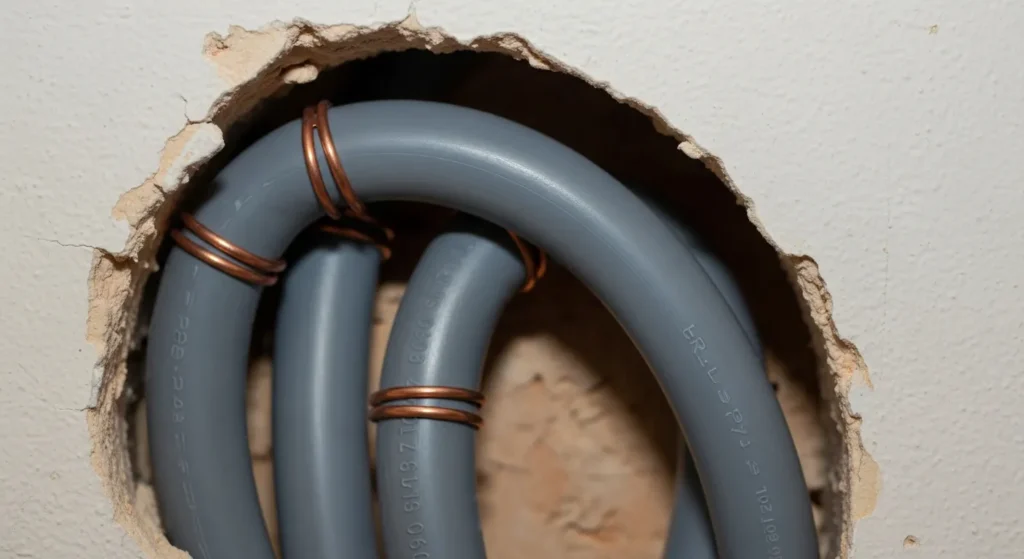
An estimated 6 to 10 million homes across the country were plumbed with polybutylene. These pipes are typically gray, white, or blue in color and have a flexible, almost rubbery feel. You will usually find them running from the main water shutoff valve to individual fixtures throughout the home. They connect using copper or plastic crimp rings and acetal (plastic) fittings, which are also prone to failure.
Production of polybutylene pipes stopped around 1995 after a class action lawsuit (Cox v. Shell Oil) resulted in a $950 million settlement. The lawsuit centered on the claim that the pipes were defective and prone to premature failure. Although polybutylene was never officially banned by building codes, it is no longer manufactured or approved for new installations anywhere in the United States.
Why Do Polybutylene Pipes Fail?
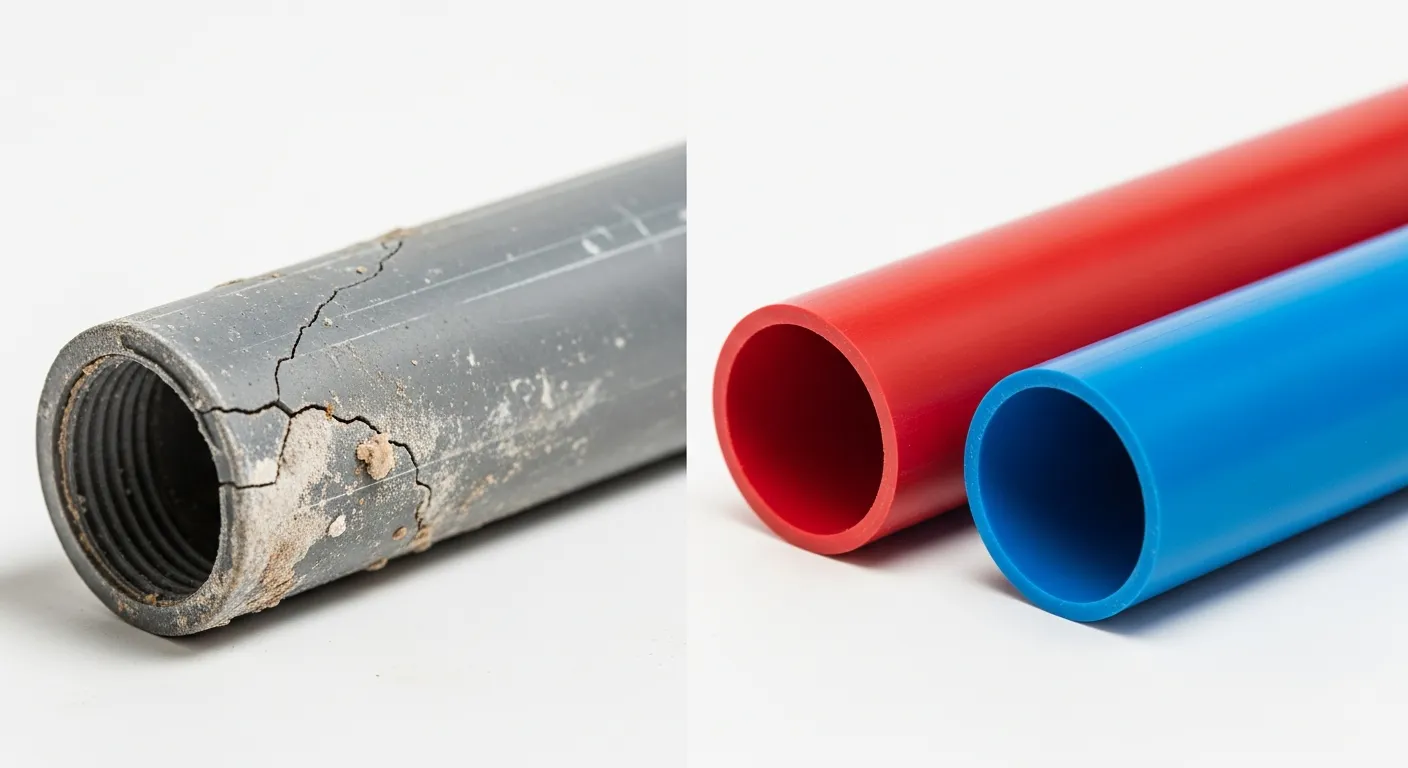
The primary reason polybutylene pipes fail is a chemical reaction between the pipe material and oxidants commonly found in public water supplies. Chlorine and chloramine, which are added to municipal water to kill bacteria, slowly degrade the polybutylene resin from the inside out. This degradation is invisible at first. The pipe walls become brittle and develop micro-fractures that expand over time until the pipe ruptures.
Several factors accelerate this process:
- Chlorine concentration: Higher chlorine levels in municipal water speed up degradation. Many Southern California water districts use elevated chlorine or chloramine levels.
- Water pressure: Homes with high water pressure put additional stress on weakened pipe walls.
- Temperature: Hot water lines tend to fail sooner than cold water lines because heat accelerates the chemical reaction.
- Fitting failures: The acetal plastic fittings and copper crimp rings used with polybutylene systems are also vulnerable. Fittings can crack, and crimp rings can corrode, causing leaks at connection points.
- Age: Most polybutylene installations are now 30 to 45 years old, well beyond the material’s realistic lifespan.
The dangerous part is that polybutylene pipe failure is unpredictable. A pipe can look perfectly fine on the outside while being critically compromised inside. Many homeowners discover the problem only after a catastrophic burst floods their home.
How Do You Know If Your Home Has Polybutylene Pipes?
Identifying gray polybutylene pipes in your home is usually straightforward if you know what to look for. Here are the key indicators:
- Color: Polybutylene pipes are most commonly gray, but they can also be white, blue, or black (for exterior underground lines). The gray color is the most distinctive feature.
- Flexibility: Unlike rigid copper or PVC pipes, polybutylene is flexible and slightly soft to the touch.
- Markings: Look for the stamp “PB2110” on the pipe. This is the industry code for polybutylene resin.
- Location: Check near the main water shutoff valve, under sinks, near the water heater, and in the attic or crawl space. Polybutylene was used for interior supply lines and sometimes for the main service line from the street.
- Fittings: Polybutylene systems use distinctive copper or gray plastic crimp rings at connection points, rather than the stainless steel clamps used with modern PEX systems.
Many Orange County homes built during the 1980s and early 1990s, particularly in cities like Irvine, Anaheim, Mission Viejo, Lake Forest, and Laguna Hills, were constructed during the peak era of polybutylene installation. If your home falls in this age range, a professional water leak detection inspection can confirm whether you have polybutylene plumbing.
What Problems Can Polybutylene Pipes Cause?
Living with polybutylene plumbing creates several serious risks for homeowners:
- Sudden pipe bursts: The most common failure mode is a sudden rupture that can release hundreds of gallons of water per hour. This can destroy flooring, drywall, furniture, and personal belongings.
- Slab leaks: When polybutylene lines run beneath the concrete foundation, failures can cause signs of a slab leak including foundation damage, mold growth, and persistent moisture. Professional slab leak detection is essential if you suspect an under-slab failure.
- Insurance complications: Many insurance companies will not write new policies for homes with polybutylene plumbing, or they require the pipes to be replaced before coverage is issued. Some insurers charge significantly higher premiums for homes that still have polybutylene.
- Reduced property value: Real estate agents in Southern California frequently note that polybutylene pipes are a red flag during home inspections. Buyers often demand a price reduction or require repiping as a condition of sale.
- Water quality concerns: As polybutylene degrades, small particles of plastic can flake off into your water supply. While no direct health hazard has been conclusively proven, degraded pipes can affect water taste and clarity.
When Should You Repipe Your Home?
If your home has polybutylene pipes, the honest recommendation is to repipe sooner rather than later. Here are situations where polybutylene pipe replacement becomes urgent:
- You have experienced one or more leaks in your polybutylene system
- You notice discolored water, low water pressure, or moisture stains on walls and ceilings
- You are buying or selling a home and the inspection reveals polybutylene
- Your insurance company has flagged the pipes or is threatening to drop your coverage
- Your home is more than 30 years old and has never been repiped
Waiting until a pipe bursts is the most expensive option. Emergency repairs cost more, water damage restoration can run into tens of thousands of dollars, and you may be displaced from your home during cleanup. Proactive repiping eliminates the risk entirely.
What Are Your Repiping Options?
When it comes to polybutylene pipe replacement, homeowners typically choose between three materials. Each has distinct advantages depending on your budget, home layout, and long-term plans.
| Feature | PEX (Cross-linked Polyethylene) | Copper | CPVC |
|---|---|---|---|
| Average Cost (Whole House) | $4,000 to $8,000 | $8,000 to $15,000 | $3,500 to $7,000 |
| Lifespan | 40 to 50+ years | 50 to 70+ years | 25 to 40 years |
| Flexibility | Highly flexible, fewer joints | Rigid, requires fittings at turns | Semi-rigid |
| Chlorine Resistance | Excellent | Excellent | Good |
| Freeze Resistance | Good (expands without bursting) | Poor (can burst when frozen) | Poor |
| Installation Speed | Fast (1 to 2 days) | Slower (2 to 4 days) | Moderate (1 to 3 days) |
| Best For | Most residential repiping jobs | Premium builds, high resale value | Budget-conscious projects |
For most homeowners in Orange County and the Inland Empire, repiping with PEX is the best balance of cost, durability, and ease of installation. PEX is specifically designed to resist the chlorine and chloramine in municipal water that destroyed polybutylene pipes in the first place. It is also flexible enough to route through walls and attics with fewer connections, reducing potential leak points.
Copper remains a premium choice that adds value to the home and has the longest proven track record. See our copper vs PEX piping comparison for a detailed breakdown of these two materials. CPVC is a budget-friendly option but does not offer the same longevity or flexibility as PEX.
How Does the Repiping Process Work?
A whole-house repipe is a significant project, but experienced plumbers can complete most residential repiping jobs in one to three days. Here is what to expect:
- Inspection and planning: A licensed plumber evaluates your existing plumbing layout, identifies all polybutylene lines, and plans the new pipe routing.
- Protecting your home: Furniture and flooring near work areas are covered. Access points are created in walls and ceilings as needed.
- Removing old pipes: Polybutylene lines are disconnected and removed where accessible. In some cases, abandoned lines are left in place if removal would cause unnecessary damage.
- Installing new pipes: New PEX, copper, or CPVC lines are routed to every fixture in the home.
- Testing: The new system is pressure-tested to verify there are no leaks.
- Patching and cleanup: Wall and ceiling openings are patched, and your home is cleaned up.
- Final inspection: A city building inspector verifies the work meets local plumbing codes.
At 911 Drain Lines and Plumbing, we handle the full repiping process from initial inspection through final city inspection. Our team is experienced with the specific challenges of residential plumbing in Orange County homes, including working around slab foundations, attic routing, and multi-story layouts.
Ready to replace your polybutylene pipes? Contact 911 Drain Lines or call (714) 909-1517 for a free repiping estimate.
Frequently Asked Questions About Polybutylene Pipes
Are polybutylene pipes dangerous?
Polybutylene pipes are not considered a direct health hazard, but they are a serious property risk. The pipes degrade from the inside due to chlorine in municipal water, leading to unpredictable leaks and burst pipes that can cause extensive water damage, mold growth, and foundation problems.
How much does it cost to repipe a house with polybutylene?
The cost to repipe a home depends on the size of the house, the number of fixtures, and the replacement material. For a typical 1,500 to 2,500 square foot home, PEX repiping costs between $4,000 and $8,000, while copper repiping ranges from $8,000 to $15,000. These estimates include labor, materials, and basic wall patching. For a complete pricing breakdown, read our guide on how much it costs to repipe a house in Orange County.
Will insurance cover my home if it has polybutylene pipes?
Many insurance companies in California are reluctant to insure homes with polybutylene plumbing. Some will require a plumbing inspection before issuing a policy, and others may charge higher premiums or exclude water damage claims. Repiping your home can lower your insurance costs and make the property more insurable.
Can I repipe just part of my polybutylene system?
While partial repiping is technically possible, most plumbing professionals recommend a full whole-house repipe. If one section of polybutylene has degraded, the remaining pipes are likely in a similar condition. Partial repiping leaves you vulnerable to future failures in the sections you did not replace.
How long does a whole-house repipe take?
Most residential repiping projects take one to three days, depending on the size of the home and the accessibility of the pipes. A single-story home with accessible attic space can often be completed in one day. Larger or multi-story homes may require two to three days. Your water will be shut off during working hours but restored each evening.