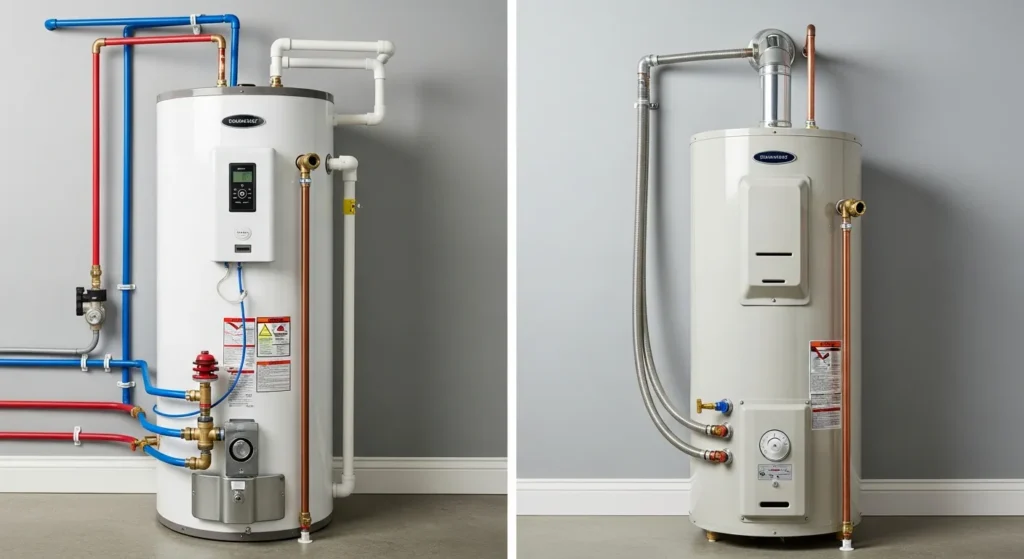




When it is time to replace your water heater, one of the first decisions you will face is whether to go with an electric or gas model. Both fuel types have loyal fans and legitimate advantages. The right choice depends on your home’s existing infrastructure, your budget, your energy goals, and how much hot water your household needs.
This guide compares electric and gas water heaters across every category that matters so you can make a confident decision.
Contact 911 Drain Lines and Plumbing or call (714) 909-1175 for expert water heater advice and installation.
How Does a Gas Water Heater Work?
A gas water heater uses a burner at the bottom of the tank to heat water. Cold water enters through a dip tube, is heated by the gas flame, and rises to the top of the tank where it is drawn out to your faucets and appliances. A thermostat monitors the water temperature and triggers the burner when it drops below the set point.
Gas water heaters require a natural gas or propane supply line and a venting system to exhaust combustion gases. Conventional models use atmospheric venting through a chimney, while power-vent and direct-vent models use fans or sealed intake/exhaust pipes for more flexibility in placement.
How Does an Electric Water Heater Work?
An electric water heater uses one or two heating elements submerged inside the tank to warm the water. A thermostat controls when the elements activate. Because there is no combustion involved, electric models do not need gas lines or venting, making installation simpler in many homes.
Electric water heaters are available in standard tank, hybrid (heat pump), and tankless configurations. Heat pump models are particularly efficient because they pull warmth from the surrounding air rather than generating it directly.
Which Type Costs More Upfront?
Electric water heaters are generally less expensive to purchase and install than gas models. A standard 50-gallon electric tank costs between $400 and $800, while a comparable gas tank runs $500 to $1,200. Installation costs add another $300 to $700 for electric and $500 to $1,500 for gas, depending on whether gas lines and venting already exist.
If your home does not currently have a gas line to the water heater location, running one can add $500 to $2,000 or more. In that case, electric is usually the more practical choice. For detailed pricing, see our water heater installation cost guide.
Which Type Is Cheaper to Operate?
Operating costs depend on local utility rates. In most parts of the United States, natural gas costs less per BTU than electricity, so gas water heaters are typically cheaper to run month to month. A gas water heater may cost $250 to $400 per year to operate, while a standard electric tank costs $400 to $550 per year.
However, heat pump (hybrid) electric water heaters flip this equation. They use 60% to 70% less energy than standard electric models, bringing annual costs down to $150 to $250. If you are considering a high-efficiency option, electric heat pump models are among the most cost-effective water heaters available today.
Which Type Heats Water Faster?
Gas water heaters have a faster recovery rate, meaning they reheat a full tank of water more quickly after heavy use. A gas unit can typically recover a 50-gallon tank in about 30 to 40 minutes, while a standard electric model takes 60 to 80 minutes.
For large families or homes with high simultaneous hot water demand, gas water heaters have a clear edge. If recovery time is a concern but you prefer electric, consider a tankless water heater, which heats water on demand and never runs out.
Is an Electric Water Heater Safer Than Gas?
Electric water heaters have a slight safety advantage because they do not involve combustion. There is no risk of gas leaks, carbon monoxide exposure, or backdrafting. Gas water heaters are safe when properly installed and maintained, but they do require functioning venting and regular inspection of the gas connection.
If you smell gas near your water heater, turn off the gas supply and evacuate immediately. Read our guide on what to do if you have a gas leak for step-by-step safety instructions.
How Do They Compare on Efficiency and Environmental Impact?
Standard gas water heaters have an energy factor (EF) of 0.58 to 0.70, while standard electric tanks rate 0.90 to 0.95. However, EF does not account for how the energy is generated. Because power plants convert fuel to electricity at roughly 30% to 40% efficiency, the overall environmental impact of standard electric heaters can be higher than gas in some regions.
Heat pump electric water heaters are the standout performers, with EF ratings of 2.0 to 3.5, making them two to three times more efficient than any other option. If reducing your carbon footprint is a priority, a heat pump model is the clear winner.
Which Type Lasts Longer?
Both gas and electric tank water heaters have similar lifespans of 8 to 12 years with proper maintenance. Electric models sometimes last slightly longer because they have fewer mechanical components and no combustion-related wear. Tankless models of either fuel type can last 15 to 20 years. For more on lifespan expectations, see our guide on how long water heaters last.
Regular maintenance, including annual flushing and anode rod inspection, extends the life of both types. Sediment buildup is the number one enemy of tank water heaters, and it affects gas models more heavily because the burner sits directly below the tank where sediment settles. Electric models with bottom-mounted elements can also suffer from sediment, but the impact on efficiency is typically less severe.
If your water heater is acting up, check our water heater troubleshooting guide or no hot water resource.
Does Your Home’s Existing Infrastructure Affect the Decision?
Your home’s current setup is one of the biggest practical factors in choosing between gas and electric. If your home already has a gas line running to the water heater location along with proper venting, replacing a gas unit with another gas unit is the most cost-effective option. Similarly, if your home runs on all-electric utilities with no gas service, converting to gas would require running a new gas line from the meter, adding venting through the roof or wall, and obtaining permits, all of which adds significant cost.
In Orange County and the Inland Empire, most older homes have gas water heaters. Newer construction, especially condominiums and apartments, increasingly uses electric. If you are building a new home or doing a major remodel, this is the best time to evaluate which fuel type serves you better long term, since the infrastructure costs are already part of the project budget.
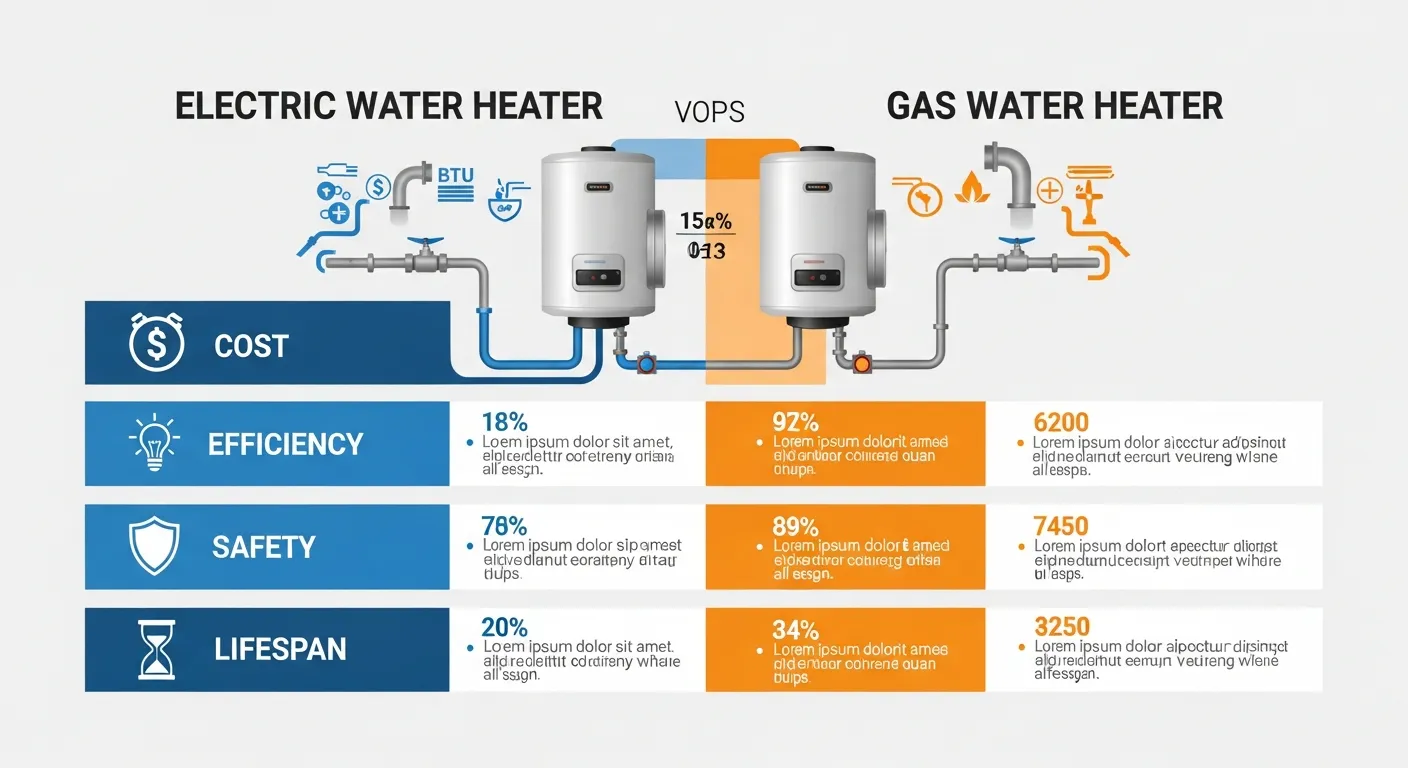
| Category | Gas Water Heater | Electric Water Heater |
|---|---|---|
| Upfront cost | $500 to $1,200 | $400 to $800 |
| Annual operating cost | $250 to $400 | $400 to $550 (standard); $150 to $250 (heat pump) |
| Recovery rate (50 gal) | 30 to 40 minutes | 60 to 80 minutes |
| Energy efficiency (EF) | 0.58 to 0.70 | 0.90 to 0.95 (standard); 2.0 to 3.5 (heat pump) |
| Lifespan | 8 to 12 years | 8 to 12 years (slightly longer on average) |
| Installation complexity | Requires gas line and venting | Requires only electrical connection |
| Safety | Gas leak and CO risk (low with maintenance) | No combustion risks |
| Environmental impact | Moderate (direct gas use) | Varies by grid; heat pump models are excellent |
Which Water Heater Should You Choose?
Choose a gas water heater if your home already has a gas line, you want faster recovery, or natural gas rates are favorable in your area. Gas is a strong choice for larger households with high peak demand.
Choose an electric water heater if your home lacks gas infrastructure, you prioritize safety, or you want the long-term savings of a heat pump model. Electric is also the better option in areas with low electricity rates or for homeowners who want a simpler installation.
Need help deciding? Contact 911 Drain Lines and Plumbing or call (714) 909-1175. Our licensed plumbers serve Orange County and the Inland Empire with expert water heater installation and replacement.
Frequently Asked Questions
Is a gas or electric water heater better for a large family?
Gas water heaters are typically better for large families because they recover hot water faster. A gas unit can reheat a full 50-gallon tank in 30 to 40 minutes compared to 60 to 80 minutes for electric, reducing wait time during heavy use.
Can I switch from gas to electric or vice versa?
Yes, but switching fuel types requires modifications. Going from gas to electric means adding a dedicated 240-volt circuit and capping the gas line. Going from electric to gas means running a gas line and installing venting. A licensed plumber can evaluate your home and handle the conversion.
What is the most energy-efficient water heater?
Heat pump (hybrid) electric water heaters are the most energy-efficient option available, using 60% to 70% less electricity than standard electric models. They have energy factor ratings of 2.0 to 3.5, far exceeding both standard electric and gas models.
Do electric water heaters work during a power outage?
No. Electric water heaters require electricity to operate and will not heat water during a power outage. Gas water heaters with a standing pilot light or battery ignition can continue to function without electricity.
How much does it cost to install a water heater in Orange County?
Water heater installation in Orange County typically costs $800 to $2,500 depending on the fuel type, tank size, and complexity of the installation. Gas installations with new venting can cost more. For a detailed breakdown, visit our water heater installation cost page.