



A gas leak in your house is one of the most dangerous situations a homeowner can face. Natural gas is highly flammable, and even a small leak can lead to an explosion, fire, or serious health problems for everyone in the home. Knowing the signs of a gas leak, understanding the symptoms of exposure, and having a clear plan of action can save lives.
In this guide, the licensed plumbing team at 911 Drain Lines and Plumbing explains what a gas leak smells like, the physical symptoms to watch for, step-by-step safety instructions if you suspect a leak, and how professionals detect and repair gas lines in Orange County and the Inland Empire. If the issue persists, consider scheduling gas line repair and replacement with a licensed professional. If the issue persists, consider scheduling residential plumbing services with a licensed professional.
Contact 911 Drain Lines and Plumbing for 24/7 emergency gas leak detection and repair. Call (714) 746-7611 now.
After securing your safety, call our emergency plumber in Orange County for immediate gas line repair.
What Does a Gas Leak Smell Like?
Natural gas in its pure form is completely odorless and colorless. That is why utility companies add a chemical called mercaptan (also called methanethiol) to the gas supply. Mercaptan produces a strong, unmistakable rotten-egg or sulfur smell that serves as an early warning system.
If you walk into a room and notice that distinct sulfur odor, even faintly, take it seriously. The smell may be stronger near gas appliances like your stove, water heater, furnace, or dryer. It can also accumulate in enclosed spaces like closets, basements, or utility rooms where gas lines run.
Keep in mind that some people have a reduced sense of smell due to age, illness, or smoking. If others in your household mention a strange odor that you cannot detect, trust their observation and act immediately.
What Are the Physical Symptoms of a Gas Leak?
Exposure to natural gas can cause a range of physical symptoms that often get mistaken for the flu or general fatigue. Recognizing these gas leak symptoms early can prevent serious harm:
- Headaches that appear suddenly when you are at home and improve when you leave
- Dizziness and lightheadedness, especially in rooms with gas appliances
- Nausea and vomiting without an obvious cause
- Fatigue and drowsiness beyond normal tiredness
- Difficulty breathing or shortness of breath
- Eye, nose, and throat irritation
- Ringing in the ears
- Mood changes, including confusion or difficulty concentrating
The key indicator is whether multiple people in the home experience these symptoms at the same time, or if symptoms improve once you step outside. Pets may also show signs of distress, lethargy, or loss of appetite. Prolonged exposure to a gas leak can lead to loss of consciousness and, in severe cases, death. Never ignore these warning signs.
What Are the Visual and Audible Signs of a Gas Leak?
Beyond the smell and physical symptoms, there are several visual and audible clues that may indicate a gas leak in your house:
- Hissing or whistling sounds near gas lines, meters, or appliances
- Dead or dying houseplants in areas near gas pipes, even with proper watering
- Bubbles in standing water near gas line connections or in puddles around outdoor gas meters
- White mist or fog near a gas line, especially outdoors
- Dirt or debris blowing from a hole in the ground near a gas line
- Higher-than-normal gas bills without a change in usage patterns
- Pilot lights that frequently go out on your water heater, furnace, or stove
- Yellow or orange burner flames instead of the normal steady blue flame
Any of these signs warrants immediate investigation. If you notice a combination of smell, symptoms, and visual indicators, do not wait to confirm the leak yourself. Get everyone out of the house and call for help.
How Do You Compare Gas Leak Warning Signs?
| Warning Sign | Type | Severity | What to Do |
|---|---|---|---|
| Rotten-egg or sulfur smell | Smell | High | Evacuate immediately, call 911 |
| Hissing or whistling near gas line | Sound | High | Evacuate immediately, call 911 |
| Headache, dizziness, nausea at home | Physical | High | Leave the house, seek fresh air, call gas company |
| Dead houseplants near gas pipes | Visual | Moderate | Schedule professional inspection |
| Pilot light keeps going out | Visual | Moderate | Call a licensed plumber |
| Yellow or orange burner flames | Visual | Moderate | Turn off appliance, call a technician |
| Unexplained increase in gas bill | Financial | Low to Moderate | Request a gas line inspection |
| Bubbles in water near gas fittings | Visual | Moderate | Do not touch; call a licensed plumber |
What Should You Do If You Suspect a Gas Leak?

Your response in the first few minutes matters more than anything else. Follow these steps in order:
1. Evacuate Immediately
Get every person and pet out of the house right away. Do not stop to gather belongings. Leave doors open behind you to help gas dissipate. Move at least 300 feet away from the home, similar to how you would respond to a burst pipe or other household emergency that requires immediate evacuation.
2. Do Not Create Any Sparks
While inside or near the house, do not:
- Turn on or off light switches or electrical appliances
- Use your cell phone or landline
- Light matches, candles, or cigarettes
- Start your car if it is in an attached garage
- Use a flashlight (unless it is rated intrinsically safe)
Even a tiny spark from a light switch can ignite natural gas that has accumulated in your home.
3. Call for Help From Outside
Once you are safely away from the house, call 911 and your gas utility company’s emergency line. SoCalGas customers in Orange County and the Inland Empire can call 1-800-427-2200. Report the suspected leak and follow their instructions. Do not re-enter the home until emergency responders or a qualified technician confirms it is safe.
4. Shut Off the Gas (Only If Safe)
If you can safely access your gas meter outside without re-entering the home, turn the gas shutoff valve to the off position using a wrench. Turn it a quarter turn so the valve handle is perpendicular to the pipe. If you cannot reach the meter safely, leave it for the professionals.
How Do Plumbers Detect Gas Leaks?
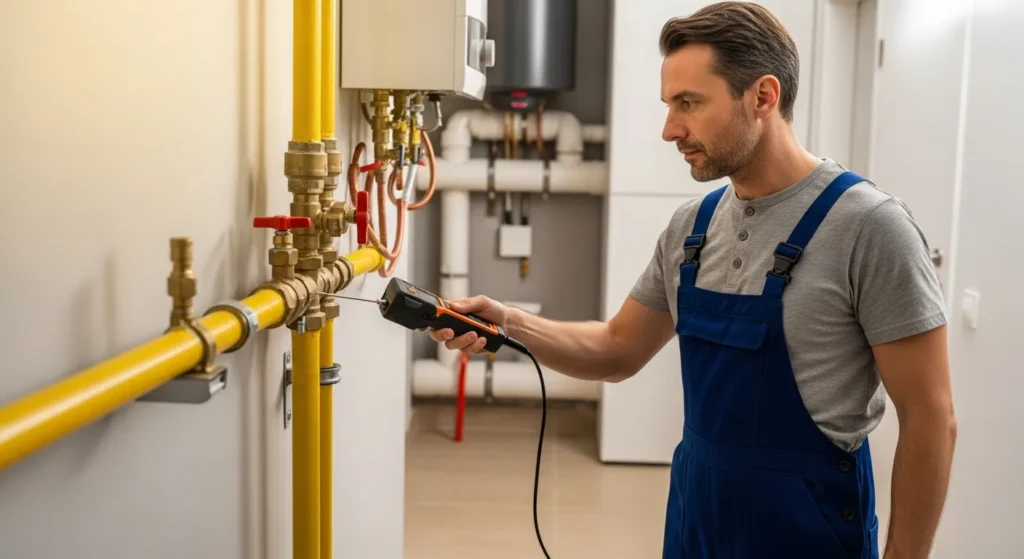
Licensed plumbers use specialized equipment and proven methods to locate gas leaks accurately without guesswork. At 911 Drain Lines and Plumbing, our technicians use the following approach for electronic gas leak detection:
- Electronic gas leak detectors: Handheld devices that measure gas concentration in the air down to parts per million, allowing technicians to pinpoint exactly where a leak is occurring
- Pressure testing: The gas system is pressurized to a specific level and then monitored. Any pressure drop over time indicates a leak somewhere in the system
- Soapy water test: Applied to joints, fittings, and connections. Bubbles form at the exact point where gas is escaping
- Infrared cameras: Advanced thermal imaging can visualize gas escaping from underground or concealed pipes
Professional detection is critical because gas leaks can occur in hidden locations, behind walls, under slabs, or in underground lines running to your home. Attempting to find a leak on your own can waste valuable time and put your family at risk.
What Does the Gas Line Repair Process Look Like?
Once the leak is located, a licensed plumber will determine the best repair method based on the leak’s location, the pipe material, and the severity of the damage. Common repair approaches include:
- Fitting and joint repair: Tightening or replacing corroded fittings, damaged connectors, or worn joints
- Section replacement: Cutting out the damaged section of pipe and replacing it with new material
- Full line replacement: For older homes with deteriorating gas lines, a complete replacement may be the safest long-term solution
- Appliance connector replacement: Flexible connectors between gas lines and appliances can degrade over time and are a common leak source
After any repair, the technician will pressure-test the entire system again to verify there are no remaining leaks. For a detailed breakdown of what to expect in terms of pricing, see our guide on gas line repair cost.
All gas line work in California must be performed by a licensed contractor holding a C-36 plumbing license. Never hire an unlicensed worker for gas line repairs.
How Can You Prevent a Gas Leak in Your House?
While you cannot eliminate every risk, these steps significantly reduce the chance of a gas leak in your house:
- Schedule annual gas line inspections with a licensed plumber, especially in homes older than 20 years
- Install natural gas detectors on every level of your home and near gas appliances (these work like smoke detectors but specifically sense gas)
- Maintain your gas appliances with regular professional servicing. Ensure burners, pilot lights, and ventilation are functioning properly
- Know where your gas shutoff valve is and keep a wrench nearby so you can turn it off quickly in an emergency
- Replace old flexible gas connectors made of uncoated brass, which are known to crack and leak over time
- Keep the area around gas appliances clear of flammable materials, chemicals, and clutter
- Watch for signs of corrosion on visible gas pipes, especially in humid areas or near water sources
- Call before you dig. Always contact 811 before any excavation work near your property to have underground gas lines marked
When Should You Call a Professional About a Gas Leak?
Do not hesitate to call a licensed plumber if you experience any of the following:
- You smell gas, even faintly, and cannot identify the source
- Your gas detector alarm goes off
- You hear hissing near a gas line or appliance
- You notice physical symptoms like headaches and dizziness that improve when you leave the house
- Your gas bill has increased without explanation
- You want a preventive inspection of aging gas lines
Contact 911 Drain Lines and Plumbing for 24/7 emergency gas leak detection and repair across Orange County and the Inland Empire. Call (714) 746-7611.
Our technicians hold C-36 plumbing licenses and use electronic detection equipment to locate and fix leaks quickly and safely.
Frequently Asked Questions About Gas Leaks
What does a gas leak smell like?
Natural gas is odorless by itself, but utility companies add a chemical called mercaptan that gives it a distinctive rotten-egg or sulfur smell. If you notice this odor in your house, treat it as a possible gas leak and take immediate safety precautions.
What are the symptoms of gas leak exposure?
Common gas leak symptoms include headaches, dizziness, nausea, fatigue, difficulty breathing, and eye or throat irritation. Prolonged exposure can lead to loss of consciousness. If multiple people in your household feel these symptoms at the same time, evacuate and call 911.
How do I check for a gas leak in my house?
Look for warning signs like the rotten-egg smell, hissing sounds near gas lines, dead or dying houseplants, and bubbles in standing water near pipes. You can apply soapy water to gas fittings and watch for bubbles. However, the safest approach is to call a licensed plumber who uses electronic gas leak detectors and pressure testing equipment.
What should I do if I smell gas in my house?
Evacuate everyone from the home immediately. Do not turn on or off any electrical switches, lights, or appliances. Do not use your phone inside the house. Once you are safely outside, call 911 and your gas utility company. Do not re-enter the home until a professional confirms it is safe.
Can I fix a gas leak myself?
No. Gas line repair should only be performed by a licensed plumber or gas technician. DIY gas line work is extremely dangerous and illegal in most jurisdictions. A qualified professional with proper tools and licensing, such as a C-36 plumbing license in California, should handle all gas line repairs.
How much does gas leak detection and repair cost?
Costs vary depending on the location and severity of the leak, the type of pipe, and the extent of repair needed. For a detailed breakdown of typical costs, visit our gas line repair cost guide or contact us for a specific estimate.