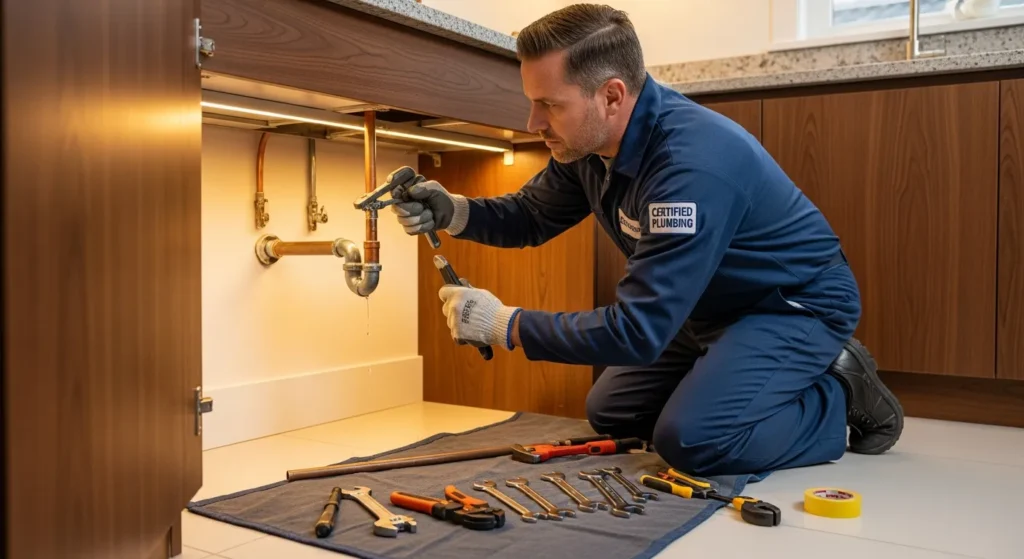




A leaky pipe might seem like a minor inconvenience, but ignoring it can lead to thousands of dollars in water damage, mold growth, and skyrocketing utility bills. The EPA estimates that household leaks waste nearly 1 trillion gallons of water annually in the United States. Whether you are dealing with a slow drip under the kitchen sink or a steady stream from a corroded pipe, knowing how to fix a leaky pipe quickly can save your home and your wallet.
If your home has older piping, check our polybutylene pipe guide to see if your pipes are at risk.
In this guide, we cover the most common causes of pipe leaks, how to spot them early, the best temporary repairs you can do yourself, and when it is time to call a licensed plumber for a permanent fix. If you are a homeowner in Orange County or the Inland Empire, this information could prevent a small problem from becoming a full-scale plumbing emergency.
Contact 911 Drain Lines and Plumbing or call (714) 400-5090 for fast, professional pipe repair.
What Causes Pipes to Leak?
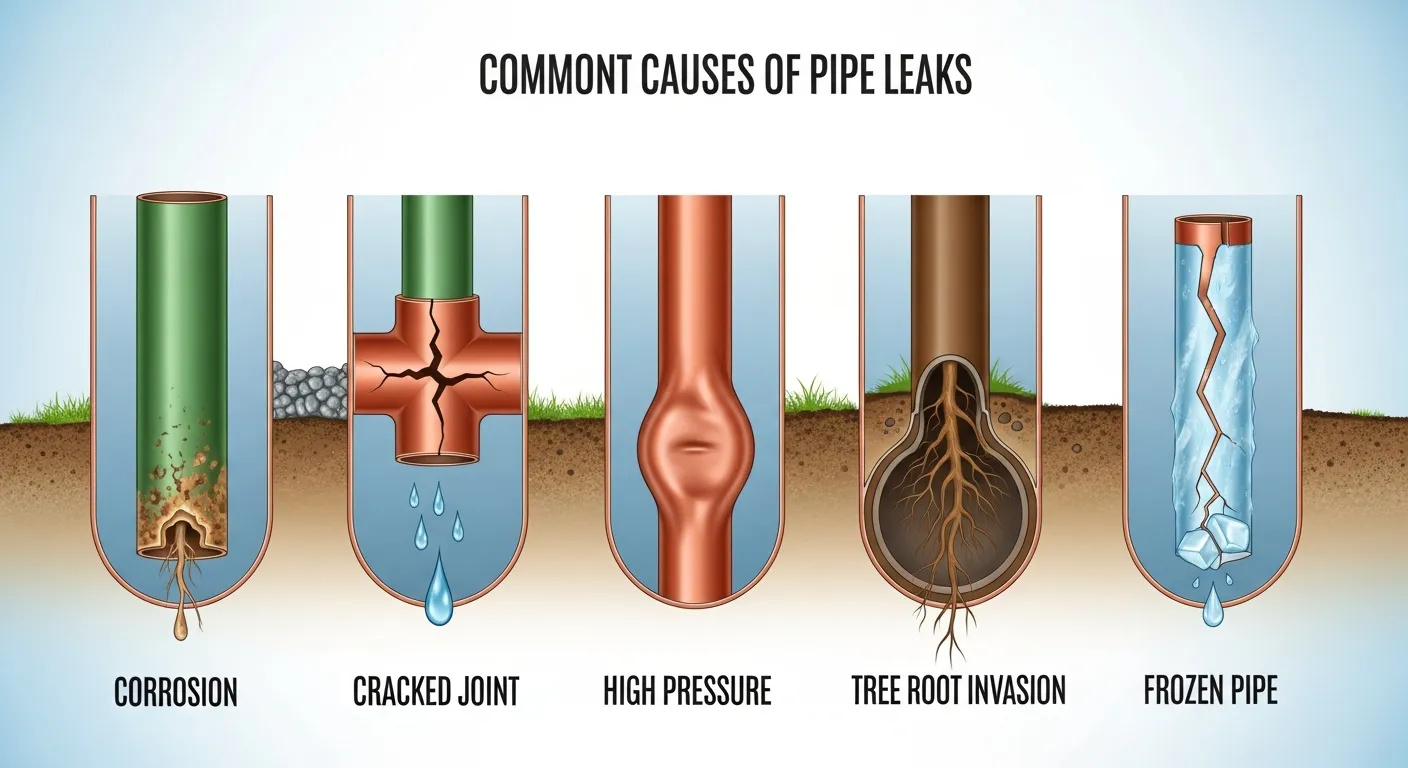
Understanding why pipes leak is the first step toward preventing future problems. Here are the most common culprits behind residential pipe leaks.
Corrosion
Older homes with copper or galvanized steel pipes are especially vulnerable to corrosion. If you are considering upgrading your pipe material, our copper vs PEX piping guide breaks down the pros and cons of each option. Over time, minerals in the water react with the pipe walls, thinning the metal until it develops pinhole leaks. If your home is more than 30 years old and still has original plumbing, corrosion is a leading risk factor.
High Water Pressure
Water pressure above 80 PSI puts excessive stress on pipe joints and fittings. While strong water pressure feels great in the shower, it accelerates wear on your plumbing system. A pressure regulator can keep levels in the safe 40 to 60 PSI range.
Joint Failures
Pipe joints are the weakest points in any plumbing system. Soldered connections can weaken over time, threaded fittings can loosen, and push-fit connectors can slip. Joint failures are one of the most common reasons homeowners notice water leaks behind walls or under cabinets. If the issue persists, consider scheduling slab leak detection with a licensed professional.
Temperature Changes
Pipes expand and contract with temperature fluctuations. In Southern California, cold snaps can cause uninsulated pipes in garages, crawl spaces, or exterior walls to crack. Even moderate temperature swings create stress at joints and bends over many years.
Tree Root Intrusion
Tree roots naturally seek out moisture. They can penetrate tiny cracks in underground sewer and water lines, gradually widening the opening and causing significant leaks. This is particularly common in older neighborhoods with mature landscaping.
Aging Pipes
Every pipe has a lifespan. Copper pipes typically last 50 to 70 years, galvanized steel 20 to 50 years, and PVC around 25 to 40 years. If your plumbing is approaching these thresholds, proactive inspection is essential.
How Do You Spot a Leaky Pipe Before It Gets Worse?
Many pipe leaks go undetected for weeks or months, causing hidden damage behind walls and under floors. Watch for these warning signs that indicate you may have a leaking pipe or fixture somewhere in your home.
- Water stains on ceilings or walls: Yellowish or brownish discoloration on drywall usually points to a slow leak above or behind the surface.
- Mold or mildew growth: Persistent musty smells or visible mold in bathrooms, kitchens, or basements often signal hidden moisture from a leak.
- Unexplained increase in your water bill: A sudden spike with no change in usage habits is one of the clearest indicators of a hidden leak.
- Sound of running water: If you hear water flowing when all fixtures are off, there may be a leak in the supply lines or behind a wall.
- Wet spots or pooling water: Damp areas on floors, under sinks, or in the yard (especially near the foundation) can reveal underground or slab leaks.
- Decreased water pressure: A noticeable drop in pressure at multiple fixtures may indicate a significant leak somewhere in the main line.
- Warped or buckling flooring: Laminate, hardwood, or vinyl flooring that starts to warp without an obvious cause could be absorbing water from a pipe beneath.
If you notice any of these signs, turn off the water supply to the affected area and investigate further. Knowing how to turn off water to your house is critical for limiting damage during a plumbing emergency.
What Are the Best Temporary Fixes for a Leaky Pipe?
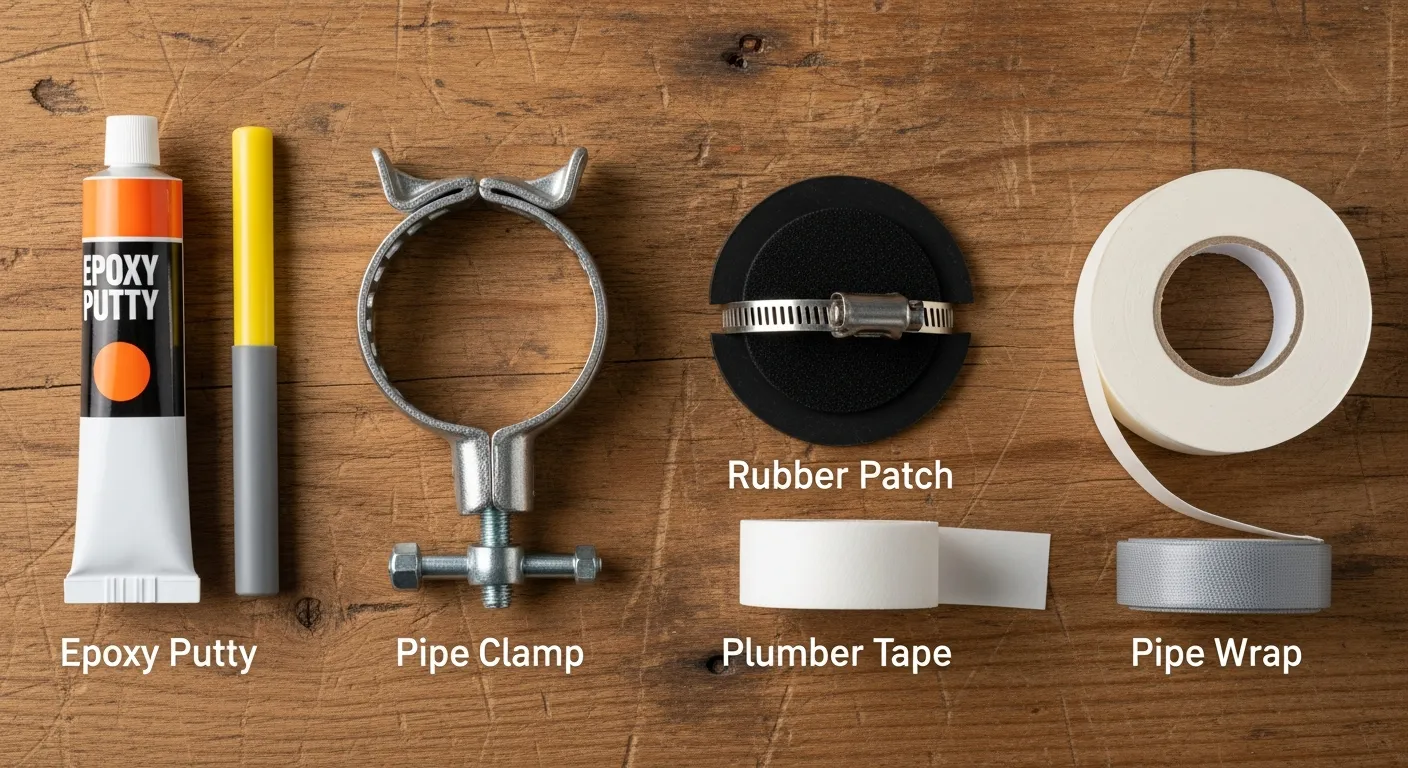
When a pipe starts leaking, you need a quick fix to minimize damage while you arrange for a permanent repair. Here are the five most effective temporary solutions, compared side by side.
| Method | Best For | Cost | Difficulty | Durability |
|---|---|---|---|---|
| Epoxy Putty | Pinhole leaks, small cracks | $5 to $15 | Easy | Weeks to months |
| Pipe Clamp | Cracks up to 2 inches | $8 to $20 | Easy | Months to years |
| Rubber Patch + Hose Clamp | Moderate leaks, curved surfaces | $5 to $12 | Moderate | Weeks to months |
| Plumber Tape (Teflon/Silicone) | Threaded joint leaks | $2 to $6 | Easy | Weeks |
| Fiberglass Pipe Wrap | Larger cracks, reinforcement | $10 to $25 | Moderate | Months |
How to Apply Epoxy Putty
- Turn off the water supply and dry the pipe thoroughly.
- Knead the two-part epoxy until the color is uniform.
- Press the putty firmly over the leak, extending at least one inch past the damaged area on all sides.
- Allow it to cure for the time specified on the packaging (usually 20 to 60 minutes).
- Turn the water back on slowly and check for leaks.
How to Use a Pipe Clamp
- Shut off the water and clean the pipe surface around the leak.
- Place the rubber gasket from the clamp kit directly over the crack or hole.
- Position the metal clamp over the gasket and tighten the bolts evenly.
- Restore water flow and inspect for any remaining drips.
How to Apply a Rubber Patch with Hose Clamp
- Cut a piece of rubber (an old bicycle inner tube works well) large enough to cover the leak with two inches of overlap.
- Wrap the rubber tightly around the pipe over the damaged area.
- Secure it with two hose clamps, one on each side of the leak.
- Tighten until snug and test with water flow.
Important: All temporary fixes are exactly that, temporary. They buy you time but should never replace a professional repair. A patch that seems fine today can fail without warning, especially under fluctuating water pressure. If the issue persists, consider scheduling water heater repair with a licensed professional.
When Should You Call a Professional Plumber?
While DIY fixes can handle minor leaks in accessible locations, certain situations demand professional expertise. Call a licensed plumber immediately if you experience any of the following.
- Leaks behind walls or under floors: Accessing these pipes requires cutting into drywall or flooring. A professional can locate the exact source using leak detection technology and make repairs with minimal damage to your home.
- Slab leaks: Water leaking under your home’s concrete foundation is a serious structural concern. Slab leak repair requires specialized equipment and expertise.
- Main water line leaks: A leak in the main supply line affects your entire home’s water pressure and can waste hundreds of gallons per day.
- Recurring leaks: If the same pipe keeps leaking after temporary repairs, the underlying issue (corrosion, high pressure, or failing material) needs a permanent solution.
- Multiple leaks at once: Several leaks appearing simultaneously often signal systemic plumbing deterioration that may require partial or full repiping.
- Sewage or gas line leaks: These are health and safety hazards. Never attempt DIY repairs on sewer or gas lines.
A qualified plumber from a full-service plumbing company can diagnose the root cause, recommend the most cost-effective repair, and ensure the fix meets local building codes.
How Much Does Professional Pipe Repair Cost?
Pipe repair costs vary based on the type of repair, pipe location, and material. Here are typical price ranges for common repairs in the Orange County area.
| Repair Type | Average Cost Range |
|---|---|
| Simple pipe joint repair | $150 to $350 |
| Pipe section replacement | $200 to $800 |
| Slab leak repair | $500 to $2,500 |
| Main water line repair | $300 to $1,500 |
| Full repiping (whole house) | $4,000 to $15,000 |
| Emergency after-hours repair | $200 to $500 (service call + repair) |
These are general estimates. The actual cost depends on the complexity of the job, pipe accessibility, and the materials needed. Always request a detailed estimate before authorizing work.
How Can You Prevent Pipe Leaks in Your Home?
Prevention is always cheaper than repair. These proactive steps can significantly reduce your risk of dealing with a leaky pipe.
- Insulate exposed pipes: Foam pipe insulation costs a few dollars per foot and protects against temperature-related cracks, especially in garages, attics, and exterior walls.
- Monitor water pressure: Install a pressure gauge on your main line. If pressure exceeds 80 PSI, install a pressure reducing valve to bring it into the safe range of 40 to 60 PSI.
- Schedule annual plumbing inspections: A professional inspection can catch corrosion, joint wear, and other issues before they become leaks.
- Replace aging pipes proactively: If your home has galvanized steel pipes over 40 years old, consider upgrading to copper or PEX before failures begin.
- Address hard water: If your water has high mineral content, a water softener can slow corrosion buildup inside pipes.
- Know your shutoff valves: Familiarize yourself with the location of your main water shutoff and individual fixture shutoffs so you can react quickly when a leak occurs.
- Manage landscaping near pipes: Plant trees and large shrubs away from underground water and sewer lines to prevent root intrusion.
Contact 911 Drain Lines and Plumbing or call (714) 400-5090 for a professional pipe inspection or repair in Orange County and the Inland Empire.
Frequently Asked Questions About Leaky Pipe Repair
Can I fix a leaky pipe myself?
You can apply temporary fixes like epoxy putty, pipe clamps, or rubber patches to minor, accessible leaks. However, these are short-term solutions. For leaks behind walls, under slabs, or on main lines, hire a licensed plumber to ensure a safe, code-compliant repair.
How long does a temporary pipe repair last?
Depending on the method, temporary repairs can last anywhere from a few weeks to several months. Pipe clamps tend to last the longest (sometimes years), while tape-based fixes may only hold for a few weeks under pressure. Always schedule a permanent repair as soon as possible.
Is a leaky pipe an emergency?
It depends on the severity. A slow drip under a sink can usually wait a day or two for repair. However, a burst pipe or a fast-flowing leak that you cannot stop is an emergency requiring immediate professional attention. When in doubt, shut off the water supply and call a plumber.
What happens if you ignore a leaky pipe?
Ignoring a leak leads to escalating damage: water stains, mold growth, structural rot, and dramatically higher water bills. A small leak that costs $200 to fix today could result in $5,000 or more in water damage restoration if left untreated for months.
Does homeowners insurance cover leaky pipe repair?
Most homeowners insurance policies cover sudden, accidental water damage (like a burst pipe) but do not cover damage from gradual leaks or deferred maintenance. Check your specific policy and document any damage with photos before making repairs.