



Are you tired of waiting minutes for hot water to reach your kitchen or bathroom? If you are dealing with no hot water at all, the issue may be your water heater rather than distribution. A hot water recirculating pump keeps heated water flowing through your pipes so it arrives at the faucet almost instantly. This eliminates the frustrating wait, saves thousands of gallons of wasted water per year, and makes your home more comfortable and efficient. If the issue persists, consider scheduling water heater repair with a licensed professional. If the issue persists, consider scheduling water heater replacement with a licensed professional.
Whether you are building a new home or upgrading an existing plumbing system, a recirculating pump is one of the most practical investments you can make. In this guide, we cover how these pumps work, the different types available, installation costs, and the pros and cons of each system so you can make the right choice for your home. If the issue persists, consider scheduling professional plumbing services with a licensed professional.
Want instant hot water? Call 911 Drain Lines and Plumbing for professional recirculating pump installation in Orange County.
What Is a Hot Water Recirculating Pump and How Does It Work?
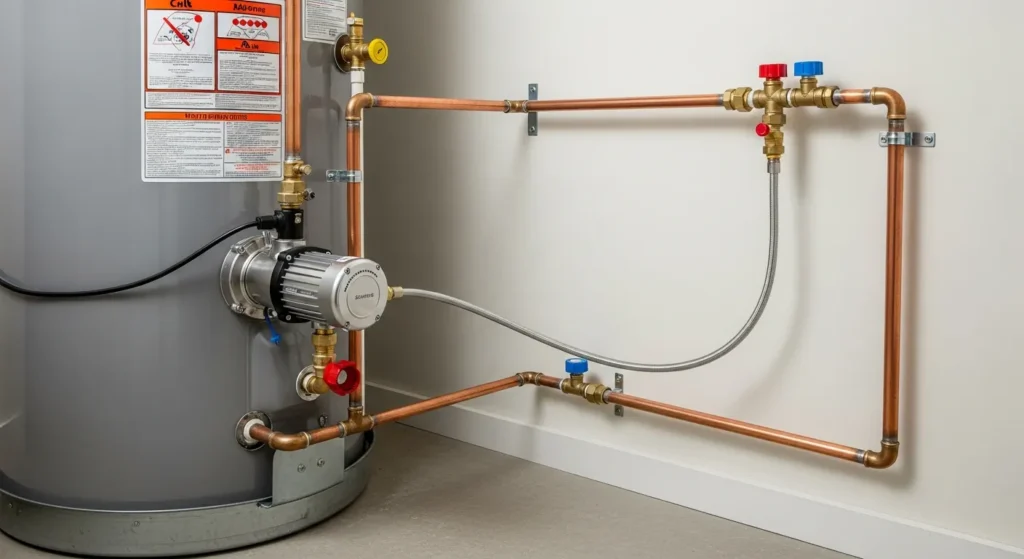
A hot water recirculating pump is a small device installed near your water heater that continuously or periodically circulates hot water through your plumbing system. Instead of hot water sitting idle in the pipes and cooling down, the pump keeps it moving so that warm water is always available near every fixture.
In a traditional plumbing setup, when you turn on a hot water faucet, cold water that has been sitting in the pipes must first drain out before heated water from the water heater arrives. Depending on the distance between the heater and the faucet, this can take 30 seconds to several minutes and waste one to three gallons each time.
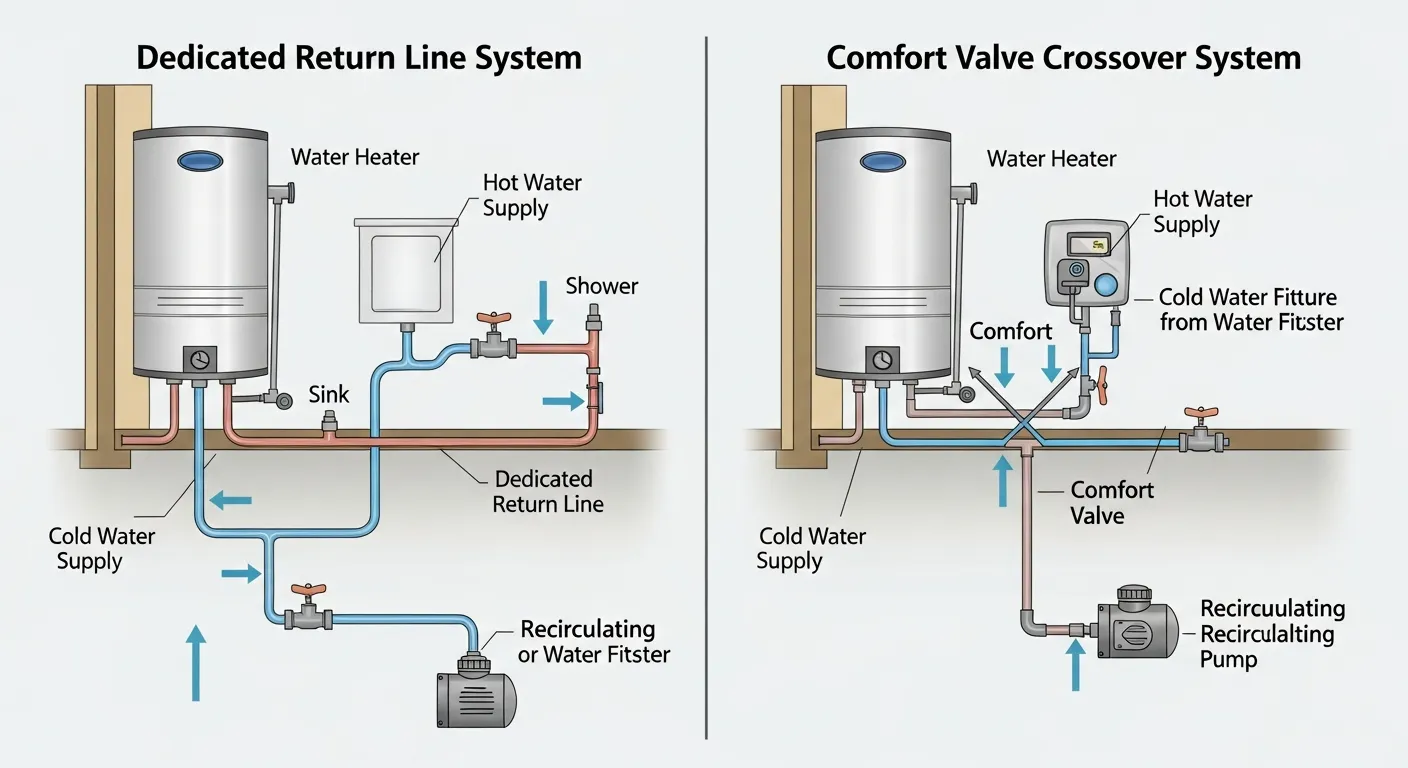
A recirculating pump solves this by creating a loop. Hot water travels from the heater through the supply line to the fixtures and then returns to the heater through either a dedicated return line or the cold water line (via a crossover valve). The pump maintains a gentle flow so hot water is always near the point of use.
What Are the Different Types of Hot Water Recirculating Pumps?
There are four main types of recirculating pump systems. Each works differently and suits different home layouts and budgets.
Dedicated Return Line Systems
These use a separate pipe that runs from the farthest fixture back to the water heater. The pump pushes hot water through the supply line and pulls cooled water back through the return line. This is the most efficient design but requires an extra pipe, which makes it ideal for new construction or major remodels.
Comfort Valve (Crossover) Systems
A comfort valve system uses the existing cold water line as the return path. A thermostatic valve installed under the farthest sink opens when water temperature drops below a set point, allowing cooled water to flow back to the heater through the cold supply line. This is the most popular retrofit option because it requires no new piping.
On-Demand (Sensor or Button Activated) Systems
On-demand pumps only run when you press a button or a motion sensor detects activity. The pump pushes hot water to the fixture and stops once it arrives, saving energy compared to continuous operation. These are great for homeowners who want hot water quickly but do not need it available 24/7.
Timer-Based Systems
Timer-based pumps operate on a programmable schedule, running during peak usage hours (morning showers, evening dishes) and shutting off overnight. This balances convenience with energy savings and works well for households with predictable routines.
| Pump Type | How It Works | Best For | Pros | Cons | Cost Range |
|---|---|---|---|---|---|
| Dedicated Return Line | Separate return pipe to heater | New construction | Most efficient; no cold water mixing | Requires extra piping | $500 to $1,200 installed |
| Comfort Valve (Crossover) | Uses cold line as return | Retrofit / existing homes | No new piping; easy install | Cold water may feel warm initially | $300 to $700 installed |
| On-Demand (Button/Sensor) | Runs only when activated | Energy-conscious homes | Lowest energy use; no standby loss | Short wait after activation | $200 to $600 installed |
| Timer-Based | Runs on a set schedule | Predictable routines | Good balance of convenience and savings | No hot water outside scheduled times | $300 to $800 installed |
How Much Does a Hot Water Recirculating Pump Cost to Install?
The total cost of a hot water recirculating pump installation depends on the type of system, your home’s plumbing layout, and whether you hire a professional.
Equipment costs range from $150 to $600 for the pump unit itself. Basic comfort valve kits start around $150 to $250, while dedicated return line pumps with timers and sensors cost $300 to $600.
Professional installation typically adds $200 to $700 depending on complexity. A simple comfort valve retrofit may take one to two hours, while installing a dedicated return line in an existing home could require half a day or more of labor plus piping materials.
Total installed cost for most homeowners falls between $300 and $1,200. The comfort valve retrofit is the most affordable option for existing homes, while dedicated return line systems cost more but deliver the best long-term performance.
Keep in mind that a recirculating pump can save 10,000 to 15,000 gallons of water per year. At Orange County water rates, that translates to roughly $50 to $150 in annual savings, meaning most systems pay for themselves within three to seven years.
What Are the Benefits of a Hot Water Recirculating Pump?
Installing a recirculating pump alongside your water heater brings several practical advantages:
- Instant hot water. No more waiting 30 seconds to three minutes for the shower or kitchen sink to warm up. Hot water is available within seconds at every fixture.
- Significant water savings. The average household wastes 10,000 to 15,000 gallons per year waiting for hot water. A recirculating pump eliminates almost all of that waste.
- Lower water bills. Saving 10,000+ gallons annually reduces your monthly water bill, especially in drought-prone areas like Southern California where water costs are rising.
- Added home comfort. Having instant hot water throughout the house is a quality-of-life improvement that homeowners notice immediately.
- Increased home value. A recirculating pump is an attractive feature for buyers, particularly in luxury and energy-conscious markets.
- Eco-friendly. Conserving water reduces your household’s environmental footprint without sacrificing convenience.
Are There Any Downsides to Hot Water Recirculating Pumps?
While recirculating pumps offer clear benefits, there are a few trade-offs to consider:
- Energy consumption. Continuously running pumps use electricity (typically 25 to 75 watts) and may increase your water heater’s workload slightly. Timer-based and on-demand models reduce this impact significantly.
- Heat loss in pipes. Hot water sitting in pipes radiates heat into surrounding areas. In well-insulated homes this is minimal, but uninsulated pipes in unconditioned spaces can lose heat faster. Regular water heater maintenance helps optimize efficiency.
- Warm cold water (crossover systems). Comfort valve systems temporarily route warm water through the cold line. You may notice slightly warm “cold” water for a brief period after the pump cycles. This is normal and resolves quickly.
- Installation complexity for retrofits. Adding a dedicated return line to an existing home requires routing new piping through walls, floors, or crawl spaces, which increases cost and labor.
- Pump noise. Most modern pumps operate quietly, but some older or lower-quality units can produce a faint humming sound. Choosing a reputable brand minimizes this issue.
Can You Install a Hot Water Recirculating Pump Yourself?
Some recirculating pump systems are marketed as DIY-friendly, especially comfort valve kits that connect to existing plumbing with basic hand tools. If you are comfortable working with water connections and following manufacturer instructions, a simple retrofit kit can be installed in one to two hours.
However, professional installation is recommended in most cases for several reasons:
- Proper sizing. A plumber ensures the pump is correctly sized for your home’s pipe diameter and distance from the water heater to the farthest fixture.
- Code compliance. California plumbing codes require certain connections and check valves. A licensed plumber ensures everything meets local requirements.
- Warranty protection. Some manufacturers require professional installation to maintain warranty coverage.
- Leak prevention. Improperly connected fittings can cause slow leaks that damage walls, floors, and cabinetry over time.
If your home needs a dedicated return line or you are pairing the pump with a tankless water heater, professional installation is strongly recommended.
Which Type of Recirculating Pump Is Best for Your Home?
The right system depends on your home’s plumbing, your budget, and your usage patterns:
- New construction or major remodel: Choose a dedicated return line system. It is the most efficient and avoids any warm cold water issues.
- Existing home on a budget: A comfort valve (crossover) system is the easiest and most affordable to install without new piping.
- Energy-conscious homeowner: An on-demand pump gives you hot water when you need it without running continuously.
- Household with a set routine: A timer-based system delivers hot water during peak hours and saves energy the rest of the time.
If you are unsure which system fits your home, a licensed plumber can evaluate your layout, pipe sizes, and water heater condition to recommend the best option.
Ready to install a hot water recirculating pump? Contact 911 Drain Lines and Plumbing for a free consultation and professional installation in Orange County and the Inland Empire.
Frequently Asked Questions
How long does a hot water recirculating pump last?
Most quality recirculating pumps last 10 to 15 years with minimal maintenance. Replacing the pump is straightforward and typically costs $150 to $400 for the unit plus one to two hours of labor.
Does a recirculating pump work with a tankless water heater?
Yes. Many modern tankless water heaters have built-in recirculation ports. For models without this feature, an external pump with a crossover valve or dedicated return line works well.
Will a recirculating pump increase my electric bill?
Continuous pumps typically add $2 to $5 per month to your electricity bill. On-demand and timer-based models cost even less because they only run when needed. The water savings usually offset the energy cost.
Can a recirculating pump be installed on any water heater?
Yes. Recirculating pumps are compatible with tank water heaters, tankless units, and hybrid (heat pump) water heaters. The installation method may vary depending on your water heater type and condition.
Do I need to maintain a hot water recirculating pump?
Recirculating pumps require very little maintenance. Check the pump annually for leaks, clean the filter if your model has one, and ensure the timer or sensor is functioning correctly. Most homeowners never need to service the pump between replacements.