



Frozen pipes are one of the most stressful plumbing emergencies a homeowner can face. When temperatures drop unexpectedly, water inside your pipes can freeze, expand, and create serious pressure that leads to cracks, bursts, and costly water damage. The sudden pressure changes that occur when frozen pipes thaw can also trigger water hammer. Even in Southern California, cold snaps in inland areas like the Inland Empire can push overnight temperatures low enough to freeze exposed or poorly insulated plumbing. Knowing how to thaw frozen pipes safely, and when to call a professional, can save you thousands of dollars in repairs and protect your home from flooding. If the issue persists, consider scheduling residential plumbing services with a licensed professional. If the issue persists, consider scheduling water heater repair with a licensed professional.
In this guide, we will walk you through how to identify frozen pipes, the safest thawing methods, dangerous mistakes to avoid, and proven prevention strategies to keep your plumbing protected all winter long.
Contact 911 Drain Lines and Plumbing for 24/7 emergency plumbing service. Call today if your pipes are frozen or burst.
How Can You Tell if Your Pipes Are Frozen?
Before you can fix the problem, you need to confirm that your pipes are actually frozen. Here are the most common warning signs that indicate frozen pipes in your home:
- Reduced or no water flow. If you turn on a faucet and only a trickle comes out, or nothing at all, there is likely a frozen blockage somewhere in the line. This is the most obvious and common indicator.
- Frost visible on exposed pipes. Check pipes in unheated areas like your garage, crawl space, attic, or along exterior walls. If you see frost or ice buildup on the outside of the pipe, the water inside is almost certainly frozen.
- Unusual odors from drains. A frozen pipe can trap sewer gases that would normally flow out through the drain system. If you notice a foul smell coming from a sink or drain, a frozen blockage may be the cause.
- Bulging or cracked pipes. Ice expands as it forms, putting enormous pressure on pipe walls. If you see a visible bulge or crack in a pipe, the situation is urgent. Call a professional immediately to prevent a burst pipe.
- Strange sounds. Banging, clanking, or gurgling noises when you turn on the water can indicate ice moving inside the pipe or trapped air pockets caused by a frozen section.
If you suspect frozen pipes, act quickly. The longer ice remains in the pipe, the greater the risk of a burst that can cause extensive water damage throughout your home.
What Are the Safest Methods to Thaw Frozen Pipes?
Once you have confirmed a frozen pipe, the next step is thawing it safely. The key is to apply gentle, even heat. Never rush the process. Here are the safest and most effective methods:
1. Hair Dryer
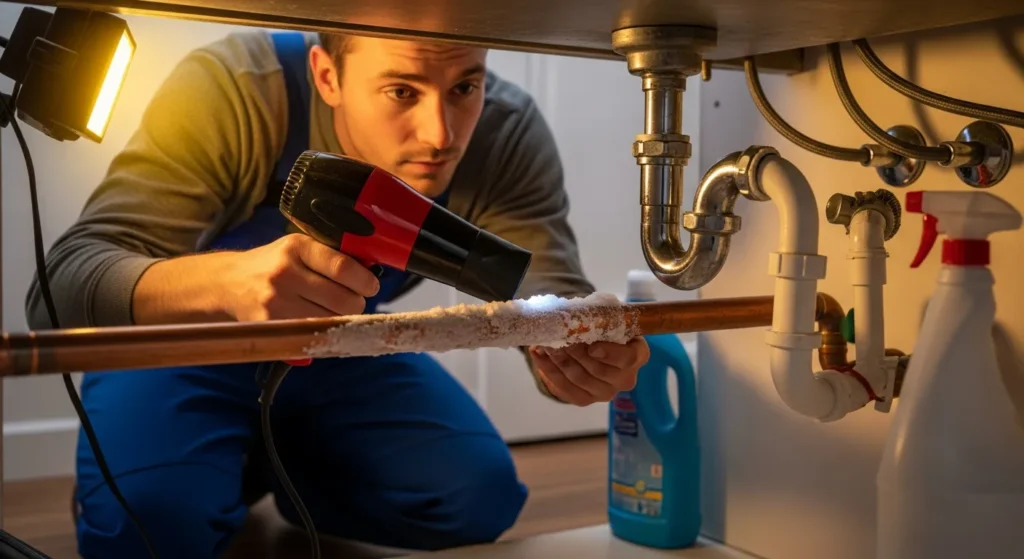
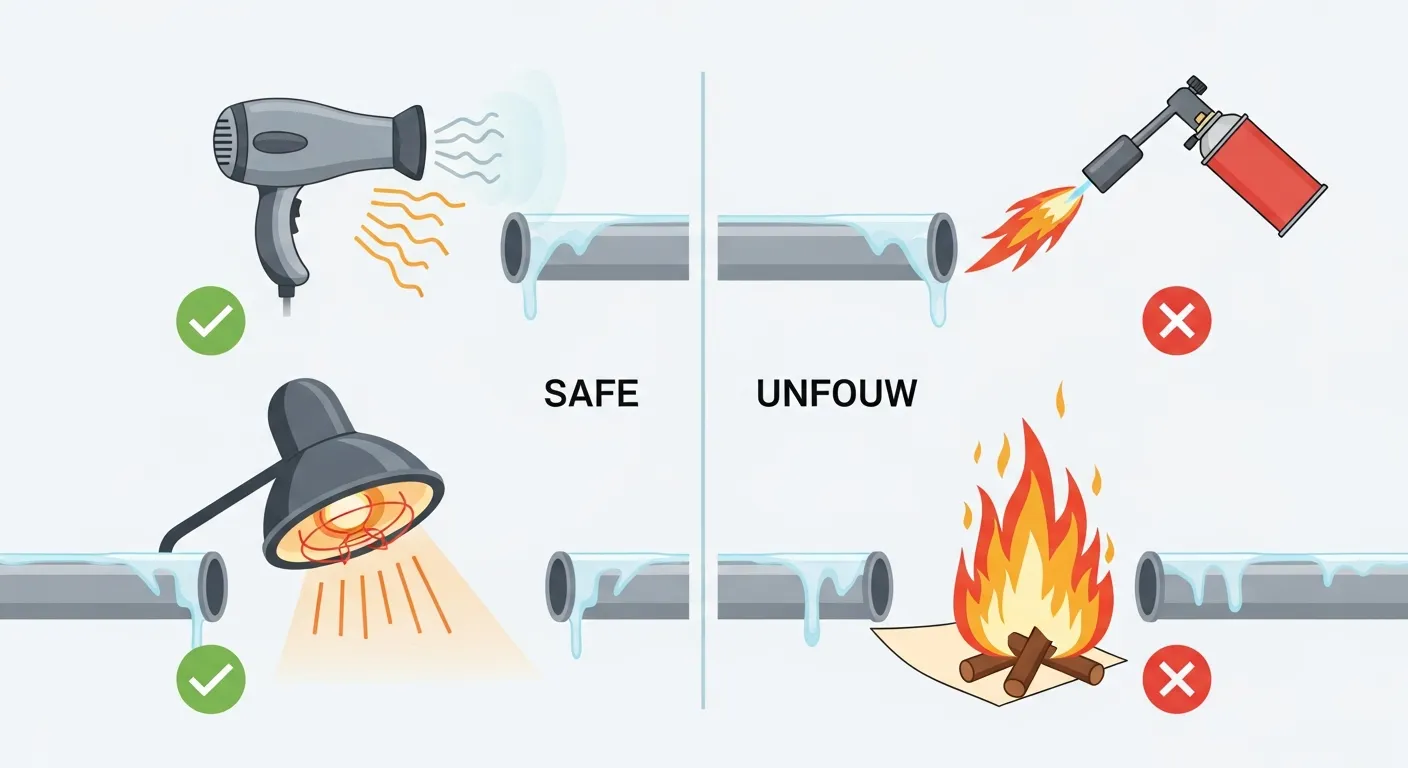
A standard hair dryer is one of the safest and most accessible tools for thawing frozen pipes. Hold the dryer about six to eight inches from the frozen section and move it back and forth slowly. Start from the faucet end and work your way toward the frozen area so that melting water can drain out through the open tap.
2. Heat Lamp or Portable Space Heater
Position a heat lamp or portable space heater near the frozen pipe. Make sure the heater is at least a few feet away from any flammable materials, including insulation, wood framing, or stored items. This method works well for pipes in enclosed spaces like cabinets or crawl spaces.
3. Hot Towels
Soak towels in hot water and wrap them around the frozen section of the pipe. Replace them as they cool. This is a safe, low-tech approach that works well for smaller sections of frozen pipe and costs nothing.
4. Electric Heat Tape
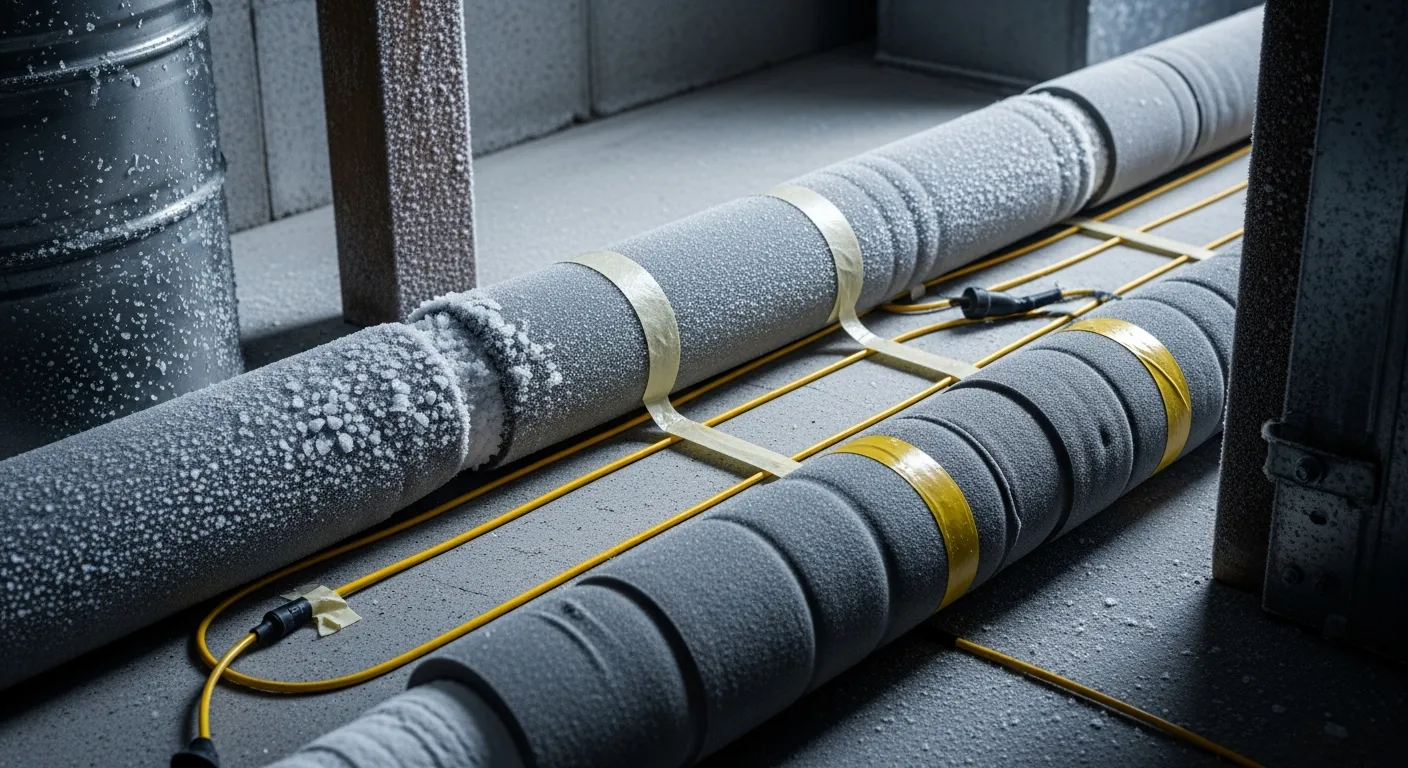
Electric heat tape (also called heat cable) wraps directly around the pipe and provides consistent, controlled warmth. This is an excellent solution for pipes that freeze repeatedly. Many heat tapes include a built-in thermostat that activates automatically when temperatures drop.
5. Warm Water on Towels
Pour warm (not boiling) water over a towel wrapped around the pipe. The gradual warmth helps melt the ice without shocking the pipe material. This is especially useful for PVC or CPVC pipes that can be damaged by rapid temperature changes. Note that PEX piping offers significantly better freeze resistance than copper, making it a popular choice for homes in freeze-prone areas.
Important: Always open the faucet connected to the frozen pipe before you begin thawing. This allows water to flow out as the ice melts and helps relieve pressure inside the line.
What Should You Never Do When Thawing Frozen Pipes?
Some thawing methods are extremely dangerous and can cause fires, pipe damage, or personal injury. Avoid these mistakes at all costs:
- Never use a blowtorch or open flame. This is the single most dangerous mistake homeowners make. An open flame near pipes can ignite surrounding materials, melt plastic pipes, or cause solder joints to fail. It is a leading cause of house fires during winter.
- Never pour boiling water directly on the pipe. The sudden temperature shock can crack or shatter the pipe, especially PVC, CPVC, and older cast iron. Use warm water on a towel instead.
- Never use a propane heater in an enclosed space. Propane heaters produce carbon monoxide, which is deadly in confined areas like crawl spaces and attics.
- Never leave heating devices unattended. Space heaters and heat lamps can tip over or overheat nearby materials. Stay present throughout the entire thawing process.
- Never ignore a bulging pipe. A visible bulge means the pipe is under extreme pressure and could burst at any moment. Shut off your main water supply and call a licensed plumber immediately.
How Do the Different Thawing Methods Compare?
The table below compares the most common pipe thawing methods by safety, effectiveness, cost, and best use case. Use this to choose the right approach for your situation.
| Thawing Method | Safety Level | Effectiveness | Cost | Best For |
|---|---|---|---|---|
| Hair Dryer | Very Safe | High | Free (if you own one) | Accessible exposed pipes |
| Heat Lamp / Space Heater | Safe (with supervision) | High | $20 to $50 | Pipes in enclosed spaces |
| Hot Towels | Very Safe | Moderate | Free | Small frozen sections |
| Electric Heat Tape | Very Safe | Very High | $15 to $80 | Recurring freeze-prone pipes |
| Warm Water on Towels | Very Safe | Moderate | Free | PVC and CPVC pipes |
| Blowtorch / Open Flame | DANGEROUS | N/A | N/A | Never use this method |
| Boiling Water (directly) | DANGEROUS | N/A | N/A | Never use this method |
How Can You Prevent Pipes from Freezing in the First Place?
Prevention is always more affordable than emergency repairs. Here are proven strategies to protect your plumbing from freezing temperatures:
- Insulate exposed pipes. Install foam pipe insulation sleeves on any pipes in unheated areas, including garages, crawl spaces, attics, and along exterior walls. This is one of the most cost-effective preventive measures available.
- Install heat cable on vulnerable pipes. Self-regulating heat cable wraps around the pipe and automatically adjusts its output based on the surrounding temperature. It is ideal for pipes that freeze every winter.
- Let faucets drip during cold snaps. A slight drip keeps water moving through the pipes, which makes it much harder for ice to form. Even a pencil-thin stream is enough to prevent freezing in most cases.
- Open cabinet doors. During cold weather, open the cabinet doors under kitchen and bathroom sinks to allow warm indoor air to circulate around the pipes.
- Keep your thermostat consistent. Set your home thermostat to at least 55 degrees Fahrenheit, even when you are away. A lower setting may save on heating costs but can allow interior temperatures to drop enough for pipes to freeze.
- Seal gaps and cracks near pipes. Use caulk or spray foam to seal any openings where cold outdoor air can reach your plumbing. Pay close attention to areas where pipes enter the house through exterior walls.
- Disconnect outdoor hoses. Before winter, disconnect and drain garden hoses. Shut off the interior valve to outdoor faucets if your home has one.
When Should You Call a Professional Plumber for Frozen Pipes?
While many frozen pipe situations can be handled with the DIY methods above, there are times when calling a licensed plumber is the safest and smartest option:
- Water flow does not return after thawing. If you have applied heat for 30 to 45 minutes and water still is not flowing, the blockage may be deeper in the system or in an area you cannot access.
- You see a visible crack, bulge, or split in the pipe. This means the pipe is already damaged and may burst at any moment. A plumber can safely replace the damaged section before a flood occurs.
- The frozen pipe is behind a wall or underground. Pipes that are not physically accessible require professional equipment and expertise to thaw safely without causing additional damage.
- A pipe has already burst. If water is actively leaking or spraying, shut off your main water supply immediately and call an emergency plumber. A burst pipe can cause thousands of dollars in water damage within minutes.
- Multiple pipes are frozen at once. If several fixtures in your home have no water, you may have a main line freeze or a widespread issue that needs professional diagnosis.
Call 911 Drain Lines and Plumbing for immediate help with frozen or burst pipes. We offer 24/7 emergency plumbing service throughout Orange County and the Inland Empire.
Can Pipes Really Freeze in Southern California?
Yes. While Southern California is known for mild weather, homeowners in the Inland Empire and foothill communities regularly experience overnight temperatures that drop into the 20s and 30s during winter cold snaps. Areas like Riverside, San Bernardino, Temecula, Rancho Cucamonga, and even parts of north Orange County can see temperatures cold enough to freeze unprotected plumbing.
Pipes most at risk in Southern California include those in uninsulated garages, exterior walls, crawl spaces, and outdoor plumbing fixtures. Because freezing weather is less common here than in northern states, many homes were built without the level of pipe insulation found in colder climates. That makes local homes especially vulnerable when an unusual cold snap hits.
If you live in Orange County or the Inland Empire and have concerns about your plumbing during winter, a professional leak detection inspection can identify vulnerable pipes before temperatures drop.
Frequently Asked Questions About Frozen Pipes
How long does it take for frozen pipes to thaw?
Most frozen pipes take 30 to 60 minutes to thaw when using a hair dryer, heat lamp, or hot towels. The exact time depends on the length of the frozen section, the pipe material, and the ambient temperature. If the pipe does not thaw within 45 minutes of applying heat, call a licensed plumber.
Will frozen pipes thaw on their own?
Frozen pipes may thaw on their own if outdoor temperatures rise above freezing. However, waiting is risky because the ice continues to expand and can crack or burst the pipe before it melts. It is always safer to actively thaw the pipe using one of the methods described above.
At what temperature do pipes freeze?
Water inside pipes can begin to freeze when the surrounding air temperature drops to 20 degrees Fahrenheit or below. However, pipes in poorly insulated or drafty areas may freeze at temperatures slightly above that threshold. Wind chill can accelerate freezing in exposed outdoor plumbing.
How much does it cost to fix a burst pipe from freezing?
Repairing a burst pipe typically costs between $150 and $2,000 depending on the pipe location, material, and extent of the damage. If the burst causes water damage to floors, walls, or ceilings, restoration costs can add thousands more. Prevention and early thawing are always far less expensive than emergency repairs.
Should I turn off the water if my pipes are frozen?
If you see a crack, bulge, or active leak, yes. Shut off your main water supply immediately to prevent flooding. If the pipe appears intact and you are preparing to thaw it, leave the water on and open the faucet so that melting water can flow out and relieve pressure.