



Replacing a toilet is one of the most common home improvement projects, and the good news is that most homeowners can handle it with basic tools and a few hours of work. Whether your current toilet is cracked, constantly running, or you simply want to upgrade to a more water-efficient model, learning how to install a toilet yourself can save you hundreds of dollars in labor costs.
On a difficulty scale of 1 to 10, a standard toilet replacement sits around a 4 or 5. You do not need specialized plumbing knowledge, but you do need to follow each step carefully to avoid leaks and ensure a secure, long-lasting installation. This guide walks you through every step of how to replace a toilet from start to finish.
Contact 911 Drain Lines and Plumbing or call (714) 746-7611 for professional toilet installation in Orange County and the Inland Empire.
What You Need to Know Before Installing a Toilet
Installing a toilet yourself can save $150–$300 in labor costs, and for a standard replacement on a functioning flange with no pipe modifications, it is a realistic DIY project for most homeowners. The entire process typically takes 1–2 hours. Before you buy a new toilet or pick up a wrench, three things need to be confirmed: your rough-in measurement, the bowl shape that fits your bathroom, and the tools you have on hand.
Measure Your Rough-In First
The rough-in is the distance from the finished wall behind the toilet to the center of the floor drain bolts. Standard rough-in in most American homes including the majority of Orange County properties is 12 inches. Older homes, particularly those built before 1960 in cities like Anaheim, Santa Ana, or Fullerton, sometimes have a 10-inch or 14-inch rough-in instead. Buying the wrong size is the most common toilet installation mistake: a mismatched rough-in will either push the tank into the wall or leave a visible gap at the back.
To measure with the old toilet still in place, measure from the wall (not the baseboard) straight to the center of one of the two floor bolts on either side of the base. If you have already removed the old toilet, measure from the wall to the center of the closet flange opening.
Round vs. Elongated Bowl — Which One Fits Your Bathroom?
Round bowls extend approximately 16.5 inches from the wall bolts. Elongated bowls extend approximately 18.5 inches. Elongated bowls are more comfortable for most adults and are standard in new construction throughout Orange County, but they require more floor space. If your bathroom door swings toward the toilet or the space between the toilet and the vanity is tight, measure the available clearance before purchasing elongated.
ADA-compliant comfort height toilets, those with a seat height of 17 to 19 inches, compared to the standard 15 inches are worth considering if anyone in the household has mobility limitations, knee pain, or difficulty rising from a low seat.
Tools and Materials to Gather Before You Start
A mid-installation trip to the hardware store can add an hour or more to the job. Have everything below ready before you begin:
• New wax ring — choose standard thickness, or extra-thick if the flange sits below floor level
• New closet bolts — usually included with the toilet, but confirm before starting
• Flexible braided water supply line — 12 to 20 inches, 3/8-inch compression fitting
• Adjustable wrench
• Channel-lock pliers
• Putty knife — to scrape the old wax ring off the flange
• Hacksaw — to trim excess bolt length after setting the toilet
• Bucket and sponge — to remove remaining water from the tank and bowl
• Old rags — to stuff the drain opening and block sewer gas after removing the old toilet
• Level — to confirm the toilet sits flat before final tightening
• Plastic toilet shims — to stabilize the base if the floor is slightly uneven
• Silicone caulk (optional) — to seal around the base after installation
What Tools and Materials Do You Need to Install a Toilet?
Before you start, gather everything you need so you are not running to the hardware store mid-project:
- Adjustable wrench
- Channel-lock pliers
- Putty knife or scraper
- Hacksaw (if bolts are corroded)
- Level
- Bucket and sponge
- Rags or old towels
- Rubber gloves
- New wax ring (or wax-free gasket)
- New toilet bolt set (closet bolts)
- Flexible water supply line (if the old one is worn)
- Shims (plastic toilet shims for leveling)
- Caulk (optional, for sealing the base)
How Do You Turn Off the Water Supply and Drain the Toilet?
Locate the shut-off valve on the wall behind the toilet, usually on the lower left side. Turn it clockwise until it stops. Then flush the toilet to empty the tank. Hold the handle down to drain as much water as possible.
Use a sponge and bucket to remove any remaining water from the tank and bowl. This is a messy step, so lay down old towels around the base to catch drips. Disconnect the water supply line from the bottom of the tank using your adjustable wrench.
How Do You Disconnect and Remove the Old Toilet?
Pop off the decorative caps covering the closet bolts at the base of the toilet. Use your wrench to remove the nuts. If they are rusted and will not budge, use a hacksaw to cut through the bolts.
Rock the toilet gently side to side to break the wax seal, then lift it straight up and off the bolts. Toilets typically weigh 50 to 80 pounds, so you may want a second person to help. Set the old toilet on a drop cloth or old towels.
Important: Stuff a rag into the open drain hole (the flange) to block sewer gases from entering your home and prevent debris from falling into the pipe. If your toilet has been giving you trouble before this point, such as when your toilet won’t flush properly, removing and replacing it is often the best fix.
How Do You Prepare the Flange and Set the Wax Ring?
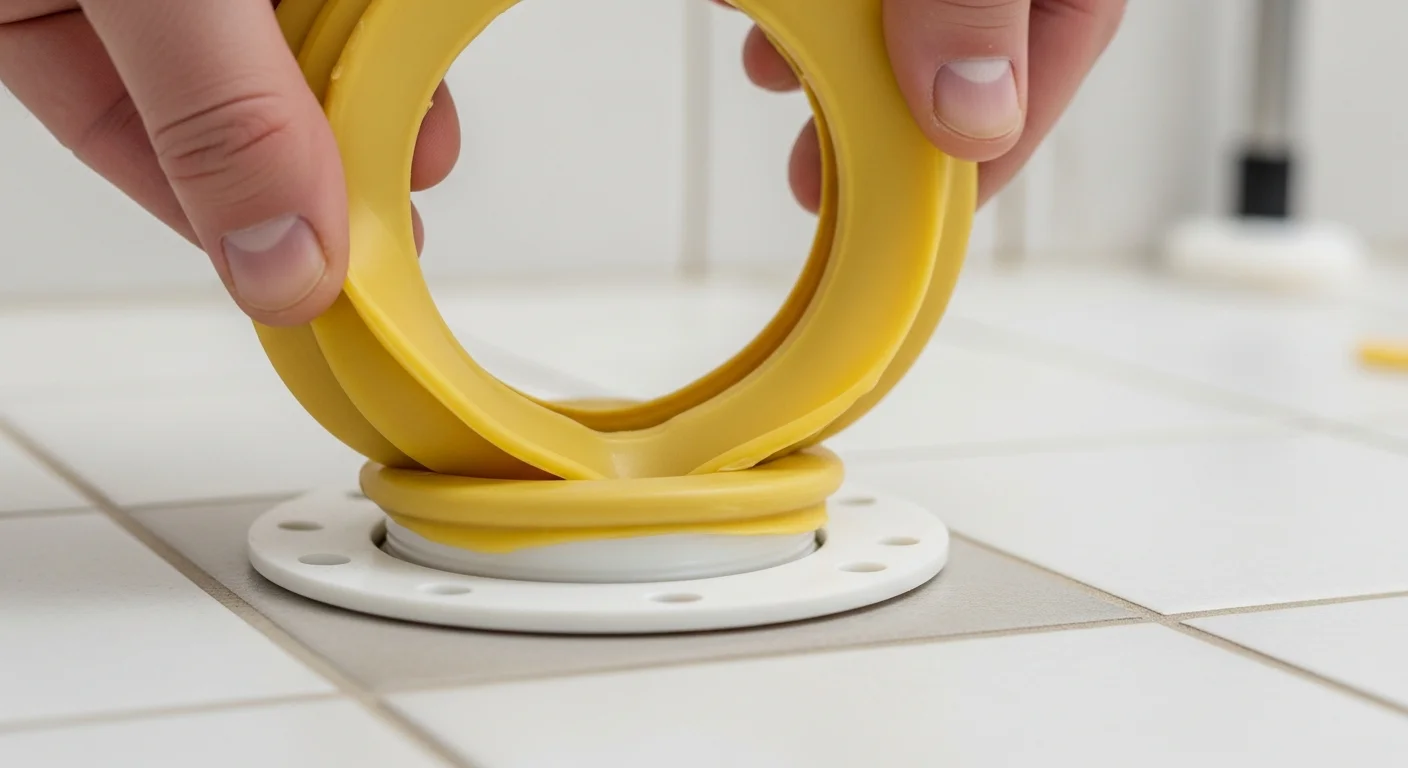
Scrape away the old wax ring from the flange using a putty knife. Inspect the flange carefully. It should be level with or slightly above the finished floor. Look for cracks, corrosion, or damage. A damaged flange is one situation where you will want to call a professional rather than risk a poor seal.
Insert new closet bolts into the flange slots, positioning them evenly on both sides. Place the new wax ring on the flange with the rounded side facing up. Some plumbers prefer to press the wax ring onto the bottom of the toilet instead. Either method works as long as the ring is centered over the drain opening.
How Do You Set the New Toilet in Place?
Remove the rag from the drain. Carefully lift the new toilet and align the holes in the base with the closet bolts. Lower the toilet straight down onto the wax ring. Do not twist or rock the toilet once it contacts the wax, as this can break the seal.
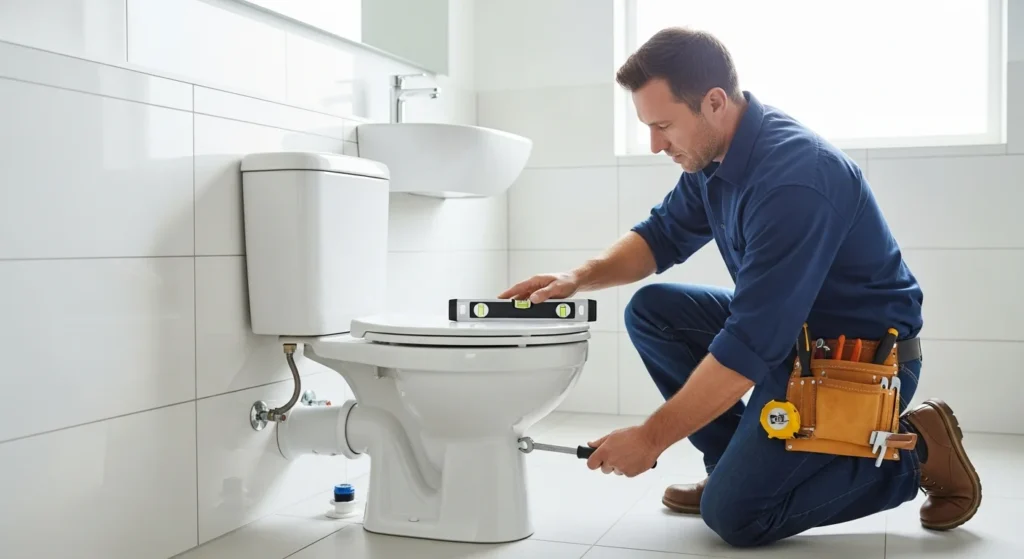
Press down firmly on the toilet with your body weight to compress the wax ring and create a tight seal. Place a level across the top of the bowl from side to side and front to back. If the toilet is not level, slip plastic shims under the base as needed.
Thread the washers and nuts onto the closet bolts and hand-tighten them. Then use your wrench to snug them down, alternating between sides. Do not over-tighten, as this can crack the porcelain base. Tighten just until the toilet does not rock.
How Do You Reconnect the Water Supply?
Attach the flexible water supply line to the fill valve at the bottom of the tank. Hand-tighten the coupling nut first, then give it a quarter turn with pliers. Do not over-tighten.
Turn the shut-off valve counterclockwise to restore water flow. Let the tank fill completely. While the tank fills, check the connection at the shut-off valve and at the tank for any drips.
How Do You Test for Leaks After Installation?
Flush the toilet three or four times and watch closely for leaks at the base, at the water supply connection, and between the tank and bowl. Get down at floor level and look around the entire base of the toilet.
If you see water at the base, the wax ring may not have sealed properly, and you will need to pull the toilet and replace the ring. A small drip at a connection point usually just needs a slight tightening.
Once you are confident there are no leaks, trim the closet bolts with a hacksaw if they stick up too high, snap on the decorative bolt caps, and optionally apply a thin bead of caulk around the base where the toilet meets the floor.
If your newly installed toilet develops running water issues later on, check out our guide on how to fix a running toilet for troubleshooting tips. And if you ever face a clog, here is how to unclog a toilet without calling a plumber.
Toilet Installation Steps at a Glance
| Step | What to Do | Key Tip |
|---|---|---|
| 1. Shut off water | Turn shut-off valve clockwise, flush, sponge remaining water | Hold the handle down to drain as much as possible |
| 2. Remove old toilet | Disconnect supply line, remove bolts, lift toilet off | Stuff a rag in the drain to block sewer gas |
| 3. Prepare flange | Scrape old wax, inspect flange, place new wax ring | A cracked flange means call a plumber |
| 4. Set new toilet | Align over bolts, press down firmly, level with shims | Do not twist once wax ring makes contact |
| 5. Connect water | Attach supply line, hand-tighten, turn on water | Quarter turn past hand-tight, no more |
| 6. Test for leaks | Flush 3 to 4 times, check base and all connections | Get at floor level to spot small drips |
When Should You Call a Professional Plumber?
While a standard toilet swap is a manageable DIY project, some situations call for a licensed plumber: For expert help, contact our drain cleaning services team.
- Damaged or broken flange: If the flange is cracked, rusted through, or sits below the floor level, a plumber can replace or repair it with the right tools.
- Persistent sewer smell: If you smell sewer gas after installation, the wax seal may not be seated correctly, or there could be a deeper drain issue.
- Unstable or rotted subfloor: A soft or spongy floor around the toilet can indicate water damage or rot that needs structural repair before a new toilet is installed.
- Upgrading plumbing connections: If your home has older plumbing and you need to modify the drain or supply lines, that work is best left to a professional.
- You are not confident in the work: There is no shame in calling for help. A botched toilet installation can lead to water damage, mold, and expensive repairs.
911 Drain Lines and Plumbing provides expert residential plumbing services throughout Orange County and the Inland Empire. If you run into any issues during your toilet installation or would rather have a professional handle it from the start, contact us for fast, reliable service.
Call 911 Drain Lines and Plumbing at (714) 746-7611 for same-day toilet installation and repair service.
Frequently Asked Questions
How long does it take to install a toilet?
A standard toilet replacement typically takes 1 to 2 hours for someone with basic DIY experience. If you need to repair the flange or deal with corroded bolts, it could take longer.
Can I reuse the old wax ring?
No. Always use a new wax ring when installing a toilet. Wax rings are designed for a single use and cost only a few dollars, so there is no reason to reuse one. A used ring will not create a proper seal.
Do I need to caulk around the base of the toilet?
Many plumbing codes require caulking around the toilet base. Caulk prevents water from seeping under the toilet and creating a breeding ground for mold and bacteria. Leave a small gap at the back so any leak from the wax ring is visible rather than hidden.
What if my toilet rocks after installation?
Use plastic toilet shims to stabilize it. Slide shims under the base until the toilet is level and does not rock, then trim the excess shim material and apply caulk over the shims to hold them in place.