



Few household problems are as frustrating as pressing the flush handle and getting no response. A toilet that won’t flush can disrupt your daily routine, but the good news is that most causes are straightforward mechanical issues you can diagnose and often fix yourself. In this guide, we’ll walk through the most common reasons your toilet is not flushing and show you exactly how to get it working again.
Before you start troubleshooting, remove the toilet tank lid carefully and set it somewhere safe — most flush problems originate inside the tank. If you’ve already tried unclogging your toilet and the handle still isn’t producing a flush, the issue is likely mechanical rather than a blockage.
Is the Water Level in Your Tank Too Low?
Your toilet needs a specific volume of water in the tank to produce a strong flush. If the water level is sitting more than an inch below the top of the overflow tube, there isn’t enough water entering the bowl to create the siphon effect that clears waste.
How to Fix It
- Check the water supply valve: The shut-off valve behind the toilet should be fully open. Turn it counterclockwise until it stops.
- Adjust the float: If the valve is open but the water level is still low, the float may be set too low. For a ball float, bend the arm slightly upward. For a cylinder float, squeeze the clip and slide it higher on the rod.
- Look for leaks: Inspect the supply line connection and the base of the fill valve for any dripping that could be reducing water volume.
The water level should reach about half an inch below the top of the overflow tube. Mark this line with a pencil so you can check it easily in the future.
Is Your Flapper Valve Worn or Damaged?
The flapper is the rubber seal at the bottom of the tank that lifts when you press the handle and drops back down after the flush. Over time, flappers warp, crack, or develop mineral buildup that prevents a proper seal.
Signs of a Bad Flapper
- The toilet runs intermittently (the tank is slowly draining between flushes)
- The flush is weak because the flapper closes too quickly
- The flapper feels stiff, warped, or slimy when you touch it
How to Fix It
- Turn off the water supply valve and flush to empty the tank.
- Unhook the old flapper from the overflow tube ears and disconnect the chain.
- Take the old flapper to the hardware store to match the size and style.
- Install the new flapper, reconnect the chain, and turn the water back on.
A flapper replacement costs just a few dollars and takes about 10 minutes. If you’ve noticed your toilet running constantly, the flapper is the most likely culprit. Replacing it often solves both the running issue and weak flush problems simultaneously.
Lift Chain Problems
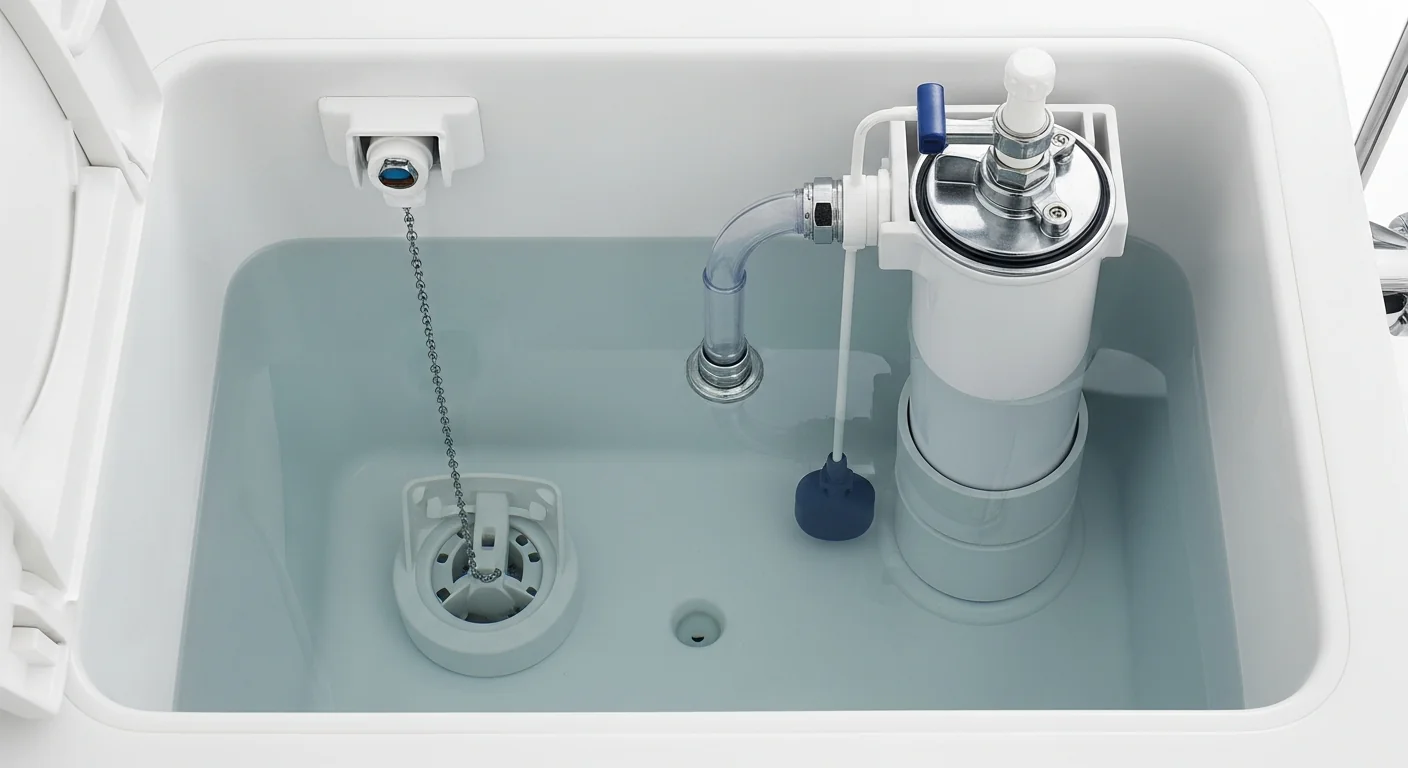
The lift chain connects the flush handle to the flapper. If it’s too loose, the handle won’t lift the flapper high enough to initiate a flush. If it’s too tight, the flapper can’t seal properly, causing a constant leak.
How to Fix It
- Too much slack: Shorten the chain by hooking it to a higher link. There should be about half an inch of slack when the flapper is seated.
- Chain is tangled or kinked: Straighten it out and trim excess length with pliers, leaving about one inch extra.
- Chain is disconnected: Reattach it to both the flush lever arm and the flapper ears. Chains corrode over time and may need replacement.
Are Your Rim Jets Clogged With Mineral Deposits?
The small holes underneath the toilet bowl rim (called rim jets or siphon jets) direct water into the bowl during a flush. Over time, mineral deposits — especially in areas with hard water like many parts of Orange County — can clog these openings and significantly reduce flush power.
How to Fix It
- Use a small mirror to look under the rim and identify clogged holes.
- Heat white vinegar and pour it into the overflow tube in the tank. Let it sit for several hours or overnight.
- Use a stiff wire, small Allen wrench, or old toothbrush to clear individual holes.
- Flush several times to rinse the loosened deposits.
If the mineral buildup is severe, you may need to repeat this process two or three times to fully restore flush power.
Has Your Fill Valve Stopped Working?
The fill valve controls the water that refills the tank after each flush. When it fails, the tank may not fill at all, fill too slowly, or stop filling at the wrong level — all of which result in a toilet that won’t flush properly.
Signs of a Failing Fill Valve
- The tank takes an unusually long time to refill
- You hear hissing or squealing from the valve
- The water level is inconsistent between flushes
- The tank doesn’t fill at all despite the supply being on
How to Fix It
Fill valve repair kits are available at most hardware stores. However, since replacement valves are inexpensive and installation takes about 20 minutes, most plumbers recommend a full replacement rather than a repair. Turn off the water, flush the tank, disconnect the supply line, remove the old valve, and install the new one following the manufacturer’s instructions.
Overflow Tube Issues
The overflow tube prevents the tank from overflowing by directing excess water into the bowl. If this tube is cracked, too short, or damaged, water continuously drains from the tank into the bowl, preventing the tank from filling to the proper level for a full flush.
How to Fix It
A cracked or damaged overflow tube typically requires replacing the entire flush valve assembly since the tube is integrated into it. This is a more involved repair that requires removing the tank from the bowl. While some handy homeowners can tackle this, it’s often worth calling a professional to avoid leaks and ensure proper reassembly.
Partial Clog Reducing Flush Power
Sometimes a toilet flushes but doesn’t clear the bowl effectively. This is different from a full blockage — there’s a partial obstruction in the trap or drainpipe that allows some water through but reduces the siphon power needed for a complete flush.
How to Fix It
- Plunger technique: Use a flange plunger (the kind with an extended rubber lip) and plunge vigorously 15-20 times to dislodge the partial clog.
- Hot water method: Pour a gallon of hot (not boiling) water from waist height into the bowl. The force and heat can break up organic obstructions.
- Toilet auger: A closet auger can reach deeper into the trap to clear stubborn partial blockages without scratching the porcelain.
If you’re dealing with a toilet that runs between flushes in addition to weak flushing, you may be dealing with multiple issues — a partial clog combined with a worn flapper, for example.
Handle and Flush Mechanism Issues
Sometimes the problem is as simple as a broken or loose handle. The flush handle connects to a lever arm inside the tank, and if this connection is corroded, loose, or broken, pressing the handle does nothing.
How to Fix It
- Tighten the mounting nut: The nut inside the tank has reverse threads — turn it clockwise to loosen and counterclockwise to tighten.
- Replace a corroded lever: Remove the old handle assembly and replace it with a universal-fit replacement.
- Check for obstructions: Make sure the lever arm moves freely and isn’t hitting the tank lid, float, or other components.
When Should You Call a Professional Plumber?
While many flush problems are DIY-friendly, some situations require professional expertise:
- Multiple toilets won’t flush: This suggests a main sewer line issue rather than a single toilet problem.
- Sewage backing up: Water or waste appearing in other drains when you flush indicates a serious blockage downstream.
- Recurring problems: If you’ve replaced the flapper and adjusted the fill valve but the problem keeps returning, there may be a deeper plumbing issue.
- Cracked tank or bowl: Porcelain repairs are not reliable — the toilet likely needs replacement.
- Old toilet (pre-1994): Toilets manufactured before 1994 use 3.5-7 gallons per flush. Replacing with a modern 1.28 GPF model saves water and flushes more reliably.
At 911 Drain Lines and Plumbing, we handle all types of toilet repairs and replacements throughout Orange County and the Inland Empire. Our licensed plumbers carry the parts needed for most repairs on their trucks, so we can often fix the problem in a single visit. Whether it’s a simple flapper swap or a complete toilet replacement, we’re available 24/7 for residential plumbing services. For expert help, contact our drain cleaning services team.
Need help? Contact us or call (714) 746-7611 for fast, reliable toilet repair service.
Need professional help? Learn more about our How to Fix a Running Toilet: Step-by-Step Guide in Orange County.
Need professional help? Learn more about our How to Unclog a Toilet: 7 Methods That Actually Work in Orange County.
Frequently Asked Questions
Why does my toilet handle feel loose and nothing happens when I press it?
A loose handle usually means the lift chain has disconnected from the flush lever or the mounting nut inside the tank has loosened. Open the tank lid and check that the chain is still attached to the lever arm. If the nut is loose, tighten it counterclockwise (toilet handle nuts have reverse threads).
Can a toilet that won’t flush cause water damage?
A toilet that simply won’t flush isn’t usually a water damage risk. However, if you’re also noticing water on the floor around the base or the tank is constantly running, those related issues can cause damage. Address flush problems promptly to avoid secondary complications.
How much does it cost to fix a toilet that won’t flush?
Most flush repairs are inexpensive. A replacement flapper costs a few dollars, a fill valve runs around $10-15, and a complete flush valve assembly is typically under $25. Professional repair labor varies, but many fixes take less than an hour. Call a local plumber for an accurate estimate based on your specific situation.
Why does my toilet flush slowly or incompletely?
A slow or incomplete flush is usually caused by clogged rim jets, a waterlogged flapper that closes too quickly, low tank water level, or a partial clog in the trap. Start by checking the water level in the tank and work through the causes listed above.
Related: Install a Toilet
Should I repair my old toilet or replace it entirely?
If your toilet is more than 25 years old, frequent repairs may not be cost-effective. Modern toilets use significantly less water (1.28 gallons vs. 3.5-7 gallons per flush) and flush more reliably. If you’re spending money on repeated repairs, replacement is usually the better long-term investment.