



A slow or clogged drain is one of the most common plumbing problems homeowners face. Before you reach for a bottle of harsh chemical drain cleaner, try a safer and more affordable solution you probably already have in your kitchen: baking soda and vinegar. This natural drain cleaning method is effective for minor clogs and routine maintenance, and it will not damage your pipes the way chemical cleaners can.
In this guide, we will walk you through exactly how to unclog a drain with baking soda and vinegar, including step-by-step instructions for every type of drain in your home.
Why Baking Soda and Vinegar Works as a Drain Cleaner
The combination of baking soda (sodium bicarbonate) and vinegar (acetic acid) creates a chemical reaction that produces carbon dioxide gas. That fizzing action you see is CO2 bubbles forming, and those bubbles help break apart organic buildup, soap scum, grease films, and hair tangles clinging to the inside of your pipes.
Here is why this baking soda vinegar drain cleaner method is worth trying:
- Non-toxic and safe. No harsh chemicals means no risk to your family, pets, or pipes. Chemical drain cleaners can corrode older metal pipes and damage PVC joints over time.
- Affordable. A box of baking soda and a bottle of vinegar cost a few dollars total.
- Environmentally friendly. The byproducts are water, carbon dioxide, and sodium acetate, all harmless.
- Works on minor clogs and slow drains. Ideal for organic buildup, soap residue, and light grease.
This method works best as a preventive maintenance tool and for minor blockages. For severe clogs, you may need a more aggressive approach like snaking the drain or calling a professional.
What You Will Need
Gather these supplies before you start:
- 1/2 cup baking soda
- 1/2 cup white distilled vinegar
- A kettle or pot of boiling water
- A drain stopper, wet cloth, or old rag
- Rubber gloves (optional)
- A small cup or funnel for pouring
Step-by-Step: How to Unclog a Drain with Baking Soda and Vinegar
Follow these steps for the best results when unclogging pipes with baking soda and vinegar:
Step 1: Remove Visible Debris
Pull out the drain stopper or strainer. Remove any visible hair, food particles, or gunk sitting at the drain opening. This allows the baking soda and vinegar to reach the actual blockage inside the pipe.
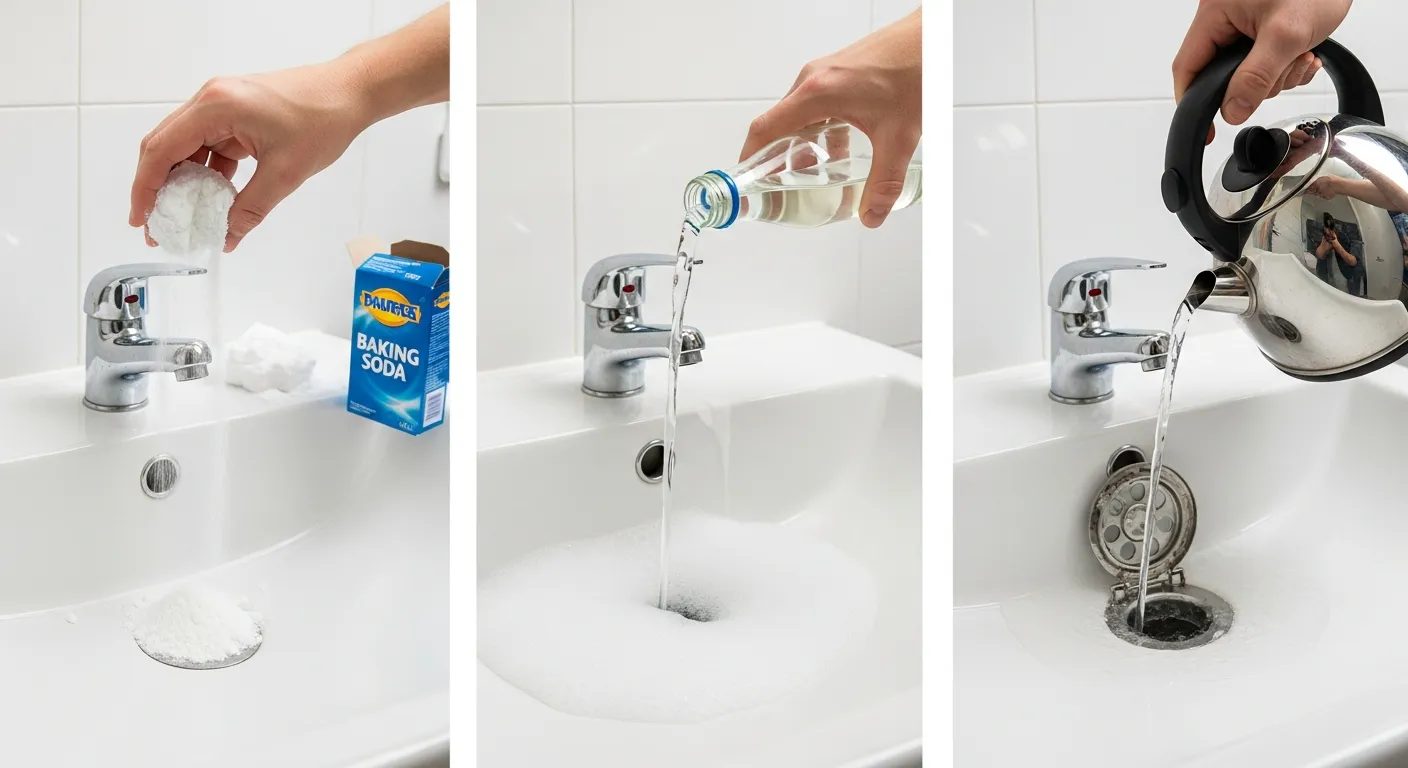
Step 2: Pour Boiling Water Down the Drain
Carefully pour a full kettle of boiling water directly into the drain. This pre-flush softens grease and loosens buildup, making the baking soda and vinegar treatment more effective. Wait about 30 seconds for the water to work through.
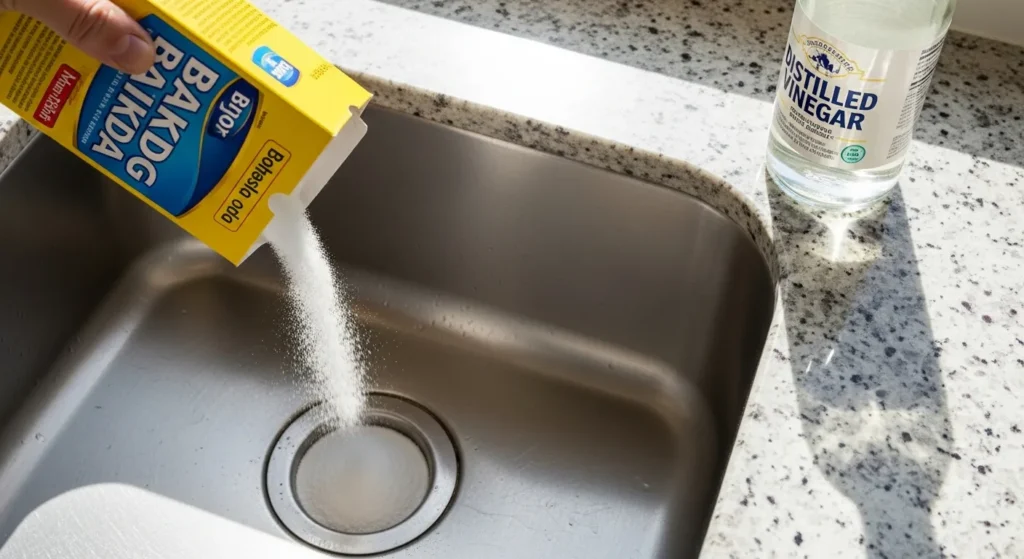
Step 3: Add 1/2 Cup of Baking Soda
Pour 1/2 cup of baking soda directly into the drain opening. Use a funnel if the opening is small. Try to get as much of the powder down into the pipe as possible rather than letting it sit on the drain cover.
Step 4: Pour 1/2 Cup of Vinegar
Slowly pour 1/2 cup of white vinegar into the drain. You will immediately hear fizzing and see bubbles forming. This is the chemical reaction at work, breaking apart the clog material.
Step 5: Cover the Drain and Wait
Quickly cover the drain with a stopper or wet cloth. This forces the fizzing action downward into the pipe instead of escaping upward. Let the mixture sit for 15 to 30 minutes. For stubborn slow drains, you can leave it for up to one hour.
Step 6: Flush with Boiling Water
After waiting, remove the cover and pour another kettle of boiling water down the drain. This final flush pushes the loosened debris through the pipe and clears the drain.
Step 7: Repeat If Needed
If the drain is still slow, repeat the entire process one or two more times. Some clogs need multiple treatments to fully clear.
Instructions for Different Drain Types
The basic process is the same for all drains, but here are specific tips for each:
Kitchen Sink Drain
Kitchen drains commonly clog from grease, food particles, and soap residue. Before using the baking soda and vinegar method, run your garbage disposal (if you have one) to clear any food sitting in the disposal chamber. Then follow the steps above. For kitchen-specific clog tips, see our guide on how to unclog a kitchen sink.
Bathroom Sink Drain
Bathroom sinks tend to clog from hair, toothpaste, and soap scum. Remove the pop-up stopper first and clean any hair wrapped around it before pouring in the baking soda. For more bathroom sink solutions, read our bathroom sink unclogging guide.
Shower Drain
Shower drains are notorious for hair clogs. Remove the drain cover and pull out any hair clumps with needle-nose pliers or a drain removal tool before starting. The baking soda and vinegar method works well here for soap scum buildup. Check out our shower drain unclogging guide for additional techniques.
Bathtub Drain
Bathtub drains face similar issues to showers: hair and soap buildup. You may need to remove the overflow plate to access the drain mechanism. Use a slightly larger amount (3/4 cup each) for bathtub drains since the pipes are typically wider. Our bathtub drain guide covers additional methods for tough tub clogs.
Tips to Boost Effectiveness
Get better results from your baking soda and vinegar drain treatment with these tips:
- Use boiling water for the pre-flush. Hot tap water is not enough. Boiling water does a much better job of softening grease and loosening buildup.
- Cover the drain tightly. The more pressure you trap inside the pipe, the more effectively the fizzing action works on the clog.
- Use white distilled vinegar. Apple cider vinegar works in a pinch, but white vinegar is more acidic and more effective.
- Do it monthly for maintenance. Even if your drains are flowing well, a monthly baking soda and vinegar treatment prevents buildup from becoming a clog.
- Try adding salt. For extra scouring power, pour 1/4 cup of table salt into the drain along with the baking soda before adding the vinegar.
- Let it sit longer for slow drains. If the drain is very slow but not fully blocked, leave the mixture for a full hour before flushing.
When Baking Soda and Vinegar Will Not Work
This natural method is great for minor clogs and maintenance, but it has limitations. Do not expect baking soda and vinegar to clear:
- Heavy grease blockages. Thick grease buildup deep in the pipe needs professional hydro jetting to fully remove.
- Tree root intrusions. Roots growing into sewer lines require mechanical cutting or pipe replacement.
- Mineral deposit buildup. Hard water scale inside pipes will not dissolve with this method.
- Collapsed or broken pipes. Structural damage to pipes requires professional repair or replacement.
- Deep clogs far from the drain opening. If the blockage is several feet into the pipe, the fizzing action will not reach it effectively.
- Solid objects. Toys, jewelry, or other items lodged in the pipe need to be physically removed.
Alternative Natural Drain Cleaning Methods
If the baking soda and vinegar method does not work, try these other natural approaches before resorting to chemicals:
- Salt and baking soda. Mix 1/2 cup salt with 1/2 cup baking soda, pour it down the drain, and let it sit overnight. Flush with boiling water in the morning. The salt adds abrasive cleaning power.
- Enzymatic drain cleaners. These use natural bacteria and enzymes to eat through organic buildup. They are slower (often overnight) but very effective for maintenance and will not damage pipes.
- Boiling water alone. Sometimes a simple flush of boiling water is enough to clear a minor grease clog in a kitchen drain.
- Manual removal. A drain snake or zip-it tool can physically pull out hair clogs from bathroom drains. Learn more in our guide to snaking a drain.
When to Call a Professional Plumber
If you have tried the baking soda and vinegar method (and repeated it) without success, it is time to call in professional help. Here are signs you need a licensed plumber:
For a complete guide to diagnosing and fixing all types of drain clogs, including DIY methods and professional options, see our guide to dealing with clogged drains in Orange County.
- Multiple drains in your home are clogging at the same time (this suggests a main sewer line issue that may need a sewer camera inspection)
- Water is backing up into other fixtures when you run a sink or flush a toilet
- You notice a sewage smell coming from your drains
- The clog keeps returning within days of clearing it
- You hear gurgling sounds from drains or toilets
- Standing water will not drain at all, even slowly
For stubborn clogs that will not clear, call 911 Drain Lines and Plumbing for professional drain cleaning. Our licensed technicians have the equipment, including sewer cameras and hydro jetting machines, to diagnose and clear any clog quickly. We serve Orange County, the Inland Empire, and surrounding areas with 24/7 emergency service. For professional assistance, contact our hydro jetting services team.
Frequently Asked Questions
Can baking soda and vinegar damage pipes?
No. Baking soda and vinegar are safe for all pipe types, including PVC, copper, and cast iron. Unlike chemical drain cleaners, this natural method will not corrode or weaken your plumbing. It is one of the safest ways to maintain your drains.
How often should I clean my drains with baking soda and vinegar?
For preventive maintenance, use this method once a month on each drain in your home. If you notice a drain starting to slow down, treat it immediately rather than waiting for a full clog to develop.
Does the baking soda and vinegar method work on toilet clogs?
It can help with minor toilet clogs caused by organic waste, but a plunger is usually more effective for toilets. Pour 1 cup of baking soda and 2 cups of vinegar into the bowl, wait 30 minutes, then flush with hot (not boiling) water. Boiling water can crack a porcelain toilet bowl.
Related: How Drain Cleaners Work
Is it better to use baking soda and vinegar or a chemical drain cleaner?
For minor clogs and regular maintenance, baking soda and vinegar is the better choice. Chemical drain cleaners are more powerful but can damage pipes over time, are hazardous to handle, and harmful to the environment. Professional plumbers generally recommend avoiding chemical drain cleaners entirely.