



A clogged kitchen sink can turn routine tasks like washing dishes or preparing meals into a frustrating ordeal. Standing water, slow drainage, and foul odors are all signs that something is blocking your pipes. The good news: many kitchen sink clogs can be resolved at home with the right approach. For stubborn blockages, knowing when to call a professional plumber saves you time, money, and potential pipe damage.
If your bathroom sink is clogged instead, see our dedicated guide. This guide covers the most common causes of kitchen sink clogs, step-by-step DIY methods to unclog your drain, and when it makes sense to bring in a licensed plumber.
Before You Start: Figure Out Where the Clog Actually Is
Not every kitchen sink problem is a drain clog. Before reaching for the plunger or baking soda, a quick 60-second check can tell you exactly where the problem is and save you from working on the wrong part of the system entirely.
If you have a double sink, run water on the non-disposal side and watch what happens. If that side drains freely, the clog is isolated to the disposal side — either the disposal itself or the drain line directly beneath it. If water backs up into both basins at the same time, the blockage is further down at the shared drain line where both basins connect. That rules out the disposal completely and means you can skip straight to the P-trap or drain snake methods below.
If you have a single sink, the location test is simpler: if water drains slowly but eventually clears, the clog is partial and likely close to the drain opening. If water sits completely still with no movement, the blockage is more complete and may be further down the line.
Is It the Garbage Disposal or the Drain?
If your kitchen sink has a garbage disposal and water is not draining, the disposal itself is often the culprit not the drain line. These are two very different problems with different fixes. Here are the three most common disposal-specific issues and exactly what to do about each one:
-
The disposal makes no sound at all when switched on
This means the disposal has tripped its internal thermal overload and shut itself off. Look under the sink at the bottom of the disposal unit — you will see a small red or black reset button. Press it firmly until you feel it click into place. Wait 10 minutes, then try the disposal again. If it still does not respond after resetting, the unit may need replacement rather than a drain cleaning. -
The disposal hums but nothing spins and water is not draining
This means the impeller plate inside the disposal is jammed usually by a small bone fragment, fruit pit, or piece of hard food. Turn the disposal switch off immediately, then cut power at the circuit breaker or unplug the unit from under the sink. Look for the hex socket on the very bottom center of the disposal unit and insert a 1/4-inch Allen wrench. Rotate it back and forth manually to free the jammed impeller. Once it moves freely, restore power, press the reset button, and run cold water before turning the disposal on again. -
The disposal runs and drains but the sink still backs up
This typically points to a partial blockage at the disposal’s discharge tube the short horizontal pipe that connects the disposal to the drain line under the sink. Grease and food particles collect at this junction over time, especially in older Orange County homes where the discharge tube runs a longer horizontal distance before dropping into the drain stack. Disconnecting the discharge tube and clearing it manually, or inserting a drain snake directly into the wall pipe at that connection point, usually clears this quickly. If the discharge tube itself is cracked or deteriorating, it will need to be replaced before the issue resolves fully.
What Causes a Clogged Kitchen Sink?
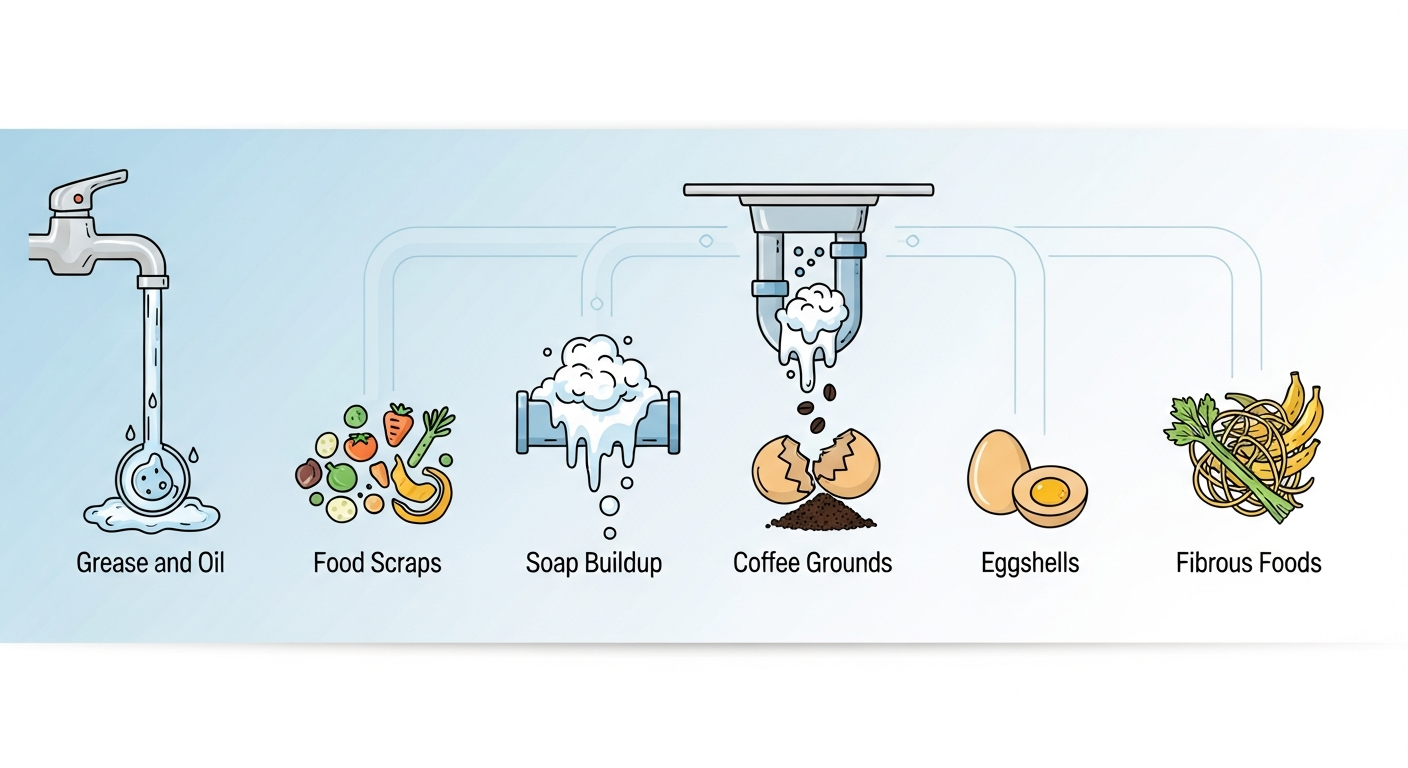
Understanding what causes kitchen drain clogs helps you fix them faster and prevent future blockages. Here are the most common culprits:
While you are working under the kitchen sink, it may also be a good time to replace an old kitchen faucet if it is showing signs of wear.
Grease and Cooking Oil
Grease is the number one cause of kitchen sink clogs. When poured down the drain, fats and oils cool and solidify inside your pipes, creating a sticky layer that traps food particles and debris. Over time, this buildup narrows the pipe until water can no longer flow through.
Food Scraps and Debris
Even with a garbage disposal, certain foods cause problems. Starchy foods like pasta, rice, and potatoes expand when wet and create a paste-like blockage. Fibrous vegetables like celery, asparagus, and corn husks can wrap around disposal blades and clog the drain.
Coffee Grounds
Coffee grounds seem small enough to wash away, but they clump together in pipes and create dense blockages that resist water flow. Always dispose of coffee grounds in the trash or compost.
Soap and Mineral Buildup
Dish soap residue combines with minerals in hard water to form a thick film inside your pipes. In areas like Orange County and the Inland Empire where water hardness is moderate to high, this buildup accumulates faster than you might expect.
Foreign Objects
Small items like bottle caps, utensil pieces, twist ties, and food packaging can accidentally fall into the drain and create an immediate blockage or catch other debris flowing through.
How to Unclog a Kitchen Sink: 6 Methods That Work
Before calling a plumber, try these proven methods in order from simplest to most involved. Each one targets a different type of clog.
1. Boiling Water
Best for: Minor clogs caused by soap or grease buildup
Boil a full kettle or pot of water and pour it directly into the drain in two to three stages, waiting several seconds between each pour. The heat melts grease and dissolves soap residue. This method works best as a first attempt on slow-draining sinks.
Important: Do not use boiling water if you have PVC pipes, as extreme heat can loosen pipe joints. Use hot (not boiling) water instead.
2. Baking Soda and Vinegar
Best for: Moderate clogs with organic buildup
- Remove any standing water from the sink.
- Pour one cup of baking soda directly into the drain.
- Follow with one cup of white vinegar.
- Cover the drain with a stopper or wet cloth to contain the fizzing reaction.
- Wait 15 to 30 minutes.
- Flush with hot water for one to two minutes.
The chemical reaction between baking soda and vinegar breaks down organic material and clears minor to moderate blockages without damaging your pipes.
3. Plunger
Best for: Clogs close to the drain opening
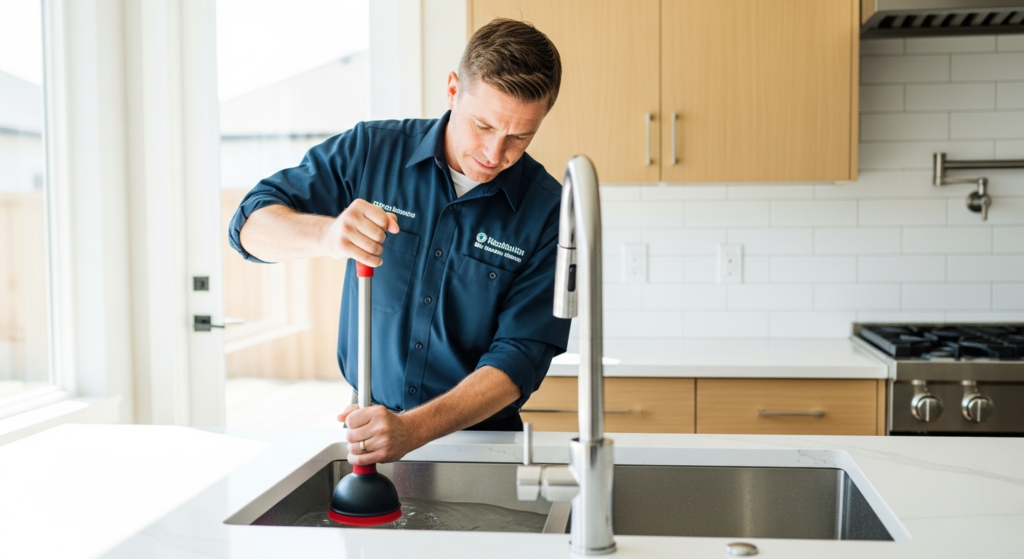
Use a flat-bottomed cup plunger (not a flange plunger, which is designed for unclogging toilets). Fill the sink with enough water to cover the plunger cup, place it firmly over the drain, and pump vigorously 15 to 20 times. The pressure change dislodges clogs near the drain opening.
Double sink tip: Seal the opposite drain with a wet cloth or stopper before plunging. This directs all the pressure to the clogged side.
4. Clean the P-Trap
Best for: Clogs caused by trapped debris
The P-trap is the U-shaped pipe section under your sink. It is a common spot for clogs because debris settles at the bottom curve.
- Place a bucket under the P-trap to catch water.
- Unscrew the slip nuts on both ends of the P-trap by hand or with pliers.
- Remove the P-trap and clean out any buildup inside.
- Reassemble and run water to test.
5. Drain Snake (Plumber’s Auger)
Best for: Deep clogs beyond the P-trap
A drain snake is a flexible metal cable that reaches deep into your pipes to break up or pull out stubborn clogs. Insert the snake into the drain (or into the wall pipe after removing the P-trap), feed it until you feel resistance, then rotate the handle to break through the blockage. Pull the snake out and flush with hot water.
You can rent or buy a basic hand-crank drain snake at most hardware stores for $15 to $30.
6. Wet-Dry Vacuum
Best for: Pulling out solid blockages
If you have a wet-dry shop vacuum, set it to the wet/liquids setting. Create a tight seal over the drain with the vacuum hose and turn it on at the highest setting. The suction power can pull out clogs that other methods push deeper into the pipes.
When to Call a Professional Plumber
DIY methods handle most minor kitchen sink clogs. But some situations require professional equipment and expertise. Call a licensed plumber if you notice any of these signs:
- Multiple drains are clogged at the same time. This points to a blockage in your main sewer line, not just the kitchen drain.
- Water backs up into other fixtures. If running the kitchen sink causes water to rise in a bathroom drain or toilet, you have a main line issue.
- The clog returns within days. Recurring clogs usually mean a deeper problem like a pipe obstruction, tree root intrusion, or deteriorating pipes.
- Foul sewage odors. Persistent sewer smells from the kitchen drain can indicate a broken vent pipe or a clog deep in the sewer line.
- You have tried all DIY methods without success. Forcing a stubborn clog with excessive pressure or chemical drain cleaners can damage your pipes.
A professional plumber uses tools like motorized drain augers, hydro jetting equipment, and sewer camera inspection systems to locate and clear blockages that household tools cannot reach.
Why Chemical Drain Cleaners Are Not Recommended
Store-bought chemical drain cleaners like Drano and Liquid-Plumr are tempting because they are cheap and easy to use. However, most professional plumbers advise against them for several reasons:
- Pipe damage: The caustic chemicals generate heat that can warp PVC pipes and corrode older metal pipes.
- Partial clearing: Chemical cleaners often dissolve only part of the clog, giving temporary relief before the blockage returns worse than before.
- Safety hazards: Splashback can cause chemical burns, and mixing different products creates toxic fumes.
- Environmental impact: These chemicals eventually reach local waterways and treatment facilities.
Mechanical methods like plunging, snaking, or hydro jetting are safer for your pipes and more effective at removing the entire blockage.
How to Prevent Kitchen Sink Clogs
Prevention is always easier and cheaper than dealing with a clogged drain. Follow these habits to keep your kitchen sink flowing freely:
- Never pour grease down the drain. Let cooking oil and grease cool in a container, then dispose of it in the trash.
- Use a sink strainer. A mesh strainer catches food particles before they enter the drain. Clean it after every use.
- Run hot water after each use. A 30-second flush of hot water helps prevent grease from solidifying in the pipes.
- Flush with baking soda monthly. Pour half a cup of baking soda followed by hot water once a month to keep pipes clean.
- Scrape plates before washing. Remove food scraps into the trash or compost before rinsing dishes in the sink.
- Schedule annual drain cleaning. Professional drain maintenance prevents buildup before it becomes a problem.
Kitchen Sink Clog FAQ
Can a clogged kitchen sink fix itself?
No. A clogged kitchen sink will not clear on its own. The debris causing the blockage stays in place and usually gets worse over time as more material accumulates. Address the clog as soon as you notice slow drainage.
How much does it cost to unclog a kitchen sink?
Professional drain cleaning typically costs between $150 and $350 depending on the severity and location of the clog. Simple clogs near the drain opening cost less than deep blockages that require hydro jetting or camera inspection. Most plumbing companies provide free estimates before starting work.
Is it safe to use a plunger on a kitchen sink?
Yes, a flat-bottomed cup plunger is safe and effective for kitchen sinks. Avoid using a flange plunger (the kind with a protruding rubber lip), which is designed for toilets and will not create a proper seal on a flat sink drain.
Why does my kitchen sink keep clogging?
Recurring kitchen sink clogs usually indicate one of three issues: grease buildup inside the pipes, a partial obstruction deeper in the drain line, or a problem with the pipe slope or configuration. If your sink clogs more than once every few months, a professional sewer camera inspection can identify the root cause.
Can a clogged kitchen sink cause a leak?
Yes. Standing water puts pressure on pipe joints, especially at the P-trap connections under the sink. Over time, this pressure can loosen fittings and cause leaks that damage cabinets and flooring. Clearing the clog promptly prevents water damage.
Dealing with a stubborn kitchen sink clog that will not clear? The licensed plumbers at 911 Drain Lines and Plumbing are available 24/7 for emergency drain cleaning in Orange County and the Inland Empire. Call (714) 746-7611 for fast, professional service.
Related: Install a Garbage Disposal