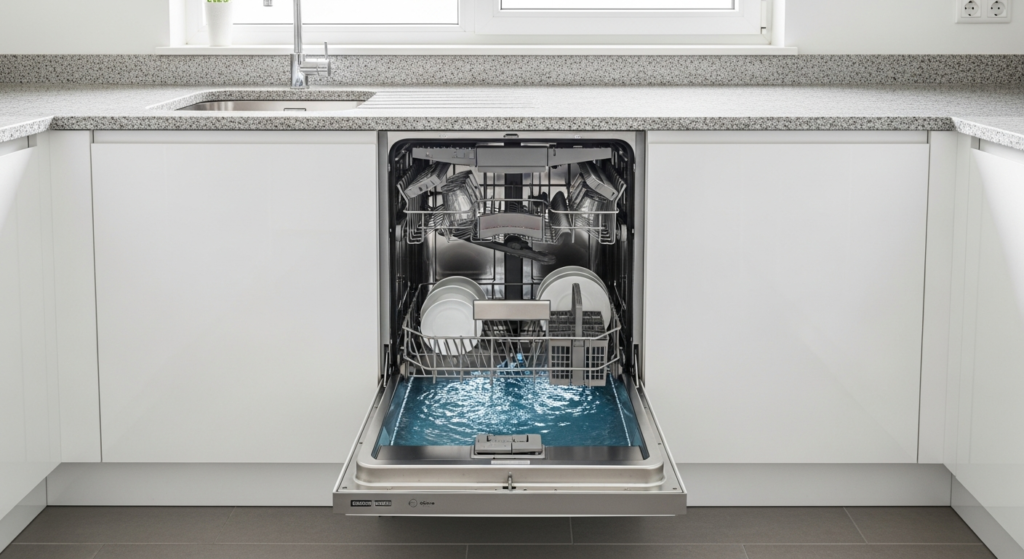




A dishwasher not draining is one of the most common appliance problems homeowners encounter. You open the door expecting clean, dry dishes and instead find a pool of murky standing water sitting at the bottom of the tub. The good news is that most causes are straightforward, and many can be resolved without a service call. In this guide, we walk through the most likely reasons your dishwasher won’t drain, step-by-step troubleshooting you can try yourself, and clear signs that it is time to call a licensed plumber.
Common Causes of a Dishwasher Not Draining
Before you start pulling parts out, it helps to understand what is actually happening inside your dishwasher. The drain cycle relies on several components working together: a filter or drain basket that catches food debris, a drain hose that carries water to your kitchen sink drain or garbage disposal, a drain pump that pushes water out, and sometimes an air gap that prevents backflow. A failure in any one of these parts can leave your dishwasher standing water at the end of a cycle.
Clogged Filter or Drain Basket
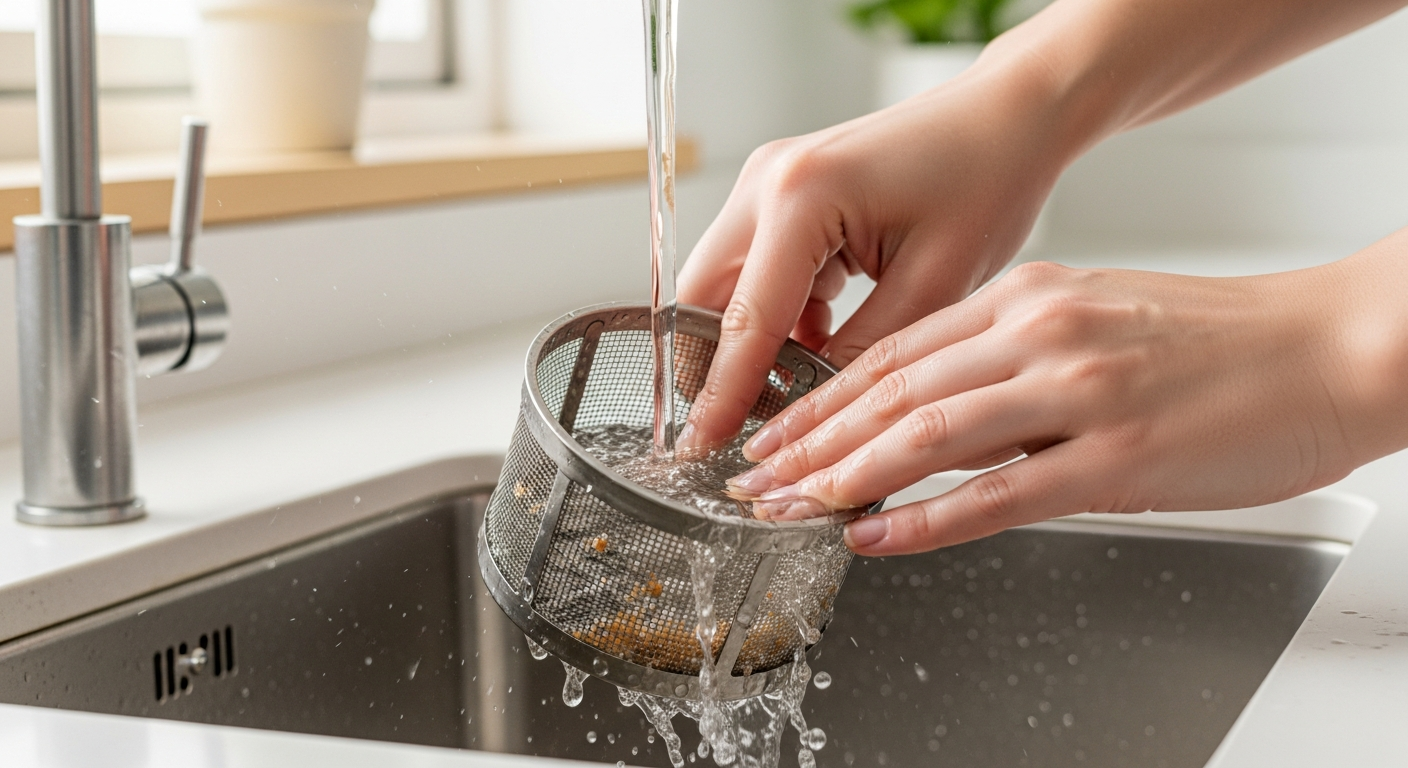
The most common reason a dishwasher is not draining water is a clogged filter. Most modern dishwashers have a cylindrical filter assembly at the bottom of the tub, usually beneath the lower spray arm. Food particles, grease, and small debris accumulate here over time and restrict water flow.
How to Clean the Filter
- Remove the bottom dish rack to access the floor of the dishwasher.
- Locate the filter, which is usually a cylindrical assembly near the back or center of the tub. Twist it counterclockwise and lift it out.
- Rinse the filter under warm running water. Use a soft brush (an old toothbrush works well) to remove stuck-on grease and debris.
- Check the filter housing inside the dishwasher for any debris that fell through. Wipe it clean with a damp cloth.
- Reinstall the filter, twist it clockwise until it locks, and run a short rinse cycle to test.
If your kitchen sink also backs up when the dishwasher runs, the clog may be deeper in the shared drain line. Our guide on fixing a clogged kitchen sink covers that situation in detail.
Blocked or Kinked Drain Hose
The drain hose connects the dishwasher pump to either your garbage disposal inlet or the sink drain tailpiece. Over time, the hose can become kinked from being pushed against the wall when the dishwasher is slid back into position, or it can develop an internal blockage from grease buildup.
How to Check the Drain Hose
- Turn off power to the dishwasher at the circuit breaker.
- Pull the dishwasher out from under the counter far enough to access the hose at the back.
- Inspect the hose for visible kinks, sharp bends, or crushed sections. Straighten any kinks you find.
- Disconnect the hose from the disposal or tailpiece connection (have a towel ready for residual water). Blow through it or run water through it to check for blockages.
- If the hose is clogged, flush it with a mixture of hot water and white vinegar, or replace it if the buildup is severe.
Garbage Disposal Connection Issues
If your dishwasher drains through a garbage disposal, two common problems can prevent draining. First, if the disposal is new, the knockout plug inside the disposal inlet may not have been removed during installation. This completely blocks the dishwasher drain path. Second, food buildup inside the disposal can restrict flow from the dishwasher hose.
Run your garbage disposal for 15 to 20 seconds with cold water flowing before starting your dishwasher. This clears any residual food and opens the drain path. If your garbage disposal is not working at all, that is a separate issue that needs to be addressed first since a dead disposal blocks the dishwasher drain entirely.
Faulty Drain Pump
The drain pump is a small motor-driven component that forces water out through the drain hose. If you hear a humming sound during the drain cycle but water is not moving, the pump motor may be running but the impeller could be jammed with debris. If the dishwasher is completely silent during what should be the drain cycle, the pump motor may have failed.
Pump repairs are generally not a DIY job. The part needs to be accessed from underneath the dishwasher, and diagnosing whether the issue is the pump itself, the motor, or the control board requires testing with a multimeter. This is where calling a professional plumber makes sense.
Air Gap or High Loop Problems
Many kitchen plumbing codes require either an air gap device (that chrome cylinder on the back of your sink) or a high loop in the drain hose to prevent dirty sink water from flowing back into the dishwasher. If the air gap is clogged with debris, water backs up and the dishwasher cannot drain properly.
How to Clean the Air Gap
- Remove the chrome cover and the inner cap from the air gap on your sink.
- Use a stiff brush or pipe cleaner to clear any debris from the opening.
- Check the hose that runs from the air gap to the garbage disposal for clogs.
- Reassemble and run a test cycle.
If your dishwasher uses a high loop instead of an air gap, verify that the drain hose is secured at the highest point under the counter. A hose that has slipped down can allow water to siphon back into the dishwasher. For more on handling drain issues in general, check out our article on how to unclog a drain.
While you are working on your kitchen plumbing, consider whether your faucet also needs attention. Our guide on how to replace a kitchen faucet walks you through the full process. For more about clearing drain clogs, see our complete clogged drain guide. If the issue persists, consider scheduling drain cleaning services with a licensed professional. If the issue persists, consider scheduling residential plumbing services with a licensed professional.
Standing Water from a Canceled Cycle
Sometimes the fix is simpler than you think. If a wash cycle was interrupted or canceled mid-run, the dishwasher may not have reached the drain portion of its cycle. In this case, the standing water is normal and the machine just needs to complete a full cycle.
Close the door, select a normal wash or drain-only cycle (if your model has one), and let it run to completion. If the water drains normally, the issue was simply an interrupted cycle. If not, one of the mechanical issues above is likely the cause.
DIY Troubleshooting Checklist
Before calling a plumber, work through these steps in order. Each one takes just a few minutes and can save you a service call:
- Run the garbage disposal for 20 seconds with cold water to clear the shared drain path.
- Check and clean the filter at the bottom of the dishwasher tub.
- Inspect the drain hose for kinks or blockages.
- Clean the air gap (if your sink has one) or verify the high loop is secure.
- Run a complete cycle using the hottest water setting to flush grease from the system.
- Try a vinegar rinse: Place a cup of white vinegar on the top rack and run an empty hot cycle to dissolve grease and mineral buildup.
If your dishwasher is still not draining after these steps, the problem likely requires professional diagnosis. A plumber can use specialized tools like a drain snake to clear deep blockages or diagnose pump and motor failures.
When to Call a Professional Plumber
While the troubleshooting steps above handle most common scenarios, certain situations call for professional help:
- The drain pump is not running. If the dishwasher is silent during the drain cycle, the pump motor may need replacement.
- Water is backing up into the sink. This suggests a main drain line blockage that goes beyond the dishwasher itself.
- You see water under the dishwasher. Leaking combined with drainage issues could indicate a cracked hose, loose connection, or pump seal failure.
- The problem keeps recurring. If you clean the filter and drain hose but the issue returns within days, there may be a deeper plumbing problem.
- The dishwasher is more than 10 years old. Repeated drain failures in an aging unit often mean it is more cost-effective to replace than repair.
911 Drain Lines and Plumbing provides 24/7 emergency plumbing services across Orange County and the Inland Empire. Our licensed plumbers can diagnose dishwasher drainage problems quickly and recommend the most cost-effective solution. Contact 911 Drain Lines to schedule service.
Frequently Asked Questions
Why is there standing water in the bottom of my dishwasher?
A small amount of water (about a cup) in the sump area is normal and keeps the seals from drying out. However, if the water level covers the entire bottom of the tub, the most common causes are a clogged filter, blocked drain hose, or a faulty drain pump.
Can I use Drano or chemical drain cleaners in my dishwasher?
No. Chemical drain cleaners are not designed for dishwashers and can damage rubber seals, gaskets, and internal components. Use white vinegar and baking soda for safe cleaning, or call a plumber for persistent clogs.
Why does my dishwasher not drain but my sink drains fine?
This usually points to a problem specific to the dishwasher rather than the shared drain line. Check the dishwasher filter, drain hose, and drain pump. A clogged air gap can also cause this since it only affects the dishwasher drain path.
How often should I clean my dishwasher filter?
Most manufacturers recommend cleaning the filter at least once a month. If you run your dishwasher daily or wash heavily soiled dishes without pre-rinsing, clean it every two weeks to prevent drainage problems.
My dishwasher won’t drain and it smells bad. What should I do?
A foul smell combined with standing water usually means food debris is decomposing in the filter, drain hose, or sump area. Clean the filter, run a hot vinegar cycle, and check the drain hose for buildup. If the smell persists after cleaning, there may be a blockage in the drain line that requires professional attention.