



A clogged bathroom sink is one of the most common plumbing problems homeowners face. Whether water is pooling around the drain or refusing to go down at all, you do not have to call a plumber right away. Most bathroom sink clogs can be cleared with simple tools and household supplies you already have on hand.
In this guide, we walk through six proven methods to unclog a bathroom sink, explain what causes these clogs in the first place, and share tips to keep your drain flowing freely.
What Causes a Clogged Bathroom Sink?
Before you start unclogging, it helps to understand what is blocking the drain. Bathroom sink clogs are different from kitchen sink clogs because of what goes down them every day. The most common culprits include:
- Hair: Loose strands of hair are the number one cause of bathroom sink clogs. They wrap around the stopper, pivot rod, and inside the P-trap, creating a tangled net that traps everything else.
- Soap scum: Bar soap and liquid soap leave a sticky residue that coats the inside of pipes. Over time, this buildup narrows the drain opening and catches hair and debris.
- Toothpaste: Toothpaste is thick and sticky. When it combines with hair and soap residue, it hardens into a stubborn blockage.
- Small objects: Jewelry, bobby pins, bottle caps, and other small items can accidentally fall into the drain and create an instant clog.
- Mineral buildup: Hard water deposits calcium and magnesium inside pipes, gradually reducing water flow.
Understanding the cause helps you pick the right method. For a deeper look at what causes drain problems throughout your home, check out our guide on the 10 main causes of drain clogs and how to prevent them.
6 Easy Methods to Unclog a Bathroom Sink
Start with the simplest method first and work your way up. Most bathroom sink clogs can be cleared without any special tools.
Method 1: Boiling Water Flush
Best for: Minor clogs caused by soap scum and toothpaste buildup.
This is the easiest method and requires nothing but a kettle. Boiling water can dissolve soap scum and loosen soft blockages that are slowing your drain.
- Boil a full kettle of water.
- Remove any standing water from the sink if possible.
- Pour the boiling water directly into the drain in two or three stages, waiting a few seconds between each pour.
- Let the hot water sit for a minute, then run the faucet to test the flow.
Important: Do not use boiling water if you have PVC pipes (the heat can soften plastic joints). Use very hot tap water instead.
Method 2: Baking Soda and Vinegar
Best for: Moderate clogs with slow drainage caused by organic buildup.
This classic combination creates a fizzing reaction that breaks up soap scum, toothpaste, and light hair clogs without harsh chemicals.
- Remove any standing water from the sink.
- Pour 1/2 cup of baking soda directly into the drain.
- Follow with 1/2 cup of white vinegar. You will hear fizzing immediately.
- Cover the drain with a wet cloth or stopper to keep the reaction inside the pipe.
- Wait 15 to 30 minutes.
- Flush with hot water for one to two minutes.
Repeat if needed. This method is safe for all pipe types and works well as a monthly maintenance flush too.
Method 3: Plunger Technique for Bathroom Sinks
Best for: Clogs that are not responding to boiling water or baking soda.
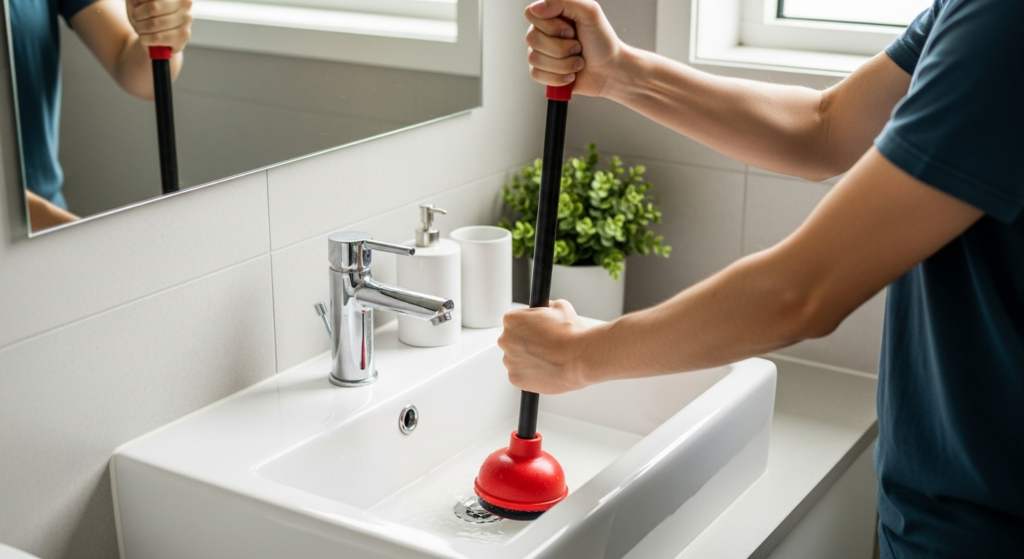
A plunger creates pressure that dislodges blockages stuck deeper in the pipe. Use a flat-bottomed cup plunger (not a flange plunger, which is designed for toilets).
- Plug the overflow hole (the small opening near the top of the sink) with a wet rag. This ensures the plunger creates a proper seal.
- Fill the sink with two to three inches of water.
- Place the plunger over the drain, making sure it covers the opening completely.
- Pump up and down firmly 15 to 20 times.
- Pull the plunger away quickly on the last stroke to break the seal.
- Check if the water drains. Repeat two to three times if necessary.
This method works well for clogs in the upper section of the drain pipe. If your bathroom sink still will not drain, move to the next method.
Method 4: Remove and Clean the P-Trap
Best for: Stubborn clogs caused by hair, soap, or small objects caught in the curved pipe under the sink.
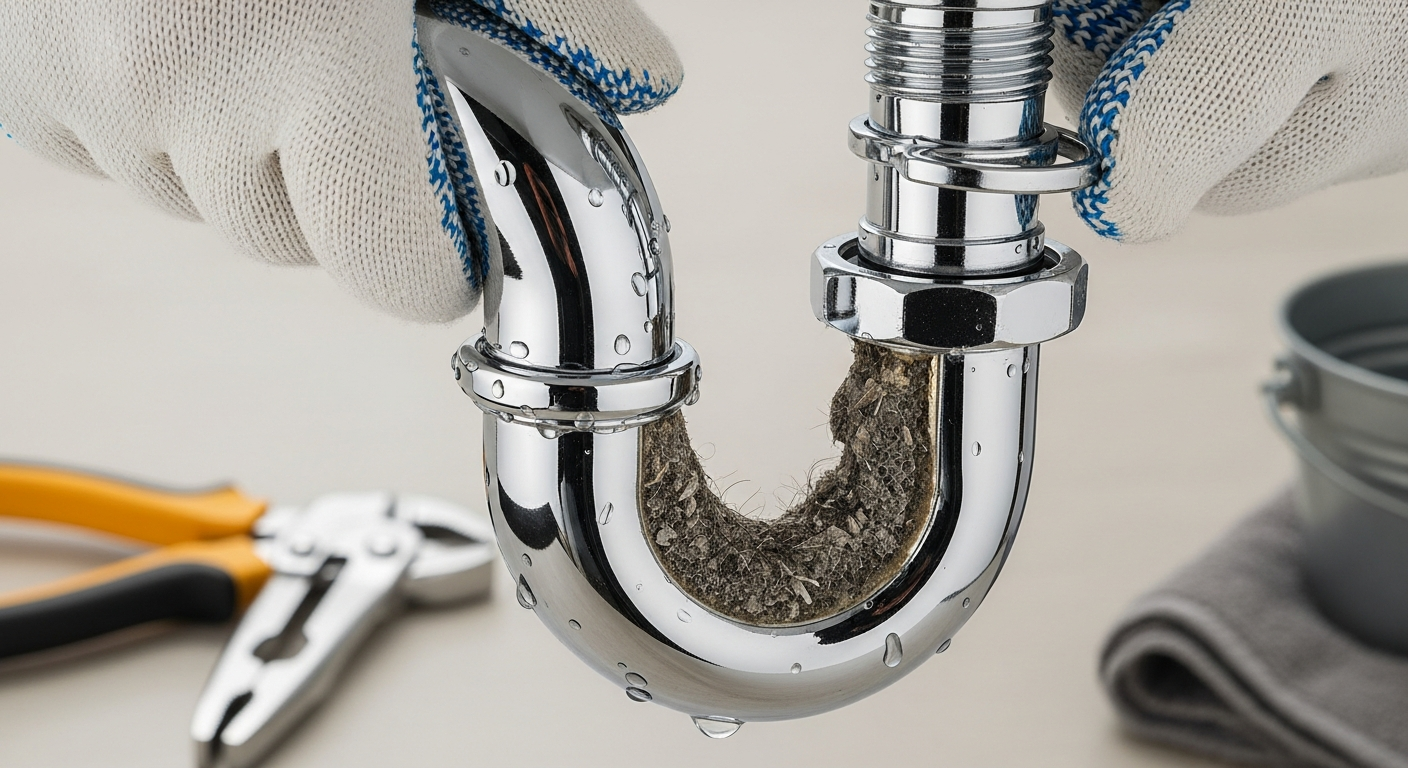
The P-trap is the U-shaped or J-shaped pipe under your sink. It is designed to hold a small amount of water (which blocks sewer gases), but it also collects debris over time.
- Place a bucket or towel under the P-trap to catch water.
- Loosen the slip nuts on both ends of the P-trap by hand or with pliers.
- Carefully remove the P-trap and let the water drain into the bucket.
- Clean out the inside of the trap. You will likely find hair, soap scum, and grime.
- Inspect the pipe going into the wall for any visible blockage.
- Reassemble the P-trap, hand-tighten the slip nuts, then snug them with pliers (do not overtighten).
- Run the water to check for leaks and confirm the clog is cleared.
Method 5: Use a Drain Snake
Best for: Deep clogs that are beyond the P-trap, further down the drainpipe.
A drain snake (also called a plumber’s auger) is a flexible metal cable that reaches deep into the pipe to break up or pull out blockages. You can buy a basic hand-crank drain snake at any hardware store for under $20.
- Remove the P-trap (see Method 4) or feed the snake directly into the drain opening.
- Push the snake into the pipe until you feel resistance.
- Crank the handle clockwise to work through the clog.
- Pull the snake back, bringing the debris with it.
- Run hot water through the drain for two minutes to flush any remaining material.
A drain snake can reach clogs 15 to 25 feet into the pipe, making it effective for blockages that simpler methods cannot reach. For even tougher clogs, professional plumbers use motorized augers and hydro jetting equipment to clear lines completely.
Method 6: Remove the Stopper and Clean the Pivot Rod
Best for: Sinks that drain slowly because hair is wrapped around the pop-up stopper mechanism.
Many bathroom sinks have a pop-up stopper controlled by a pivot rod behind the drainpipe. Hair and gunk collect on this mechanism and restrict water flow. This is often the real cause when your bathroom sink will not drain properly.
- Try pulling the stopper straight up. Some lift right out.
- If it does not come out, go under the sink and find the pivot rod, a horizontal rod connected to the back of the drainpipe with a small clip.
- Squeeze the clip and pull the pivot rod out of the drainpipe.
- Now you can lift the stopper out from above.
- Clean the stopper and pivot rod thoroughly. Remove all hair, soap residue, and buildup.
- Reassemble by inserting the stopper, sliding the pivot rod back in, and reattaching the clip.
This method takes five minutes and often fixes slow bathroom sink drains instantly.
How to Prevent Bathroom Sink Clogs
Prevention is easier than dealing with a clogged bathroom sink. These simple habits will keep your drain clear:
- Use a drain screen or hair catcher: A small mesh screen over the drain catches hair before it enters the pipe. This one step prevents most bathroom sink clogs.
- Run hot water after each use: A 30-second hot water flush after brushing your teeth or washing your face helps clear soap and toothpaste residue.
- Monthly baking soda flush: Pour 1/2 cup of baking soda followed by hot water once a month to keep pipes clean.
- Clean the stopper regularly: Pull out the pop-up stopper every few weeks and wipe off accumulated hair and soap buildup.
- Avoid dumping products down the drain: Do not pour lotions, oils, or thick products directly into the sink. Wipe them off with a tissue first.
For more tips on keeping all your drains clear, see our guide on how to unclog a bathtub drain, which covers similar prevention strategies for other fixtures in your bathroom.
When to Call a Professional Plumber
DIY methods work for most bathroom sink clogs, but some situations require professional help:
- Multiple drains are clogged at once: If your bathroom sink, shower, and toilet are all draining slowly, the problem is likely in your main sewer line, not just one fixture and may require a sewer camera inspection.
- The clog keeps coming back: Recurring clogs often indicate a deeper issue like pipe damage, tree root intrusion, or buildup further down the line.
- You smell sewer gas: A sewer odor coming from the drain can signal a broken vent pipe or a problem with the P-trap seal.
- Water backs up into other fixtures: If using the sink causes water to back up in the shower or tub, you have a shared drain line issue.
- You have tried all six methods above: If none of these approaches work, the clog is beyond what household tools can handle.
professional drain cleaning for professional drain cleaning service in Orange County and the Inland Empire. Our licensed plumbers use commercial-grade equipment, including sewer camera inspections and hydro jetting, to clear even the toughest clogs and identify the root cause so the problem does not come back. We offer 24/7 emergency service when you need help fast. For professional assistance, contact our hydro jetting services team.
Frequently Asked Questions
Why is my bathroom sink draining slowly?
A slow-draining bathroom sink is usually caused by a buildup of hair, soap scum, and toothpaste inside the drain pipe or around the pop-up stopper. Removing the stopper and cleaning the pivot rod (Method 6) fixes this problem in most cases.
Can I use chemical drain cleaners on a clogged bathroom sink?
We do not recommend chemical drain cleaners. They contain harsh chemicals that can corrode pipes over time, especially older metal pipes and PVC joints. The baking soda and vinegar method (Method 2) is a safer and equally effective alternative for most clogs.
How often should I clean my bathroom sink drain?
Clean the pop-up stopper every two to four weeks and do a baking soda flush once a month. If multiple people share the bathroom, clean it more frequently. Regular maintenance prevents most clogs before they start.
What is the fastest way to unclog a bathroom sink?
Removing the pop-up stopper and cleaning off the hair and debris (Method 6) is usually the fastest fix, taking about five minutes. If that does not work, the plunger technique (Method 3) is the next quickest option.
Related: Snake A Drain
My bathroom sink is completely clogged and water will not go down at all. What should I do?
For a completely clogged bathroom sink, skip the boiling water and baking soda methods and go straight to the plunger (Method 3) or P-trap removal (Method 4). If those do not work, use a drain snake (Method 5). If nothing clears the blockage, call a professional plumber because the clog may be deep in the drainpipe or in a shared line.