



A slab leak can turn from a minor concern into a major expense if you don’t catch it early. Whether you’ve noticed a spike in your water bill, warm spots on your floor, or the faint sound of running water, understanding the cost of slab leak repair helps you plan and avoid surprises.
This guide breaks down what slab leak repair actually costs in Orange County, what factors drive the price up or down, and how to choose the right repair method for your situation.
What Is a Slab Leak?
A slab leak is a water leak in the pipes running beneath your home’s concrete foundation. These pipes carry fresh water into your home or wastewater out, and when they corrode, shift, or crack, water escapes into the soil or up through the slab.
Slab leaks are common in Southern California homes built on concrete foundations, especially those over 20 years old with copper or galvanized steel pipes. Left unrepaired, they can cause foundation damage, mold growth, and structural issues that cost far more than the original repair.
Average Slab Leak Repair Cost
Slab leak repair costs vary widely depending on the repair method, location of the leak, and accessibility. Here are the typical ranges homeowners in Orange County can expect:
| Repair Method | Average Cost Range | Best For |
|---|---|---|
| Spot repair (direct access) | $500 – $2,000 | Single, accessible leak location |
| Pipe reroute/reline | $1,500 – $4,000 | Multiple leaks or corroded section |
| Trenchless pipe bursting | $3,000 – $6,000 | Full pipe replacement without excavation |
| Whole-house repipe | $5,000 – $15,000+ | Aging pipe system with recurring leaks |
| Epoxy pipe lining | $2,000 – $5,000 | Pipes with minor corrosion, no major damage |
Note: These ranges reflect typical Orange County pricing. Actual costs depend on your specific situation, pipe material, and home layout.
Factors That Affect Slab Leak Repair Cost
No two slab leaks are identical. Several variables determine what you will actually pay:
1. Leak Location and Accessibility
A leak under a bathroom in the center of your home costs more to access than one near an exterior wall. If the leak is under tile, hardwood, or built-in cabinetry, expect additional costs for removal and restoration. Our Irvine plumbing team handles these complex repairs daily.
2. Pipe Material and Condition
Copper pipes corrode differently than PEX or CPVC. If your home has galvanized steel pipes, the plumber may recommend a full PEX repipe rather than a spot fix, since one leak often means more are coming.
3. Repair Method
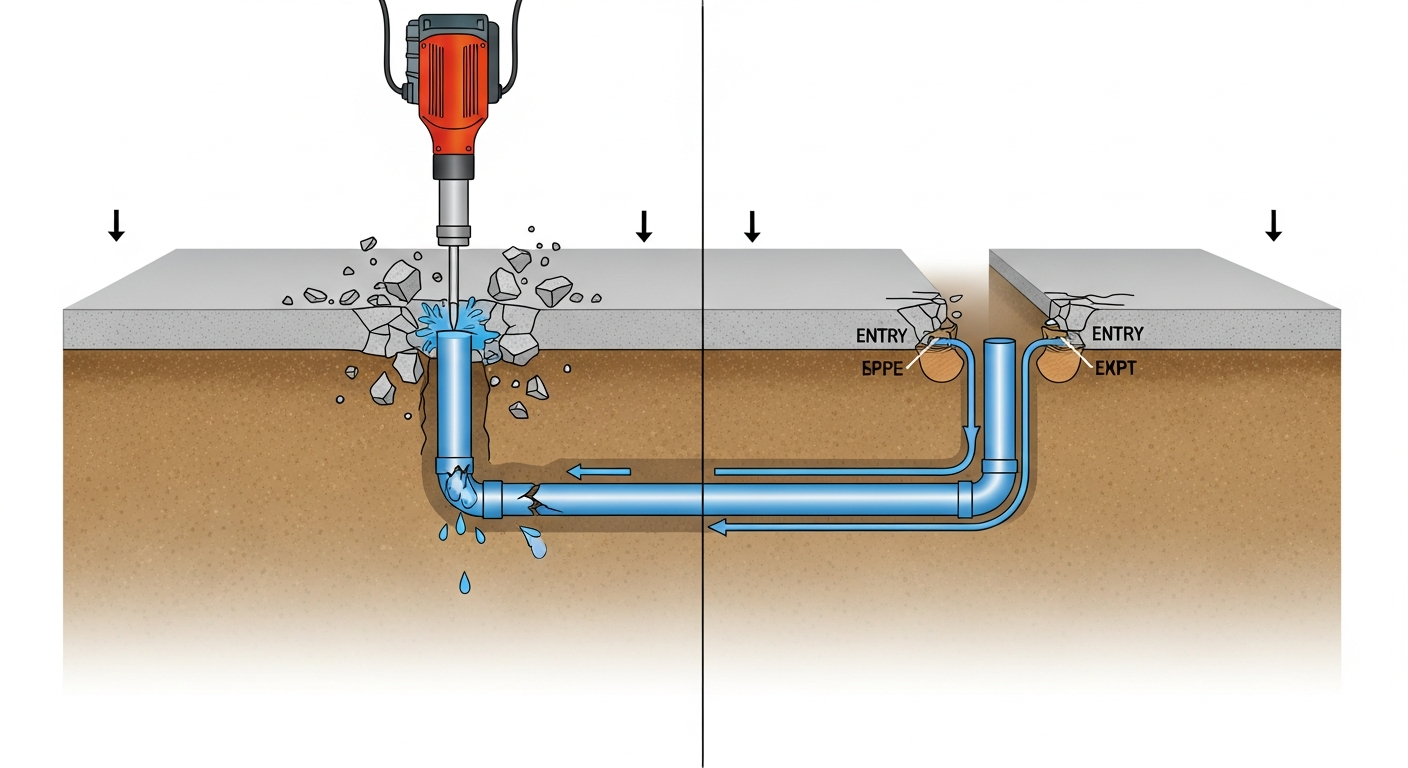
A simple spot repair where the plumber jackhammers a small section of slab is the least expensive option. However, if the pipes are deteriorating throughout, a reroute or trenchless pipe bursting approach saves money long-term by preventing repeat repairs.
4. Water Damage Extent
If the leak has been active for weeks or months, you may face additional costs for mold remediation ($1,000 – $3,500), flooring replacement ($500 – $5,000+), and foundation repair. Early slab leak detection minimizes these secondary costs significantly.
5. Permits and Inspections
Some Orange County cities require permits for slab leak repairs, especially if the work involves rerouting pipes or modifying the foundation. Permit costs typically run $150 – $500.
Slab Leak Repair Methods Explained
Spot Repair (Direct Access)
The plumber cuts through the concrete slab at the leak location, repairs or replaces the damaged pipe section, then patches the concrete. This is the most affordable option when you have a single, localized leak.
Pros: Lowest cost, fastest completion (usually same-day)
Cons: Only fixes the immediate problem; other sections may leak soon after
Pipe Reroute
Instead of accessing the pipe under the slab, the plumber abandons the leaking section and runs a new pipe through the walls, attic, or along the exterior. This avoids breaking the slab entirely.
Pros: No slab damage, eliminates the problem section permanently
Cons: Higher cost than spot repair, may require drywall work
Trenchless Pipe Bursting
A trenchless pipe bursting approach pulls a new pipe through the old one, breaking the old pipe outward as it goes. This replaces the full pipe run without excavating the slab.
Pros: Full pipe replacement, minimal disruption
Cons: Higher upfront cost, requires access points at both ends
Epoxy Pipe Lining
A resin-coated liner is inserted into the existing pipe and inflated, creating a new pipe within the old one. This works well for pipes with minor corrosion or small cracks.
Pros: No digging, extends pipe life 50+ years
Cons: Not suitable for severely damaged or collapsed pipes
Whole-House Repipe
When the entire plumbing system is aging and prone to leaks, a full repipe with PEX is often the most cost-effective long-term solution.
Pros: Eliminates all potential slab leak sources, modern materials last 50+ years
Cons: Highest upfront cost, 2-5 day project
Signs You Have a Slab Leak
Catching a slab leak early can save thousands in repair and water damage costs. Watch for these warning signs of a slab leak:
- Unexplained spike in water bills without increased usage
- Sound of running water when all fixtures are off
- Warm or hot spots on your floor (indicates a hot water line leak)
- Damp or wet carpet with no obvious source
- Cracks in your foundation or walls
- Mold or mildew smell near the floor level
- Low water pressure throughout the house
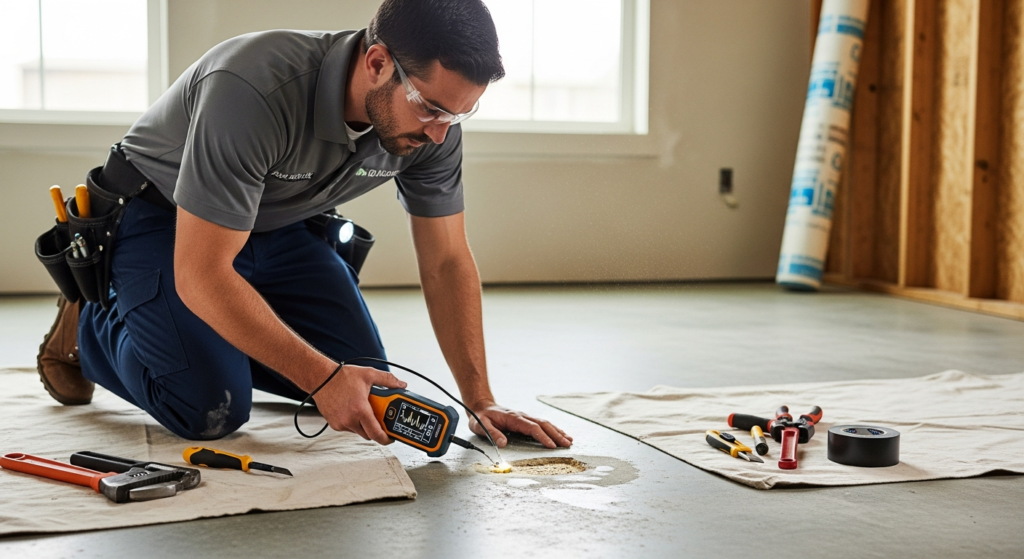
If you notice any of these signs, schedule a professional slab leak detection service immediately. Modern electronic and acoustic detection equipment can pinpoint the exact leak location without breaking concrete.
How to Save Money on Slab Leak Repair
- Act fast. The longer a slab leak runs, the more water damage accumulates. What starts as a $1,000 repair can become a $10,000+ project with mold and foundation damage.
- Check your homeowner’s insurance. Many policies cover slab leak damage (not the repair itself, but resulting water damage). File a claim before starting repairs.
- Get multiple quotes. Repair costs vary between plumbers. Get at least 2-3 written estimates that specify the repair method and materials.
- Ask about trenchless options. While the upfront cost is higher, trenchless methods avoid expensive slab and flooring restoration costs.
- Consider long-term value. If your home has copper pipes over 25 years old, a repipe may cost more now but eliminates recurring slab leak repairs for decades.
Why Orange County Homeowners Choose 911 Drain Lines
At 911 Drain Lines and Plumbing, we specialize in slab leak detection and repair across Orange County and the Inland Empire. Our licensed plumbers use advanced electronic leak detection equipment to find leaks without unnecessary demolition, and we offer the full range of repair options from spot fixes to trenchless pipe bursting.
- 24/7 emergency slab leak service
- Licensed and insured (CSLB C-36 Plumbing)
- Advanced electronic and acoustic leak detection
- Trenchless repair options available
- Serving all of Orange County and the Inland Empire
Suspect a slab leak? Call us at (714) 746-7611 for fast, accurate detection and a transparent repair estimate.
If the leak points to a failing main water line beyond the slab, see our breakdown of water line replacement costs in Orange County to plan your next step.
Frequently Asked Questions
How much does a slab leak cost to repair?
Most slab leak repairs cost between $500 and $6,000, depending on the repair method and severity. A simple spot repair runs $500 to $2,000, while trenchless pipe bursting ranges from $3,000 to $6,000. Whole-house repipes for homes with recurring slab leaks can cost $5,000 to $15,000 or more.
Does homeowner’s insurance cover slab leak repair?
Most homeowner’s insurance policies cover the resulting water damage from a slab leak but not the cost of repairing the pipe itself. Review your policy and file a claim for any water damage, flooring replacement, or mold remediation costs.
How long does slab leak repair take?
A spot repair typically takes 4 to 8 hours. Pipe reroutes and trenchless repairs usually take 1 to 2 days. A whole-house repipe may take 2 to 5 days depending on the home’s size and pipe accessibility.
Can I ignore a small slab leak?
No. Even a small slab leak wastes water, increases your utility bill, and causes progressive damage to your foundation and flooring. What seems minor today can cause thousands in structural damage within months. Always address slab leaks as soon as they are detected.