



Key Takeaways
- Tank water heaters cost less upfront but more over time. A traditional tank unit runs $800 to $1,500 installed, but its lower energy efficiency means higher monthly utility bills for the 8 to 12 years it typically lasts.
- Tankless water heaters save money long-term. While the upfront cost is higher ($2,000 to $4,500 installed), a tankless unit can last 20 years or more and cut water heating energy use by up to 34% for most households.
- The best choice depends on your home. Consider your household size, hot water demand, available space, and budget. A licensed plumber can assess your home’s plumbing and gas or electrical capacity to recommend the right system for your needs.
How Tank Water Heaters Work
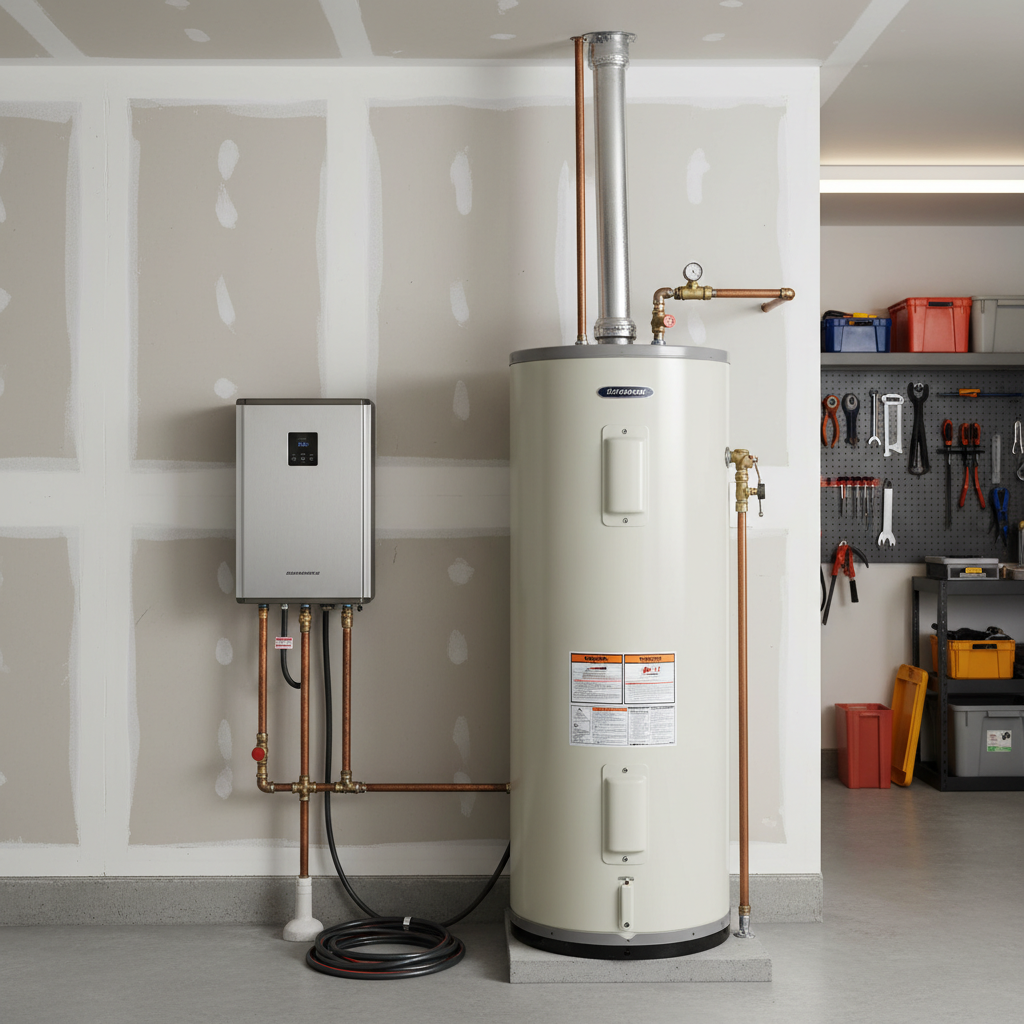
A traditional tank water heater is the system most Orange County homeowners, from Irvine to Newport Beach, are familiar with. It stores a set amount of hot water, typically 40 to 80 gallons, in an insulated tank. A gas burner or electric heating element keeps that water at a constant temperature, ready for you whenever you turn on the tap.
The biggest advantage is simplicity. The technology is straightforward, replacement parts are widely available, and installation costs are lower. The downside is what the industry calls “standby heat loss.” The heater works around the clock to keep that stored water hot, even when nobody in the house needs it. That constant energy use adds up on your utility bills month after month.
How Tankless Water Heaters Work
A tankless, or on-demand, water heater takes the opposite approach. It has no storage tank at all. When you open a hot water faucet, cold water flows through the unit and is heated instantly by a high-powered gas burner or electric element. The moment you turn the faucet off, the unit shuts down and stops using energy.
This on-demand design eliminates standby heat loss entirely. You only pay to heat the water you actually use. The trade-off is that the unit has a limited flow rate, measured in gallons per minute (GPM). If you run the dishwasher, the washing machine, and a shower at the same time, a single tankless unit may struggle to keep up. Proper sizing by a licensed plumber is critical to avoid this problem.
Tankless vs. Tank: A Side-by-Side Comparison
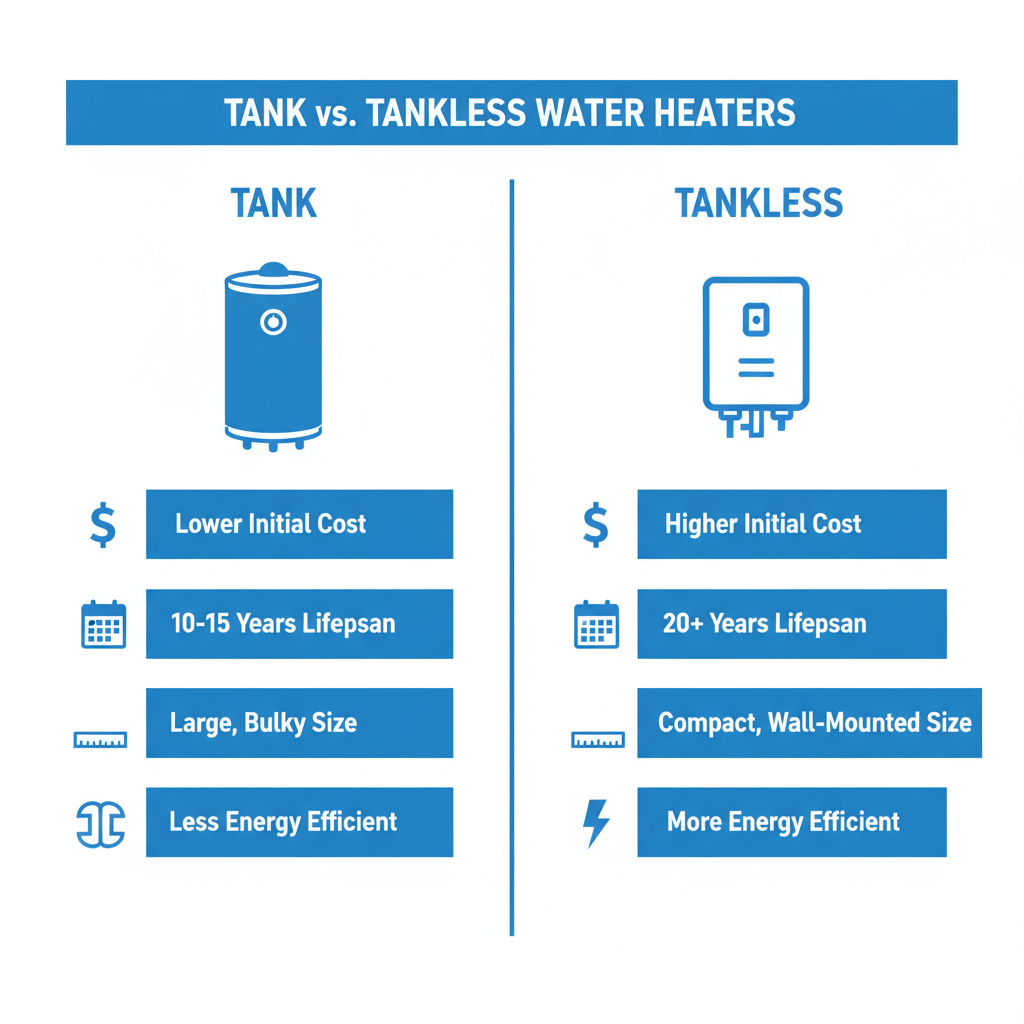
Choosing the right water heater comes down to your priorities. Here is a direct comparison of the factors that matter most to homeowners.
Upfront Cost
A standard 50-gallon tank water heater typically costs between $800 and $1,500 for the unit and installation. A tankless water heater costs more, usually between $2,000 and $4,500 installed, depending on whether it runs on gas or electricity and whether your home needs new gas lines or upgraded electrical panels. For a full breakdown of what drives the price, see our guide to tankless water heater installation cost.
Energy Efficiency and Monthly Bills
This is where the tankless system pulls ahead. According to the U.S. Department of Energy, tankless water heaters can be 24% to 34% more energy efficient than conventional tank models for homes that use 41 gallons or less of hot water per day. For higher-demand households, the savings are still significant at 8% to 14%. Over the life of the unit, that efficiency gap can save you hundreds or even thousands of dollars.
Lifespan
A well-maintained tank water heater typically lasts 8 to 12 years. A tankless unit, on the other hand, can last 20 years or more with proper annual maintenance, such as descaling and flushing. That longer lifespan means you may go through two or three tank units in the time a single tankless system serves your home.
Hot Water Supply
A tank water heater delivers a large volume of hot water at once, but when the tank runs empty, you have to wait for it to reheat. This is a common frustration for larger families. A tankless system provides an endless supply of hot water as long as demand stays within its flow rate. You will never run out during a long shower, but running multiple fixtures simultaneously may reduce the temperature.
Space Requirements
Traditional tank units are bulky, often standing five feet tall and two feet wide. They take up significant floor space in a garage, utility closet, or basement. Tankless units are compact, about the size of a small suitcase, and can be mounted on a wall indoors or outdoors. For homeowners with limited space, this is a major advantage.
Maintenance
Both systems need regular maintenance to perform their best. Tank units should be flushed annually to remove sediment buildup (unflushed tanks are a leading cause of water heater leaks) and have their anode rod inspected every few years. Tankless systems also need annual flushing to prevent mineral scale buildup, especially in areas with hard water like parts of Orange County and the Inland Empire. Neglecting maintenance on either type shortens its lifespan and reduces efficiency.
Which One Is Right for Your Orange County Home?
There is no universal answer. The best water heater for your home depends on several factors specific to your situation.
A tank water heater may be the better choice if:
- You are on a tight budget and need the lowest upfront cost.
- You rarely use more than one hot water fixture at a time.
- You plan to sell your home in the next few years and want a simple, affordable replacement.
A tankless water heater may be the better choice if:
- You want to lower your monthly energy bills over the long term.
- Your household has high hot water demand with showers, laundry, and dishes running often.
- You want to free up floor space in your garage or utility area.
- You plan to stay in your home for 10 or more years and want a system that lasts.
Before making a decision, it helps to have a professional evaluate your home. The right choice depends on your existing plumbing, your gas line capacity, your electrical panel, and your family’s daily hot water usage. Getting this wrong can mean an undersized system that leaves you without enough hot water or an oversized one that wastes your money.
Frequently Asked Questions
Is a tankless water heater worth the higher upfront cost?
For most homeowners who plan to stay in their home long-term, yes. The energy savings, longer lifespan, and endless hot water supply typically offset the higher installation cost within 6 to 10 years. However, if you are on a strict budget or plan to move soon, a tank water heater is a solid, reliable choice.
Can a tankless water heater handle a large family?
Yes, but sizing matters. A single tankless unit may not keep up with multiple fixtures running simultaneously. Learn about what size water heater you need before deciding. Larger households often benefit from a high-capacity gas tankless unit or two smaller units installed in parallel. A licensed plumber can calculate your peak demand and recommend the right setup.
How often does a tankless water heater need maintenance?
Annual maintenance is recommended. This typically involves flushing the system with vinegar to remove mineral scale, cleaning the inlet filter, and inspecting the venting. In areas with hard water, more frequent flushing may be necessary. Proper maintenance keeps the unit running efficiently and protects your warranty.
Does switching to tankless require changes to my home’s plumbing?
It depends on your current setup. Gas tankless units often need a larger gas line and a dedicated venting system. Electric tankless units may require an electrical panel upgrade. A professional assessment of your home’s infrastructure before installation avoids surprises and ensures the system works correctly from day one.
What is the average lifespan of each type?
Tank water heaters typically last 8 to 12 years. Tankless water heaters can last 20 years or more. In both cases, regular maintenance is the single biggest factor in how long the unit serves your home.
Get Expert Advice on Your Water Heater
Choosing between a tankless and a tank water heater is a decision that affects your comfort, your energy bills, and your home’s value for years to come. The team at 911 Drain Lines and Plumbing helps Orange County and Inland Empire homeowners make the right choice every day. We assess your home, explain your options, and handle the installation from start to finish.
Call (714) 746-7611 to schedule a water heater consultation, or contact us online for a free estimate.