



A dirty P-trap can cause slow drains, sewer-like odors, gurgling sounds, and mystery leaks under the sink. The good news is that many sink P-traps can be cleaned with a bucket, a towel, and a few basic tools. This guide explains how to clean a P-trap safely, what to do if the trap will not come apart, and when a clog is a sign of a bigger drain problem.
Need help with a stubborn sink clog? Schedule professional drain cleaning with 911 Drain Lines for fast service in Orange County.
What Is a P-Trap?
A P-trap is the curved section of pipe under a sink that holds a small amount of water to block sewer gas from coming back into your home. It also catches small debris, hair, soap residue, toothpaste buildup, grease, and dropped items before they move deeper into the drain line.
Most bathroom and kitchen sinks have a visible P-trap inside the cabinet. The trap is usually made of white PVC, black ABS, chrome-plated metal, or older brass. It connects the sink tailpiece to the drain pipe that exits through the wall or floor.
Because the P-trap sits at a low point in the drain assembly, it is one of the first places to check when a sink drains slowly or smells bad. Cleaning it can solve simple clogs without using harsh chemicals.
Can You Clean a P-Trap Yourself?
Yes, many homeowners can clean a sink P-trap themselves if the trap is accessible, the pipes are in good condition, and the clog appears limited to one fixture. The job usually takes 20 to 45 minutes and does not require advanced plumbing experience.
Do not force old, corroded, glued, cracked, or badly misaligned pipes. Stop and call a plumber if the slip nuts will not turn, the trap breaks, the leak continues after reassembly, or multiple drains in the home are slow at the same time. Those symptoms can point to a deeper blockage that needs professional equipment.
Tools and Supplies You Will Need
Gather everything before you loosen the trap. Once the trap is open, water and debris can spill quickly.
- Bucket or shallow pan
- Old towel or rags
- Rubber gloves
- Flashlight
- Adjustable pliers or channel-lock pliers
- Bottle brush, old toothbrush, or small drain brush
- Mild dish soap
- White vinegar, optional for odor and residue
- Replacement slip-joint washers, optional but helpful
- Plumber’s tape, only if recommended for your specific threaded connection
Avoid chemical drain cleaners before opening the P-trap. If chemicals are sitting in the trap, they can splash onto your skin or cabinet when you remove the pipe.
How to Clean a P-Trap Step by Step
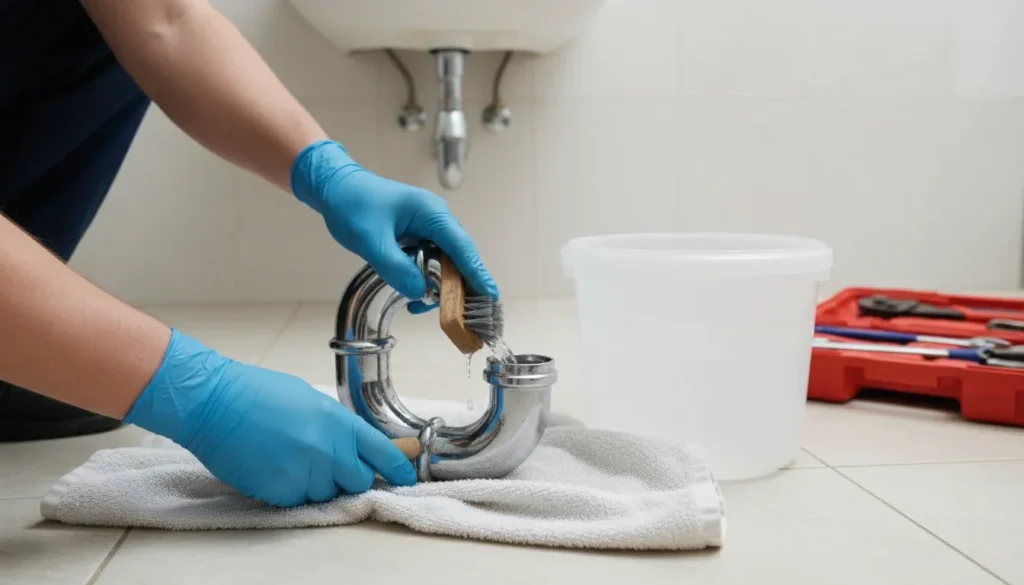
To clean a P-trap, place a bucket under the trap, loosen the slip nuts, remove the curved pipe, scrub out the buildup, rinse the trap, reinstall it, and run water to check for leaks.
1. Clear the cabinet and protect the area
Remove stored items from under the sink. Place a towel across the bottom of the cabinet and set a bucket directly under the P-trap. Even a clean-looking trap can hold dirty water, sludge, hair, and small debris.
If you are working on a bathroom sink, remove personal care products from the area so they do not get contaminated. If you are working under a kitchen sink, keep food storage items away from the work area.
2. Turn off the faucet and do not run water
You usually do not need to shut off the hot and cold supply valves for a P-trap cleaning, but make sure nobody uses the sink while the trap is disconnected. If children or guests are home, tell them not to turn on the faucet until you are finished.
If the faucet drips constantly, shut off the water supply valves under the sink before removing the trap.
3. Loosen the slip nuts
Most plastic P-traps are held in place by two slip nuts. One connects the trap to the sink tailpiece. The other connects the trap arm to the wall drain. Try loosening them by hand first. Turn carefully and support the pipe so the assembly does not twist.
If the nuts are too tight, use adjustable pliers. Wrap a rag around plastic or chrome parts before gripping them to reduce scratches. Use gentle pressure. If the pipe flexes, cracks, or will not move, stop before you cause a leak.
4. Remove the trap slowly
Once both nuts are loose, lower the curved trap into the bucket. Tip it carefully because it will contain water. Watch for small items such as rings, earrings, toothpaste caps, or drain stopper parts.
Check the washers as you remove the trap. Slip-joint washers can fall into the bucket or stay stuck to the pipe. Keep track of their direction, because reinstalling a washer backward can cause a leak.
5. Clean the inside of the P-trap
Dump the water and debris into the bucket, not back into the sink you just opened. Use a bottle brush, old toothbrush, and mild dish soap to scrub the inside of the trap. Rinse it in another sink, a utility sink, or outside with a hose if possible.
For odor buildup, soak the trap in warm water with a small amount of dish soap and white vinegar for a few minutes, then scrub again. Avoid boiling water on plastic parts because extreme heat can soften or deform some plumbing components.
6. Check the drain tailpiece and wall pipe
With the trap removed, shine a flashlight into the sink tailpiece and the pipe that leads into the wall. Remove visible hair, soap scum, or debris with a brush or a gloved hand. Do not push a thick clog deeper into the wall pipe.
If the wall pipe is packed with buildup or water backs up from the wall opening, the problem is not just the P-trap. That is the point where professional drain cleaning services are often the safer choice.
7. Reinstall the P-trap
Put the washers back in the correct position and slide the trap into place. Start both slip nuts by hand before tightening either one fully. This gives you room to align the trap arm and tailpiece without cross-threading the nuts.
Hand-tighten the nuts until snug. For plastic fittings, hand-tight is often enough. If you use pliers, tighten only a small additional amount. Over-tightening can crack plastic nuts or distort washers.
8. Test for leaks
Run a slow stream of water for 30 seconds while watching the trap connections. Then fill the sink partway and release the water to create a stronger flow. Wipe the joints with a dry paper towel. If the towel gets wet, tighten the connection slightly or reseat the washer.
Keep the cabinet clear for a few hours after the repair so you can check for slow drips. A small leak can damage cabinet flooring if it goes unnoticed.
How to Clean a P-Trap Without Removing It
You can sometimes freshen a smelly P-trap without removing it, but this method is less effective for solid clogs. Flush the drain with warm water, add a small amount of dish soap, wait a few minutes, and rinse again. For mild odor, a cup of white vinegar followed by warm water may help reduce residue.
This approach will not remove jewelry, heavy sludge, compacted hair, or objects lodged in the trap. If the sink still drains slowly after a gentle flush, remove the trap for a full cleaning or call a plumber.
If the sink is still clogged after you clean the trap, contact 911 Drain Lines or call (714) 746-7611 for help diagnosing the drain line.
Common Mistakes to Avoid
A P-trap is simple, but small mistakes can create leaks or make the clog worse. Avoid these common problems:
- Using chemical cleaner first: Chemicals can sit in the trap and splash during removal.
- Forcing old fittings: Corroded metal and brittle plastic can crack under pressure.
- Losing washer orientation: A backward or missing washer is one of the most common causes of leaks after reassembly.
- Over-tightening plastic nuts: Tighten until snug, then test. More force is not always better.
- Dumping trap debris into the same sink: This sends the clog right back into the open drain.
- Ignoring multiple slow drains: If several fixtures are slow, the clog may be in a branch line or main line.
- Skipping the leak test: Always run water and check every joint before putting items back under the sink.
Why Does a P-Trap Smell Bad?
A P-trap usually smells bad for one of three reasons: organic buildup inside the trap, a dry trap that no longer blocks sewer gas, or a deeper drain or venting issue. Food particles, hair, soap scum, and grease can create odor as they sit in the curved pipe.
If a sink has not been used for weeks, the water in the trap can evaporate. Running water for a minute may refill the trap and stop the odor. If the smell returns quickly, if you hear gurgling, or if the odor affects multiple drains, the issue may involve the plumbing vent or sewer line. Related symptoms are covered in our guide to a sewer smell in the house.
How Do You Know If Your P-Trap Is Clogged?
A clogged P-trap often causes one sink to drain slowly while nearby fixtures still work normally. You may also notice standing water, gurgling from the sink drain, odor from trapped debris, or water leaking from the trap connections after repeated plunging.
If only a bathroom sink is slow, hair and soap buildup in the stopper or P-trap are common causes. If a kitchen sink is slow, grease, food particles, and disposal debris may be involved. If tubs, toilets, and multiple sinks are slow, the blockage is likely beyond the P-trap.
When to Call a Plumber
Call a plumber if cleaning the P-trap does not restore normal drainage or if the job exposes a damaged pipe. You should also get professional help when:
- The slip nuts are rusted, stripped, glued, or impossible to loosen
- The pipe cracks or leaks after reassembly
- Water backs up from the wall pipe when the trap is removed
- The sink clogs again within a few days
- Several drains in the home are slow at the same time
- You smell sewer gas even after refilling and cleaning the trap
- You suspect a blockage in an older, corroded, or fragile plumbing system
911 Drain Lines provides 24/7 plumbing and drain service throughout Orange County, including Irvine, Newport Beach, Santa Ana, Huntington Beach, Anaheim, and nearby communities. For stubborn buildup, recurring clogs, or drain line problems, our team can use professional tools such as drain snakes, camera inspections, and hydro jetting when appropriate.
How to Prevent Future P-Trap Clogs
After the trap is clean, a few simple habits can help keep the sink draining well:
- Use a drain screen in bathroom sinks to catch hair.
- Wipe greasy pans before washing them in the kitchen sink.
- Run warm water after using toothpaste, shaving cream, or soap-heavy products.
- Clean the sink stopper regularly, especially in bathrooms.
- Avoid rinsing coffee grounds, eggshells, and fibrous food scraps down the drain.
- Schedule professional cleaning if clogs keep returning.
For broader clog prevention, see our guides on how to unclog a bathroom sink, what to do with a clogged kitchen sink, and how to snake a drain.
Frequently Asked Questions
Can I clean a P-trap myself?
Yes, you can clean many sink P-traps yourself if the trap is accessible and the fittings are in good condition. Place a bucket underneath, remove the trap carefully, scrub it clean, reinstall it, and test for leaks. Stop if the pipe is corroded, glued, cracked, or will not loosen.
How often should you clean a P-trap?
Most P-traps do not need routine removal if the sink drains normally. Clean the trap when you notice slow drainage, odor, visible buildup, or an object dropped down the sink. Bathroom sinks with heavy hair and soap use may need attention more often than lightly used sinks.
How do you clean a smelly P-trap?
Clean a smelly P-trap by removing the curved pipe, scrubbing out organic buildup, rinsing it, and reinstalling it with the washers seated correctly. If the trap is dry, run water to refill it. If the sewer odor returns quickly, there may be a vent, drain line, or sewer issue.
Does baking soda and vinegar clean a P-trap?
Baking soda and vinegar may help loosen light residue and reduce mild odor, but they will not reliably remove hair, sludge, grease, or solid objects from a P-trap. For a real clog, removing and physically cleaning the trap is usually more effective.
What if the P-trap is glued and cannot be removed?
If the P-trap is glued, do not cut it apart unless you are comfortable replacing drain piping. Some glued assemblies require cutting and rebuilding the trap with proper fittings. A plumber can replace the assembly safely and check whether the setup meets current plumbing standards.
Final Takeaway
Cleaning a P-trap is one of the most practical DIY fixes for a slow or smelly sink. Work slowly, protect the cabinet, keep track of washers, and test carefully for leaks before you finish. If the clog comes back, if multiple drains are affected, or if the trap cannot be removed safely, the problem may be deeper than the visible pipe under the sink.
For recurring sink clogs or professional drain cleaning in Orange County, reach out to 911 Drain Lines or call (714) 746-7611.