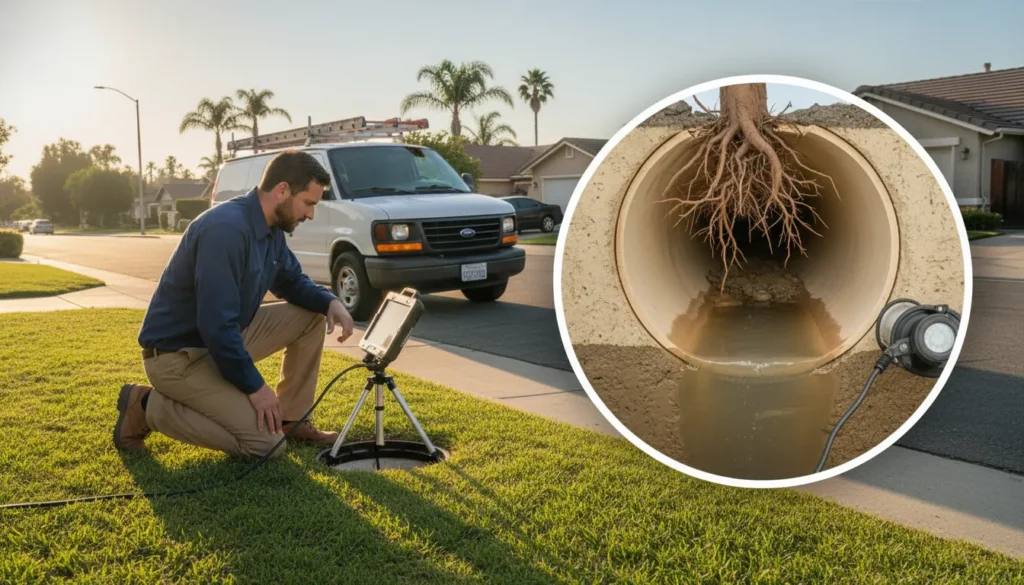




Recurring sewer backups are a warning sign, not proof of one single cause. In Orange County homes, sewer line bellies, root intrusion, offsets, buildup, and cracked pipe can all create the same messy symptoms.
Schedule a sewer camera inspection with 911 Drain Lines before another backup returns.
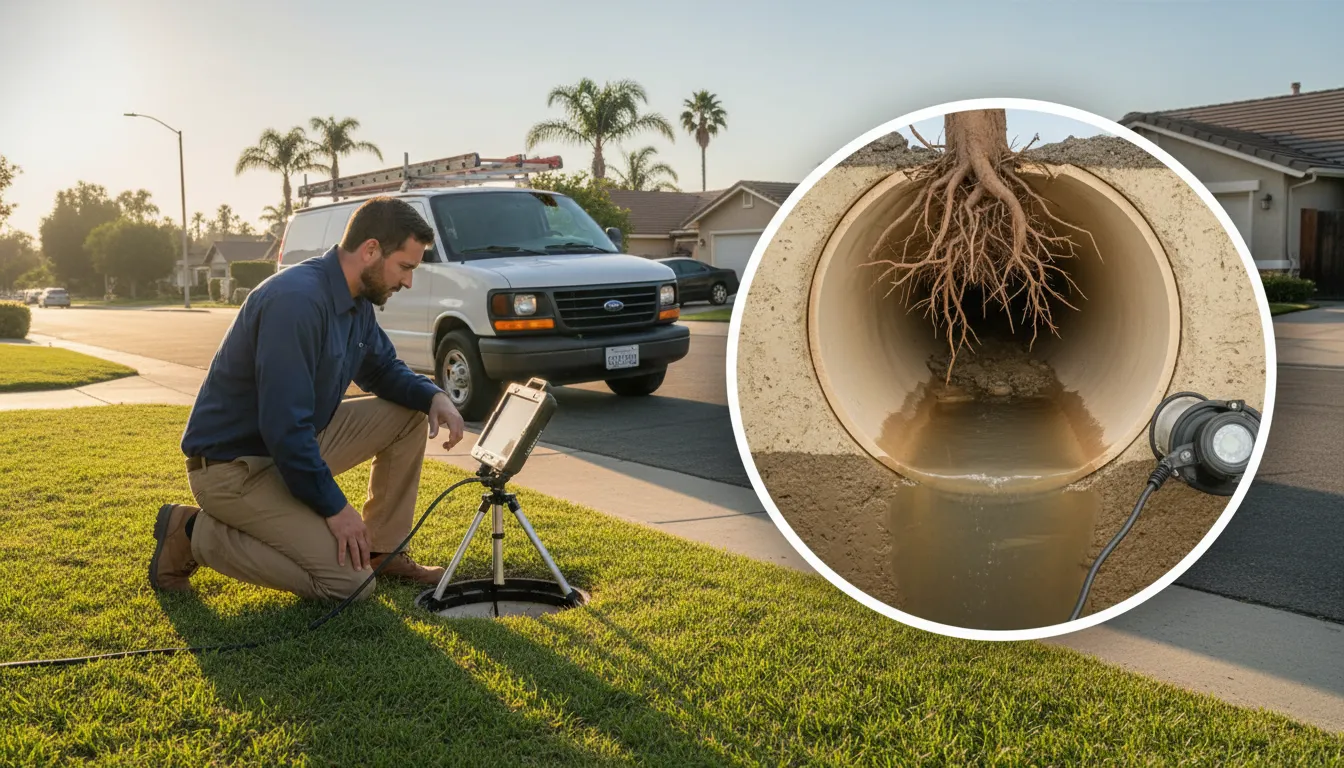
Sewer line bellies are low sections of a sewer lateral where water, waste, and paper can settle instead of flowing downhill. Roots can enter through weak joints or cracks, then catch debris and make the low spot clog faster. Symptoms like slow drains, gurgling toilets, sewage odors, or repeat backups suggest a main line problem, but they do not confirm the cause. A camera inspection is the practical way to see standing water, roots, offsets, cracks, or collapsed pipe before choosing drain cleaning, hydro jetting, spot repair, or sewer line repair.
The right next step is to separate symptoms from confirmed findings. That protects you from paying for another short-term cleaning when the line actually needs a repair plan.
Sewer line bellies in Orange County: what they are
A sewer line belly is a sag in the buried pipe between the home and the municipal connection or septic connection. Instead of maintaining steady fall, the pipe dips down and rises again. Water may still pass through the line, but some water and solids stay in the low section.
That standing water matters because a gravity sewer line depends on slope. When wastewater slows down, toilet paper, grease film, soil, and other debris can settle. The next heavy use of the line may push more material into the same place and create another blockage.
How a belly differs from a normal clog
A normal clog is material blocking an otherwise usable pipe. A belly is a shape or slope problem in the pipe itself. Drain cleaning can clear the obstruction, but it does not lift the pipe or reset the grade.
This is why repeat backups deserve a closer look. If a line was recently cleared and the same fixtures back up again, the problem may not be what was removed. It may be where the pipe keeps holding water.
Why older sewer laterals can have several problems
Many Orange County properties have mature landscaping, older buried laterals, or previous repair work below the yard, driveway, or hardscape. Roots can enter through a joint or crack. Soil can settle below a pipe. An offset can catch paper. Any of those issues can appear near a belly.
Homeowners often describe this as the same clog coming back. In reality, the line may have more than one condition. A sewer camera inspection helps show whether the issue is standing water, root intrusion, pipe damage, or a combination.
Symptoms that suggest more than a simple drain clog
Symptoms cannot diagnose sewer line bellies by themselves, but patterns can tell you when to stop treating the issue like a one-time clog. The strongest warning is recurrence. If the line clears, then slows or backs up again in the same way, the cause should be inspected.
- Toilets, tubs, or showers backing up after a previous clearing
- Slow drainage in several fixtures at the same time
- Gurgling when another fixture drains
- Sewage odors near drains or an exterior cleanout
- A soft, wet, or smelly area near the sewer route
Several fixtures acting up together usually points beyond one sink or shower trap. A toilet bubbling while a tub drains, or a tub backing up when the washing machine discharges, can suggest a main line flow problem.
Why symptoms are not the same as proof
Roots, grease buildup, wipes, broken pipe, offset joints, and collapsed sections can all cause backups. A belly can also exist without causing a major backup yet. That is why a plumber should verify what is happening inside the pipe before recommending repair.
Keep a short record of what happened, which fixtures were affected, and whether the problem followed heavy water use. If you already had service, note how long the line stayed clear. That history helps the technician focus the inspection and explain the findings.
What causes sewer line bellies and root intrusion?
Sewer line bellies usually form when a section of pipe loses support or was installed with poor slope. Soil settlement, shifting ground, weak bedding, heavy loads above the line, or age-related movement can leave part of the pipe lower than the rest of the run.
Root intrusion is a separate issue. Roots seek moisture and can enter through cracks, open joints, offsets, or other weak points. Once roots enter the line, they catch paper and debris. They may return after clearing if the opening remains.
When both problems work together
A belly and roots can appear in the same sewer lateral. The low spot holds water and debris, while the roots create a screen that catches more material. Clearing the roots may restore flow for a while, but the pipe may still hold water if the belly remains.
The repair conversation should match what the camera shows. If roots are the main restriction, cleaning and pipe condition review may be the first step. If a low section holds water after the line is clear, professional sewer line repair may be needed to correct the affected run.
How a professional diagnosis separates symptoms from causes
A good diagnosis starts with the pattern, then confirms it with visual evidence. The technician checks where backups occur, how often they return, and whether the home has an accessible cleanout. A cleanout gives the camera a controlled entry point and can reduce guesswork.
- Review the backup history, including slow fixtures, odors, gurgling, and recent drain cleaning.
- Locate a usable cleanout or safe access point for the inspection.
- Run the camera through the sewer lateral while watching for standing water, roots, offsets, cracks, or collapsed sections.
- Record the distance and location of the suspect area.
- Explain which findings are confirmed and which symptoms are only clues.
- Match the recommendation to the evidence, not to a single backup event.
What confirms a sewer line belly?
A belly is confirmed when the camera shows a low section that holds water or debris in the pipe. The technician should also look beyond the first visible issue. Roots, cracks, offsets, and collapsed areas can change the repair choice.
Ask to see the footage or findings. Clear documentation makes it easier to compare cleaning, monitoring, spot repair, trenchless work, or excavation. It also helps avoid treating a root blockage while missing a nearby grade problem.
Talk with 911 Drain Lines about sewer line repair options after camera findings are confirmed.
Repair options for bellies, roots, and recurring backups
The right option depends on the defect, not just the symptom. A backed-up line may need immediate clearing, but long-term repair depends on whether the camera shows soft blockage, heavy roots, standing water, structural damage, or lost grade.
| Option | Best fit | Limit with a belly |
|---|---|---|
| Drain cleaning | Immediate stoppage or soft blockage | Does not correct pipe slope |
| Hydro jetting | Heavy buildup, sludge, or removable roots | Does not raise a sagging pipe |
| Spot repair | Short damaged or sagging section | Requires access to the affected area |
| Sewer line repair | Damaged, shifted, or poorly graded pipe | Scope depends on location and pipe condition |
| Trenchless repair | Qualified damaged runs with limited digging | Fit depends on grade, access, and camera findings |
Hydro jetting can be useful when roots or heavy debris need to be removed before a final inspection. It can also restore flow during some blockages. It should not be presented as a cure for a confirmed low spot because water may still collect in the same dip.
Spot repair may fit when one short section has settled and the rest of the line is sound. Broader sewer line repair may be needed when the run is damaged, poorly graded, or affected in several places. The plumber should explain how the recommended option addresses the condition seen on camera.
When is a sewer line belly an emergency?
A belly is not always an emergency when it is first discovered. It becomes urgent when wastewater cannot drain, sewage enters the home, or several fixtures stop at once. Active sewage backup should be treated as a prompt service call because each flush, shower, or appliance cycle can add more wastewater.
- Sewage coming up through a tub, shower, toilet, or floor drain
- Several fixtures slow or stopped at the same time
- Strong sewage odor indoors or near the cleanout
- Water or waste surfacing outside near the sewer route
- A backup that returns soon after the line was cleared
Stop using water when a backup is active. Do not run the dishwasher or washing machine. Keep children and pets away from wastewater. Avoid chemical drain products because they do not fix a sagging pipe, and they can make service messier.
If the line is still draining, gather details while waiting for service. Note which fixtures are affected, when the issue started, and whether prior clearing helped for days, weeks, or months. If you are not sure where the cleanout is, review 911 Drain Lines’ guidance on sewer cleanout access.
How homeowners can reduce repeat backups
Home habits cannot repair sewer line bellies, but they can reduce added strain while you arrange diagnosis. Put wipes, paper towels, hygiene products, and grease in the trash instead of the drain. Keep the main cleanout visible and reachable.
Do not let a temporary clearing close the file if the same backup returns. Save invoices, photos, and any camera video. If roots were removed, ask where they entered and whether the pipe wall or joint was damaged. If standing water remains after cleaning, ask whether the line has a confirmed belly.
When you schedule service, describe the full pattern. Tell the technician which fixtures slowed, whether gurgling or odor appeared, and how long the last clearing lasted. That information helps separate a local clog from a main line condition.
Frequently asked questions about sewer line bellies
How serious is a belly in a sewer line?
A sewer line belly can be serious when it holds water and debris long enough to cause repeat backups. A small low spot may be monitored if flow remains reliable. A deeper belly with standing water, odors, or recurring clogs should be evaluated for repair.
Can hydro jetting fix sewer line bellies?
Hydro jetting can clear sludge, roots, and debris from many sewer lines, but it does not restore the slope of a sagging pipe. If backups return after jetting, a camera inspection can show whether standing water, roots, offsets, or damage remain.
Do all sewer line bellies need repair?
No. The decision depends on the belly’s depth, length, pipe material, backup history, and camera findings. A minor low spot may be watched, while a section that repeatedly holds waste or causes sewage backups may need targeted repair.
How do plumbers find sewer line bellies?
Plumbers usually run a sewer camera through a cleanout. The video can show standing water, debris collecting in a low section, root entry points, cracks, offsets, and collapsed areas. Locating equipment may mark the area above ground.
Ready to stop guessing about repeat backups?
Another backup can damage floors, interrupt daily life, and leave you paying for cleanup without knowing why the problem returned. A camera inspection gives you evidence before you choose cleaning, repair, or monitoring.
Contact 911 Drain Lines to schedule a sewer camera inspection in Orange County.
If the camera confirms sewer line bellies, root intrusion, or pipe damage, the team can explain the repair path and help you move from repeated emergency cleanups to a plan based on what the line actually shows.