



Your pipes are cracked, corroded, or clogged beyond a simple drain cleaning. A plumber tells you the line needs to be fixed, and now you have two options: reline the existing pipe or dig it up and replace it. Both methods solve the problem, but they differ in cost, disruption, and how long the repair lasts.
Need help deciding? Call 911 Drain Lines at (714) 746-7611 for a free sewer inspection and honest recommendation. We offer both trenchless and traditional solutions across Orange County.
This guide breaks down pipe relining and pipe replacement side by side so you can make a confident choice for your home.
What Is Pipe Relining?
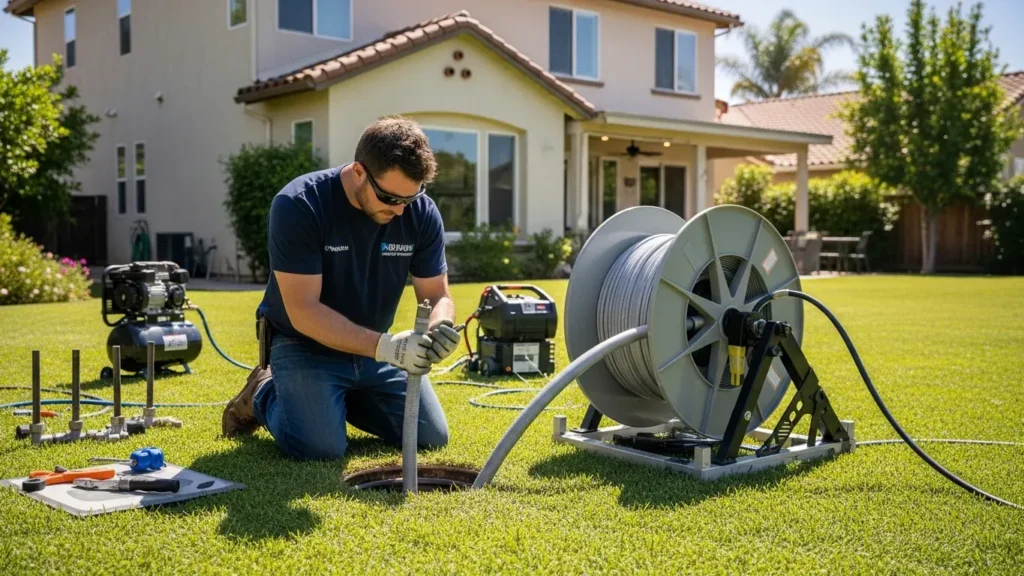
Pipe relining is a trenchless repair method that creates a new pipe inside your existing one. Instead of digging up your yard, driveway, or foundation, a technician inserts a flexible liner coated with epoxy resin into the damaged pipe. The liner inflates against the pipe walls and hardens in place, forming a smooth, jointless tube.
There are two main types of pipe relining used in residential plumbing:
- CIPP (cured-in-place pipe) lining: A resin-saturated felt liner is pulled or inverted into the pipe, then cured with hot water, steam, or UV light. CIPP is the most common method for sewer and drain lines.
- Epoxy pipe lining: A thin epoxy coating is applied to the interior walls of smaller-diameter supply lines. This method works well for water pipes with pinhole leaks or corrosion.
Both approaches require a sewer camera inspection first to assess the pipe’s condition, locate damage, and confirm that relining is a viable option.
What Is Traditional Pipe Replacement?
Pipe replacement means removing the damaged pipe and installing a new one. This is the conventional approach most homeowners are familiar with. A crew digs a trench along the path of the pipe, pulls out the old line, and lays new pipe material (typically PVC, ABS, or HDPE) in its place.
In some cases, replacement can also be done using trenchless pipe bursting, which fractures the old pipe underground while simultaneously pulling a new HDPE pipe through the same path. Pipe bursting requires only two small access pits rather than a full trench, making it less disruptive than open-cut replacement.
Traditional replacement is sometimes the only option, especially when pipes are severely collapsed, misaligned, or made from outdated materials like Orangeburg or deteriorated cast iron.
Pipe Relining vs. Pipe Replacement: Side-by-Side Comparison
| Factor | Pipe Relining | Pipe Replacement |
|---|---|---|
| Cost | $80-$250 per linear foot | $50-$250+ per linear foot (plus restoration) |
| Total project cost (typical) | $4,000-$15,000 | $5,000-$25,000+ |
| Timeline | 1-2 days for most residential jobs | 3-7 days (longer if landscaping or concrete is involved) |
| Digging required | Minimal (1-2 small access points) | Full trench or 2 access pits (pipe bursting) |
| Yard and landscaping impact | Low | High for trenching; moderate for pipe bursting |
| Lifespan | 50+ years | 50-100 years (depends on pipe material) |
| Pipe diameter change | Slightly reduces internal diameter | Can upsize or maintain original diameter |
| Works on collapsed pipes | No | Yes |
| Works on bellied/sagging pipes | No | Yes |
| Joint sealing | Eliminates joints entirely | New joints (potential future weak points) |
Bottom line: Relining costs less and causes less disruption when the pipe is still structurally sound. Replacement is necessary when the pipe has collapsed or lost its shape.
Advantages and Disadvantages of Pipe Relining
Pros
- No excavation: Relining preserves your landscaping, driveway, patio, and foundation. The work happens entirely underground through small access points.
- Faster completion: Most residential relining jobs finish in one to two days, compared to a week or more for excavation and replacement.
- Lower total cost: Because there is no trenching, backfilling, or landscape restoration, the total project cost is often 30-50% less than traditional replacement.
- Jointless design: The cured liner forms a single, continuous tube with no joints. Joints are where tree roots typically enter sewer lines, so eliminating them reduces the risk of future root intrusion.
- Corrosion resistance: The epoxy liner creates a smooth, non-corrosive interior that resists scale buildup and chemical degradation.
Cons
- Not suitable for collapsed pipes: The liner needs an intact pipe to press against. If the pipe has caved in or lost its round shape, relining will not work.
- Slight diameter reduction: The liner adds a thin layer inside the pipe, reducing the internal diameter by about 5-10%. For most residential pipes (4-6 inches), this has no noticeable effect on flow. For pipes that are already undersized, it could be a concern.
- Limited access to lateral connections: If you have multiple lateral connections along the relined section, reconnecting them after lining requires additional work.
- Requires a camera inspection first: The pipe must be clean and inspected before relining, which adds to the upfront process (though this step is valuable for diagnosing the real problem).
Considering a trenchless repair for your home? Contact 911 Drain Lines to schedule a camera inspection and get an honest assessment of your options.
Advantages and Disadvantages of Pipe Replacement
Pros
- Works in any condition: Collapsed, bellied, back-pitched, or severely damaged pipes can all be replaced. There are no structural prerequisites.
- Full diameter restoration: Replacement gives you a brand-new pipe at the original or even a larger diameter, improving flow capacity.
- Opportunity to upgrade materials: Older homes in Orange County may have galvanized steel, cast iron, or clay pipes. Replacement lets you upgrade to modern PVC or HDPE.
- Addresses alignment issues: Bellied sections (where the pipe sags and collects water) can only be fixed by realigning or replacing that section.
Cons
- Significant excavation: Open-cut replacement requires a trench along the entire pipe run. This can tear up lawns, driveways, sidewalks, and mature landscaping.
- Higher total cost: The digging, backfilling, compacting, and surface restoration add thousands to the project. Repairing a concrete driveway or replanting landscaping alone can cost $2,000-$5,000 on top of the plumbing work.
- Longer timeline: Excavation, permitting, and restoration can stretch a project to a full week or longer.
- Disruption to daily life: Heavy equipment, noise, and restricted access to parts of your property are common during replacement projects.
When Should You Choose Pipe Relining?
Relining is the better choice when your pipes meet these conditions:
- The pipe is still structurally intact. Cracks, root intrusion, joint separation, and corrosion are all fixable with relining, as long as the pipe has not collapsed.
- You want to avoid excavation. If pipes run under a slab foundation, mature trees, a swimming pool, or an expensive patio, relining saves you from tearing everything up.
- Budget is a concern. Relining typically costs 30-50% less than full replacement when you factor in restoration costs.
- You need the repair done quickly. A one-to-two-day turnaround versus a week-long project matters when you are living in the home.
For homeowners dealing with root intrusion or aging clay and cast iron pipes, relining is often the most practical path. The trenchless sewer replacement page covers additional trenchless options available in Orange County.
When Should You Choose Pipe Replacement?
Replacement is the right call in these situations:
- The pipe has collapsed or lost its shape. A liner cannot restore structure that is no longer there.
- Severe bellying or misalignment exists. A sagging pipe section traps waste and water regardless of the liner’s condition. The pipe grade needs to be corrected.
- You are repiping the entire home. If multiple lines need work, a whole-home repipe with new materials may be more cost-effective than lining each section individually.
- The pipe material is Orangeburg. Orangeburg (tar paper) pipes deteriorate so badly that they often cannot hold a liner.
- You want to increase pipe diameter. Homes with undersized 3-inch sewer laterals may benefit from upgrading to a 4-inch line during replacement.
If you are unsure about the condition of your pipes, a camera inspection is the first step. Our team uses high-resolution cameras to assess the damage and recommend the most effective repair method. Learn more about sewer line repair options we offer.
Not sure which method your home needs? Call (714) 746-7611 for a professional sewer camera inspection. We will show you the footage and walk you through your options.
How to Decide: A Quick Checklist
Use this checklist to narrow down which repair method fits your situation:
- Has a camera inspection confirmed the pipe’s condition? (If not, start there.)
- Is the pipe collapsed or severely misaligned? If yes, replacement is likely necessary.
- Is the pipe cracked, corroded, or infiltrated by roots but still round? Relining is a strong candidate.
- Does the pipe run under a structure, driveway, or mature landscaping? Relining avoids the excavation.
- Is the home’s plumbing system old enough to warrant a full repipe? Replacement may make more sense long-term.
- What is your budget? Relining is typically more affordable when restoration costs are included.
A qualified plumber can review camera footage with you and recommend the best approach. At 911 Drain Lines, we perform both relining and traditional replacement, so our recommendation is based on what your pipes actually need, not what we prefer to sell.
Frequently Asked Questions
How long does pipe relining last?
CIPP and epoxy pipe relining typically lasts 50 years or more. The cured resin creates a durable, corrosion-resistant inner pipe that performs comparably to a new PVC installation. Many manufacturers back their relining products with a 50-year warranty.
Is pipe relining worth the cost?
For most homeowners with structurally sound pipes, yes. Relining costs $4,000-$15,000 for a typical residential sewer line, compared to $5,000-$25,000+ for full replacement (including excavation and restoration). The savings on landscaping, concrete, and restoration work often make relining the more economical choice.
Can all pipes be relined?
No. Pipes that have collapsed, severely bellied, or lost their round shape cannot be relined. Pipes must be structurally intact enough to support the liner during the curing process. A camera inspection determines whether relining is feasible.
Does pipe relining reduce water flow?
The liner reduces the internal diameter by roughly 5-10%, but the smooth interior surface actually improves flow in most cases. Older pipes with scale buildup, corrosion, and root blockages have far more flow restriction than a slightly smaller but perfectly smooth relined pipe.
How long does pipe relining take?
Most residential relining projects take one to two days from start to finish. The liner itself cures in a few hours depending on the method used (hot water, steam, or UV). Traditional pipe replacement with excavation typically takes three to seven days.
Get the Right Fix for Your Pipes
Whether your home needs pipe relining or full replacement depends on the condition of your existing pipes, your budget, and how much disruption you are willing to handle. The right choice starts with an accurate diagnosis.
911 Drain Lines provides both trenchless relining and traditional replacement services across Orange County. We start every job with a thorough camera inspection so you see exactly what is happening underground before any work begins.
Call (714) 746-7611 today to schedule your inspection, or request an estimate online. We are available 24/7 for emergency and scheduled residential plumbing services.