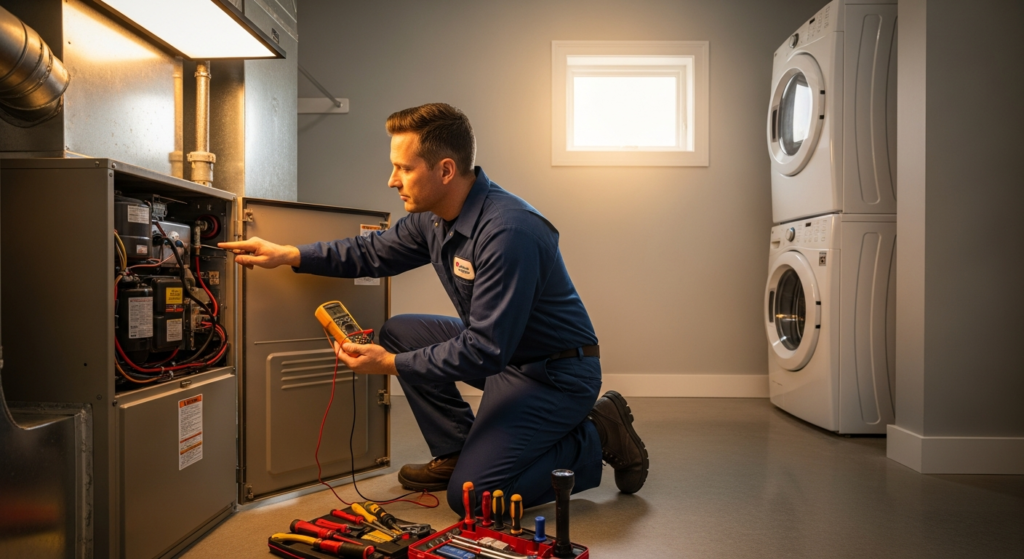




Is your furnace not turning on when you need heat the most? A non-working furnace during cold weather is stressful, but the good news is that many common causes have simple fixes you can try before calling a professional. In this guide, we cover the most frequent reasons a furnace stops working and walk you through step-by-step troubleshooting to get your heat running again.
1. Check Your Thermostat Settings
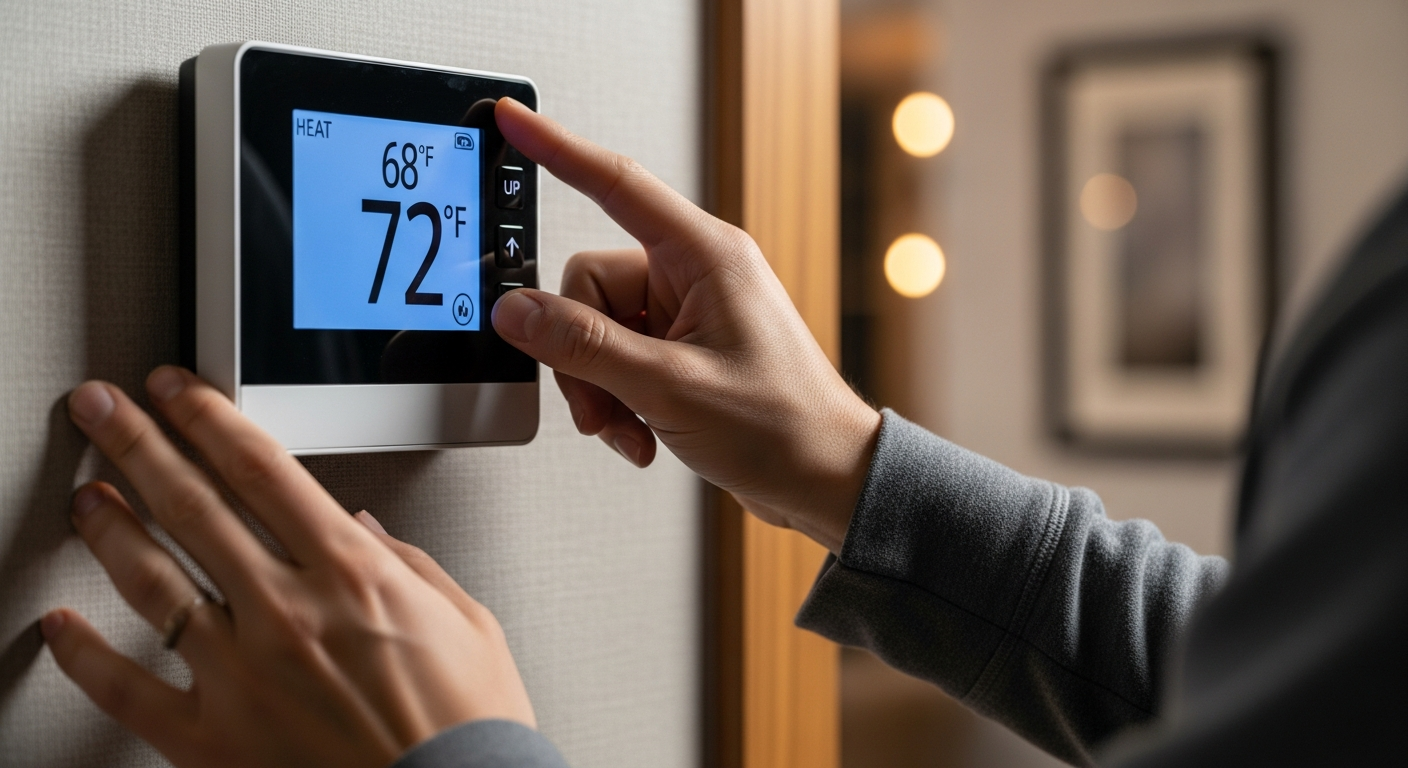
Before assuming the worst, start with the basics. A surprising number of furnace problems trace back to the thermostat. Make sure your thermostat is:
- Set to “Heat” mode (not “Cool” or “Off”)
- Set to a temperature above the current room temperature
- Switched to “Auto” fan mode rather than “On”
- Powered on — check for a blank or dim display
If your thermostat runs on batteries, try replacing them. A dead battery is one of the most overlooked reasons for a furnace not working. If you recently had a power outage, the thermostat may need to be reset. For more seasonal tips, see our HVAC maintenance checklist. For professional assistance, contact our HVAC services team. For professional assistance, contact our professional plumbing services team.
2. Tripped Circuit Breaker or Blown Fuse
Even gas furnaces need electricity to operate the ignitor, blower motor, and control board. Check your home’s electrical panel for a tripped breaker labeled “Furnace” or “HVAC.” If the breaker has tripped:
- Flip it fully to the “Off” position
- Wait 30 seconds
- Flip it back to “On”
If the breaker trips again immediately, there may be an electrical issue with the furnace. Do not keep resetting it — call an HVAC professional. A furnace that repeatedly trips its breaker could have a short circuit, a failing blower motor, or a wiring problem that needs expert diagnosis.
3. Dirty or Clogged Air Filter
A clogged air filter is one of the most common — and most preventable — reasons your heat is not working in the house. When the filter is blocked with dust and debris, airflow is restricted. This causes the furnace to overheat, triggering the high-limit safety switch that shuts the system down.
How to check:
- Locate your furnace filter (usually in a slot near the return air duct or at the bottom of the unit)
- Slide it out and hold it up to light — if you can’t see through it, replace it
- Use the correct filter size (printed on the existing filter’s frame)
Replace your filter every 1 to 3 months, especially during heavy-use seasons. This simple habit prevents overheating, improves air quality, and extends the life of your furnace.
4. Pilot Light Is Out (Older Furnaces)
If you have an older furnace with a standing pilot light, the flame may have gone out. Without a lit pilot, the furnace cannot ignite the burners. Here is how to relight it:
- Turn the gas valve to “Off” and wait 5 minutes for residual gas to clear
- Turn the valve to “Pilot”
- Hold down the reset button while lighting the pilot with a long lighter
- Continue holding the button for 30 to 60 seconds after the pilot lights
- Release the button — the pilot should stay lit
- Turn the gas valve to “On”
If the pilot will not stay lit, the thermocouple may be faulty and need replacement. For related pilot light troubleshooting, read our guide on water heater pilot light issues — many of the same principles apply.
5. Faulty Ignitor (Newer Furnaces)
Modern furnaces use an electronic ignitor (hot surface ignitor or spark ignitor) instead of a pilot light. Over time, ignitors crack, wear out, or accumulate residue that prevents them from getting hot enough to ignite the gas.
Signs of a bad ignitor:
- The furnace clicks or hums but does not produce heat
- You hear the blower start then shut off after a few minutes
- The furnace cycles on and off repeatedly (short cycling)
Ignitor replacement is a common repair, but it involves working near the gas valve. Unless you have HVAC experience, this is one to leave to the pros. If your AC is also not turning on, there may be a shared electrical or control board issue worth investigating.
6. Gas Supply Issues
Your furnace needs a steady gas supply to operate. Check these potential gas-related problems:
- Gas valve is off: The valve near your furnace should be parallel to the gas line (perpendicular means off)
- Gas meter shut-off: Verify your main gas supply has not been turned off by the utility company
- Other gas appliances: Check if your water heater, stove, or dryer are working — if none of them have gas, the issue is supply-side
If you smell gas near your furnace, do not attempt repairs. Leave the house immediately and call your gas company or 911. Gas leaks are serious emergencies that require professional attention.
7. Clogged Condensate Drain (High-Efficiency Furnaces)
High-efficiency (90%+ AFUE) furnaces produce condensation during operation. This moisture drains through a condensate line. If the line becomes clogged with algae, sediment, or debris, a safety switch shuts down the furnace to prevent water damage.
To clear the line:
- Locate the condensate drain line (a small PVC pipe near the furnace)
- Check the drain pan for standing water
- Flush the line with a mixture of warm water and vinegar
- Ensure the drain line empties to a floor drain or pump
8. Blower Motor Problems
The blower motor pushes heated air through your ductwork. If it fails, the furnace may fire up but you will not feel any warm air from the vents. Listen for unusual sounds:
- Squealing or screeching: Worn belt or bearing issues
- Humming but no airflow: Motor capacitor may be failing
- Rattling: Loose components or debris in the blower assembly
Blower motor repairs involve electrical components and should be handled by a qualified HVAC technician. This is related to the same issue when your AC is not blowing cold air — the blower serves both systems.
When to Call a Professional
While some furnace issues have DIY solutions, call a licensed HVAC professional when:
- You smell gas or suspect a gas leak
- The circuit breaker keeps tripping after reset
- The furnace makes loud banging, popping, or grinding noises
- You have tried basic troubleshooting and the furnace still will not start
- The furnace is short cycling (turning on and off rapidly)
- You see cracks in the heat exchanger or signs of carbon monoxide
911 Drain Lines and Plumbing provides 24/7 emergency HVAC repair in Orange County and the Inland Empire. Our licensed technicians diagnose and fix furnace problems the same day. Contact 911 Drain Lines to schedule service or get emergency help.
Frequently Asked Questions
Why is my furnace not turning on at all?
The most common reasons are a tripped circuit breaker, incorrect thermostat settings, a dead thermostat battery, or a faulty ignitor. Start by checking your thermostat and electrical panel before calling for service.
Can a dirty air filter stop my furnace from working?
Yes. A clogged filter restricts airflow, causing the furnace to overheat. The high-limit safety switch then shuts the furnace down to prevent damage. Replace your filter every 1 to 3 months to avoid this.
How do I know if my furnace ignitor is bad?
Signs include the furnace clicking on but not producing heat, the blower running briefly then shutting off, or the furnace short cycling. A cracked or worn ignitor cannot reach the temperature needed to light the gas burners.
Is it safe to relight my furnace pilot light myself?
If you follow the manufacturer instructions carefully and do not smell gas, relighting a pilot light is generally safe. However, if the pilot will not stay lit or you detect a gas odor, turn off the gas and call a professional.
How much does furnace repair cost?
Costs vary depending on the issue. Simple fixes like replacing a filter or thermostat battery are inexpensive, while ignitor replacement, blower motor repair, or heat exchanger issues can cost more. A professional diagnostic visit can pinpoint the exact problem and cost.
Should I repair or replace my old furnace?
If your furnace is over 15 to 20 years old, requires frequent repairs, or your energy bills are climbing, replacement may be more cost-effective. A newer high-efficiency furnace can reduce heating costs by 15 to 30 percent. Ask your HVAC technician for a cost comparison.