



A sewer problem rarely announces itself with one dramatic failure. Slow drains, repeated backups, foul odors, or wet areas in the yard can point to a damaged line that needs more than another spot repair.
Sewer line replacement is the process of removing or bypassing a failing underground pipe and installing a new line after a camera inspection confirms that repair is no longer the dependable option. In Orange County, the work may involve conventional excavation or a trenchless method, depending on the pipe condition, access, and property layout.
The homeowner experience becomes much easier to manage when you know what happens first, what decisions come next, and how restoration fits into the job. Contact 911 Drain Lines and Plumbing at 714-746-7611 for help with a sewer problem. The process starts with identifying the signs that a failing line has reached the point where replacement should be considered.
When Sewer Line Replacement Becomes Necessary
Not every sewer problem requires a new line. A localized break, isolated root intrusion, or short damaged section may be addressed with a targeted repair, such as a patch or lining. Replacement becomes necessary when damage extends across a substantial portion of the pipe, the line has collapsed, or the existing material cannot reliably support another repair.
The decision should begin with a sewer camera inspection. A camera allows a plumber to see inside the line and identify the actual cause of the problem, including blockages, breaks, or tree root infiltration. That information helps distinguish a repairable defect from a sewer line that is too compromised for a localized fix. It also gives the homeowner a clearer basis for discussing the available options before excavation or replacement work begins.
Warning signs that deserve attention
Some sewer line problems develop gradually, so homeowners may adjust to the symptoms instead of recognizing them as a pattern. Recurring clogs, several slow drains, or backups that return after cleaning can indicate that the issue is deeper than a single fixture. A sewage smell indoors or in the yard may also point to a damaged or leaking line.
Outdoor signs matter as well. A soggy area in the yard, unusually lush vegetation in one spot, or persistent standing water can suggest wastewater escaping underground. In more advanced cases, soil movement around the line may contribute to foundation settling. These symptoms do not prove that replacement is required, but they should not be ignored, especially when they occur together or continue after previous repairs.
For an Orange County homeowner, the practical goal is to find the lasting solution rather than repeat temporary fixes. Inspection results, the location and extent of damage, access conditions, and the line’s overall condition determine whether repair is reasonable or full replacement is the more dependable path.
Step-by-Step Sewer Line Replacement Process
A sewer line replacement is easier to manage when you know what happens at each stage. The exact work depends on the pipe’s location, condition, length, and access, but a professional project follows a predictable sequence from diagnosis through final testing.
-
Inspect the line with a sewer camera
The process begins with a camera inspection to identify the precise problem. The video can reveal breaks, severe corrosion, collapsed sections, blockages, or tree root infiltration. It also helps locate the damaged area and determine whether the line can be cleaned or repaired, or whether replacement is the more reliable option. Starting with evidence reduces unnecessary digging and gives the contractor a clearer project scope.
-
Review the quote and choose the method
After reviewing the inspection findings, the plumber explains the recommended work, expected access requirements, materials, and project cost. A localized defect may be a candidate for repair, while extensive damage may call for a full replacement. If replacement is necessary, the available approach may include traditional dig-and-replace or a trenchless method such as pipe bursting. The decision should account for the pipe route, soil, existing structures, and the condition of the surrounding line, not just the least disruptive option.
-
Arrange permits and utility locates
Before excavation or insertion pits are opened, the contractor verifies applicable local permit requirements and arranges utility locates. Requirements can vary by Orange County city and may be different if work reaches a public right-of-way or street. Confirming these details before digging helps protect underground utilities and prevents avoidable delays.
-
Access the existing sewer line
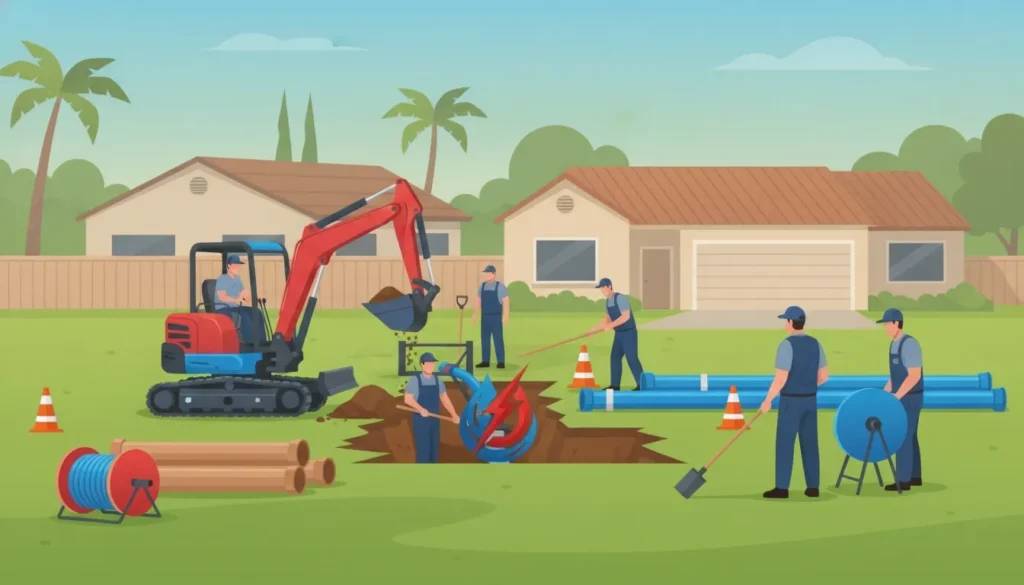
With traditional replacement, crews excavate a trench along the pipe route to expose the existing line. This creates more surface disturbance but may be appropriate when the pipe is shallow, inaccessible to trenchless equipment, or being reconfigured. Trenchless work generally uses existing openings or smaller insertion and receiving pits rather than excavating the entire length of the line. The EPA’s pipe bursting fact sheet describes this reduced-excavation approach.
-
Remove the old pipe and install the replacement
For dig-and-replace work, the damaged pipe is exposed, removed, and replaced with a new sewer line. For pipe bursting, a bursting head is pulled through the old pipe while fracturing and displacing it. Creating space for the new pipe to follow through the existing path. The new line is then connected to the home’s plumbing and the appropriate public or private sewer connection.
-
Backfill, compact, and restore the property
Once the installation is complete, the excavation or pits are filled in stable layers and compacted to help limit future settling. Traditional excavation may require restoration of lawn, landscaping, patios, driveways, or concrete along the trench route. Trenchless methods usually require far less surface restoration because they avoid extensive excavation, although the access points still need to be closed and finished properly.
-
Complete the final flow test and inspection
The final step is confirming that wastewater flows through the new line as intended. The contractor may run water through the system, inspect connections, and perform a post-installation camera check when appropriate. This verifies that the replacement is properly connected, open, and ready for normal household use before the project is closed out.
Conventional Excavation vs. Trenchless Sewer Replacement
Once a camera inspection confirms that a sewer line needs replacement, the next decision is how the crew will access and replace it. The two broad approaches are conventional excavation and trenchless work. The right choice depends on the pipe’s condition, the depth of the line, available access, and what sits above it, including landscaping, driveways, patios, or other hardscaping.
What conventional excavation involves
With traditional dig-and-replace work, the crew excavates a trench along the line to expose the damaged pipe. The old pipe is removed, a new line is installed, and the trench is backfilled. This method provides direct access to the entire run, which can be useful when the pipe has extensive damage. The alignment must change, or site conditions do not support a trenchless installation.
The tradeoff is greater disruption to the property. Excavation can disturb the yard and any surface features above the sewer line. After the plumbing work is complete, restoration may include regrading soil, replacing sod, or repairing affected concrete, pavers, or other landscaping elements.
How trenchless replacement reduces excavation
Trenchless sewer replacement uses existing access points or small insertion pits rather than opening the full length of the line. Pipe bursting is one option: specialized equipment pulls a new pipe through the existing line while fracturing and displacing the old pipe. Pipe lining is another trenchless approach that forms a new pipe inside the existing one when the original line and site conditions are suitable.
Because trenchless methods require far less excavation, they can reduce damage to lawns, driveways, and hardscaping. They are not automatic substitutes for conventional digging, however. A professional must evaluate the inspection findings, pipe condition, depth, access, and surrounding property before recommending a method. For a more detailed overview, see trenchless vs. traditional sewer replacement. The goal is a durable repair plan that fits both the sewer system and the homeowner’s property.
Conventional excavation vs. trenchless at a glance
| Factor | Conventional excavation | Trenchless replacement |
|---|---|---|
| Access | Open trench along the full line | Small insertion or entry pits |
| Yard disruption | Higher, with restoration needed | Lower, less surface restoration |
| Best suited to | Reconfigured route, shallow pipe, tough access | Deeper lines, landscaping protection, faster turnaround |
| Typical outcome | Durable new line, more cleanup | Durable new line, less cleanup |
How Long Does Sewer Line Replacement Take?
Most residential sewer line replacement projects are completed in about 1 to 3 days, but that range is a planning estimate, not a guarantee. The actual schedule depends on the length and depth of the line, access to the work area, soil conditions, the replacement method, and any required restoration. A licensed contractor should inspect the property and give you a clear, job-specific estimate before work begins.
Inspection and planning
The process starts with a sewer camera inspection. This confirms the location and condition of the damaged line and helps the contractor determine whether replacement is necessary. After reviewing the findings, the contractor can explain the recommended method, access requirements, permits or inspections, and expected work sequence. This planning stage is important because the repair plan may change based on what is found underground.
Replacement work
On the job days, the crew accesses the existing line, removes or bypasses the damaged section, and installs the new pipe. Conventional excavation can take longer because it requires opening a trench across part of the property, then backfilling and restoring the surface. Trenchless methods are often faster and can reduce yard disruption, although they are not suitable for every property or sewer layout.
Final inspection and restoration
Once the new line is installed, the contractor should test the system and complete any required inspection before closing the work area. The final schedule may also include reconnecting the line, backfilling, regrading soil, and restoring sod, concrete, or other surfaces affected by excavation. Trenchless work generally requires less surface restoration, which can help the property return to normal sooner.
Ask what is included in the timeline, which conditions could extend the project, and how restoration will be handled. That conversation gives you a more useful expectation than relying on a fixed number of days.
What Homeowners Can Expect During the Job
Once the replacement plan is confirmed, the crew begins by reviewing access points, identifying utility lines, and establishing a safe work area. Utility locates help prevent damage to buried services. The team may also use protective coverings or defined walkways to limit tracking across the property and protect nearby landscaping, driveways, and paths.
Before work starts, ask when water will be shut off and whether bathroom use will be limited. Sewer line replacement can require temporary interruptions while the old pipe is disconnected and the new line is connected, tested, and inspected. Your contractor should explain the expected schedule and provide practical guidance for the interruption. Machinery, digging, compacting, and material handling can also create noticeable noise, especially during excavation.
Trench safety is not a minor detail. A cubic yard of soil can weigh more than 3,000 pounds, which is why a licensed crew must treat open excavations as serious work zones. The CDC and NIOSH trenching safety guidance explains the hazards of trench collapse and the importance of appropriate protective systems. Keep children, pets, and visitors away from the work area, and follow the crew’s instructions about access.
Restoration depends on the method and the surfaces involved. With excavation, the crew typically backfills and re-grades the area, while replacement of sod, concrete, a patio, or other hardscape may require separate planning. Ask what restoration is included in the scope and what requires another specialist. If you are budgeting for the project, review the factors that affect sewer line replacement cost before approving the work.
Modern pipe materials such as PVC or ABS are designed for durable service, although long-term performance depends on proper installation, site conditions, and use. A clear plan for access, interruptions, safety, testing, and restoration makes the experience more predictable from arrival through final cleanup.
The Sewer Line Replacement Process in Orange County
Sewer line replacement in Orange County should begin with a clear diagnosis, not a guess about what is happening underground. A professional crew starts with a sewer camera inspection to locate breaks, severe deterioration, root intrusion, or other conditions that may make repair impractical. The camera findings help determine whether replacement is necessary and which method fits the property.
Planning around the property and the city
Once the condition and route of the line are confirmed, the contractor can explain the recommended work, access requirements, and expected effect on the property. Some projects may use trenchless techniques, while others require conventional excavation. The right choice depends on the pipe, its location, access points, and surrounding hardscape or landscaping.
Orange County is made up of multiple cities, and permitting and inspection requirements can vary by municipality. A licensed contractor should identify the applicable local process, prepare the required documentation, coordinate inspections, and keep the work aligned with the city’s requirements. Homeowners should not have to guess which office to contact or whether an inspection is needed. Ask who is responsible for permits, scheduling, and final sign-off before work begins.
One crew from diagnosis through completion
A full-service, licensed and insured team can manage the project from the initial camera findings through installation, connections, inspection, and restoration. Using a crew that does not rely on subcontractors supports clearer communication and consistent accountability at each stage. Engineering-backed planning is especially valuable when the sewer route passes beneath a driveway, patio, mature landscaping, or other areas where access must be carefully considered.
For an active sewer emergency, 911 Drain Lines and Plumbing provides 24/7 service throughout Orange County, with verified 1-hour response times. That response begins with assessing the immediate risk, then using the available evidence to plan a lasting solution rather than rushing into unnecessary excavation. Contact 911 Drain Lines and Plumbing at 714-746-7611 to discuss the next step with a licensed team.
Frequently Asked Questions
How do I know if I need sewer line replacement?
A camera inspection is the best starting point. It can show whether the line has a break, severe root infiltration, repeated collapse, or another condition that a spot repair cannot reliably address. Your plumber should explain the findings and compare repair and replacement options before work begins.
What is the difference between conventional and trenchless sewer line replacement?
Conventional replacement requires opening a trench to remove and install the pipe, followed by backfilling and surface restoration. Trenchless methods use smaller access points, and pipe bursting pulls a new pipe through the existing alignment while fracturing the old line. The right method depends on access, pipe condition, depth, and the property layout.
How long does sewer line replacement take?
Many residential replacements take about one to three days. But the actual schedule depends on the length of the sewer run, site access, the selected method, inspections, and restoration needs. Ask for a day-by-day plan, including when water use may be limited and when the connection will be tested.
What happens after the new sewer line is installed?
The connection is inspected and tested before the work area is closed. With conventional excavation, the remaining steps can include backfilling, regrading, and replacing affected sod, concrete, or patio surfaces. Confirm what restoration is included in the written scope before work starts.
Ready to Plan Your Sewer Line Replacement?
A clear inspection and practical plan can help you understand the next steps for your Orange County home. Call 911 Drain Lines and Plumbing at 714-746-7611 or request sewer line replacement service through our contact page. Share what you have noticed, and the team can help direct you toward the appropriate next step.