



How to Read Your Water Meter to Detect Hidden Leaks
Most Orange County homeowners pay their water bill without ever thinking about where the number comes from. The meter sits at the curb, quietly tallying every gallon, but it also holds a piece of information most people never use: whether water is leaving your pipes when it should not be. If you know how to read your water meter for leaks, you can catch a hidden problem in under ten minutes, often weeks or months before a stain on the ceiling or a spike in your bill gives you the first visible sign.
Suspect a hidden leak? Contact 911 Drain Lines for professional water leak detection in Orange County. Same-day service available.
This guide walks you through exactly how to locate your meter, read the dial, and run a simple two-step leak test. If the test flags a problem, we explain what to do next.
Where to Find Your Water Meter
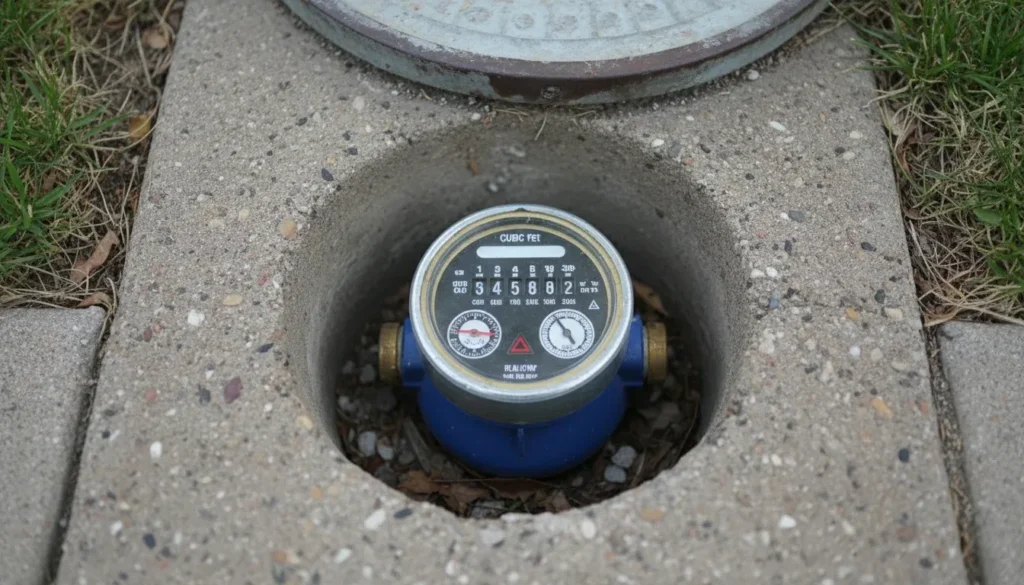
In most Orange County homes, the water meter is located in a concrete or plastic box set flush with the ground, near the property line at the front of your lot, usually close to the street or sidewalk. The lid is typically marked “Water Meter” or “Water.” You can lift it with a flathead screwdriver.
A few things to watch for when you open the box:
- Insects, spiders, or debris: clear the box before reaching in
- Standing water: if the box is flooded, the meter itself may already be damaged
- Wet soil around the box: this alone can indicate a leak near the service line
Once the lid is open, you will see the meter face. Depending on your utility district, it will be either an analog dial-style meter or a digital display.
How Do You Read an Analog Water Meter?
Analog meters look similar to an odometer. You will see a row of numbers: your total usage in cubic feet or gallons (Orange County meters typically measure in hundred cubic feet, or HCF). Read the numbers from left to right, just as you would a car odometer.
Directly on the face you will also see a low-flow indicator, sometimes called a leak detector. It is a small triangle, star, or dial that spins whenever water is moving through the meter, even a tiny trickle. This is the most useful part of the face for leak detection.
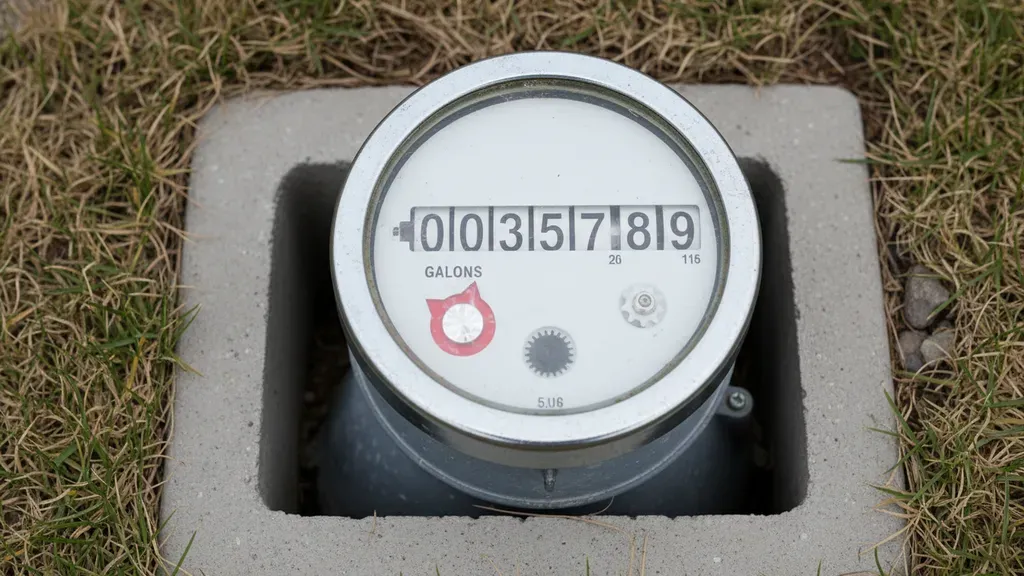
Analog Meter Reading: Step by Step
- Write down the current reading (all digits, including the stationary zeros on the left)
- Note the position of the low-flow indicator: is it moving or still?
- If the indicator is spinning with all water fixtures off inside the house, water is moving through the meter right now
How to Read a Digital Water Meter
Newer smart meters installed by MWDOC-connected water districts (including many in South Orange County) use a digital display that activates when you shine a flashlight on the sensor window or when you approach it. The reading shows in gallons or cubic feet. Some digital meters have a leak-alert symbol (a small drip icon or blinking indicator) that appears if the meter has detected continuous low-flow over a set interval.
Read the display the same way: note the current total usage number. If you see a leak-alert symbol, the meter has already flagged continuous flow on its own.
The Two-Step Leak Test
The meter reading alone tells you current usage. To find out whether you have an active hidden leak, you need to run a brief test that eliminates all legitimate water use from the picture.
Step 1: Shut Off All Water Inside the House
Do a complete walkthrough. Turn off every faucet, showerhead, and irrigation zone. Check that the ice maker line is off, the washing machine is not running, and no appliances are using water. If you have an irrigation timer, set it to off, not just to a scheduled pause, but fully off for the duration of the test.
Do not shut off the main water supply valve. You want water to remain available in the pipes; you just want zero active draw from inside the house.
Step 2: Watch the Meter for 30 Minutes
Return to the meter and take a reading. Write it down with a timestamp. Then wait 30 minutes without using any water anywhere in the house. Return to the meter and read again.
- If the numbers have not changed and the low-flow indicator has not moved: No active leak detected. Your system appears tight at the time of the test.
- If the numbers have changed or the indicator is spinning: Water is moving through your system with everything off. You have an active leak somewhere between the meter and your fixtures.
Even a small change of one or two gallons over 30 minutes adds up to 1,000+ gallons per month. A continuously running toilet alone can waste 200 gallons per day. A slow slab leak can move significantly more.
Found an active leak but not sure where it is? Call 911 Drain Lines. Our Orange County leak detection team pinpoints the source without unnecessary demolition.
What the Leak Test Cannot Tell You
The meter test is a binary pass-or-fail check. It confirms that water is moving when it should not be, but it cannot tell you:
- Where the leak is located
- Whether the leak is in a supply line, a drain, a toilet flapper, or a slab-embedded pipe
- How serious the leak is or how long it has been active
Pinpointing the source requires a more thorough investigation; and in many cases, professional leak detection equipment.
Isolating the Location: Indoors vs. Outdoors
If your meter test shows an active leak, you can narrow down the location with one additional step before calling a plumber.
Find your home’s main shutoff valve. It is usually located near the water meter on your side of the property line, or inside the home at the point where the main supply line enters the structure, often in a garage, utility room, or exterior wall. Turn this valve fully off.
Return to the meter and check the low-flow indicator:
- If the indicator stops moving: The leak is inside your home or in the supply line between the shutoff valve and your fixtures. Common culprits include running toilets, failing supply hose connections, and leaking water heater valves.
- If the indicator continues to move after shutting off the main valve: The leak is in the service line between the meter and your main shutoff, underground on your property. This is a more serious situation requiring excavation or trenchless repair.
Common Sources of Hidden Water Leaks
Toilets
A slow-running toilet is the single most common cause of unexplained water loss in residential homes. A worn flapper valve allows water to seep continuously from the tank into the bowl, silently and without any visible overflow. Add a few drops of food coloring to the tank and wait 15 minutes without flushing. If color appears in the bowl, the flapper is leaking. Replacing a toilet flapper costs less than $15 and takes under 30 minutes. Left unrepaired, a leaking flapper wastes up to 200 gallons per day.
Water Heater
Inspect the base of your water heater for moisture, mineral deposits, or rust streaks. A slow seep from the T&P relief valve or the drain valve can waste gallons per day without appearing dramatic enough to notice. If the unit is more than 10 years old, a small weep can escalate to a full rupture quickly.
Irrigation Systems
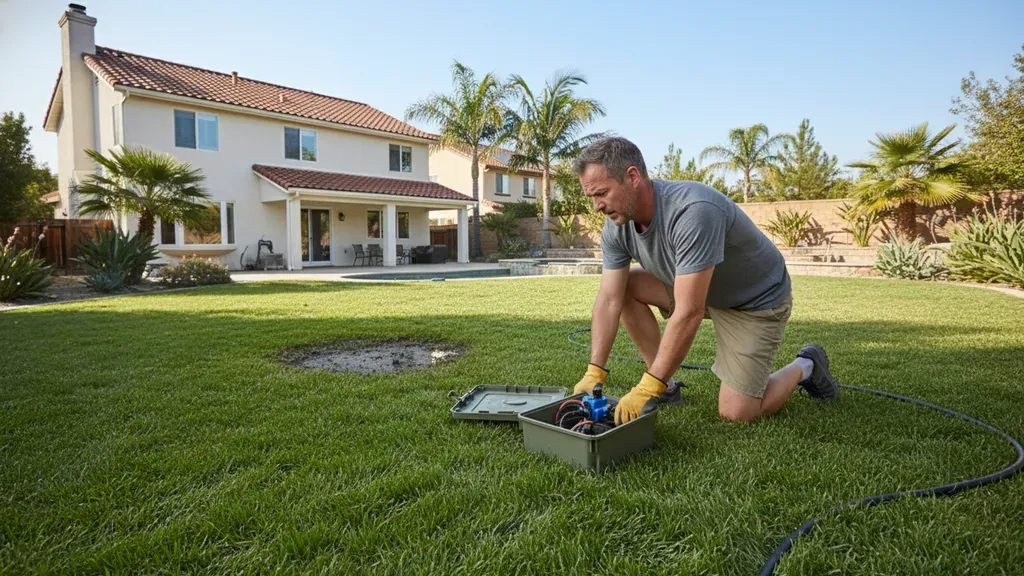
Underground drip line failures and cracked lateral lines are extremely common in Orange County’s clay-heavy soils. A zone that runs at low pressure, or a soft wet spot in your lawn without a recent watering, often points to a broken line underground.
Slab Leaks
When a pressurized supply line beneath a concrete foundation develops a pinhole or joint failure, the meter will show continuous flow even with every fixture turned off. Signs of an active slab leak include warm spots on tile or hardwood floors, the sound of running water with nothing on, a sudden jump in your water bill, and cracks appearing in baseboards or flooring. Slab leaks require professional leak detection equipment to locate accurately. Attempting to find them by breaking up concrete without a precise location wastes both money and time.
Underground Service Line Failure
Older polybutylene or galvanized service lines in homes built before 1990 are prone to pinhole leaks as the material ages. In most cases, there are no obvious surface signs until significant erosion or settling has already occurred. If your meter test shows a leak that persists after shutting off your main valve, a service line failure is the most likely cause.
Swimming Pool Leaks
Pools can lose hundreds of gallons per day through cracks in the shell, failing skimmer gaskets, or leaking return lines, and homeowners often attribute the loss to evaporation. If your pool needs more than a quarter-inch of water per day, it is worth scheduling a swimming pool leak detection inspection. The meter test will flag the loss; pool leak detection equipment pinpoints exactly where the water is going.
DIY Meter Test vs. Professional Leak Detection: Which Do You Need?
| Situation | DIY Meter Test | Professional Detection |
|---|---|---|
| Confirm an active leak exists | ✅ Sufficient | Optional |
| Identify leak location indoors or outdoors | ✅ Partial (main valve isolation test) | ✅ Precise |
| Pinpoint slab leak or underground pipe | ❌ Not possible | ✅ Required |
| Diagnose running toilet or dripping faucet | ✅ Sufficient | Optional |
| Detect wall cavity or ceiling leak | ❌ Not possible | ✅ Required |
| Swimming pool leak diagnosis | ⚠️ Flags water loss only | ✅ Required |
| Cost | Free | Varies by job scope |
The meter test is your first filter. If it clears, you are done. If it flags a problem, use the table above to decide whether you can locate the source yourself or need a professional.
When Should You Call a Plumber for a Water Leak?
The meter test is a useful first step, but it is a detection tool, not a repair tool. If you confirm an active leak, these situations call for a licensed plumber rather than a DIY fix:
- The leak persists after you shut off the main valve (underground service line problem)
- You cannot locate the source after checking all visible fixtures
- You notice warm spots on your floors, cracking tile, or rising floors (likely slab leak)
- Your water bill has spiked by 20% or more with no change in usage habits
- You see soil erosion or a persistently wet area in your yard unrelated to irrigation
The longer a hidden leak runs, the more damage accumulates behind walls, beneath floors, and in the soil around your foundation. Early detection through regular meter checks (once a month takes less than five minutes) is the simplest way to prevent a minor drip from becoming a major repair.
Call 911 Drain Lines at any hour: 24/7 emergency plumbing service throughout Orange County.
Professional Leak Detection in Orange County
911 Drain Lines uses non-invasive leak detection technology to locate water leaks without unnecessary excavation or demolition. Whether the problem is a slab leak, a failing underground service line, or a swimming pool leak, our licensed plumbers carry the equipment to find the exact source and confirm the location before any work begins.
If your meter test shows an active leak and you cannot find the source, call us. We provide same-day and 24/7 emergency service throughout Orange County. A leak found today is always cheaper than the same leak found three months from now.
Quick Reference: How to Read Your Water Meter for Leaks
- Locate the meter box near your property line at the street
- Open the lid and clear any debris
- Read the dial or display: note the total usage figure
- Check the low-flow indicator: any movement with all fixtures off means active flow
- Shut off all water inside and wait 30 minutes
- Re-read the meter: any change in the number confirms a leak
- Isolate indoor vs. outdoor by closing your main shutoff valve and checking whether the indicator stops
- Call a plumber if you cannot find the source, or if warm floors, cracking tile, or a rising water bill suggest a slab leak
Frequently Asked Questions
How do I read my water meter for leaks?
To read your water meter for leaks, shut off all water inside your home, then check the meter’s low-flow indicator (the small triangle or star on the dial face). If that indicator moves, or if the total usage number increases, with everything off, you have an active leak somewhere in your system. Running the test for 30 minutes gives the most reliable result.
What does the triangle on a water meter mean?
The triangle (sometimes a small star or pinwheel) on a water meter face is the low-flow indicator. It spins any time water moves through the meter, including amounts too small to register on the main odometer display. A spinning triangle with all fixtures off is one of the clearest early warning signs of a hidden leak.
How much water loss from a leak is considered serious?
Any confirmed movement on your meter with all fixtures off warrants investigation. Even one gallon per hour (which sounds minor) adds up to 720 gallons per month and can cause significant water damage over time if the source is behind a wall or beneath a slab. A leaking toilet flapper alone can waste 200 gallons per day.
Can a water meter detect a slab leak?
Yes: a water meter can confirm that a slab leak is active, but it cannot locate the leak. If your meter shows continuous flow after you shut off the main interior valve, the leak is likely underground or beneath the slab. At that point, professional slab leak detection equipment is needed to find the exact pipe location before any repair work begins.
How often should I check my water meter for leaks?
Once a month is a good baseline for most Orange County homeowners. The full two-step test takes about 35 minutes. If you notice a sudden spike in your water bill, check the meter immediately; do not wait for the next billing cycle. Early detection keeps repair costs manageable.
What if my meter shows a leak but I cannot find the source?
If you have checked all visible fixtures (toilets, faucets, water heater, irrigation) and the leak is still showing on the meter, the source is likely underground or concealed in a wall cavity. This is the point where professional leak detection makes the most sense. 911 Drain Lines uses acoustic and electronic detection equipment to find leaks without guesswork or unnecessary demolition. Contact us for same-day service throughout Orange County.