



A puddle of water under the kitchen sink is never a welcome sight, and when it is coming from your garbage disposal, the first reaction is often panic. The good news? Most garbage disposal leaks are straightforward to diagnose and many can be fixed without calling a plumber. The key is figuring out where the leak is coming from, because the location tells you exactly what is wrong and what it takes to fix it.
This guide walks you through the four most common garbage disposal leak locations, what causes each one, and whether you can handle the repair yourself or need professional help.
How to Find the Source of a Garbage Disposal Leak
Before you start tightening connections or replacing parts, you need to pinpoint the leak. Here is a simple method that works every time:
- Unplug the disposal or switch off the breaker for safety.
- Dry everything under the sink with towels so you are working with a clean slate.
- Place a stopper in the sink drain and fill the sink about halfway with water.
- Add a few drops of food coloring to the water so you can easily trace the leak path.
- Remove the stopper and watch closely. The colored water will reveal exactly where the leak is coming from.
Once you know the location, use the sections below to find the right fix.
Garbage Disposal Leaking from the Bottom
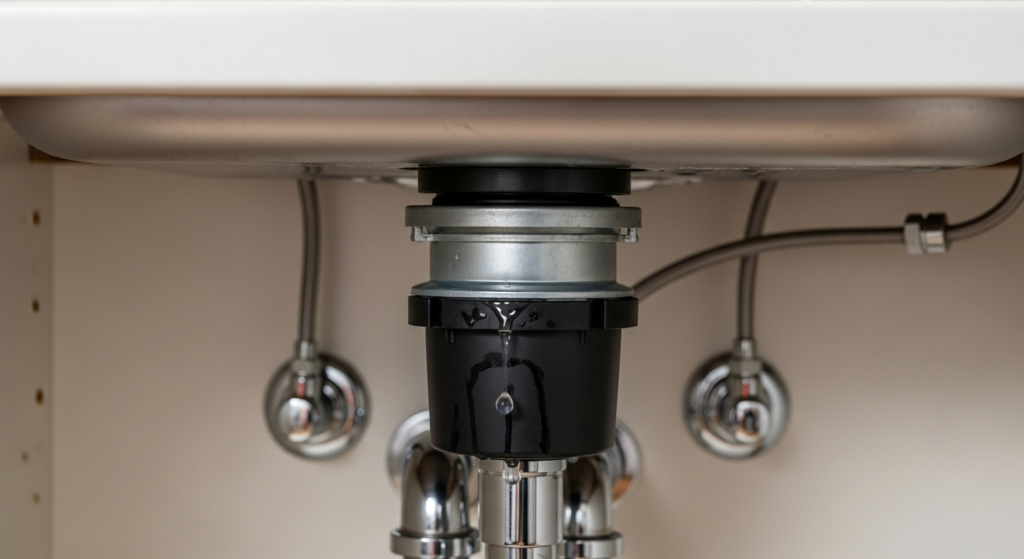
A garbage disposal leaking from the bottom is the most concerning type of leak because it usually means the internal seal has failed. The bottom of the unit houses the motor, and when the seal between the motor housing and the grinding chamber deteriorates, water seeps through and drips from the base.
Common Causes
- Worn internal seal. Over time, the seal that keeps water inside the grinding chamber breaks down. This is the most common cause of a bottom leak.
- Cracked housing. Older disposals or units that have experienced heavy impact can develop hairline cracks in the body.
- Corrosion. Years of exposure to water, food waste, and cleaning chemicals can corrode the unit from the inside out.
Can You Fix It?
Unfortunately, a garbage disposal leaking from the bottom is usually not repairable. The internal seals are not designed to be user-serviceable, and a cracked housing cannot be patched reliably. In most cases, replacement is the best option. If your disposal is more than 8 to 10 years old, it has likely reached the end of its service life. Check out our guide on how to install a garbage disposal if you are considering a new unit.
Garbage Disposal Leaking from the Top (Sink Flange)
If water is leaking from where the disposal meets the sink drain, the problem is at the mounting flange. This is the ring that connects the disposal to the underside of your sink.
Common Causes
- Loose mounting bolts. Vibrations from daily use can gradually loosen the bolts that hold the flange in place.
- Failed plumber’s putty. The putty that creates a watertight seal between the flange and the sink basin dries out and cracks over time.
- Improper installation. If the flange was not seated correctly during installation, leaks can appear from day one.
DIY Fix
- Tighten the mounting bolts. Look for the three mounting bolts on the mounting ring beneath the sink. Tighten them evenly using a wrench. Do not overtighten, as this can crack the flange or the sink.
- Reseal with plumber’s putty. If tightening does not work, you will need to disconnect the disposal, remove the flange, scrape off the old putty, apply a fresh ring of plumber’s putty around the flange, and reinstall everything.
- Reconnect and test. Fill the sink with water and check for drips.
This is a moderate DIY project. If you are comfortable working under the sink, you can handle it in about 30 to 45 minutes.
Garbage Disposal Leaking from the Side (Dishwasher Connection)
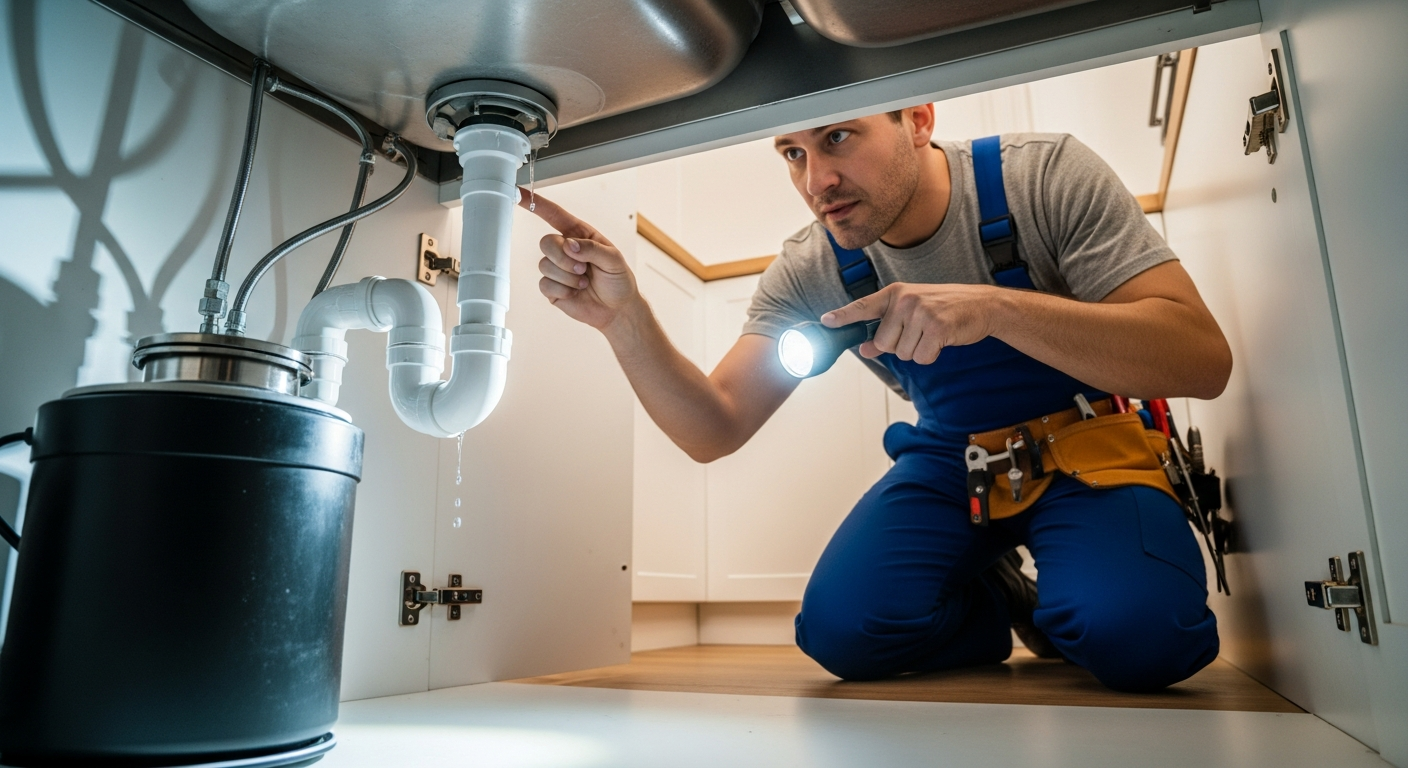
Many garbage disposals have a dishwasher inlet on the side of the unit. A rubber hose connects your dishwasher’s drain line to this inlet. If water is dripping from this connection, the fix is usually quick.
Common Causes
- Loose hose clamp. The metal clamp securing the dishwasher hose to the disposal inlet can loosen over time.
- Cracked or deteriorated hose. Rubber hoses become brittle with age and can develop cracks.
- Failed gasket. The small rubber gasket inside the connection point may have worn out.
DIY Fix
- Tighten the hose clamp. Use a screwdriver to tighten the metal clamp where the dishwasher hose meets the disposal inlet.
- Replace the hose. If the hose itself is cracked or stiff, pick up a replacement at any hardware store. They are inexpensive and easy to swap.
- Check the gasket. Remove the hose and inspect the rubber gasket at the inlet. Replace it if it is flat, cracked, or missing.
This is one of the easiest garbage disposal leak repairs. Most homeowners can complete it in under 15 minutes with basic tools.
Garbage Disposal Leaking from the Discharge Pipe
The discharge pipe (also called the drain pipe) is located on the opposite side from the dishwasher connection. It carries wastewater from the disposal to your sink’s P-trap and into the drain system. If you notice water here, it is typically a connection issue.
Common Causes
- Loose bolts. The discharge pipe is attached to the disposal with a flange and two bolts. These can loosen with vibration.
- Worn gasket. A rubber gasket sits between the disposal and the discharge pipe. This gasket can wear out and lose its seal.
- Cracked pipe. While less common, the discharge pipe itself can crack from impact or age.
DIY Fix
- Tighten the bolts. Locate the two bolts holding the discharge pipe flange and snug them up.
- Replace the gasket. If tightening does not stop the leak, remove the discharge pipe and replace the rubber gasket. Make sure the new gasket is seated evenly before reattaching.
- Inspect the pipe. If the pipe itself is cracked, replace it. Discharge pipes are standard sizes and available at hardware stores.
If you are dealing with recurring drain issues alongside this leak, take a look at our article on clogged kitchen sink problems for tips on keeping everything flowing smoothly.
Garbage Disposal Repair vs. Replacement: How to Decide
Not every leak means you need a new disposal. Here is a quick decision framework:
Repair makes sense when:
- The leak is at a connection point (flange, dishwasher inlet, or discharge pipe)
- The unit is less than 5 years old
- Tightening bolts or replacing gaskets stops the leak
- The disposal still grinds food effectively and runs quietly
Replacement is the better call when:
- The disposal is leaking from the bottom (internal seal failure)
- The unit is 8 to 12 years old or older
- You have repaired it multiple times and leaks keep returning
- The motor hums but the blades do not spin (see our guide: Garbage Disposal Not Working?)
- There is visible corrosion or cracks on the housing
Troubleshooting Tips Before You Start Any Repair
Before diving into a repair, keep these tips in mind to stay safe and avoid making the problem worse:
- Always disconnect power first. Unplug the unit or flip the breaker. Never work on a disposal that is connected to electricity.
- Never put your hand inside the disposal. Use tongs, pliers, or an Allen wrench to work on internal components.
- Have towels and a bucket ready. Water will drip when you disconnect pipes. A bucket under the work area saves your cabinet floor.
- Take a photo before disconnecting anything. Knowing how everything was connected makes reassembly much easier.
- Run water after every repair. Fill the sink and let it drain to confirm the leak is actually fixed before putting everything back together.
If your leak is part of a broader drainage issue, our guide on how to unclog a drain may help you address the full problem.
When to Call a Professional Plumber
DIY repairs can save you money, but some situations call for professional expertise:
- The leak is from the bottom of the unit and the disposal needs replacement. A plumber can ensure proper installation, electrical connections, and code compliance.
- You are not comfortable working with plumbing connections. Improperly tightened or reconnected pipes can cause bigger leaks or water damage.
- The leak persists after your repair attempt. A persistent leak may indicate a problem you cannot see, such as a crack inside the disposal body.
- There is water damage to the cabinet or floor. If the leak has been going on for a while, you may have mold or structural damage that needs professional assessment.
- Your disposal needs both replacement and electrical work. Hardwired disposals require an electrician or a plumber licensed for electrical connections.
If your garbage disposal is leaking and you are not sure where to start, the team at 911 Drain Lines and Plumbing is here to help. We provide expert garbage disposal repair and replacement throughout Orange County and the Inland Empire, with 24/7 emergency availability. Contact us or call (714) 746-7611 for fast, reliable service. For professional assistance, contact our professional plumbing services team.
Frequently Asked Questions
Why is my garbage disposal leaking from the bottom?
A garbage disposal leaking from the bottom usually means the internal seal between the motor and the grinding chamber has failed. This seal wears out over time and cannot be replaced separately. In most cases, a bottom leak means the entire unit needs to be replaced.
Can I use my garbage disposal if it is leaking?
It is best to stop using a leaking garbage disposal until the leak is repaired. Running a leaking disposal can cause water damage to your cabinet, promote mold growth, and potentially create an electrical hazard if water reaches the motor or wiring.
How much does it cost to fix a leaking garbage disposal?
DIY repairs like tightening bolts or replacing a gasket cost under $10 in parts. If you need a professional to replace the unit, total costs (including the disposal and labor) typically range from $250 to $600 depending on the model and complexity of the installation.
How long do garbage disposals last?
Most garbage disposals last 8 to 15 years with proper use. If your unit is in that age range and leaking from the bottom or experiencing frequent problems, replacement is usually more cost-effective than repeated repairs.
Is a leaking garbage disposal an emergency?
A small drip is not an immediate emergency, but it should be addressed within a day or two to prevent water damage. A large or sudden leak that is flooding the cabinet should be treated as urgent. Turn off the disposal, shut off the water supply to the sink, and call a plumber.
Can plumber’s putty fix a garbage disposal leak?
Plumber’s putty can fix a leak at the sink flange (where the disposal connects to the sink drain). It will not fix leaks from the bottom, side connections, or discharge pipe. Those require tightening connections, replacing gaskets, or replacing the unit.