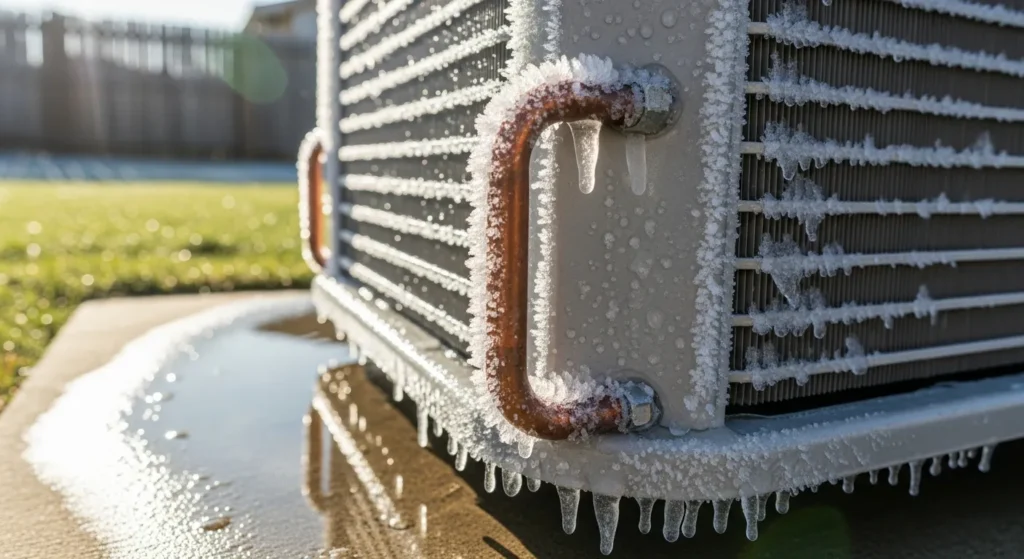




If you’ve noticed ice forming on your air conditioner, something isn’t right. A frozen AC unit is more than a cosmetic issue. It signals restricted airflow, refrigerant problems, or mechanical failure that can lead to compressor damage and costly repairs if left unchecked.
The good news? Most causes of an AC freezing up are identifiable, and several have simple fixes you can handle yourself. In this guide, we’ll walk through exactly what to do when your AC unit is frozen, the seven most common causes, and how to prevent it from happening again.
Contact 911 Drain Lines and Plumbing for fast AC repair across Orange County and the Inland Empire. Call (714) 746-7611 for same-day service.
What Should You Do If Your AC Is Frozen?
Before diagnosing the cause, you need to thaw your system safely. Running a frozen AC unit can damage the compressor, which is the most expensive component to replace.
- Turn off your AC immediately. Switch the thermostat from “cool” to “off.”
- Set the fan to “ON.” This circulates warm air over the frozen evaporator coil and speeds up thawing.
- Wait 2 to 4 hours. Give the ice time to melt completely. Place towels around the indoor unit to catch water runoff.
- Check your air filter. While the system thaws, inspect the air filter. If it’s clogged, replace it.
- Turn the AC back on. Once fully thawed, switch back to cooling mode. If ice forms again within a few hours, you have a deeper issue that requires professional attention.
If your system still isn’t performing after thawing, you may also be dealing with an AC not blowing cold air, a related problem with overlapping causes.
Why Does a Dirty Air Filter Cause Your AC to Freeze?
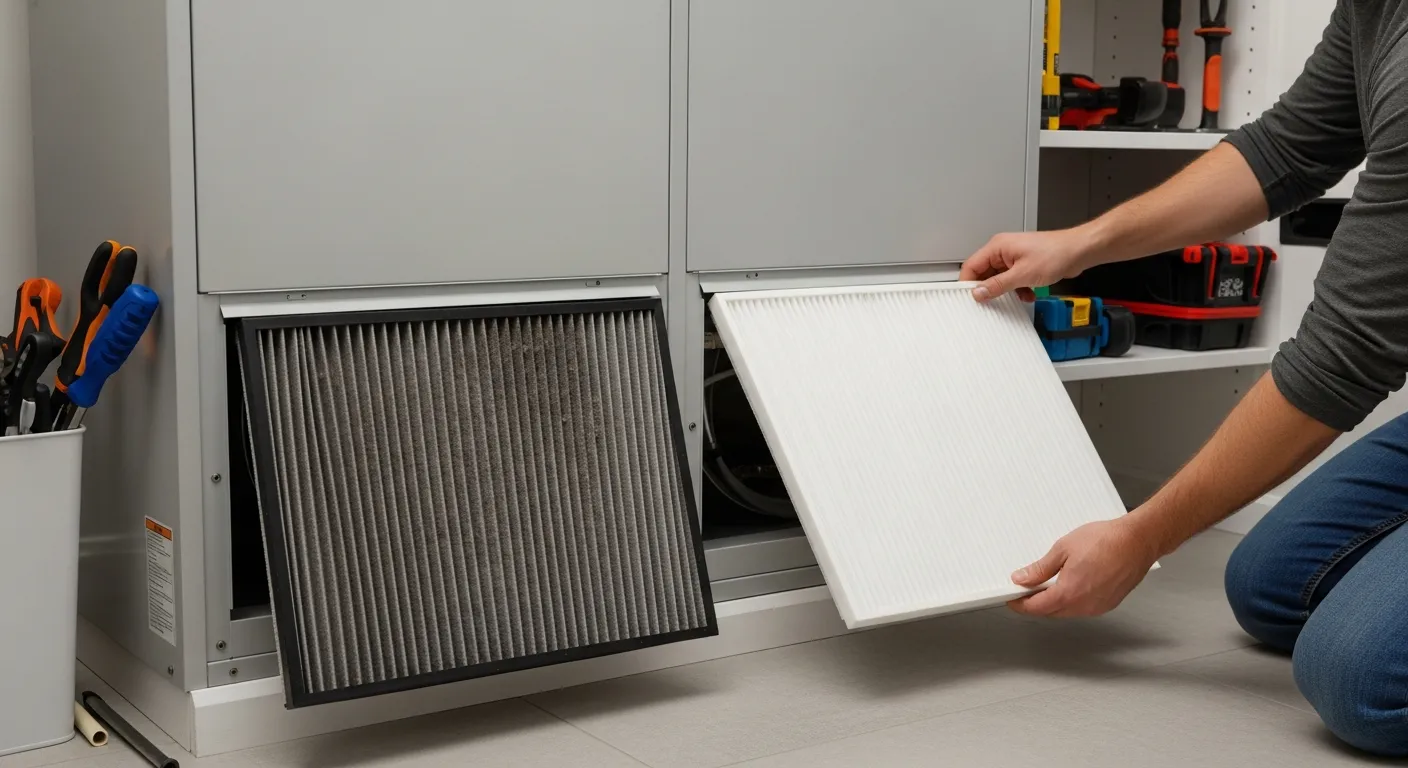
A dirty air filter is the single most common reason for an AC freezing up. When the filter is clogged with dust, pet hair, and debris, it restricts the airflow across the evaporator coil. Without adequate warm air flowing over the coil, the refrigerant inside gets too cold and the moisture in the air freezes on contact.
The fix: Check your filter every 30 days and replace it every 1 to 3 months depending on usage, pets, and household size. This one step prevents the majority of AC freeze-ups. For a full checklist, see our AC maintenance checklist.
Can Low Refrigerant Cause a Frozen AC Unit?
Refrigerant (commonly R-410A or older R-22) is the substance that absorbs heat from your indoor air. When refrigerant levels drop due to a leak, the pressure inside the evaporator coil falls. Lower pressure means lower temperatures, which causes the coil to drop below freezing and ice up.
Signs of low refrigerant:
- Hissing or bubbling sounds near the indoor unit
- Warm air blowing from vents even when the AC is running
- Ice on the refrigerant lines (the copper pipes running to your outdoor unit)
- Higher than normal energy bills
The fix: This is not a DIY repair. A licensed HVAC technician needs to locate the leak, repair it, and recharge the system with the correct amount of refrigerant. Simply adding refrigerant without fixing the leak is a temporary fix that wastes money.
Do Blocked or Closed Supply Vents Cause AC Freezing?
Your AC system is designed to move a specific volume of air. When supply vents (registers) are blocked by furniture, curtains, rugs, or even intentionally closed to “save energy,” you reduce airflow across the evaporator coil. This creates the same problem as a dirty filter, just caused by a different obstruction.
The fix: Walk through your home and make sure every supply vent is open and unobstructed. Keep furniture at least 6 inches away from registers. Closing vents in unused rooms is a common myth that actually increases system strain and can contribute to your AC unit freezing.
How Does a Dirty Evaporator Coil Lead to AC Freezing Up?
Even with regular filter changes, dust and grime can accumulate on the evaporator coil over time. A layer of buildup acts as insulation, preventing the coil from properly absorbing heat. The result is the same: the coil gets too cold and moisture freezes on its surface.
The fix: Evaporator coil cleaning is a professional job. The coil is located inside the air handler and requires careful handling. An HVAC technician will use a specialized coil cleaner and may need to disassemble parts of the unit to access it. This should be part of your annual HVAC maintenance routine.
Can Setting Your Thermostat Too Low Freeze the AC?
Running your AC with the thermostat set below 68°F, especially overnight when outdoor temperatures drop, can push the evaporator coil temperature below freezing. The coil can’t absorb enough heat from the already-cool air, and ice begins to form. This is especially common during Orange County’s cooler spring and fall evenings.
The fix: Keep your thermostat set to 72 to 78°F during summer. Avoid running the AC below 68°F, particularly at night. If you want cooler sleeping temperatures, use a fan alongside the AC rather than cranking the thermostat down.
What Happens When the Blower Fan Stops Working?
The blower fan is responsible for pushing air across the evaporator coil. If the fan motor fails, the belt breaks, or the fan speed drops due to electrical issues, airflow drops and the coil temperature plummets. A frozen AC unit is often the first visible symptom of a failing blower motor.
Signs of blower fan problems:
- Weak or no airflow from vents
- Unusual humming, squealing, or rattling sounds from the air handler
- AC turns on but air doesn’t circulate
The fix: Blower fan issues require professional diagnosis. The motor may need lubrication, the belt may need replacement, or the entire motor may need to be swapped. Don’t ignore unusual sounds; early repair is far cheaper than a compressor replacement.
Can a Clogged Condensate Drain Line Freeze Your AC?
As your AC removes humidity from the air, the condensation drips into a drain pan and exits through a drain line. If this line gets clogged with algae, mold, or debris, water backs up around the evaporator coil. In some systems, this excess moisture contributes to ice formation, especially when combined with other airflow issues.
The fix: Flush the condensate drain line with a mixture of warm water and vinegar every few months. If the line is severely clogged, a technician can use a wet/dry vacuum or pressurized air to clear it. Regular drain line maintenance is an easy preventive step that also protects against water damage.
AC Freezing Causes at a Glance
| Cause | DIY or Pro? | Difficulty | Typical Cost |
|---|---|---|---|
| Dirty air filter | DIY | Easy | $5 to $30 (filter) |
| Low refrigerant | Pro | Moderate | $150 to $500+ |
| Blocked supply vents | DIY | Easy | Free |
| Dirty evaporator coil | Pro | Moderate | $100 to $400 |
| Thermostat set too low | DIY | Easy | Free |
| Blower fan failure | Pro | Hard | $300 to $600+ |
| Clogged condensate drain | DIY/Pro | Easy to Moderate | Free to $150 |
How Can You Prevent Your AC From Freezing?
Most AC freeze-ups are preventable with basic maintenance. Here’s a year-round prevention plan:
- Replace the air filter every 1 to 3 months. This is the single most effective preventive measure.
- Schedule annual professional maintenance. A technician will check refrigerant levels, clean coils, inspect the blower motor, and clear the drain line.
- Keep all supply vents open and unblocked. Check after rearranging furniture.
- Don’t set the thermostat below 68°F. This is especially important during overnight hours.
- Listen for unusual sounds. Rattling, hissing, or squealing can indicate problems before ice appears.
- Clear debris around the outdoor unit. Maintain at least 2 feet of clearance on all sides.
- Flush the condensate drain line quarterly. A simple vinegar flush prevents clogs.
Following our AC maintenance checklist covers all of these steps and keeps your system running efficiently throughout the cooling season.
When Should You Call a Professional for a Frozen AC?
While a dirty filter or blocked vent is an easy DIY fix, several AC freeze-up causes require a licensed technician:
- Refrigerant leaks: Leak detection, repair, and recharging require specialized equipment and EPA certification.
- Blower motor failure: Electrical components need professional handling.
- Recurring freezing: If your AC freezes up repeatedly after filter changes, there’s a deeper issue.
- Evaporator coil cleaning: Professional coil cleaning should be part of annual maintenance.
- Electrical or control board issues: Faulty wiring or thermostat problems can cause erratic operation.
911 Drain Lines and Plumbing provides comprehensive HVAC services across Orange County and the Inland Empire, including emergency AC repair in Irvine, Anaheim, Costa Mesa, Mission Viejo, and surrounding cities. If your AC unit keeps freezing up and basic troubleshooting hasn’t solved it, contact us for a professional diagnosis. For professional assistance, contact our professional plumbing services team.
Schedule your AC repair today. Call 911 Drain Lines and Plumbing at (714) 746-7611. Available 24/7 for emergency HVAC service in Orange County.
Frequently Asked Questions
Can I run my AC if it’s frozen?
No. Running a frozen AC unit forces the compressor to work against ice buildup, which can cause permanent compressor damage. Turn the system off immediately, set the fan to “ON,” and let it thaw for 2 to 4 hours before restarting.
How long does it take for a frozen AC to thaw?
Most frozen AC units take 2 to 4 hours to fully thaw. Setting the fan to “ON” (not “auto”) speeds up the process by circulating warm air over the coils. Place towels around the unit to catch excess water. Do not try to chip or scrape ice off the coils, as this can damage the fins.
Why does my AC keep freezing up even after I change the filter?
If your AC freezes repeatedly with a clean filter, the cause is likely low refrigerant, a dirty evaporator coil, a failing blower motor, or a combination of issues. These all require professional diagnosis. Call 911 Drain Lines and Plumbing for a thorough inspection.
Is a frozen AC unit an emergency?
It’s not an immediate safety emergency, but it is urgent. Continued operation with ice on the coils can destroy the compressor, which typically costs $1,500 to $3,000 to replace. Turn the system off and schedule service as soon as possible.