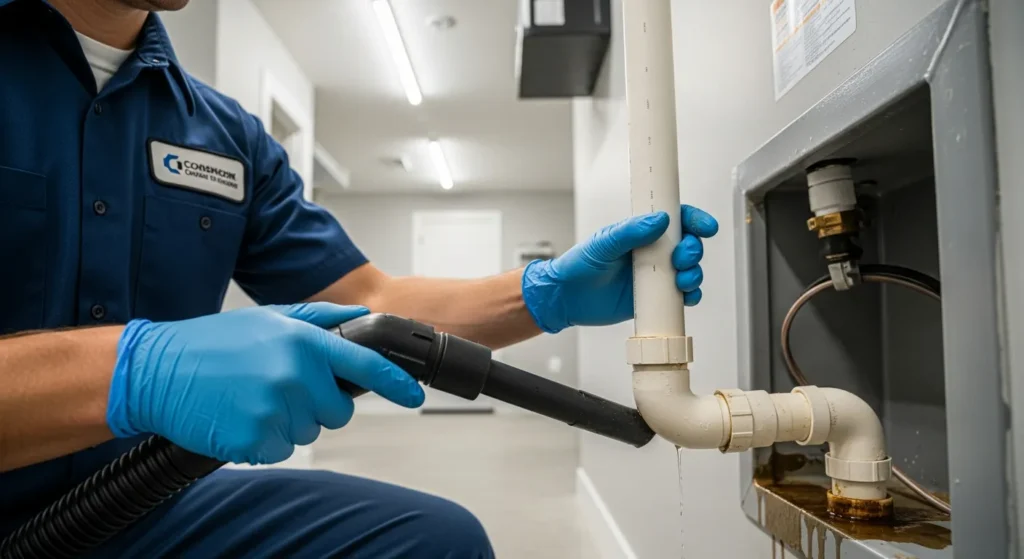




A clogged AC drain line is one of the most common reasons your air conditioning system stops working properly, leaks water, or shuts down completely. The condensate drain line carries moisture that your AC removes from the air, and when it gets blocked, water backs up into the drip pan and can cause serious damage to your home. Fortunately, clearing a clogged AC drain line is something many homeowners can handle with a few basic tools and the right technique.
In this guide, we will walk you through the warning signs of a clogged AC condensate drain, step-by-step clearing methods, a comparison of DIY versus professional solutions, and prevention tips to keep your system running smoothly all summer long.
Call 911 Drain Lines and Plumbing at (714) 909-1911 for fast, professional HVAC service in Orange County and the Inland Empire. If the issue persists, consider scheduling residential plumbing services with a licensed professional.
What Are the Warning Signs of a Clogged AC Drain Line?
Catching a clogged AC drain line early can save you from costly water damage repairs. Here are the most common signs that your condensate drain is blocked:
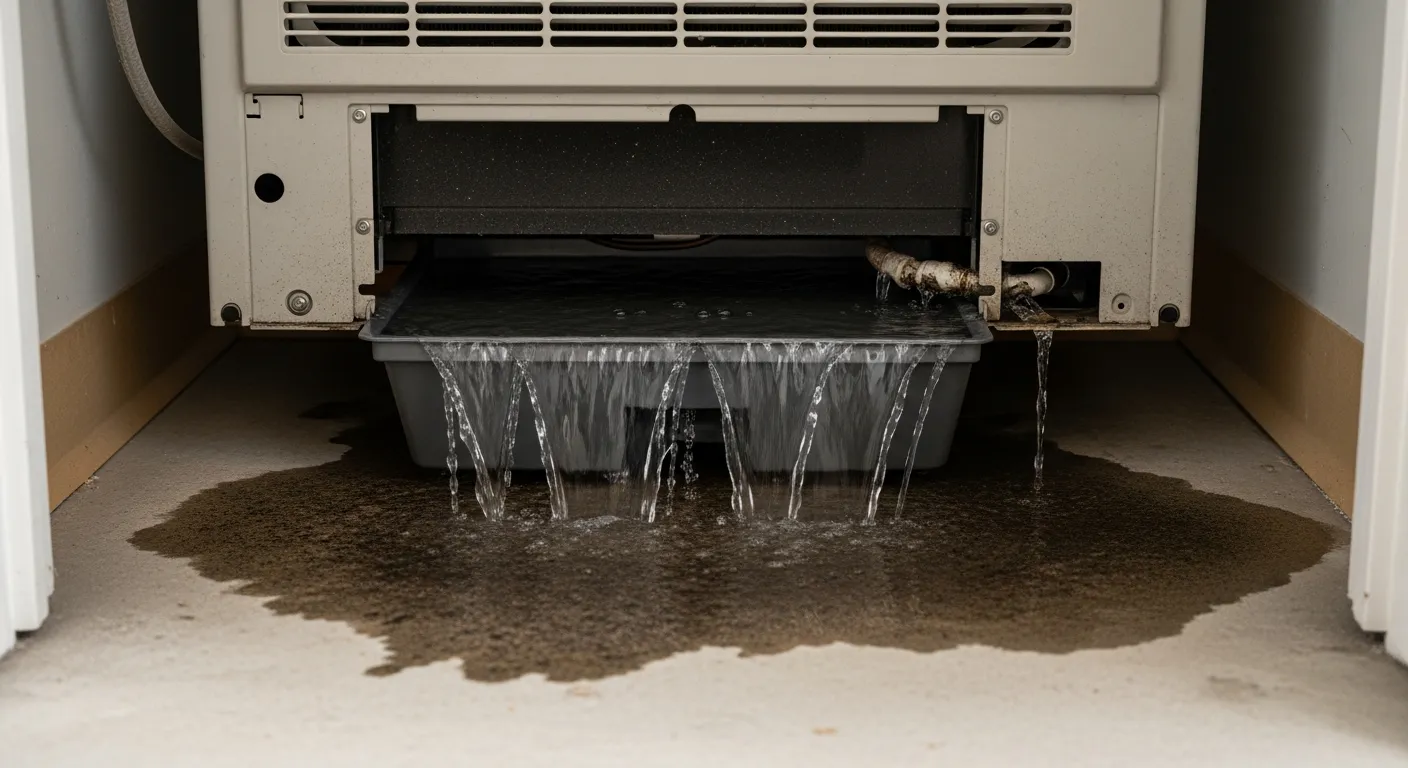
- Water pooling around the indoor unit. If you see standing water near your air handler or furnace, the drip pan is likely overflowing because the drain line cannot carry water away.
- Musty or moldy smell from the vents. Stagnant water in the drain pan or line creates a breeding ground for mold and mildew, which produces an unpleasant odor that circulates through your ductwork.
- AC shuts off unexpectedly. Many modern systems have a float switch that automatically turns off the air conditioner when the drip pan fills with water. If your AC is not turning on, a clogged drain line could be the cause.
- Reduced cooling performance. When moisture cannot drain properly, it can affect humidity levels and make your home feel warmer. If your AC is not blowing cold air, check the drain line as part of your troubleshooting.
- Water stains on walls or ceilings. If the air handler is in the attic, a clogged drain line can cause water to overflow and seep through ceilings and walls.
- Visible algae or slime in the drain opening. Green, brown, or black buildup at the drain line exit point is a clear sign that biological growth is restricting flow.
What Causes an AC Drain Line to Clog?
Understanding why your AC drain line gets clogged helps you prevent the problem from recurring. The condensate drain line is a small PVC pipe, typically 3/4 inch in diameter, that runs from the indoor evaporator coil to an exterior drain point. Several factors contribute to blockages:
- Algae and mold growth. The warm, moist environment inside the drain line is ideal for algae, mold, and bacteria. Over time, this biological growth forms a thick layer that restricts water flow.
- Dust and debris. Your evaporator coil captures airborne particles that wash into the drain pan and line with condensation. Without regular cleaning, this debris accumulates and creates a blockage.
- Insects and pests. Small insects, spiders, and even lizards can enter the drain line opening and create nests that block the flow.
- Mineral deposits. Hard water in areas like Orange County and the Inland Empire leaves calcium and mineral buildup inside the drain line over time.
- Dirty air filter. A clogged or dirty air filter allows excess dust to reach the evaporator coil, increasing the amount of debris that washes into the drain. Keeping a clean filter is part of a good AC maintenance checklist.
How Do You Clear a Clogged AC Drain Line Step by Step?
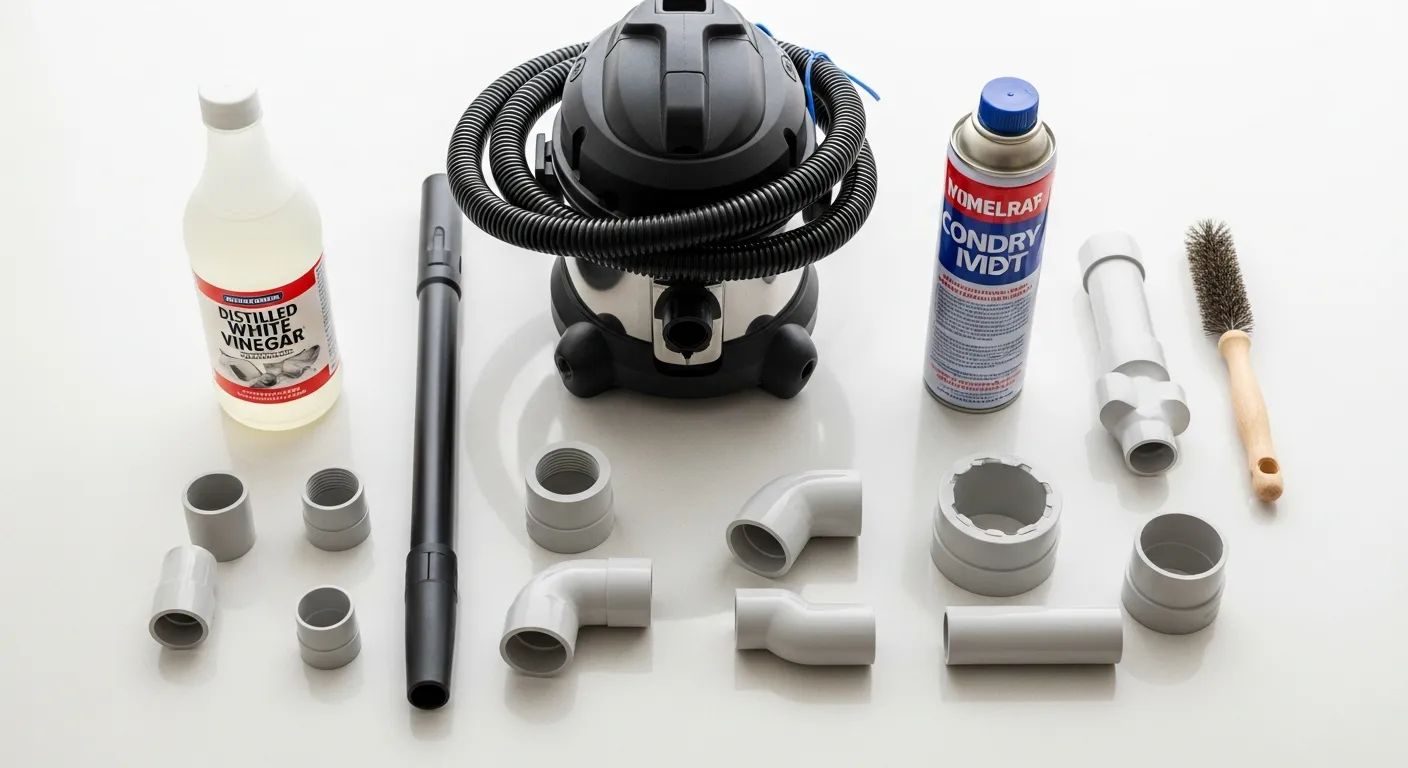
Before starting, turn off your AC system at the thermostat and the breaker to ensure safety. Gather your supplies: distilled white vinegar, a wet/dry vacuum, a stiff brush or pipe cleaner, clean rags, and a bucket.
Step 1: Locate the Drain Line and Access Point
Find your indoor air handler unit. The condensate drain line is a PVC pipe (usually white) that exits the unit near the bottom. Most systems have a T-shaped vent or access point with a removable cap near the indoor unit. This is where you will flush the line.
Step 2: Inspect the Drip Pan
Remove the air handler access panel and check the drip pan beneath the evaporator coil. If it is full of water, use a wet/dry vacuum or towels to remove the standing water. Clean the pan with a mild soap solution to remove any slime or buildup.
Step 3: Clear the Drain Line Opening
Remove the cap from the access point on the drain line. Use a stiff brush or pipe cleaner to remove any visible buildup or debris from the opening. Push gently to avoid damaging the pipe.
Step 4: Flush with Vinegar
Pour about one cup of distilled white vinegar into the drain line access point. The vinegar breaks down algae, mold, and minor blockages. Let it sit for 30 minutes to an hour to work through the buildup. Then flush with warm water and check the exterior drain point to confirm water is flowing freely.
Step 5: Use a Wet/Dry Vacuum (If Needed)
If the vinegar flush does not clear the clog, connect a wet/dry vacuum to the exterior end of the drain line. Create a tight seal using a rag or your hand around the opening. Run the vacuum for 2 to 3 minutes to suction out the blockage. Check the vacuum canister to see if debris was pulled through.
Step 6: Test the System
Pour a cup of water into the drain line from the access point and verify it flows out the exterior end. Turn your AC back on at the breaker and thermostat. Monitor the drip pan for the next few hours to ensure water drains properly.
Which AC Drain Line Clearing Method Works Best?
Different clog severities call for different solutions. Here is a comparison of the most common methods for clearing a clogged AC drain line:
| Method | Best For | Estimated Cost | Difficulty | Effectiveness |
|---|---|---|---|---|
| Vinegar Flush | Minor clogs, routine maintenance | Under $5 | Easy (DIY) | Good for light buildup |
| Wet/Dry Vacuum | Moderate clogs with solid debris | $0 (if you own one) to $50 rental | Easy to Moderate (DIY) | Good for suction-removable blockages |
| Compressed Air | Stubborn partial clogs | $10 to $30 (air canister) | Moderate (DIY with caution) | Effective but risk of loosening fittings |
| Professional Hydro Jetting | Severe clogs, recurring blockages | $75 to $250+ | Professional only | Excellent; clears entire line thoroughly |
| Drain Line Replacement | Damaged, corroded, or collapsed lines | $200 to $500+ | Professional only | Permanent fix for irreparable lines |
When Should You Call a Professional for a Clogged AC Drain Line?
While many clogs respond to DIY methods, there are situations where calling a licensed HVAC technician is the safer and smarter choice:
- The clog does not clear after two DIY attempts. If vinegar flushing and vacuuming have not resolved the issue, the blockage may be deeper in the line or caused by a structural problem.
- You see mold growth around the unit. Mold near the air handler, in the drip pan, or on walls indicates a problem that has been building for a while. A professional can assess and address both the clog and the mold.
- Water damage is visible. Stains on ceilings, warped floors, or drywall damage mean the overflow has been happening for some time. A technician can identify the root cause and recommend repairs.
- The system has additional problems. If your drain line is clogged and your AC is blowing hot air or your AC is freezing up, there may be multiple issues at play that require professional diagnosis.
- You are not comfortable working around electrical components. The air handler has electrical connections, and if you are unsure about turning off the system safely, call a professional.
911 Drain Lines and Plumbing provides 24/7 HVAC service across Orange County and the Inland Empire. Our licensed technicians use professional equipment including high-pressure hydro jetting and sewer cameras to clear even the most stubborn drain line blockages.
How Can You Prevent Your AC Drain Line from Clogging?
Preventing clogs is much easier and cheaper than dealing with the consequences. Follow these tips to keep your AC condensate drain line flowing freely:
- Flush the drain line monthly during cooling season. Pour one cup of distilled white vinegar into the access point every 30 days while your AC is running regularly. This prevents algae and mold from building up.
- Change your air filter every 30 to 60 days. A clean filter catches dust and debris before it reaches the evaporator coil, reducing what washes into the drain line. Check out our complete AC maintenance checklist for a full schedule.
- Schedule annual HVAC maintenance. A professional tune-up includes drain line inspection and cleaning, coil cleaning, and system testing. This catches small problems before they become emergencies.
- Keep the area around the outdoor drain exit clear. Make sure the exterior drain point is not blocked by landscaping, mulch, or debris.
- Install a drain line safety switch. If your system does not already have a float switch, adding one costs $20 to $50 and will automatically shut off the AC if the drain backs up, preventing water damage.
- Use condensate drain tablets. Slow-dissolving tablets placed in the drip pan help prevent algae and mold growth between cleanings.
Contact 911 Drain Lines and Plumbing at (714) 909-1911 to schedule AC maintenance or emergency drain line service in Orange County and the Inland Empire.
Frequently Asked Questions About Clogged AC Drain Lines
How do I know if my AC drain line is clogged?
Common signs include water pooling around the indoor air handler, a musty smell near vents, the AC shutting off unexpectedly due to a float switch, reduced cooling performance, and visible moisture or water stains on walls or ceilings near the unit.
Can I unclog my AC drain line myself?
Yes, minor clogs can often be cleared with a vinegar flush, wet/dry vacuum, or compressed air. However, if the clog persists after a DIY attempt, or if you notice mold growth or water damage, you should call a licensed HVAC technician for professional service.
How often should I clean my AC condensate drain line?
You should flush your AC condensate drain line with vinegar or a mild cleaning solution every 30 to 90 days during cooling season. In humid climates like Southern California coastal areas, monthly flushing is recommended to prevent algae and mold buildup. If the issue persists, consider scheduling drain cleaning services with a licensed professional.
What causes an AC drain line to clog?
The most common causes are algae and mold growth inside the drain line, dust and debris accumulation from the evaporator coil, insects or small pests nesting in the line, and mineral deposits from hard water. Lack of regular maintenance accelerates all of these issues.
How much does it cost to have a professional clear a clogged AC drain line?
Professional AC drain line clearing typically costs between $75 and $250, depending on the severity of the clog and your location. If the line requires replacement or if there is water damage that needs repair, costs may be higher. Contact a local HVAC company like 911 Drain Lines and Plumbing for a specific estimate.