



Common Reasons Your Garbage Disposal Is Not Working
Your garbage disposal was humming along fine until suddenly it stopped. Maybe it makes a buzzing sound but will not spin. Maybe it is completely silent. Or maybe it is jammed and water is backing up into the sink. Whatever the symptom, a malfunctioning garbage disposal is one of the most common kitchen plumbing issues homeowners face.
Before you call a plumber or start shopping for a replacement, try these troubleshooting steps. Many garbage disposal problems have simple fixes you can handle yourself.
Garbage Disposal Hums but Will Not Spin
If your disposal makes a humming or buzzing noise when you flip the switch but the blades are not turning, something is jammed between the impellers and the shredder ring.
How to Fix It
- Turn off the disposal and unplug it (or switch off the breaker).
- Never put your hand inside the disposal. Use a flashlight to look into the opening and identify what is stuck.
- Use an Allen wrench. Most disposals have a hex socket on the bottom. Insert a 1/4-inch Allen wrench and turn it back and forth to free the impellers.
- Use tongs or pliers to remove any visible debris from inside the chamber.
- Restore power and test. Run cold water and turn on the disposal.
If the jam keeps happening, hard items like bones, fruit pits, or utensils may be falling in repeatedly. Consider installing a sink splash guard.
Garbage Disposal Will Not Turn On at All
A completely silent disposal usually points to an electrical issue rather than a mechanical one.
Check the Reset Button
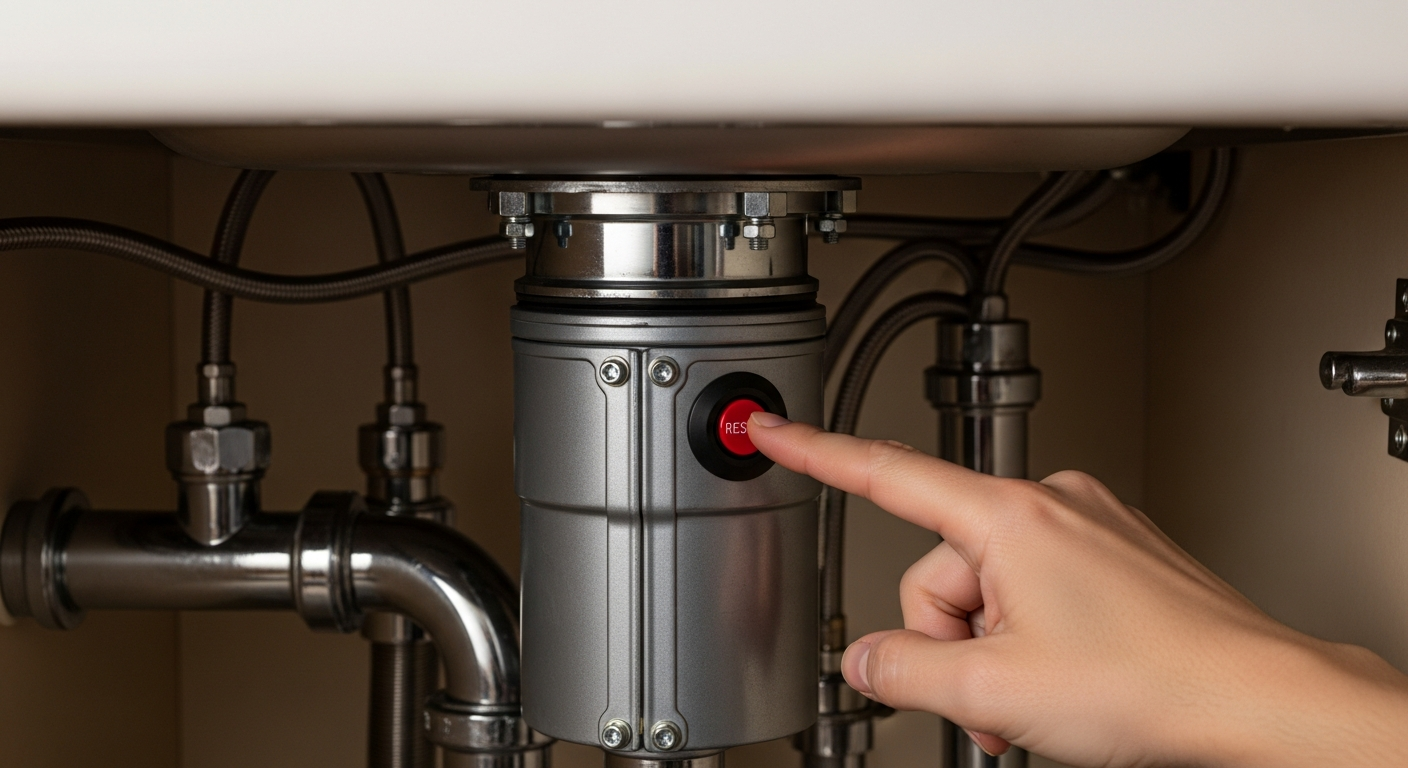
Every garbage disposal has a small reset button on the bottom of the unit. When the motor overheats or overloads, this button pops out as a safety measure. Press it firmly back in and try the switch again.
Check the Circuit Breaker
If the reset button did not fix it, check your electrical panel. Garbage disposals are typically on a dedicated 15- or 20-amp circuit. If the breaker has tripped, reset it. If it trips again immediately, there may be a wiring issue that requires an electrician.
Check the Wall Switch
The wall switch that controls your disposal can wear out over time. If the switch feels loose or you hear no click when you flip it, the switch itself may need replacement.
Garbage Disposal Is Leaking
Leaks can come from three main areas:
- Top (sink flange): The mounting ring that connects the disposal to the sink drain can loosen over time. Tightening the mounting bolts or replacing the plumber’s putty seal usually fixes this.
- Side (dishwasher connection): The hose connecting your dishwasher to the disposal can leak at the clamp. Tighten the hose clamp or replace the hose.
- Bottom (internal seal): A leak from the bottom of the unit means the internal seals have failed. This is typically not worth repairing and indicates the disposal needs replacement.
Garbage Disposal Drains Slowly or Backs Up
A slow-draining disposal usually means a clog in the drain pipe, not the disposal itself. In many cases, this results in a clogged kitchen sink that won’t drain even with the disposal running. Common causes include grease buildup, fibrous foods like celery or artichoke leaves, and starchy foods like pasta or rice that expand and create paste-like blockages.
How to Clear It
- Turn off the disposal.
- Check if the disposal chamber is clear by looking inside with a flashlight.
- If the chamber is clear, the clog is further down the drain line. Use a sink plunger over the disposal drain opening (for toilet clog solutions, a flange plunger works better).
- If plunging does not work, the P-trap under the sink may need to be removed and cleaned.
- For persistent clogs deeper in the line, professional drain cleaning may be necessary.
911 Drain Lines and Plumbing provides same-day drain cleaning services across Orange County. Call (714) 746-7611 if you cannot clear the blockage yourself.
Garbage Disposal Smells Bad
A foul odor from your garbage disposal is usually caused by food particles trapped under the impellers or stuck to the inside walls of the grinding chamber. Here is how to clean it:
- Ice and salt method: Pour a cup of ice cubes and a half cup of coarse salt into the disposal. Run it with cold water for 30 seconds. The ice knocks off debris while the salt scrubs the walls.
- Baking soda and vinegar: Pour a half cup of baking soda followed by a cup of white vinegar into the disposal. Let it fizz for 10 minutes, then flush with hot water.
- Citrus peels: Grinding lemon or orange peels freshens the smell and cuts grease.
Make cleaning your disposal part of your weekly kitchen routine to prevent odor buildup.
When to Replace Your Garbage Disposal
Most garbage disposals last 8 to 15 years depending on usage and maintenance. Replace yours if:
- It leaks from the bottom (internal seal failure).
- It frequently jams despite clearing.
- It no longer grinds food effectively.
- You need to reset it constantly.
- It is more than 10 years old and showing multiple symptoms.
A new garbage disposal installation typically takes about an hour for a licensed plumber. If you need a residential plumbing service in Orange County or the Inland Empire, 911 Drain Lines and Plumbing can handle the replacement.
What Not to Put in a Garbage Disposal
Preventing problems starts with knowing what your disposal can and cannot handle:
- Never: Grease, oil, or fat (they solidify and clog pipes)
- Never: Bones, fruit pits, or shellfish shells
- Never: Pasta, rice, or bread (they expand with water)
- Never: Coffee grounds (they accumulate in drain pipes)
- Never: Fibrous vegetables like celery, corn husks, or artichokes
- Never: Egg shells (the membrane can wrap around impellers)
- OK: Small amounts of soft food scraps, citrus peels, ice cubes
Always run cold water before, during, and after using the disposal. Cold water solidifies any grease so the disposal can break it up before it reaches your drain pipes.
Frequently Asked Questions
How do I reset my garbage disposal?
Look for the small red or black reset button on the bottom of the unit. Press it firmly until it clicks back in. If the button will not stay in, wait 10 minutes for the motor to cool down, then try again.
Why does my garbage disposal keep tripping the breaker?
Repeated breaker trips indicate an electrical fault, a short circuit in the motor, or a disposal that is drawing too much current. This requires professional diagnosis. Do not keep resetting the breaker, as this can be a fire hazard.
Can I fix a garbage disposal myself?
Many common issues like jams, reset button trips, and minor clogs are safe DIY fixes. However, electrical problems, persistent leaks from the bottom, and disposal replacement should be handled by a licensed plumber.
How much does it cost to replace a garbage disposal?
Including the unit and professional installation, most garbage disposal replacements cost between $250 and $600. Higher-end models with more horsepower or noise insulation cost more. Your plumber can recommend the right unit for your household.
Is it worth repairing an old garbage disposal?
If your disposal is over 10 years old and experiencing frequent issues, replacement is usually more cost-effective than repairs. A new unit comes with a warranty and better grinding performance.
Related: Install a Garbage Disposal
Need help with a garbage disposal that will not cooperate? Call 911 Drain Lines and Plumbing at (714) 746-7611 for fast, reliable service in Orange County, the Inland Empire, and surrounding areas.