



Category: water-heaters
Few plumbing problems change a morning faster than a cold shower. In Mission Viejo, where many homes were built in the 1970s, 1980s, and 1990s and many water heaters sit in garages or closets that have already seen one or two replacement cycles, the question we hear most is simple: can this one be repaired, or is it time to replace it? As plumbers serving Mission Viejo, we make that call by looking at age, condition, safety, and how well the unit still meets your household's needs — not by assuming the newest option is always the right one.
Signs your water heater needs attention
Most water heaters warn you before they quit. Rusty or discolored hot water can point to corrosion inside the tank. Rumbling or popping sounds often mean sediment has built up on the bottom, forcing the burner or elements to work harder. Water that swings from hot to lukewarm, runs out faster than it used to, or never quite reaches temperature is another common sign.
Leaks deserve prompt attention. A small amount of water around a valve or fitting may be repairable. Water pooling under the tank itself, especially with rust streaks down the side, usually means the tank is failing — and a tank cannot be patched. If you see active leaking, shut off the water supply to the unit if you can do so safely, turn off gas or power to the heater, and call a plumber. Our water heater repair page explains the repair services we provide.
When repair still makes sense
Repair is often the right answer when the unit is relatively young and the problem is isolated. Thermostats, heating elements, igniters, pilot assemblies, pressure-relief valves, and anode rods can all be replaced. A unit that has been maintained, shows no tank corrosion, and heats consistently after a part replacement can keep serving well for years.
We also look at the basics before recommending major work: Is the thermostat set correctly? Is sediment due for a flush? Has household demand changed — a new bathroom, more occupants, or a soaking tub — so the heater only seems weak because it is undersized? An honest assessment starts with those questions.
When replacement is the smarter call
Age is the biggest factor. Most conventional tank water heaters last roughly eight to twelve years, depending on water conditions and maintenance. Past that range, a repair can become money spent on a unit that will likely fail again soon — sometimes in a way that damages flooring, drywall, or stored belongings.
Replacement also makes sense when the tank is leaking, corrosion is advanced, repairs are becoming frequent, or the unit can no longer keep up even when it is working as designed. In those cases, water heater replacement lets you choose the right size and type for your home today, rather than inheriting the choices a previous owner made.
Water heater replacement cost depends on factors such as tank size, fuel type, venting, location in the home, code requirements for seismic strapping and drain pans, and whether gas, water, or vent lines need modification. We explain those factors up front so you can compare a repair and a replacement on real information.
Tank or tankless for a Mission Viejo home?
A conventional tank remains a practical, proven choice for many households, especially when a like-for-like swap keeps the job straightforward. A tankless unit heats water on demand and can suit homes with high or spaced-out hot water use, but it involves different venting, gas capacity, and maintenance considerations — descaling matters in hard-water conditions. We are glad to talk through tankless water heater repair and replacement options as well, but we will not steer you to tankless if a standard tank serves your home just as well for less complexity.
Sizing matters either way. A heater that is too small will frustrate you daily. One that is oversized wastes energy heating water you do not use. We size based on bathrooms, occupants, and fixtures — not a guess.
What to expect on the day of the job
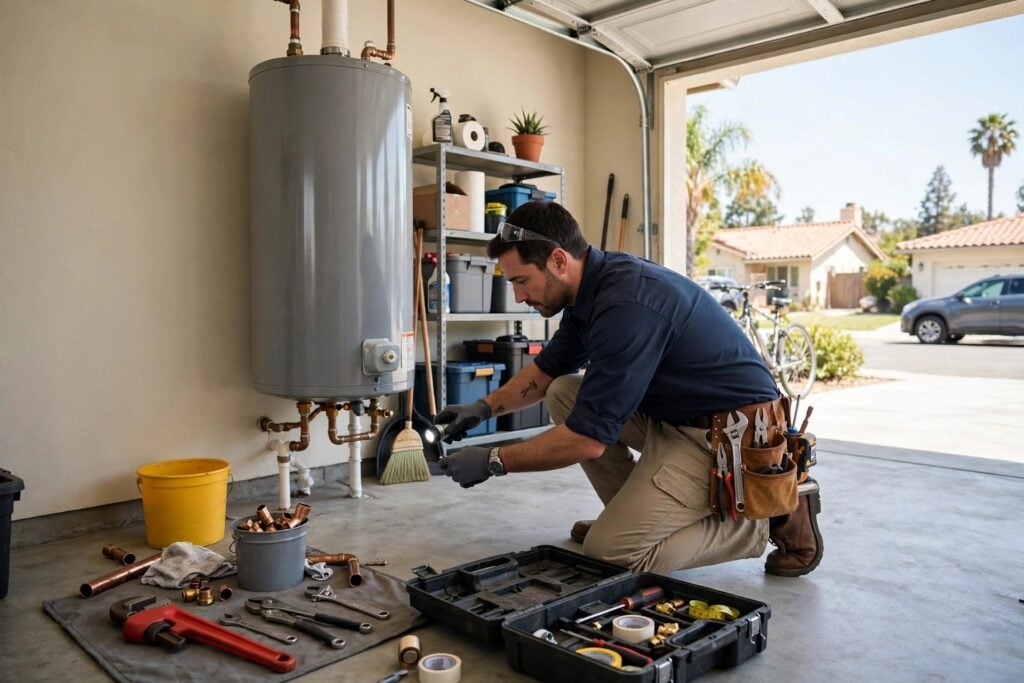
For a repair visit, we diagnose first, explain what we found in plain language, and quote the work before we start. For a replacement, we protect the work area, drain and remove the old unit, set the new heater to code, connect and test every line, check for leaks and proper venting, and walk you through the thermostat setting and basic maintenance before we leave. We haul the old unit away as part of a tidy job.
To get the most from the new unit, plan on an annual flush to control sediment and periodic anode rod checks. Those small steps are the difference between a heater that fades early and one that reaches its full service life.
If your hot water is unreliable, your heater is leaking, or you are weighing water heater repair against replacement in Mission Viejo, call 911 Drain Lines & Plumbing at (714) 746-7611. We provide 24/7 emergency service, we will assess your current unit honestly, and we will recommend repair when repair is enough — and replacement only when it is the right call for your home.