



Category: sewer-repair-replacement
When your sewer line starts failing, the last thing you want to hear is that your yard is about to become a construction zone. For many Irvine homeowners, there is a better option. Trenchless technology lets us fix or replace an underground sewer line through small access points instead of a long open trench, and most jobs finish in a day or two rather than a week or more.
Here is what the process actually looks like, step by step, so you know exactly what to expect.
It Starts With a Sewer Camera Inspection
Every trenchless job begins the same way: with a sewer camera inspection. A technician feeds a high-resolution camera through a cleanout or an access point and travels the full length of your line, recording everything along the way.
This footage tells us what we are dealing with — root intrusion at the joints, cracked or separated pipe, bellied sections where the line sags, or a pipe that has reached the end of its life. It also shows the pipe's material, diameter, depth, and exactly where it connects to the city main.
The Two Trenchless Methods Explained
Most residential trenchless work in Irvine comes down to two approaches, and the camera footage decides which one fits.
Pipe lining (CIPP) works when your existing pipe is structurally damaged but still mostly intact. We clean the line, then insert a flexible liner saturated with epoxy resin. The liner inflates against the inside walls of the old pipe and cures in place, creating a brand-new, jointless pipe within the old one. Because tree roots invade through joints and connections, a seamless liner removes the exact entry points that caused your problems in the first place.
Pipe bursting is the right choice when the old pipe is too collapsed, offset, or deformed to accept a liner. We pull a bursting head through the existing line, which fractures the old pipe outward while simultaneously drawing a new HDPE (high-density polyethylene) pipe into place behind it. The result is a completely new pipe in the same path as the old one.
Both methods typically need only one or two small access pits rather than an open trench across your yard, driveway, or landscaping. For details on how we approach these jobs, see our trenchless sewer repair services.
What Happens on Job Day
Homeowners are often surprised at how low-key a trenchless job is. Here is the general sequence:
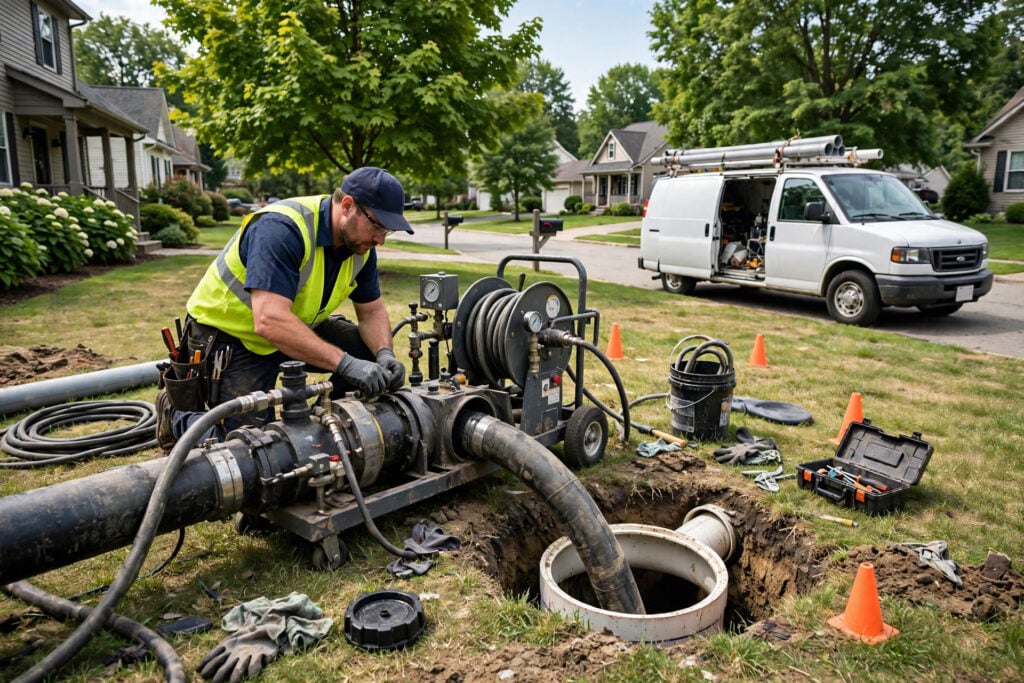
First, the crew locates your line and marks the access points. If you have a cleanout, one may already exist. If not, we dig a small pit at each end of the section being replaced — usually a few feet across, not a trench the length of your property.
Next comes cleaning. The old line is scoured with hydro jetting to remove roots, scale, and debris so the liner or new pipe can seat properly.
Then the trenchless method itself — lining or bursting — is performed. Once the new pipe is in place and cured, we run the camera through it a second time so you can see the finished work with your own eyes. Finally, we backfill the access pits, compact the soil, and restore the surface as close to its original condition as possible.
Most residential jobs are done in one to two days. You can usually use your plumbing again the same day or the next morning, depending on the curing method.
Trenchless Sewer Repair Cost: What Drives the Price
No two jobs cost the same, and anyone quoting a firm price without a camera inspection is doing you a disservice. The main factors that determine trenchless sewer repair cost are:
- Length and depth of the line. A 40-foot run costs less than a 90-foot run to the street, and deeper lines require more work at the access points.
- The method. Pipe bursting and pipe lining have different material and equipment costs.
- Pipe condition. Heavy root intrusion or severe collapse can require extra cleaning or excavation at a single access point.
- Access. Cleanouts in open ground are simple; lines under driveways, patios, pools, or mature trees take more planning.
- Permits and city requirements. Irvine requires permits for sewer work, and the job must pass inspection.
One cost advantage worth noting: trenchless sewer repair usually saves you the restoration bill that comes with open-trench work. When you factor in replacing a driveway, replanting landscaping, or rebuilding a patio, the trenchless option frequently comes out ahead on total project cost — especially compared with a full traditional sewer line replacement.
Is Trenchless Right for Your Home?
Trenchless methods handle the vast majority of residential sewer problems we see in Irvine, from the older clay pipe in established neighborhoods to PVC lines with joint failures in newer communities. It is not universal, though. A pipe that has fully collapsed in on itself, a line with an extreme bellied section, or a route with certain utility conflicts may still need targeted excavation.
That is why the camera inspection comes first. It takes the guesswork out of the decision and gives you a documented picture of what is happening underground. If trenchless is not the right answer for your situation, we will tell you that directly — and explain the sewer line repair approach that is.
The Bottom Line
Trenchless sewer repair has changed what a sewer project looks like for homeowners. Instead of weeks of torn-up property, most jobs are completed in a day or two through two small access points, with a new pipe that is often stronger and longer-lasting than the original.
If you are dealing with slow drains throughout the house, gurgling toilets, sewage odors in the yard, or repeated backups, do not wait for a minor problem to become an emergency. Call 911 Drain Lines at (714) 746-7611. We offer 24/7 emergency service throughout Irvine and the surrounding California communities, and we will start with a camera inspection so you know exactly what your line needs.